
So you are planning to go on a hike near Cusco? You’ll have plenty of choice as Peru and more particularly the area near Cusco is one of the most dreamy places for trekkers.
There are trails for everyone, from low to high fitness as well as day-trip to week-long treks. You only have to decide whether you prefer to visit lost Inca cities, clear blue glacier lakes, live adrenaline-filled experiences or stay in remote villages overlooked by snowcapped peaks! Feeling overwhelmed by the choice? We got your back with this blog post about the best hikes around Cusco in Peru.
hiking in altitude
All the hikes around Cusco are located at high altitudes, ie. above 2,400 meters above sea level.
Travellers who are not used to living in such elevation, are at risk of feeling dizziness, heavy breathing and tiredness. While altitude sickness is generally felt the first few days as your body acclimatizes, the dangers of altitude mustn’t be taken lightly as it can be life-threatening. Before starting any demanding activities, make sure to take a few days to acclimatize.
You can either stay in Cusco or visit the sacred valley which is slightly lower and might help those feeling unwell in the Incan capital.
Hike gradually
If you plan on hiking a lot around Cusco, it is recommended to organise your hike gradually, from the lowest to the highest altitudes. Do not walk to the rainbow mountain which is at 5,200 masl a day after hopping off the plane… We have seen people throwing up and passing out on our bus… Always keep in consideration that you will need time in the area to see it all because of the altitude preparation. Don’t squeeze everything in 5 days. It isn’t worth betting on your health.
Visit the lowest altitude attractions of Cusco such as the Sacred Valley first and the highest ones gradually. You can do the Salkantay or Inca Trail to Machu Picchu and then finish with Rainbow Mountain. Here is the best way to hike gradually near Cusco:
- Sacred Valley: Maras to Moray – Pisac – Tipon | altitude: 3.300 m
- Lares | altitude: 2900 -> 4400 -> 2800 m
- Inca Trail | altitude: 2900 – 4000 m
- Choquequirao | altitude: 3000 -> 1800 -> 2900 m
- Moonstone Trek | altitude: 3200 -> 4600 -> 2800
- Salkantay | Humantay Lake -> altitude: 3900 -> 4650 -> 1800 m
- Ausangate | altitude: 4200 – 5000 m
- Rainbow Mountain | altitude: 4600 -> 5200 m

Tips to hike in altitude
- It is recommended to drink a lot of water. Your body is working harder and can get dehydrated a lot faster than usual. This is generally the reason for headaches at altitude.
- If you start feeling dizzy, lightheaded or have a sore head, drink a litre of water immediately. If it doesn’t stop and you throw up, you should seek medical attention quickly.
- Avoid alcohol. It will only increase dehydration and headaches
- When you hike, take deep breaths in and deep breaths out. Don’t walk fast and stop to gasp for air. It is better to find a good rhythm, stick to it and take water breaks every now and then.
- Take it easy in Cusco, but try to do some exercise. Don’t run a marathon, but walk around town as soon as you arrive. The efforts made while visiting the city will prepare you for the lack of oxygen and your body will create extra red blood cells faster than if you stay in bed all day. Don’t force it too much and allow yourself to chill in the great parks, restaurants and cafes.
- Time is what you need. Allow yourself 2 to 3 days before starting any high-altitude hike in the area. This includes the Salkantay Trek, the Inca Trail and the Rainbow Mountain. You could go for a hike in the Sacred Valley, which is at a lower altitude. It will give you good preparation. Here is a link to our dedicated article on how to hike the Sacred Valley on your own.
- Chew coca leaves. Coca has been used by local people as a natural remedy for altitude sickness and stomach issues for centuries.
- Check your travel insurance policy. Most insurance companies do not provide cover for any activity above 3,000 m. Make sure you are covered to avoid any unnecessary policy charges in case of health issues or injury. World Nomads is one of the backpackers’ favourites because their policy covers you at high altitudes too!!
Be aware of the dangers
At high altitudes, the climate can change quickly. From our experience, the wind was the most impacting along these trails, although, depending on the season you travel to Peru, temperatures can drop below zero and snow can fall. Bad weather is probably the main danger in this part of the country, mostly near the high peaks such as the Salkantay, Ausangate and Rainbow Mountain.
If you are unsure about the weather and risks, ask the locals and/or hire a guide to hike with you. Do not go on your own if you are not properly prepared or used to hiking alone in remote places. The climate in the Andes is unpredictable, so always carry all-4-seasons gear with you and inform someone about your hiking plans.
There aren’t a lot of aggressive dogs along the trails in Peru but it can happen to be threatened by a farm dog. If this happens to you, do not run and as soon as the dog gets aggressive, kneel down to fake (or not) grabbing a stone. Believe it or not, in the international dog language, this means high danger and the dog will more than likely run away before you even have reached the ground 😉
hikes near Cusco | Overview map
Multi-day hikes near Cusco
1. official Inca Trail
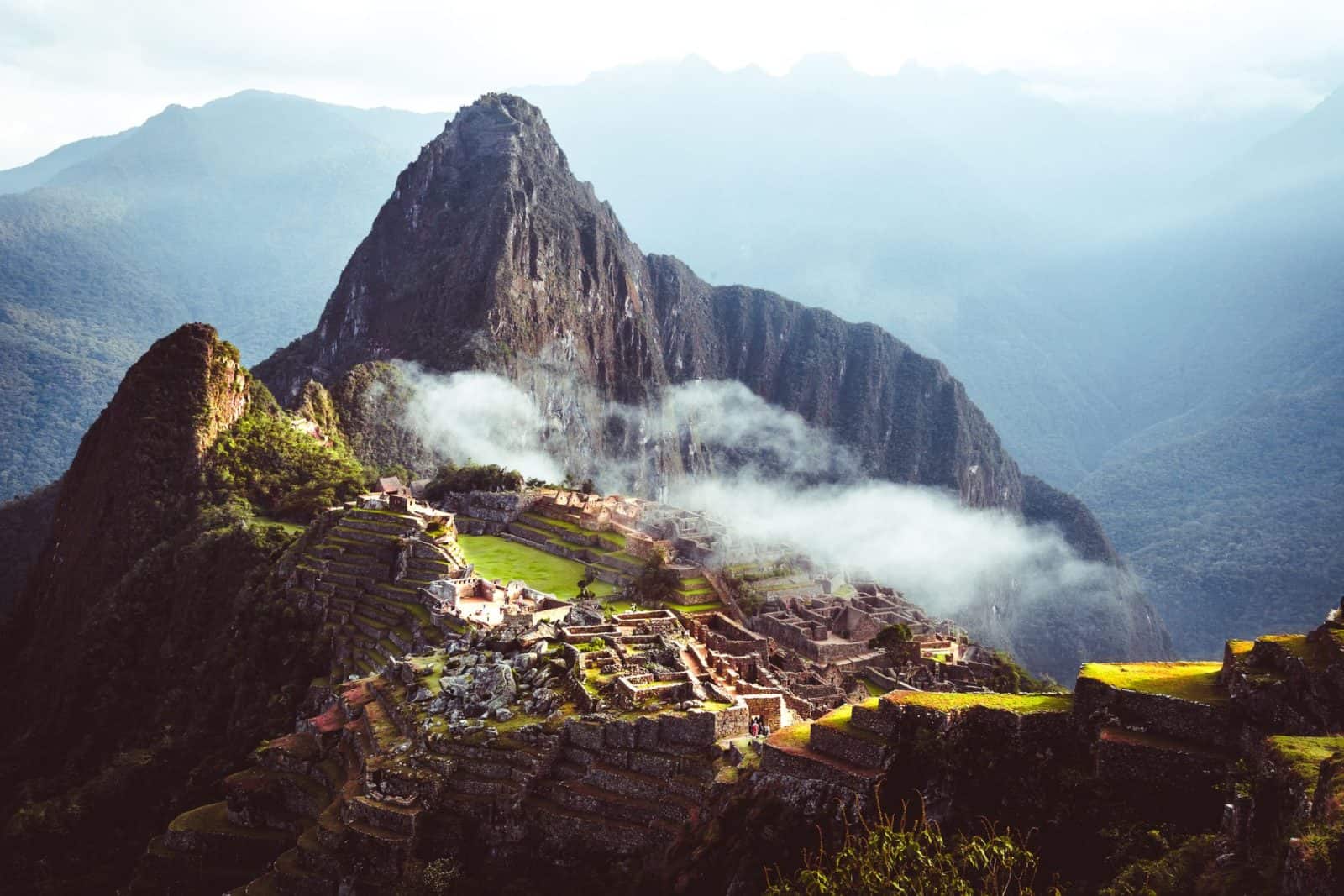
There is little doubt that the best hike in the Sacred Valley of Peru is the official Inca Trail to Machu Picchu. While all trails in the region guarantee gorgeous views and incredible experiences, only the official Inca Trail provides direct access to Machu Picchu via the Inti Punku – the Sun Gate. If you care to see the sunrise over the site, definitely opt for this hike over any other which, contrary to this one, ends up in Aguas Calientes (also known as Machu Picchu Pueblo) from where you will have to take the bus to the entrance of the site, which opens at 6:00 am – depending on the season, well after sunrise.
The official Inca Trail to Machu Picchu lasts 4 days and 3 nights, for a total of around 80 km. It’s a medium to high difficulty level hike, not so much for the terrain – the trail is easy to follow, and mostly paved – but for the altitude (the lowest point is actually Machu Picchu, which is at 2300 meters above sea level). Day one and three are the longest in terms of distance, but the toughest one is day two, which is a steady uphill walk during which you reach a pass that is over 4,000 meters above sea level.
The starting point is a bit outside Ollantaytambo, one of the nicest villages of the Sacred Valley which can be reached via bus or even train from Cusco. You can’t hike the Inca Trail independently. If you are keen to do it, you have to book months in advance – keep in mind that permits for the Inca Trail are sold out in a matter of minutes when the government puts them on sale in January.
Guided hikes usually include guides, porters (who however don’t carry more than 7 kg of weight per person), tents and meals. You can bring your own sleeping bag or rent one. You will need adequate equipment such as hiking boots and rain gear as it rains during the hike no matter the season. The highlight of the trail is seeing the sunrise over Machu Picchu on the final day.
>> Hike duration: 4 days | Hike distance: 80 km | Difficulty: Moderate
>> Altitude: 2900 – 4000 m
>> Cost: €500-700 | Location: 100 km from Cusco
>> Take a tour: Classic 4-day Inca trek – Machu Picchu Entrance ticket

2. Ausangate Trek
The Ausangate trek is one of the less-walked routes in the Sacred Valley, Cusco. The total distance of the trek is 70km, it takes 4-5 days to complete it. The route goes through very remote areas in the high Andes and offers some of the most spectacular scenery in Peru. It’s a circuit route that starts and finishes in Tinqui (Tinki), about 100 km from Cusco. It’s easy to get there by public bus from Terminal Paradero Levitaca in Cusco, the journey takes 2h30min. and costs $3.
The Ausangate Trek is a high-altitude hike. The whole route is above 4,000m with two passes over 5,000m. A good acclimatization is very important here. It’s recommended to complete one of the other hiking routes in order to acclimatize properly before attempting this trek.
Hikers must carry camping gear and food supplies most of the route goes through remote places with no villages and very few people living there. There are some designated campsites, camping there costs $1,5 per tent. The trek can be done with a guide/a tour or independently – due to the high altitude and remoteness of the route for inexperienced hikers, it’s recommended to hire a guide.
The scenery on the trek is truly amazing; turquoise lakes, hanging glaciers, emerald pasture fields with hundreds of alpacas, colourful mountains, etc. Some of the highlights of Ausangate are Puca Cocha Lake, Ausangate Lake, Ausangate Glacier, Palomani Pass. It’s possible to extend the trek and do a detour on the second day to see the famous Rainbow Mountain, it’ll add one extra day to the trek.
>> Hike duration: 4-5 days | Hike distance: 70 km | Difficulty: hard (altitude)
>> Altitude: 4200 – 5000 m
>> Cost: $40-50 (entrance & tour included) | Location: 100 km from Cusco
>> Take a tour: Full Day Ausangate Trek
3. Salkantay Trek
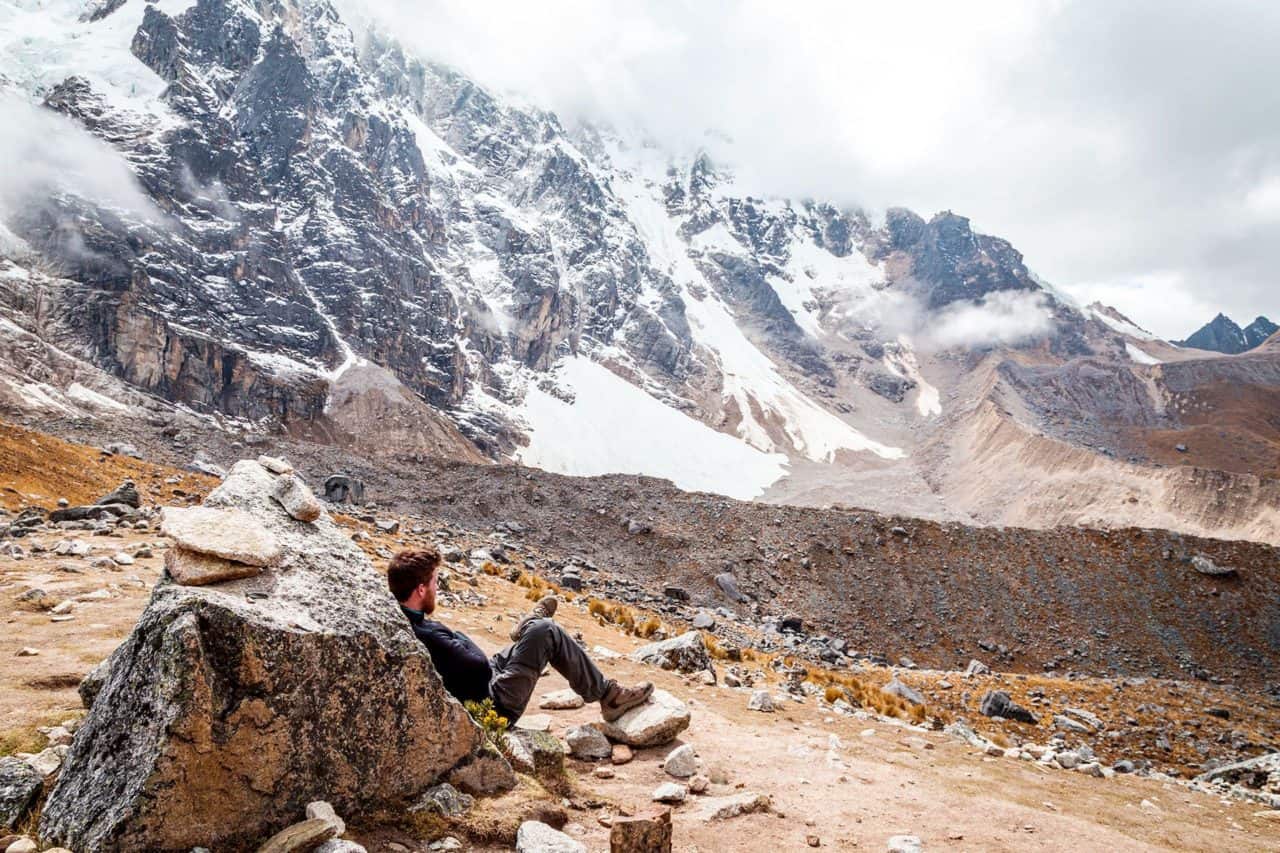
The Salkantay Trek is one of the most affordable and popular outdoor activities near Cusco. This trail that crosses 5 microclimates goes from the high snowy peaks and gorgeous glacier lakes to the town of Agua Calientes via lush forests and even coffee fields.
The Salkantay trek starts along an ancient Inca route that once led to the Salkantay, a sacred mountain in Peru. It then follows tracks and roads to the village of Santa Tereza from where you can either hike or take a shuttle to Hidroelectrico and ultimately reach Aguas Calientes after a 2-hour walk along train tracks.
The Salkantay trek, highly advertised as an alternative to the “official Inca trail” feels a lot less genuine and traditional than the famous Inca Trail. However, if you can’t organise or book your trip long in advance to get a permit for the Inca Trail or are looking for an affordable way to visit Machu Picchu, it is indeed the best trek you can choose. Tours can be booked directly from Cusco, up to a day ahead – Machu Picchu entrance, accommodation, food and porters included.
Although, for those who don’t want to join a tour, note you can organise your hike on your own and stay in hospedaje along the way. Though it will be hardly cheaper and you will still be surrounded by long lines of walkers.
>> Hike duration: 4-5 days | Hike distance: 70 km | Difficulty: Moderate (altitude)
>> Altitude: 3900 -> 4650 -> 1800 m
>> Cost: $150-$450 (all-included) | Location: 120 km from Cusco
>> Take a tour: 5-day guided tour
4. Jungle Trek
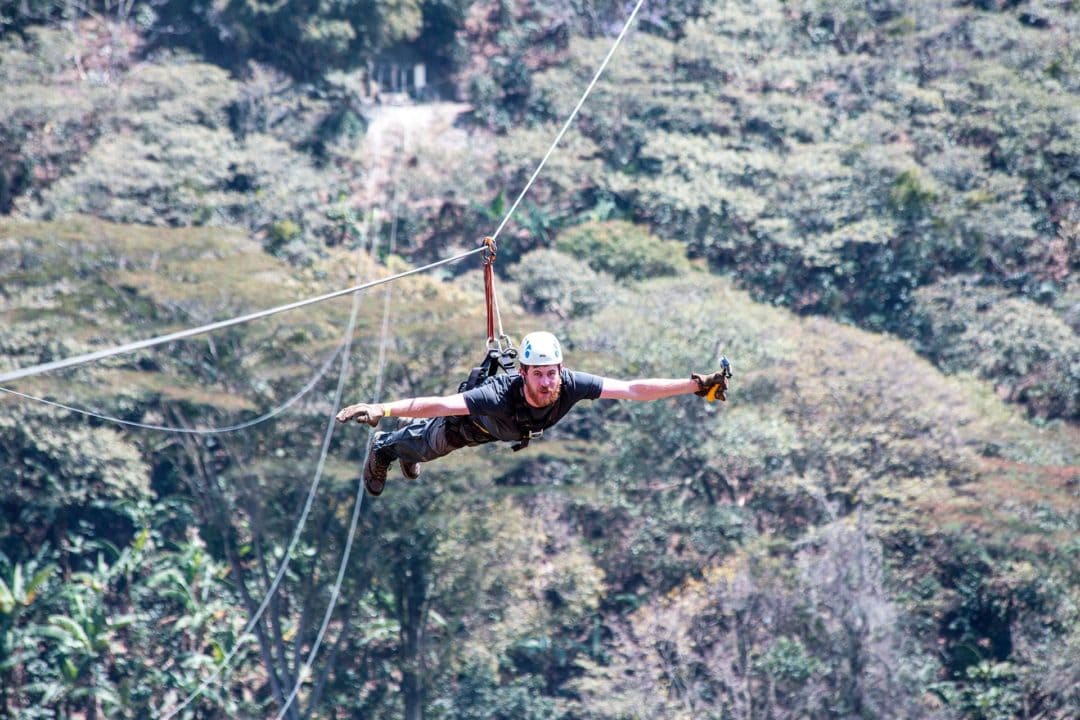
If you are looking for a shot of adrenaline during your trip to Peru, you might want to consider the Jungle Trek to Machu Picchu! Filled with extra activities, this 4-day trek that follows the Salkantay trek is an excellent way to get to Aguas Calientes from Cusco without walking it all or breaking the wallet.
During this trip, your guide will take you biking and rafting on day one! On day 2 you will hike about 20km on an easy trail. And on day 3 you will go zip-lining and if you want swimming at local thermal baths before reaching Hidroelectrica and finishing your trek with a 2-hour walk along the train tracks to Aguas Calientes where you will spend the night before walking or taking the shuttle bus to Machu Pichu on day 4.
To organise all these activities it is best to book in Cusco a couple of days before. It is easy to find a company offering this circuit. Just triple-check what is included in the price and make them write down all the activities, accommodations and food that you should be getting. If an activity or service (such as transportation) isn’t included they should state so. Note that like on the Salkantay trek, the hot springs will more than likely not be included so bring extra cash (about 20 more soles) if you plan on joining.
>> Hike duration: 4 days | Hike distance: 60 km | Difficulty: Easy but sporty
>> Altitude: 3900 -> 4650 -> 1800 m
>> Cost: Guided tour from $300 to $500 | Location: 100 km from Cusco
>> Take a tour: Multiday adventure to Machu Picchu

5. Choquequirao Trek
The Choquequirao trek is one of the best off-the-beaten-path trekking routes in the Sacred Valley. It’s a return trail to Choquequirao ruins that are known as the “Little Sister of Machu Picchu”. The total distance of the trek from Cachora to the ruins and back is 60km, it takes 3-4 days to complete the route.
The trek starts in the small town of Cachora, about 160 km from Cusco. It’s possible to get there by bus: first, take a bus from Terminal Terrestre in Cusco to Abancay and then a minibus to Cachora – it takes about 3 hours and costs $15 per person.
Compared to the other trek in the Sacred Valley, Choquequirao is not a high-altitude hike, the maximum elevation on the route is 3,000m which is lower than Cusco, therefore, this trek can be done as an acclimatization hike. It doesn’t mean that the route is very easy – there is one steep and very long descent and one exhausting ascend (about 1,500m) that luckily can be completed over two days.
Choquequirao trek can be done independently, with a tour or with a guide/muleteer. The only fee trekkers pay on the route is the entrance to the ruins which is $18. Camping on the route costs $1,5 per person. The Choquequirao ruins are the main highlight of the trek. Unlike the famous Machu Picchu these ruins don’t get thousands of visitors a day due to the difficult access (walking is the only way of getting here) there is a maximum of 50 people a day here.
It’s possible to walk from Choquequirao ruins to Aguas Calientes and visit Machu Picchu. This route is longer 119 km and it takes 8-9 days to complete.
>> Hike duration: 3-4 days | Hike distance: 60 km | Difficulty: Moderate to difficult
>> Altitude: 3000 -> 1800 -> 2900 m
>> Cost: Self-guided from $60-$150 | Location: 160 km from Cusco
>> Take a tour: 5-day trek

6. Lares Trek
Hiking the Lares trek means discovering an age-old way of life and meeting the shy but curious Quechua people who still herd alpacas and farm the land using traditional methods. Most people find the Lares trek a more human experience as most tours organise homestay with local families along the trail. it is an excellent opportunity to learn about the Quechua culture and see more of the typical dress they wear as their daily attire.
There are two main ways to hike the Lares Trek. The Classic Lares route starts in Haran, a village found in the Sacred Valley near Urubamba. It can easily be reached by bus along the line that links Pisaq to Urubamba. Ask the driver to drop you off in Haran. The other route to hike the Lares trek starts at Patacancha an indigenous community found on the hillside of Ollantaytambo. Combis and supply trucks drive to the community on most days – to grab a ride hang out in the plaza of Ollantaytambo and ask for Patacancha.
The Lares hike isn’t too hard but the altitude is always a risk in the Andes. Although, it is a great hike to prepare and acclimatise as it is not as high as the others in the region. In terms of organisation, it is possible to hike the Lares trek independently! You will find a lot of locals along the main paths who will be able to point you in the right direction, however, be aware there aren’t many hostels along the way so you will need to talk to ask the local communities if you can stay with them. If you don’t speak Spanish, it might be better to hire a guide or take a tour.
Note that the Lares trek doesn’t lead to Machu Picchu or Aguas Calientes but to Ollantaytambo. If you want to visit Machu Picchu after hiking the Lares Trek, you will have to take a train or take a bus to Hidroelectrica and hike to Aguas Calientes.
by Ariana – World of Travels with Kids ( Photo | courtesy of Apus Peru)
>> Hike duration: from 2 to 5 days | Hike distance: 30 to 40 km | Difficulty: Moderate
>> Altitude: 3200 -> 4200 -> 2800 m
>> Cost: Self-guided $150 to $200 – $600 with a tour | Location: 60 km from Cusco
>> Take a tour: 4-day Lares Trek and Machu Picchu with train and entrance ticket

7. Moonstone Trek
Also known as the Cachiccata trail, the Moonstones Trek isn’t a well-known trail which means a small number of tourists venture this way each year compared to the other trails in the region. This is, however, a beautiful hike along old Inca trails that cross gorgeous valleys, small mountain villages, a few Incan ruins and aqueducts as well as a quarry and even Incan tombs!!
The hike goes mostly downhill after the 2nd day but remains challenging at first as it reaches the high altitude of 4600 meters above sea level. No permit is required but most hikers join a guided tour for this hike as there are no infrastructures along the way, except a few spots to camp, and the path is sometimes hard to find.
All in all, it is a really good hike to get away from the crowds, and still visit remote Incan ruins…
One of the great plus of this hike is that at the end of the trail, you will arrive in Ollantaytambo from where you can take the train to Aguas Calientes and visit Machu Picchu on day 5 or head back to Cusco fairly easily.
If you go on your own, bring camping gear and food and get to the start of the trail, though, you will need to take a bus to Socma and head towards Chillipahua on day 1. Then to Inti Punku, Choquetacarpo, Cachiccata and finish in Ollantaytambo.
>> Hike duration: 4 days | Hike distance: 40 km | Difficulty: Moderate
>> Altitude: 3200 -> 4600 -> 2800
>> Cost: $600 with a tour | Location: 50 km from Cusco
1-to-2 day hikes near Cusco

8. Maras to Moray
Only a 1-hour bus drive from Cusco, the Maras salt mines are one of the most trendy places to visit at the moment in Peru. Because of this increasing tourism, the cooperative in charge closed the track within the ponds in June 2019, Although it is still possible to see these colourful salt ponds from a viewpoint. Not a big fan of pack buses? One cool thing off-the-beaten path to do is to hike through the Maras mines to Moray, an Incan agricultural site, located about 12 km away.
This hike is not really known and goes through local farmers’ lands. On top of the salt mines and the site of Moray, you’ll have the chance to see incredible landscapes of the Peruvian backcountry with stunning views over the Andean peaks.
The hike isn’t too hard as the altitude remains manageable and the trail is quite flat. though, you’ll need to start early if you want to do this hike in a day and take a taxi back from Moray to Cusco. You can also, complete this hike in 2 or 3 days, by combining it with a few extra visits to the archaeological sites of Ollantaytambo and Pisac.
There aren’t many hiking tours offering this hike but in this article, you’ll find all you need to hike the Sacred Valley on your own. Though, if you prefer a bit more adrenaline, you can also join a Quad tour!
>> Hike duration: 5 hours | Hike distance: 12 km | Difficulty: Medium
>> Altitude: 3300 m
>> Cost: 50 soles | Location: 60 km from Cusco
>> Take a tour: Maras & Moray by Quad Bike from Cusco

9. Laguna Humantay
The Humantay Lake is found at the bottom of the Humantay mountain situated 3 hours from Cusco. While most visitors come to the lake during the first day of their Salkantay trek, it is also possible to take a day tour to discover the backcountry and admire this gorgeous clear blue glacier lake.
This is certainly one of the most beautiful mountain lakes you will have the chance to see in South America, so make sure to not miss it! The best is to join an organised tour from Cusco as the local transportation isn’t much reliable for just a day in and out. Most tours to Humantay Lake will start around 4 am as it takes about a 3-hour drive and 1.5-hour hike to get there.
The Humantay Lake hike is not very challenging despite a steep part at the end, but the altitude (4,200 masl) can be tiring for those who aren’t correctly acclimatized or not used to this type of fitness exercise. The tours usually make you start in Mollepata to see Incan water roads and enjoy the landscape longer!
>> Hike duration: 1.5 hours one way | Hike distance: 2 km | Difficulty: Medium
>> Altitude: 4260 m
>> Cost: €35 | Location: 120 km from Cusco
>> Take a tour: All-inclusive day tour
10. Pisac Ruins
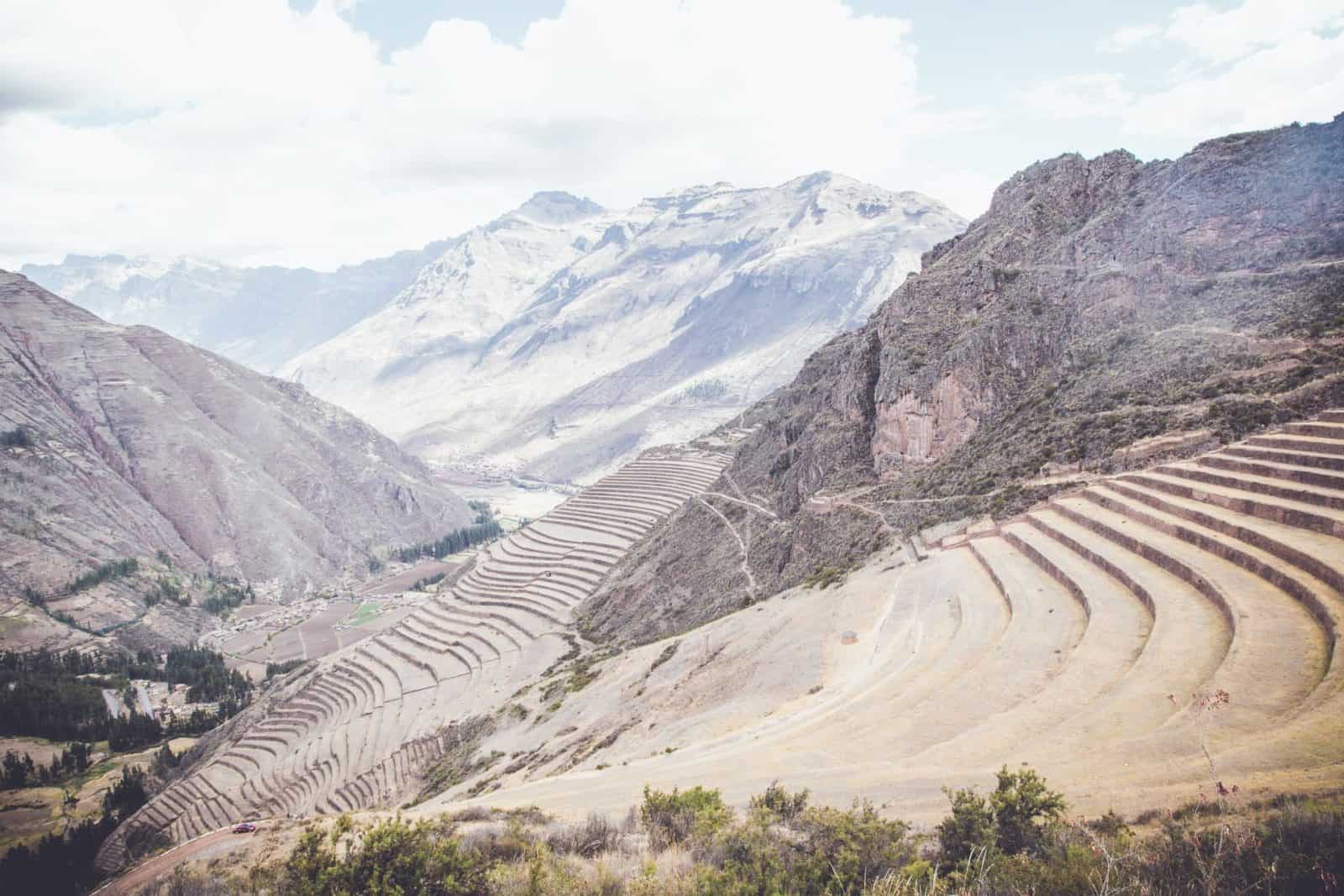
The Pisac ruins are one of the best-preserved Incan citadels near Cusco. During the Incan Empire, Pisac was a large military complex built on the side of the mountain and used as a checkpoint along the main route through the Sacred Valley. Only a 1-hour bus from Cusco, the archaeological site is really easy to visit for a day. Though to make it a little bit more challenging, it is recommended to hike all the way up!
Although, this hike isn’t for everyone. The walk is short but steep and quite challenging, so take your time and a lot of water with you! The trail starts at the back end of the Pisac market. You’ll be asked to show your Boleto Turistico or to buy one upon entering the site.
For those who really don’t feel like going up, there are a lot of taxis that can drive you there, wait for you or let you hike back down on your own.
>> Hike duration: 2 hours | Hike distance: 2 km | Difficulty: hard (altitude)
>> Altitude: 3000 -> 3450 m
>> Cost: Boleto Turistico – 40-70 soles | Location: 35 km from Cusco
>> Take a tour: Full-Day Tour of The Sacred Valley

11. Rainbow Mountain
Rainbow Mountain is one of the best and most unique day hikes you can do from Cusco. This area has only become open to tourists in recent years but has become very popular in that time thanks to the mountain’s unusual geological features. Day tours can be booked from any tour office in Cusco. The bus will pick you up bright and early around 5 am for a 4-hour bus ride to the trailhead. Breakfast is included and served at a local restaurant before the hike.
Despite its relatively short length of 11 kilometres, many travellers struggle with the hike’s altitude. The trail starts at just under 5,000m and goes up to 5,200m. Starting at this kind of elevation will make you feel easily out of breath, so it’s important to take your time going up and drink plenty of water. It takes about two hours to get to the top.
Despite its physically demanding nature, the hike’s breathtaking views will keep anyone motivated to the summit. The trail passes along snow-capped mountains, fields of llamas, and colourful valleys. The Rainbow Mountain itself is not visible until the very end of the hike but upon reaching it, you will be rewarded by the vivid explosion of colours.
Most tour companies arrive at the trailhead around 9 am. This causes heavy congestion on the trail. If you can, renting your own car will help you to skip the crowds by arriving earlier or later in the day. Crowded or not, Rainbow Mountain is one of the best adventures to have in Peru.
>> Hike duration: 2 hours | Hike distance: 11 km | Difficulty: hard (altitude)
>> Altitude: 4600 -> 5200 m
>> Cost: $40-50 (entrance & tour included) | Location: 80 km from Cusco
>> Take a tour: Cusco to Rainbow Mountain

12. Tipon Ruins
Tipon is one of the less-visited Inca ruins and thanks to its location high up in the mountains, it offers amazing views of the Andean peaks. The 12 terraces found on the site were constructed for agricultural purposes and the water channels running throughout the site are still working.
If you go independently and have time then follow the water channels up to the mountain until they have been stopped being maintained. From there, you will have a great view of the agricultural fields of locals living in the area. The landscapes over the Tipon ruins and the valley are stunning and are well worth a visit.
Tipon is located about 30 minutes from Cusco and is very easy to access on your own, though there is also the option of seeing it as part of a tour. You can get a collectivo from Cusco on Calle Belén or Callé de la Cultura. Once you get off the bus you can either walk to the ruins which are located 2 km uphill at an altitude of 3,560m or take a taxi from the town. The hike takes between 45 mins to an hour to get to the entrance.
To visit the main ruins you need around 1 hour and a half but you can easily spend longer there if you want to hike up the mountain. This trip can be done in half a day or as a full-day trip. You’ll need to have the Cusco pass (Boleto Turistico) to enter the site.
>> Hike duration: 20 min | Hike distance: 2 km | Difficulty: Easy
>> Altitude: 3100 – 3500 m
>> Opening hours: every day from 7 am to 6 pm | Cost: Full tourist ticket (130 soles) or Partial ticket Circuit 2 (70 soles) + transport (4 soles return) | Location: 20km from Cusco
>> Take a tour from Cusco to the Tipon ruins, Pikillaqta and the Temple of Andahuaylillas: Full day
safety for solo hikers
Cusco and its surrounding area are quite safe during the day and almost inexistent are the incidents along hiking routes. There are some stories about tourists harassed or mugged on walks pretty much all over South America and the rest of the world…
ou have more chance to get attacked by a farm dog than getting mugged. Regarding this, one of the most efficient ways to scare a dog away is to immediately bend to grab a stone. By just doing so, any dogs will stay away from you, it is a universal dog language!!
Some sites and trails are less frequented than others, but even on off-the-beaten paths, you will more than likely always see another walker at one point or another! If you travel alone and are worried about solo hiking, you can look for fellow travellers on Facebook groups or ask around in your hostel. Trust your instincts, only take the cash you need, avoid hiking with your expensive DSLR around the neck and leave your expensive belongings and credit cards in a safe place in Cusco.
HIGH ALTITUDE HIKING packing list
The main issue when we hiked around Cusco was the cold and sharp gusts of wind. Here are the gears we would recommend you to look into as you prepare for your trip to Peru:
- Hat and gloves will make a big difference. A buff is a good idea too to cover your ear and nake.
- Always hike with Hiking shoes or at least good sports shoes. Do not hike with soft-sleeved shoes.
- Windproof/waterproof jacket. If possible one that does both. It is always good to invest in a warm, light, and functional jacket when travelling.
- Sunglasses, lip balm and sun cream. Get your skin and your eyes protected against the violent UVs. The atmosphere is thin at high altitudes, the UV rays are strong and there is no moisture.
- Hiking poles will help with balance and will save your energy when going up and your knees when going down. If there was one thing to buy, that would be it!
- Coca leaves! You can buy a bag at the market in Cusco. You may not like it at first but from my experience, it gets better with time and helps with altitude sickness. It’s good for the stomach too. I tend to have stomach pain and dizziness at altitude – Chewing coca leaves really helped during my 4 months in Peru and Bolivia.
- Get a small backpack. Carrying stuff in plastic bags or handbags isn’t fashionable when you hike… Photographer, I recommend the light Lowepro Photo Sport backpack, for its very useful and not noticeable side pocket for DSLR.

ARE YOU ON PINTEREST?
What about saving this post to your Pinterest board? Click on the photo to save this blog post for later.
We are also on the platform and we love pinning great travel tips. Follow Tales From The Lens’ boards to see our latest pins.
Don’t be shy, come say hi!

About the Author
Jen is the Funder, Author & Photographer behind Talesfromthelens.comJen has lived for the past 15 years across Oceania and Ireland while also travelling in Latin America, North America, and Europe. She has visited more than 65 countries and set foot on every continent in the world! She is a coffee nerd, passionate about photography, wildlife, and outdoor activities.
For more info, check out the About page.
I did the official Inca Trail Hike a few years ago. Having read this, I wish I had spent longer in Cusco and tried some of these other hikes as well. I’d love to see Rainbow Mountain. I spent a lot of time chewing coca leaves in Cusco, I think it helped a bit with the altitude. I’d recommend good hiking boots too, mine completely collapsed after day one and walked the trail in flip flops – certainly slowed me down a bit lol.
Yes! Coca leaf 🙂 I got used to drinking Coca tea at least twice a day and chewing the leaf on hikes. You kind of get addicted to it… but they are so good for altitude sickness and stomach issues. I wish I could have them in Europe :/
Hiking boots or hiking shoes are a must. There is nothing more important on hikes (except hiking poles) to remain safe and dry. I don’t know how you managed the Inca trail in flip flop. What an accomplishment sarah!
Great article which brought back our memories of trekking the Inca Trail. The altitude was definitely an issue for some of our group. Since we did the trek there seems to be more options available if you dont’ want to do or do not have the time to do the Inca Trail. Thanks for including all the information about the other treks.
Peru is high on my list, but still, have other destinations with priority. It looks like I should plan it around Cusco because I love trails you describe in the post. Humantay Lake is a must! And I dream of Peru Andean peaks! Those people on the hike from Maras to Moray look very original too. Machu Pichu is something that scares me off Peru because of its popularity and crowd, so I probably going to miss it. There are so many other hikes in your post – for example, I like Ausangate trek more! I have never heard of Pisac Ruins before and on the photo, it looks fantastic! Thanks for this detailed guide – for sure will use it to plan my trip to Peru!
We were so sad when we had to cancel our trip to Cusco and Machu Pichu. Hopefully we will get it scheduled again. But I am probably not doing the 4 day Inca Trail. It was interesting to look at other hikes we may want to do. We would be looking for the less high fitness routes. I love that you can visit Humatay Lake as a day trip tour. And the Pisac ruins might be doable with a taxi ride back. But I sure wish I was fit enough to do the Ausangate trek for the amazing views.
Peru is so high on my bucket list, and reading this makes me want to visit even more. Cusco looks spectacular, especially from these places you’ve covered on the hike. I think I’d like to try the jungle trek and the Tipon Ruins just because I’m a complete newbie hiker.
Great list!! I had no idea about most of the places that you have mentioned. Peru has always been in my radar and I would be thrilled to explore it.
Thanks Daniel! I can only recommend. Feel free to contact me if you have any questions 🙂 x
So many great hikes here! Thanks for sharing. I have Peru really high on my travel list. The Maras salt mines
look so beautiful, especially for photos. I love that it’s somewhat off the beaten path and goes through local farmers lands. Sounds right up my alley!
What an AMAZING LIST. Peru is just such a majestic place! To explore Peru by a hike- solo or even in a group is a life long dream of mine. Thank you for showing this in such great detail. Will pin this for the future.
Thank you, Jenny for this fantastic information. I am planning a trip to Cusco in February and plan to spend 3-4 days in the Sacred Valley. I understand that this is the rainy season and the Inca trail is closed. Would you still recommend Machu Picchu?
Most of your hikes span multiple days. Do you have any suggestions for day hikes? We are in our 60’s and not up for long backpacks but we live at high altitudes and are used to hiking 9-12K in elevation. Any ideas are greatly appreciated.
Hello Randee, Thanks!!! I will always recommend Machu Picchu. It’s such an incredible place to visit and since you will be next door, why not visiting? Also, if you are already in the sacred valley and the train from Cusco isn’t running, you can take still take it from Ollantaytambo. I would suggest taking care of your MP entrance and train tickets as soon as you arrive in Cusco and not book in advance so you will have the latest information from the tourism office.
Regarding day hikes, I can suggest you go to Moray and walk to Maras village + Maras salt ponds – it should take 3 to 4 hours downhill. You can also hike from Chinchero to Urquillos, Walk around the Urcos lake or even visit Pikillacta and Tipon ruins which both require a bit of walking. There is also a nice trail from Cusco up to the Christo Blanco and Sacsayhuamán ruins. I have just published an article about the things to do in the Sacred Valley – It might help you 🙂 https://talesfromthelens.com/2019/11/23/ultimate-travel-guide-sacred-valley-things-to-do-cusco-peru/
Let me know how it goes and happy travels!
Jenny
What a complete guide. Thank you so much!! I am going to Peru next month and I really wanted to hike but not just the famous trails. This article is very complete and gave a lot of ideas for when I will be in Cusco. Cheers
Woohoo thank you for this!! Such a helpful post!
We just came back from Cusco and used this guide to find all the great hikes around the city. Thank you, it really helped!
These photographs are all absolutely gorgeous! I have always wanted to go to Cusco, and this is just making me want to go even more!
thank you soooo much Amy for your comment. I hope you can visit soon
Peru is on my bucket list and this is such a great inspiration! Some of those sights look amazing!