
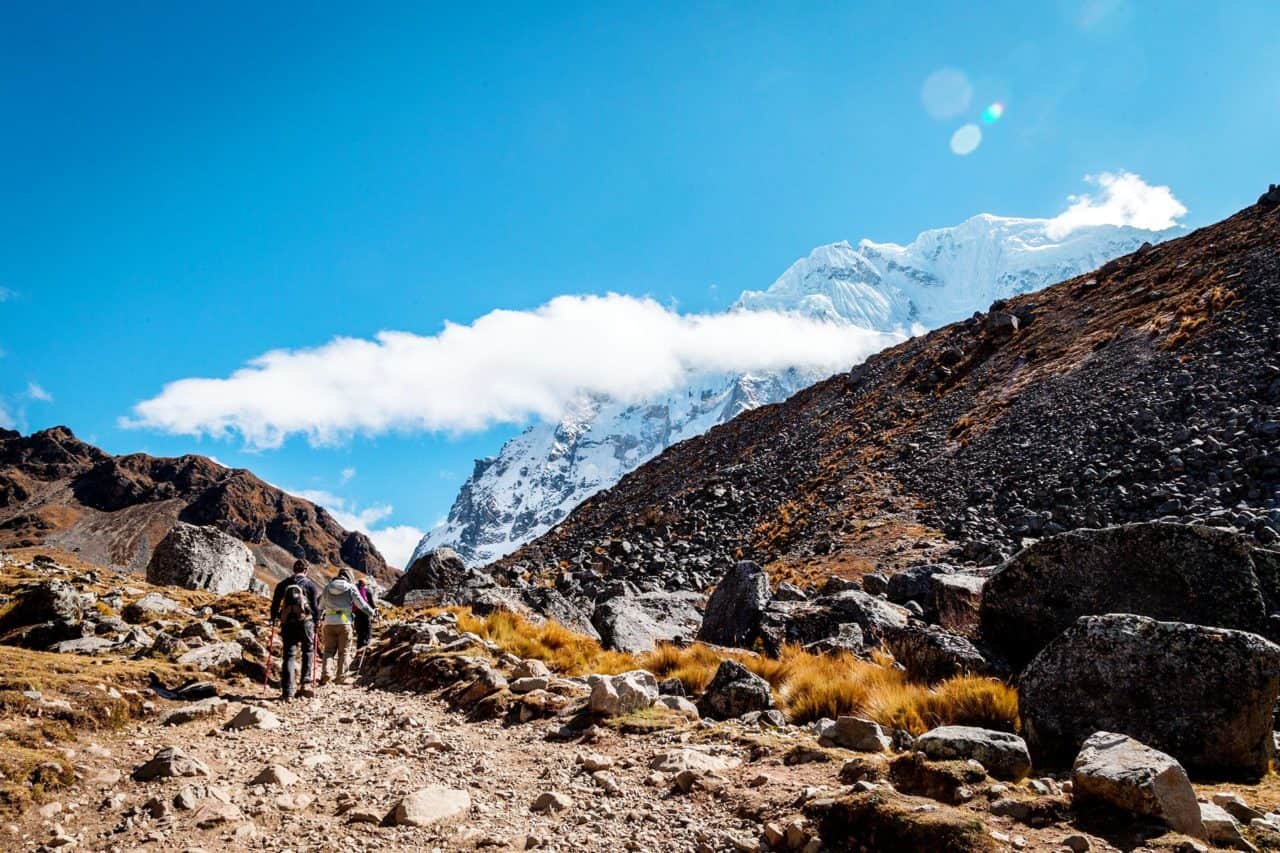
5-day Salkantay trek to Machu Picchu
The Salkantay trek is one of the few trails in the Cusco region which leads to Machu Picchu’s nearby town, Aguas Calientes. It is considered as an alternative to the notorious “Inca Trail” which is often fully booked out at least 6 months in advance.
With a lower price and the possibility to book up to two days before directly from Cusco, the 5-day Salkantay trek to Machu Picchu is an attractive hike to those on a budget or not able to plan 6 months in advance. No surprise then that its popularity is growing.
In this article, we will cover all you need to know before booking your Salkanty Trek and all the different options available!
Why you should hike the Salkantay trek?
It’s cheaper than the Inca Trail and no need to book ahead
The Salkantay trek doesn’t require a permit like the Inca Trail, therefore it is possible to book this alternative hiking trip to Machu Picchu, anytime, and directly in Cusco or online if you prefer.
The price range varies from US$150 to US$500 depending on the quality of the services you’ll book. Though, a 5-day trek with Machu Picchu entrance, for $30 a day, all included, is a good deal when everything is so pricey in the area of Cusco compared to the rest of the country.
Stop at the gorgeous Humantay Lake
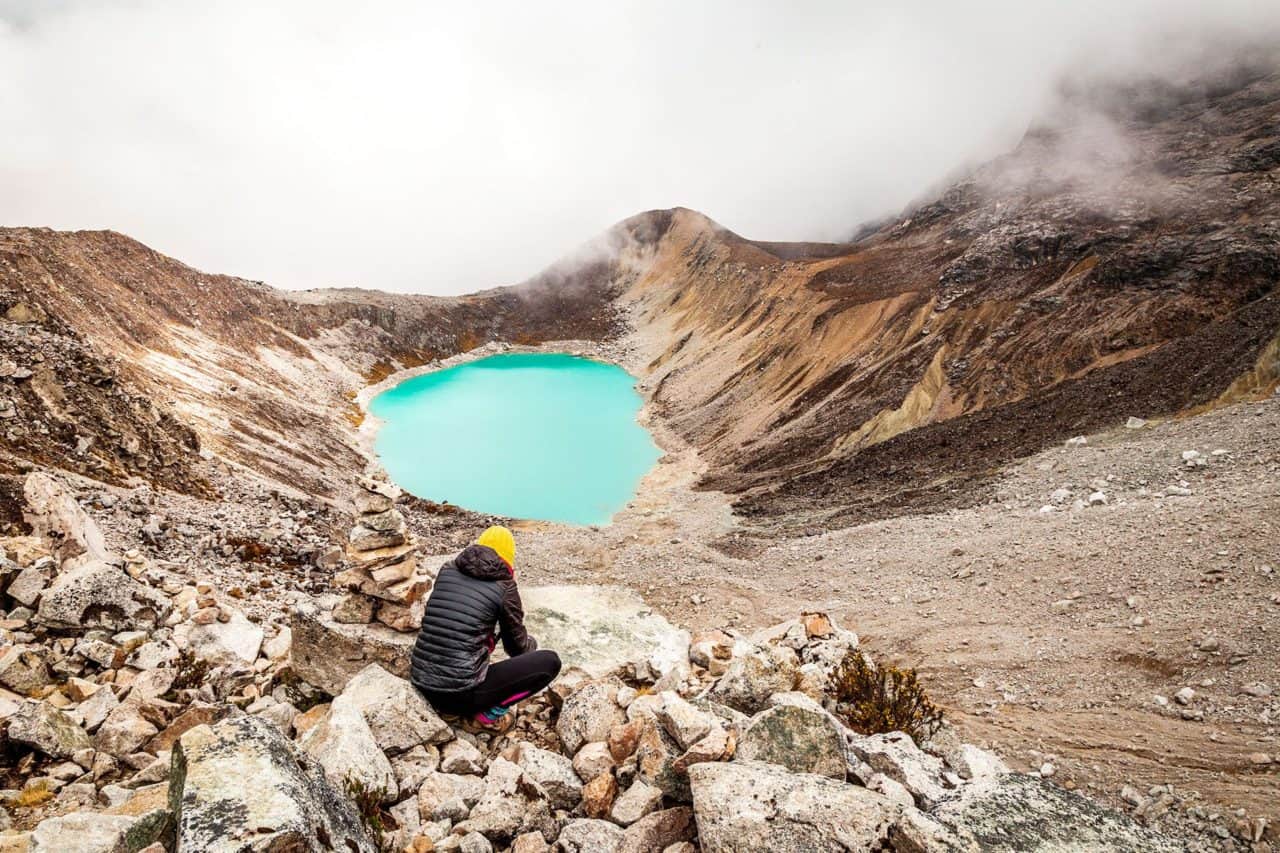
The start of the Salkantay trek brings you past the Humantay Lake, a large clear blue lake, consisting of many beautiful turquoise shades. There are many day tours from Cusco to visit the lake for an afternoon as it is very popular. On the Salkantay trek, you get to spend time there and therefore save time and money!
You get to hike up to 4,630 m
The Salkantay trek isn’t very challenging, but it is slightly less accessible than the Inca Trail because of the altitude. The hike starts at around 3,800 m on day one and after a night at 4,000 m, it leads to the Salkantay Pass, the highest elevation of the hike at 4,630 m. The hike to the pass is a steady zigzagging trail that will require a slow pace to not feel breathless.
Learn about Inca rituals
Along the Humantay Laguna this time (not the Humantay Lake), which is a marvellous turquoise pond after the Salkantay Pass, you will find many stone towers. These are not the usual “I was here” reminders left by tourists, instead, they are what the local people call “Apacheta”.
In this area, most guides will introduce you to a ritual in which they place 3 coca leaves representing the Andean trilogy, underneath a rock. This offering is part of the prayers to Pachamama, Mother Earth, for protection during the hike.
Tip: Add a cookie to your offering, we heard Pachamama likes them too!

How to Organise your 5-day hike?
Self-guided
A great thing about the Salkantay trek is that you can do it self-guided. It won’t especially be cheaper than with a tour, but DIY is always better for the freedom of hiking at your own rhythm and stopping wherever and whenever you want.
In terms of sleeping options, there are many hospedajes and campsites along the trail where you can book a place for the night.
Most of these accommodations offer breakfast and dinner (extra fee for a packed lunch) so you don’t even have to carry any food except for snacks. You will, however, have to take care of booking your Machu Picchu entrance ticket, your night in Aguas Calientes and your transport to the start of the hike.
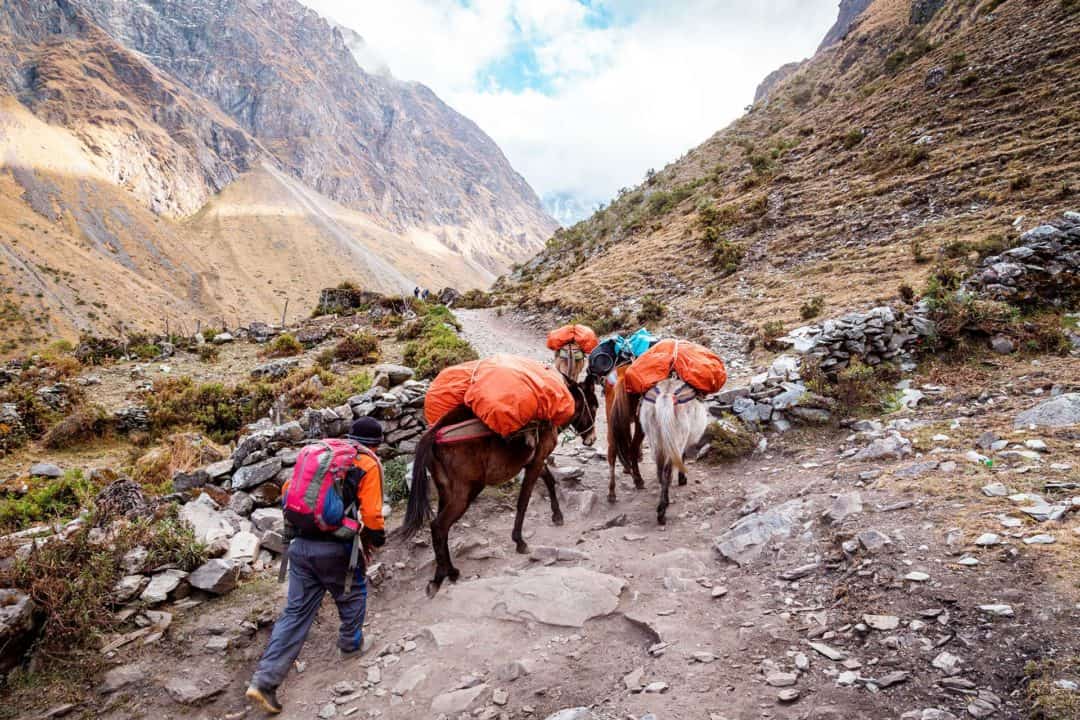
Tip: If you don’t want to carry any of your bag and camping equipment, you can rent a horse like the guided tours do, directly at the start or along the trail.
Book a tour
In Cusco, go around a few agencies and see for yourself what they offer and what price they ask for. You can bargain a better deal if you wish to include the ziplining and a day tour at Rainbow Mountain.
Booking directly in Cusco is mostly recommended for those who are staying in Cusco longer than a day, or have been backpacking in South America for a while. If you don’t have the time or feel stressed about not getting a spot, by all means, book online. It will be slightly more expensive but peace of mind comes with a price.
This Salkantay Trek 5-Day Hike to Machu Picchu is pretty much what we have done and detailed in this article. Though it is a lot more expensive than what I paid for in Cusco (but it includes the train back to Ollantytambo…). It also includes camping equipment, a night in Aguas Calientes in a Hotel, transportation from Cusco by Bus and Machu Picchu Entrance.
Here are more options with upgraded accommodation or different lengths:
🥾 Our Hiking tour selection
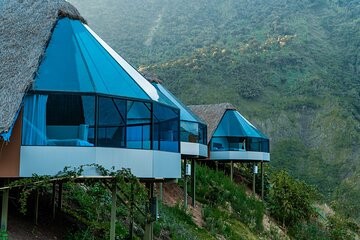
3 nights in Domes camp (Sky Camp, Mountain Sky View, Jungle Domes) + Train
⭐⭐⭐⭐⭐ +230 reviews

Classic Salkantay 4-days / 3-nights
Classic Salkantay hike but 1 day shorter with return on Panoramic Exclusive train
⭐⭐⭐⭐⭐ +200 reviews

5-day Salkantay trek to Machupicchu
The cheapest online tour with good reviews I found
⭐⭐⭐⭐⭐ +20 reviews
Find more hiking tours >>> VIATOR / GET YOUR GUIDE
The Saltankay Trek Elevation & Climate
With an elevation oscillating between 3,800 m and 1,500 m via the Salkantay pass at 4,630 m, the trail crosses 5 different climate zones. As you start the hike in the shadow of the snow-capped Andean peaks, you then embark on a journey that will lead you along sweeping plains before entering a cloud forest and ultimately the sub-tropical jungle below Machu Picchu.
The best part of all this is that you will have plenty of time to enjoy the change of scenery and appreciate the different ecosystems that go with it.
5-day Salkantay trek to Machu Picchu – Breakdown
Depending on the tour company that you choose the day-by-day breakdown will be different. For example, some start in Mollepata, and others directly from Soraypampa. In the below breakdown, I am going to share the itinerary that my group followed. Though, I don’t believe there is a better itinerary than another.
Day 1: Cusco to Salkantaypampa
Our Salkantay adventure began in Cusco, where we departed very early in the morning and headed towards Mollepata to start the trek. The first part, from Mollepata to Soraypampa, which most tours skip, was actually a great way to start the hike. It follows an ancient Inca water system, something I had not seen anywhere else in Peru.
Once in Soraypampa, the guide gave us 1 hour to hike to Humantay Lake and come back. Make sure to go there… It is a short detour from the main trail, but it is an absolute must-see while in the Cusco region.
Tip: Once at the lake, there is a trail leading up to a ridge. Climb it to enjoy an incredible viewpoint of the lake and the Humantay mountain. Be careful, as this section requires walking on the saddle of a ridge which can be dangerous in strong winds.
We made camp that night at Salkantaypampa. Day 1 is relatively easy but such an incredible landscape and first impression of what’s yet to come.
Day 2: Salkantaypampa to Wiñaypoco via Salkantay Pass
The second day of the trek is both challenging and exhilarating, as you ascend to the trek’s highest point, the Salkantay Pass, at 4,630 meters above sea level. The journey from Salkantaypampa Camp to Wiñaypoco covers approximately 25 kilometres and takes around 8-9 hours of trekking through dramatically changing landscapes.
As you arrive at the Salkantay pass, the views of the Salkantay mountain and the thundering sound of its glacier will be your reward. A well-deserved break to enjoy the movement of the clouds hugging the surrounding snow-peaked mountains, creating the mystifying energy the Incas once glorified.
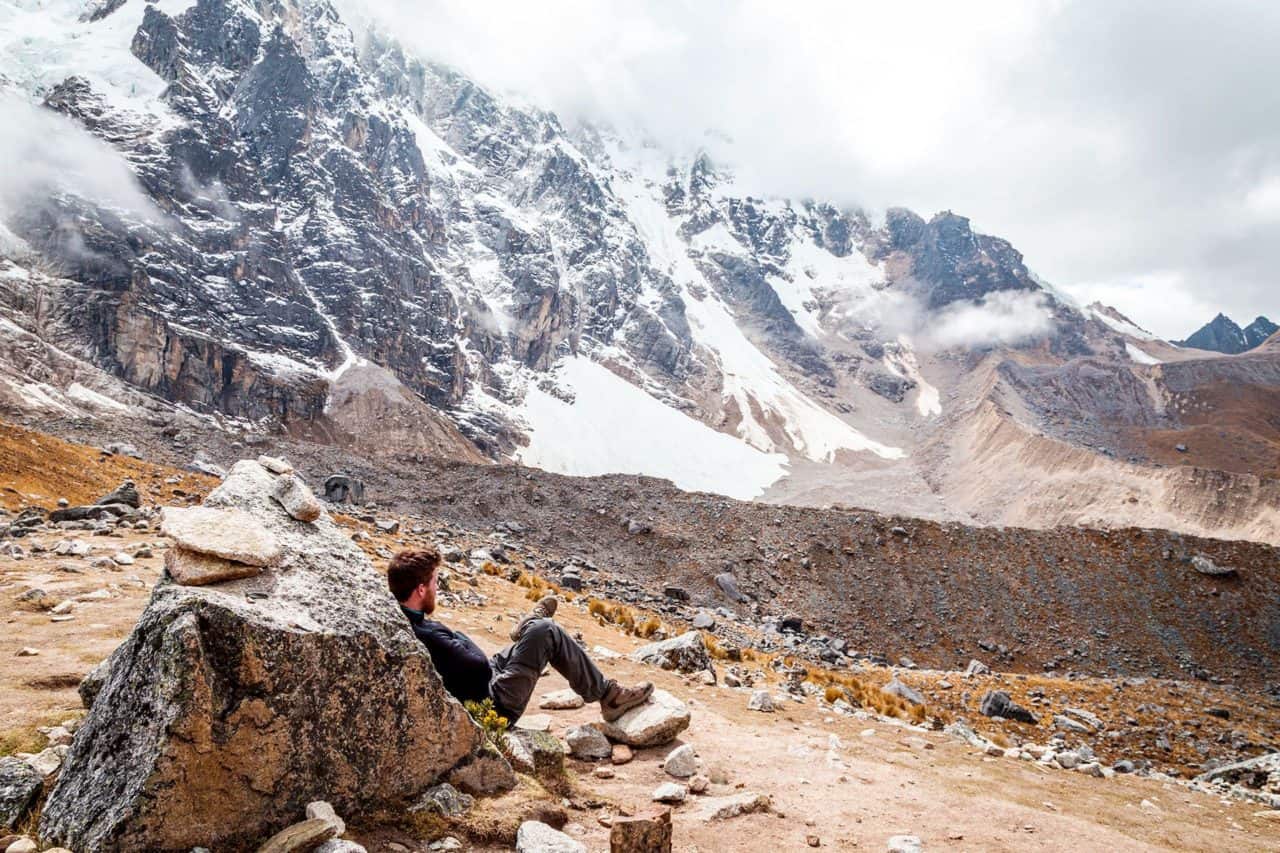
After reaching the summit of the pass, the trail descends towards the Humantay Laguna where most guides will introduce you to an Inca Ritual.
This day is arguably the most visually spectacular, offering panoramic views that stretch across vast valleys to distant mountains. Though the physical demands of this day are significant, the sense of achievement upon reaching the pass and the breathtaking vistas make it incredibly rewarding.
Don’t worry, day 2 is the hardest out of the 5-day Salkantay Trek. It only gets easier from here!
Tip: Make sure to drink a lot of water, chew Coca leaves and avoid alcohol if you don’t want to suffer from altitude sickness. The ultimate secret to copping well is good acclimatisation for a few days in Cusco, especially if you arrive from a low altitude.
Day 3: Wiñaypoco to Santa Teresa
On the third day, the trek continues from Wiñaypoco down to Santa Teresa, traversing approximately 20 kilometres through the incredible cloud forest.
This segment took us about 6 hours and presented a gentler trail compared to the previous day’s rigorous climb. As you descend into warmer, humid climates, you’ll notice a dramatic transformation in the environment. The path winds through lush, dense jungle scenery, highlighted by an array of flora including orchids and brightly coloured birds, and the sounds of rivers and occasional glimpses of waterfalls.
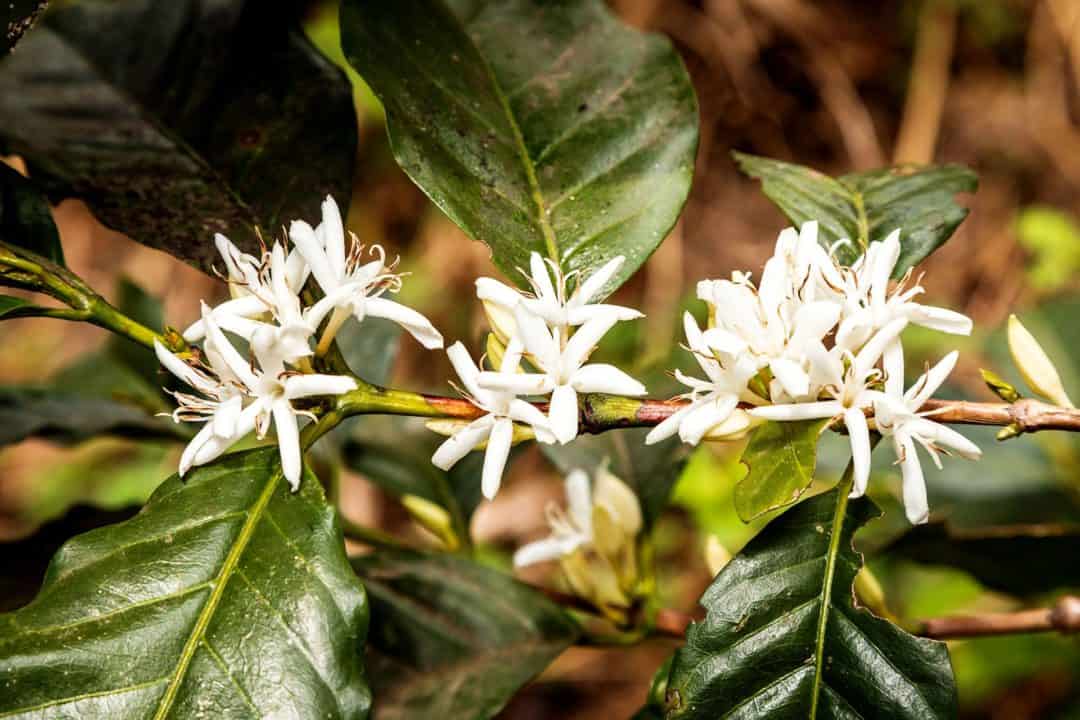
The area of Santa Theresa is one of the main coffee-producing regions in Peru. During the hike down through the cloud forest into the jungle, you will have the chance to see many coffee fields. Depending on the season you may even be able to taste the cherry from which the beans are extracted before roasting or you may see the plant flowering.
Tip: Grab a couple of deep red coffee cherries and taste the sweetness of it. If you have never tried it, you will be surprised how different it is from the coffee you drink. Don’t forget to spit the coffee beans though!

Day 4: Santa Teresa to Aguas Calientes
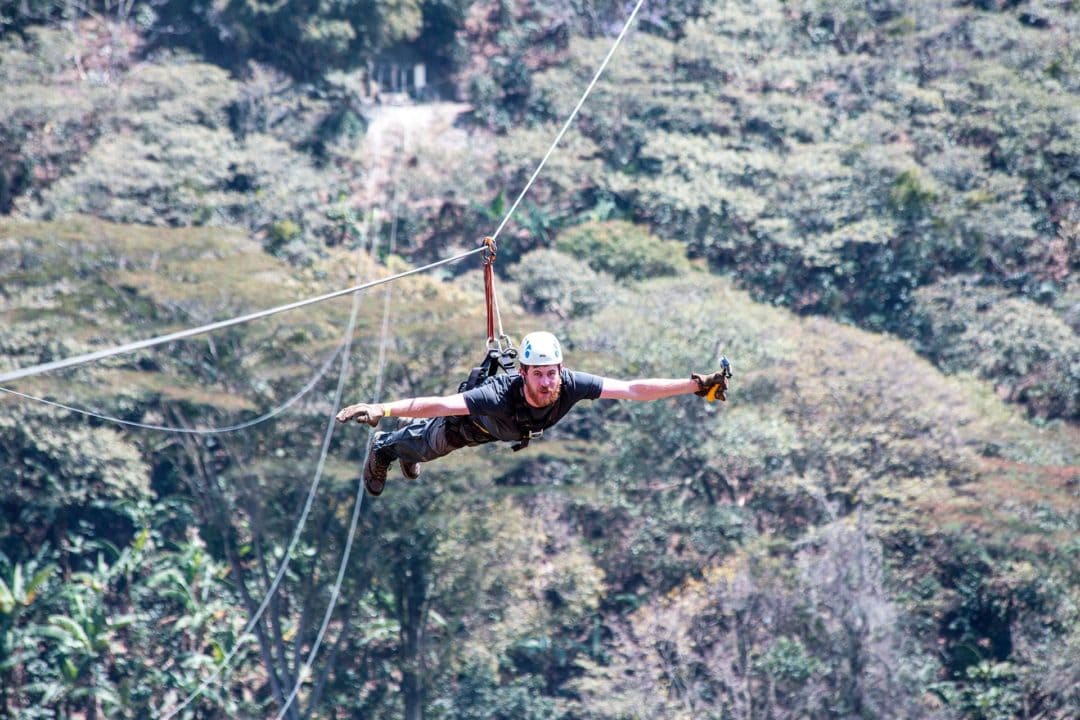
This day part of the group went ziplining in the morning and the other went to enjoy a hot bath in a local Spring. These are add-ons to the Salkantay trek, that most agencies in Cusco offer.
We did the zipline which was a lot of fun. There are 4 lines, of which one is 1 km long. Each zip line is done in different positions, which makes the thrill even more enjoyable: sitting, Superman, upside down, etc. The hot water springs, on the other hand, are a great excuse to relax. It is really enjoyable after 4 days of walking but keep in mind that there may be a lot of mosquitos by the hot springs!
After these activities, we were dropped off at Hidroeléctrica from where we walked along the train tracks to Aguas Calientes, the city at the bottom of Machu Picchu. The walk is not really interesting but it is a different part of the journey, and a necessary one as there are no other ways to Aguas Calientes. The walk is about 2 hours.
Tip: If you are planning on doing the ziplining, make sure to book it at the same time as the trail. The price is much higher if you decide to join at the last minute. For those who don’t want to zipline but still want to get there to see a friend or a partner, you can go but will be asked to pay for the transport, which shouldn’t be more than 20 Soles.
Day 5: Aguas Calientes to Machu Picchu & Cusco
The final day of your trek begins before dawn, setting out from Aguas Calientes to ascend the ancient steps up to Machu Picchu. The hike up is strenuous and can take up to 1 hour depending on your level of fitness, but if you are not into hiking, you can take a shuttle. We have detailed this part of the journey in our dedicated article on How to get to Machu Picchu.
Once at Machu Picchu, you have several hours to explore the vast complex. Consider joining a guided tour to learn about the rich history and architecture of this New World Wonder. If you’re up for more adventure, you have the option to hike additional trails such as Huayna Picchu or Machu Picchu Mountain (would have needed to book ahead – not included).
As the day winds down, we returned to return to Aguas Calientes to collect our backpacks before beginning the journey back to Cusco. Most trekkers walk back along the train tracks to Hidroelectrica to catch a bus, while others prefer taking the train back to Ollantaytambo (or Cusco). This way is significantly more expensive and not included in the 5-day Salkantay Trek package, but a great experience.

When is the best time to do the Salkantay Trek?
The best time to do the Salkantay Trek is during the dry season, which runs from April through October. During these months, you can expect clearer skies and lower precipitation, making the trail conditions more favourable for hiking. Though, the weather is generally warmer during the day but can still be quite cold at night, especially at higher altitudes.
The peak tourist season is from June to August, coinciding with the best weather and international summer holidays. If you prefer a less crowded experience, consider planning your trek in April, May, September, or October. These months still offer good weather but with fewer tourists, providing a more solitary and intimate experience with nature.
It’s advisable to avoid the rainy season from November to March, as the trails can be slippery and the heavy rains may lead to challenging trekking conditions.
What to pack?
Crossing 5 different climates means that you may encounter all four seasons in one day, or at least during your 4 to 5-day hike. Make sure to pack accordingly. Here is a non-exhaustive list:
Clothing:
- Base Layers: Moisture-wicking T-shirts and long underwear that you can layer under your clothing.
- Insulating Layer: Fleece or wool sweater and trousers for cold weather, especially in the evenings and early mornings.
- Outer Layer: Waterproof and windproof jacket and pants. The weather can change quickly, and it’s essential to stay dry and warm.
- Hiking Boots: Waterproof and broken-in to prevent blisters.
- Camp Shoes: Lightweight shoes or sandals for relaxing at the campsite.
- Hats / Gloves / Socks / Swimsuit (for the hot spring)
Gear:
- Backpack: A comfortable, fitted pack with enough capacity for your gear (40-60 litres is typical).
- Sleeping Bag: A good quality sleeping bag rated for at least -10 degrees Celsius. Some operators provide them but check for quality and hygiene.
- Trekking Poles: Helpful for both the steep ascents and descents.
- Headlamp: Essential for early morning starts or navigating the campsite at night.
- Hiking bladder: Staying hydrated is critical; ensure you can carry at least 2 litres.

About the Author
Jen is the Funder, Author & Photographer behind Talesfromthelens.comJen has lived for the past 15 years across Oceania and Ireland while also travelling in Latin America, North America, and Europe. She has visited more than 65 countries and set foot on every continent in the world! She is a coffee nerd, passionate about photography, wildlife, and outdoor activities.
For more info, check out the About page.
Another alternative to walk in Peru that is different from the Inca Trail, is the Moonstone Trek to Machu Picchu. We did the tour because there were no spaces on the Inca Trail and it was the best experience we had (I came to walk the Inca Trail a few years later) Fewer travelers, beautiful landscapes, villages and amazing people. Ronald de Machula Expeditions helped us a lot organizing the trip.
Cheers
Jhon
Hi Jhon, thank you so much for this recommendation. I will add it to my list of the best hikes near cusco. Sounds really like a great hike.
https://talesfromthelens.com/best-hikes-around-cusco-peru/
Hi! Great article!
But i have a more specific question… so you said that you could find a service from 150 dollars, but the link to book online was more than 400 dollars..
i know it was some years ago, but still…
what is a more accurate price that I could pay when booking in cusco?
regards!
Hey Rafael, the online price are a lot higher than what we saw in Cusco indeed. I think the reason is that travel agencies/tour companies make more profit online since most tourists want to book their tours ahead. Tour agencies know that most people are travelling for a short time with a tight schedule and prefer booking to ensure their spot. Therefore, they bump up their prices. If you have the ability to wait to be in Cusco because you have time or don’t have an exact date you want to start the tour + are flexible, then you should definitely wait. You will find the Salkantay tour for about 150 euros. Just pop in one of the many agencies on or around the main square. Negotiate a bit too.