
When people think of the Basque Country, their minds often drift to Spain’s vibrant cities like San Sebastián and Bilbao. But just across the Pyrenees lies the French Basque Country, a region that’s just as captivating, yet often overlooked.
From the picturesque villages of Ainhoa, Sare, Espelette, and La Bastide Clairence to the historic charm of Saint-Jean-Pied-de-Port and the luxurious beach resorts of Biarritz and Saint-Jean-de-Luz, the French Basque Country is dotted with some of the most beautiful towns you’ll find in France.
Despite its undeniable charm, the French side of the Basque region tends to fly under the radar. Maybe it’s because Spain does a better job of promoting its Basque cities, or perhaps travellers just don’t realise what they’re missing. But those who venture into the Pays Basque discover a place rich in history and culture, where whaling harbours transformed into royal resorts and sleepy villages became world-class surf spots.
You’ll find Basque Pelota frontons in nearly every village square, and the iconic red and green half-timbered houses that make this region so unique.
The French Basque Country is divided into three distinct regions: Labourd, Basse-Navarre, and Soule. Together, they stretch from the Atlantic Ocean to the high peaks of the Pyrenees, offering everything from sun-soaked beaches to misty hills and rolling green landscapes. Unlike the bustling cities across the border, these towns feel like hidden gems: quiet, charming, and undeniably beautiful.
In this guide, we’re exploring the most beautiful towns of the French Basque Country. Whether you’re looking to wander cobblestone streets, taste local delicacies, or soak in the Basque culture, these spots are not to be missed.
AINHOA
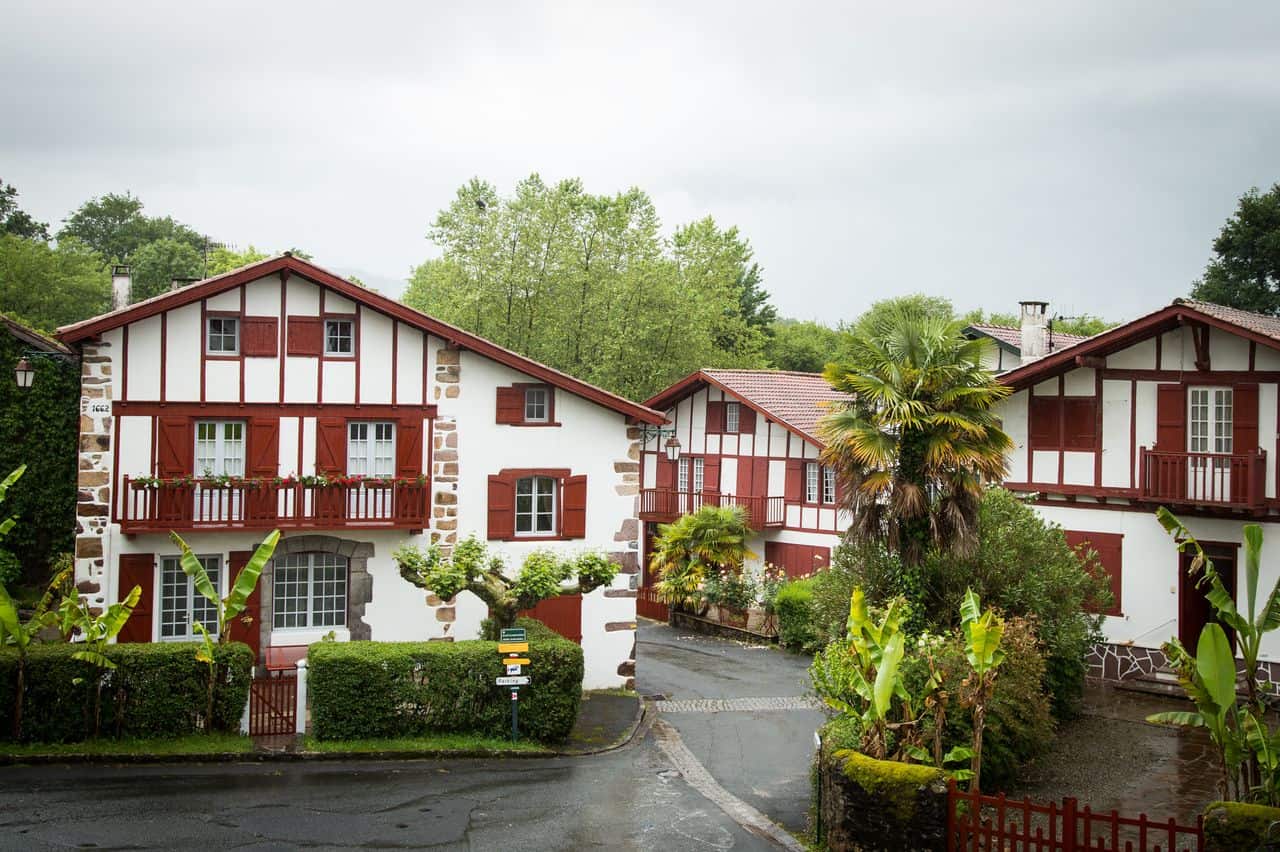
Ainhoa has long been a resting place for pilgrims walking the St. James’ Way. For centuries, travellers would stop here to rest, eat, and refresh before continuing their journey. These days, the village is a bit quieter. The main route to Santiago de Compostela (the French Way) now draws most pilgrims to Saint-Jean-Pied-de-Port, leaving Ainhoa to its peaceful existence, interrupted only by the occasional tourist or local visitor.
Much like La Bastide-Clairence, Ainhoa’s main street is dotted with art galleries and craft shops set within charming, traditional Basque houses. Their wooden facades are painted deep red, a signature of the region’s architecture. As you stroll along the main road, you’ll come across the village fronton, where local kids often play Pelota next to the beautiful Notre-Dame Church. It’s a small, picturesque spot that gives you a real taste of Basque life.
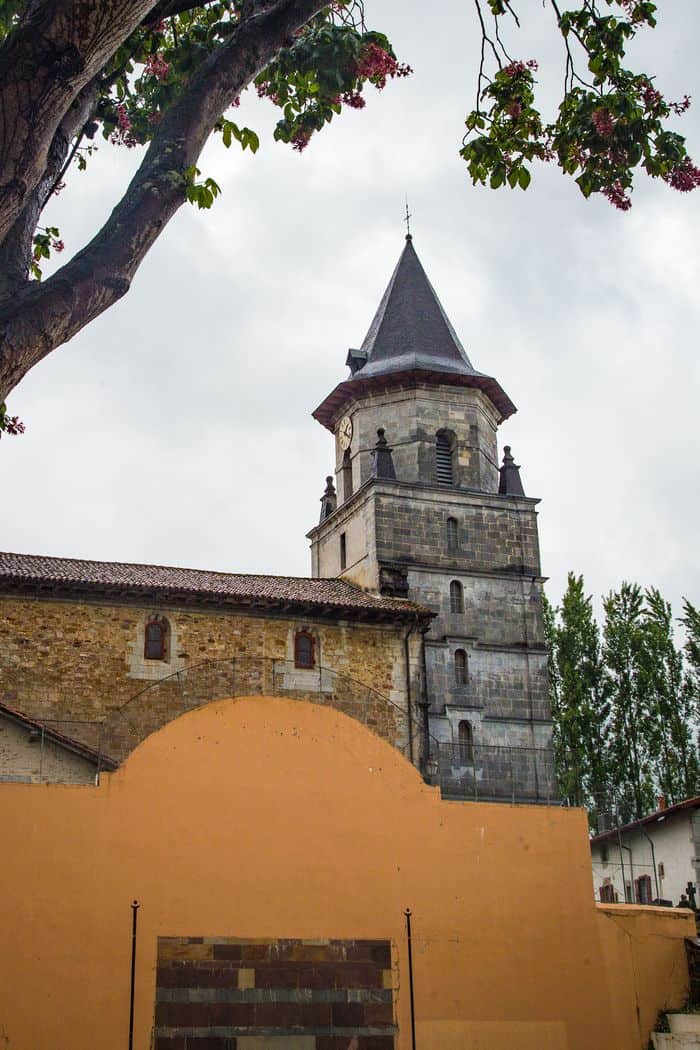
If you step inside the church, don’t miss the wooden balconies, they’re typical of the area. The space is quite dark, but for just €1, you can light up the interior and even play some music, completely transforming the atmosphere. It’s definitely worth it. Outside, the cemetery holds ancient headstones decorated with 16th-century funeral art, adding another layer of history to this tiny village.
Ainhoa is one of those places that’s perfect for a quiet afternoon of exploring and shopping for local craftwork. This is the place to be if you’re looking for a typical Basque village away from the crowds.

Useful information about Ainhoa
Don’t miss: the 16th-century houses with banana trees in the gardens.
Visit: “La Maison du Patrimoine” to learn about local history.
Eat: “Le pain d’épice d’Ainhoa” a French spiced bread that tastes just like Christmas!
Sleep: Hôtel Ithurria – Maison Goxoki – Gite La Rhune
| How to get to Ainhoa: Car via road D20 – Bus 22 from Saint-Jean-de-Luz – Plane via Biarritz (30km) or San Sebastian (40km) airports.
BAYONNE

What makes Bayonne so captivating is its authentic Basque Art de Vivre. The city is crisscrossed by the Adour and Nive rivers, with charming half-timbered buildings lining the riverbanks. Their painted shutters (red, blue, or green) reflect off the water, creating a picture-perfect scene that feels almost timeless.
Wandering along the cobblestone streets, you’ll find yourself stepping back in time, especially in the historical center, where medieval lanes are packed with artisanal shops selling local delicacies.
One of the best ways to explore Bayonne is on a walking tour. These tours wind through the medieval streets, highlighting the city’s history and the local stories that have shaped it. If you’re there in late July or early August, you might just catch the Fêtes de Bayonne; a week-long street party where the whole city turns white and red for days of music, food, and celebration.
It’s loud, lively, and absolutely unforgettable.
Make sure to try the local specialities while you’re there. Bayonne is famous for its ham and chocolate, and you won’t have to look far to find both. Many of the artisanal shops in the old town are happy to let you taste before you buy. Just don’t be surprised if you leave with more than you planned!


Useful information about Bayonne
Don’t miss: the three neighbourhoods: Grand Bayonne, Petit Bayonne and Saint-Esprit
Visit: 13th-century Cathedral of Saint Mary of Bayonne – river bankside – Beaux-arts museum Bonnat – Basque Museum.
Eat: chocolate at “Chocolats Daranatz” – “La Chistera” for lunch (go early or book ahead)
Drink: Hot chocolate at “Chocolat Cazenave”
Sleep: Hotel Cote Basque – Welcomehome64 – Ibis Bayonne Centre
| How to get to Bayonne: Car via Highway A63 or A64 – Direct train from Paris, Bordeaux. Bus from many European cities – Plane via Biarritz airport.
BIARRITZ

Long known as the Queen of Resorts and the Resort of Kings, Biarritz first gained its royal reputation when Napoleon III’s wife, Eugénie de Montijo, chose it as her summer retreat. Her love for the town sparked a wave of aristocratic visitors, and today, Biarritz still draws celebrities and jet-setters with its grand mansions and luxurious hotels. But Biarritz is more than just glamour.
In recent decades, it’s also become a global hotspot for surfers, spa lovers, and sophisticated shoppers looking to soak up its unique blend of elegance and laid-back vibes.
The town’s incredible architecture and shredded coastline are stunning backdrops for a weekend getaway or even just a day trip. You can wander the 4 km seaside promenade, watch surfers catching waves at the famous Côte des Basques, or find a quiet spot near the Saint-Martin Lighthouse for a sunset picnic.
If relaxation is more your style, Biarritz is also known for its spa resorts, perfect for pampering after a day of exploring.
Start your day early if you’re visiting during high season. Free parking spots are almost non-existent after mid-morning, and even the paid ones fill up fast. The beaches also get busy on the sand and in the water, where surfers and bodyboarders compete for waves. But if you don’t mind the buzz of activity, it’s all part of Biarritz’s charm.
If you want to learn more about the town’s history, consider joining a walking tour. Local guides will tell you stories about the town’s aristocratic past, its transformation into a surf mecca, and the unique Basque culture that still thrives here.


Useful information about Biarritz
Don’t miss: Côte des Basques – Port des Pêcheurs – Grande Plage
Visit: Cité de l’océan – Muséum Asiatica
Eat: “Les Halles” (indoor market) – Bar Jean – Bali Bowl
Drink: Casa Juan Pedro – Etxola Bibi
Sleep: Surf hostel – Hôtel Alcyon – Windsor Grande Plage
| How to get to Biarritz: Car via Highway A63 or A64 – Train from Bayonne or Hendaye. Bus from many european cities – Plane via Biarritz airport. Learn more in our dedicated article to Biarritz.
ESPELETTE

Espelette is famous across France for its signature red peppers (piment d’Espelette) which you’ll see hanging from the whitewashed facades of buildings during the harvest season.
These bright red peppers, first brought over from the Americas in the 15th century, have since become a staple of Basque gastronomy. Thanks to the village’s unique soil and humid climate, Espelette’s peppers are distinct in flavor and are even protected by an AOP (Appellation d’Origine Protégée) label.
Wandering through the village, you’ll find piment d’Espelette infused into just about everything: jelly, salt, salsa, jam, oil, honey, and even chocolate. While I love trying them all, my personal favourite is the pepper powder just a sprinkle adds a smoky kick to meat, fish, and salads.
If you’re there during the harvest season (September through November), the entire village is decorated with strands of drying peppers, creating a sea of red along the cobblestone streets. Outside of those months, the displays are a bit more modest, but the village’s charm is still undeniable.
Take some time to explore beyond the main square and head toward the Castle of the Barons of Espelette and the Saint-Etienne Church. The church’s interior, with its wooden galleries and simple elegance, is a beautiful example of Labourd region architecture.
If you’re planning to explore more of the Basque region, check out my Best Road-Trip Itinerary Around the French Basque Country for tips on including Espelette and other stunning villages in your journey.


Useful information about Espelette
Don’t miss: “Lurretik” runs tours of the production from May to October on Tuesday and Friday at 11 am – Free
Visit: the interpretation centre to learn more about the “piment d’Espelette” culture, harvest and use.
Eat: Restaurant Euzkadi
Drink: Brasserie Labea – Chez Doxpi
Sleep: Hôtel Chilhar – Hôtel Euzkadi
| How to get to Espelette: Car via road D20 – Bus 22 from Saint-Jean-de-Luz or 814 from Bayonne – Plane via Biarritz (25km) or San Sebastian (45km) airports.
BIDART
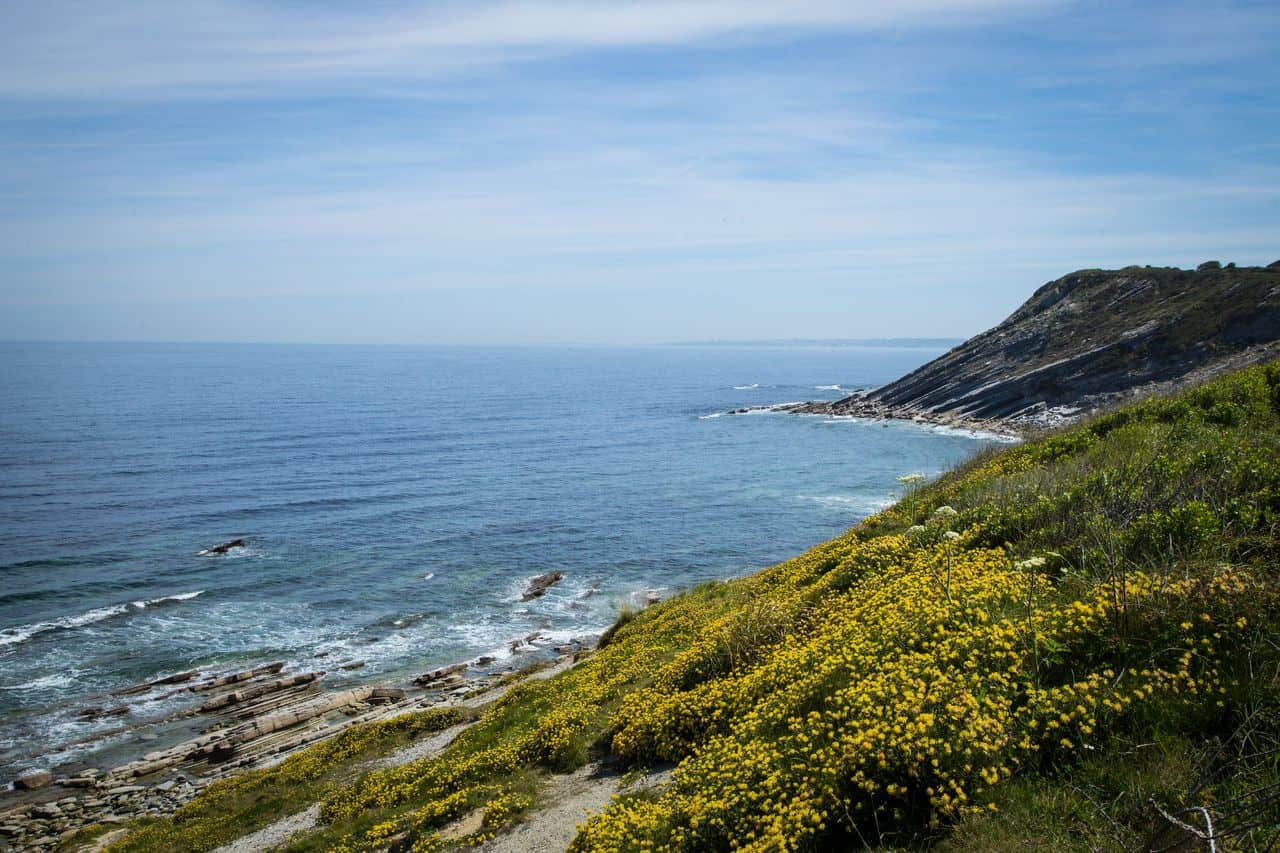
Once a bustling whaling town, Bidart has transformed into a laid-back seaside escape along the southern coast of Biscay, nestled perfectly between Biarritz and Saint-Jean-de-Luz. Unlike its neighbour, Guéthary, known for its luxury hotels and casinos, Bidart has a more relaxed vibe about surfing and beach days.
With more than 5 km of coastline divided into six sandy beaches, it’s quickly becoming one of the top spots for surfers in the French Basque Country. The abundance of surf schools and campsites makes it especially popular with families and budget travellers.
One of my favourite things about Bidart is the panoramic view from the Sainte-Madeleine Church. From its hilltop perch, you can gaze out over the Atlantic, with nothing but the sound of crashing waves and the distant outline of the Pyrenees.
For a perfect afternoon, take a walk along the Route de la Corniche, a stunning seaside trail that runs from Erretegia Beach to Saint-Jean-de-Luz (12 km) or even further to Hendaye (25 km). Known as the Coastal Path, it’s a beautiful spot for a morning hike or an evening stroll. Just be mindful as some sections are close to cliffs or the main road, so it’s best to stay alert.
Useful information about Bidart
Don’t miss: the main square with the pelota fronton, city council, church, cemetery, post office, hotels, ect.
Visit: Basque pelota workshop at Ona Pilota
Eat: Basque cake at Moulin de Bassilour – Tantina de la Playa – La Voile rouge – Le Bleu Blanc Jaune
Drink: Kala Txiki –
Sleep: Camping Harrobia – Résidence Ilbarritz – Hah Lay surf House – Hotel Elissaldia
| How to get to Bidart: Car via road D810 or highway A63 – Bus 816 from Bayonne/Biarritz or 814 from BayonneHendaye/St-Jean-de-Luz – Direct train (TER) from Hendaye, Bayonne, Bordeaux… – Plane via Biarritz airports
LA BASTIDE CLAIRENCE

Named one of the Most Beautiful Villages in France, La Bastide Clairence is a gem of the Pyrénées-Atlantiques region, which proudly boasts five of France’s 158 most beautiful villages. The village has preserved its medieval charm, founded over 700 years ago by Louis I, who would later become King Louis X of France.
The original mansion, built with Basque clay, still stands, and the village square is surrounded by white and red arcade houses that capture the essence of Basque architecture.
La Bastide Clairence’s thriving community of artisans and craft workers makes it truly special. As you wander through its cobblestone streets, you’ll notice open workshops where local artists create and display their work. You’ll find everything from glass sculptors and perfumers to jewellers and traditional weavers.
It’s a place where craftsmanship is celebrated. If you’re interested in visiting the workshops, stop by the tourism office and grab a map highlighting each artisan is location.
One spot not to miss is the Trinquet, home to an indoor pelota court. If the side door is closed, ask at the bar, they’re usually happy to show you around.
Local teams often play matches on Saturday afternoons, and it’s a perfect opportunity to watch the action and learn about this unique Basque sport.


Useful information about La Bastide-Clairence
Don’t miss: the main square and the “Trinquet”
Visit: the church to see the wooden balconies. Donate €2 for music and light.
Eat: La Table Gourmande de Ghislaine Potentier –
Drink: Les Arceaux – Trinquet Gartxot
Sleep: Les Collines Iduki – Les Chalets de Pierretoun – Le Clos Gaxen
| How to get to La Bastide-Clairence: Car via road D20 – Bus 22 from Saint-Jean-de-Luz or 814 from Bayonne – Plane via Biarritz (25km) or San Sebastian (45km) airports.
SARE
Nestled at the base of La Rhune (Larrun), the iconic hill of the Pays Basque, Sare is a village steeped in history and local legend. The hill is famous for its Neolithic monuments (dolmens and stone circles) that hint at its ancient past. It became even more popular in the 19th century after Eugénie de Montijo, the wife of Napoleon III, famously climbed to the summit.
Today, you can follow in her footsteps by hiking to the top, or if you’re after a more relaxed journey, take the Petit Train de la Rhune, a charming little train that chugs its way up the mountain, offering sweeping views of the French and Spanish Basque Country.
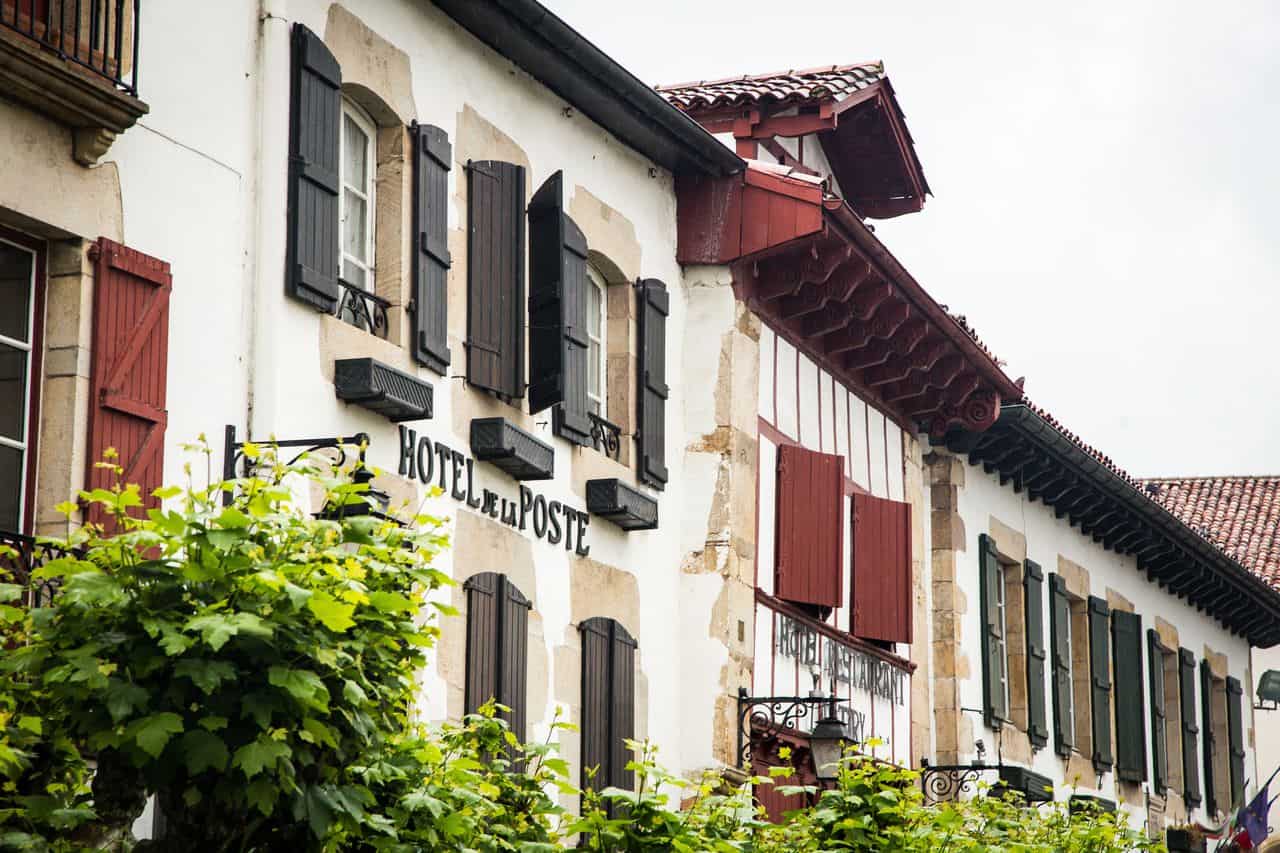
Sare has also earned its place as one of the Most Beautiful Villages of France, and it’s precisely what you’d expect from a picturesque Basque town. Its pretty facades, typical church, and the large fronton in the village square are classic Basque features.
But if you look closely, you’ll notice that many houses here are built with cornerstones instead of the traditional red half-timbering you see in neighbouring villages. It’s a small detail, but it makes Sare unique.
Though its history is marked by tales of smuggling across the Pyrenees, Sare is nowadays mostly known for its festivities and gastronomy. The village comes alive in the summer with local celebrations, and it’s also famous for its Gâteau Basque, a delicious cake filled with either cream or cherry jam.
Sare even inspired works of French literature, like Pierre Loti’s “Ramuntcho”, which captures the spirit of Basque life.


Useful information about Sare
Don’t miss: the view of the Pyrenees mountains in the background of the “fronton”.
Visit: La Rhune – Ortillopitz house – Prehistoric cave of Sare
Eat: Baketu – Restaurant Arraya – Akoka
Drink: Sare et Thé – Pleka Trinquet Bar
Sleep: Hotel Arraya – Hotel Pikassaria – Hôtel Baratxartea
| How to get to Sare: Car via road D20 – Bus 22 from Saint-Jean-de-Luz or 814 from Bayonne – Plane via Biarritz (25km) or San Sebastian (45km) airports.
SAINT-JEAN-DE-LUZ

Just 30 minutes from Biarritz, the charming seaside town of Saint-Jean-de-Luz is a favourite among locals looking for less crowded beaches and more affordable prices. Once the central hub for French corsairs, the town later became an important fishing port before evolving into a celebrated seaside resort in the 17th century.
Its reputation was cemented when Louis XIV married Maria Theresa of Spain, also known as l’Infante, at the stunning Saint-Jean-Baptiste Cathedral, a moment that marked the town’s place in history.
Saint-Jean-de-Luz is tucked along a shell-shaped bay lined with fine sand, an elevated promenade that protects the town from the Atlantic waves, and striking buildings like the Casino La Pergola.
Beyond the beachfront, you’ll find vibrant pedestrian streets crisscrossing the town, filled with shops, cafés, and colorful half-timbered houses. Make sure to stroll down rue Gambetta, where you can sample local delicacies like macarons and pick up beautifully woven Linge Basque, traditional Basque linens that make for perfect souvenirs.
If you venture south, the town seamlessly blends into the fishing harbour and the quaint village of Ciboure.
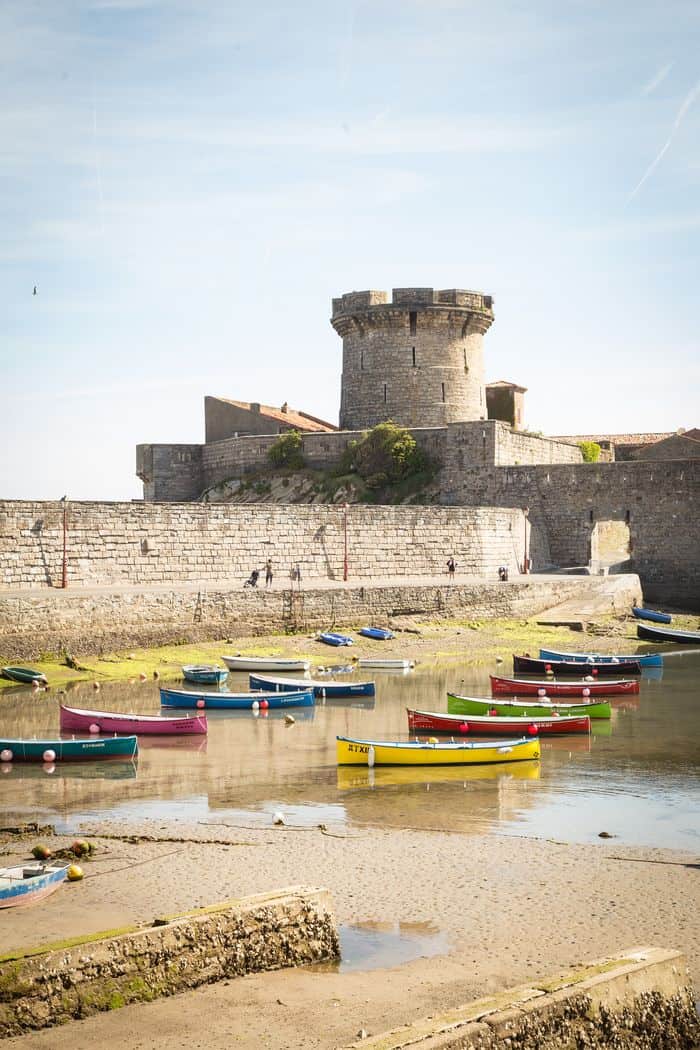
rom here, you can set off on a scenic 12-km hike to Hendaye, passing by the Fortress of Socoa (a structure that might remind you of the fortified port of Essaouira) and continuing along the dramatic cliffs of the Corniche.
It’s the kind of walk that showcases the rugged beauty of the Basque coast, with panoramic views of the Atlantic crashing against the cliffs.

Useful information about Saint-Jean-de-Luz
Don’t miss: Macaron at Maison Adam – the local Anchovy
Visit: La pointe Sainte Barbe for a panoramic view and the Socoa fort in Cibourne
Eat: Le Petit Louis – Akeita Coffee – Le Bistrot Luzien
Drink: Bar Cintra – Le Suisse – Le Middle
Sleep: Hotel Colbert – Villa Yoda – Grand Hôtel de la Poste
| How to get to Saint-Jean-de-Luz: Car via road D810 or motorway A63- Bus 816 from Biarritz, Bayonne and Henday – Plane via Biarritz (15km) or San Sebastian (20km) airports.
SAINT-JEAN-PIED-DE-PORT
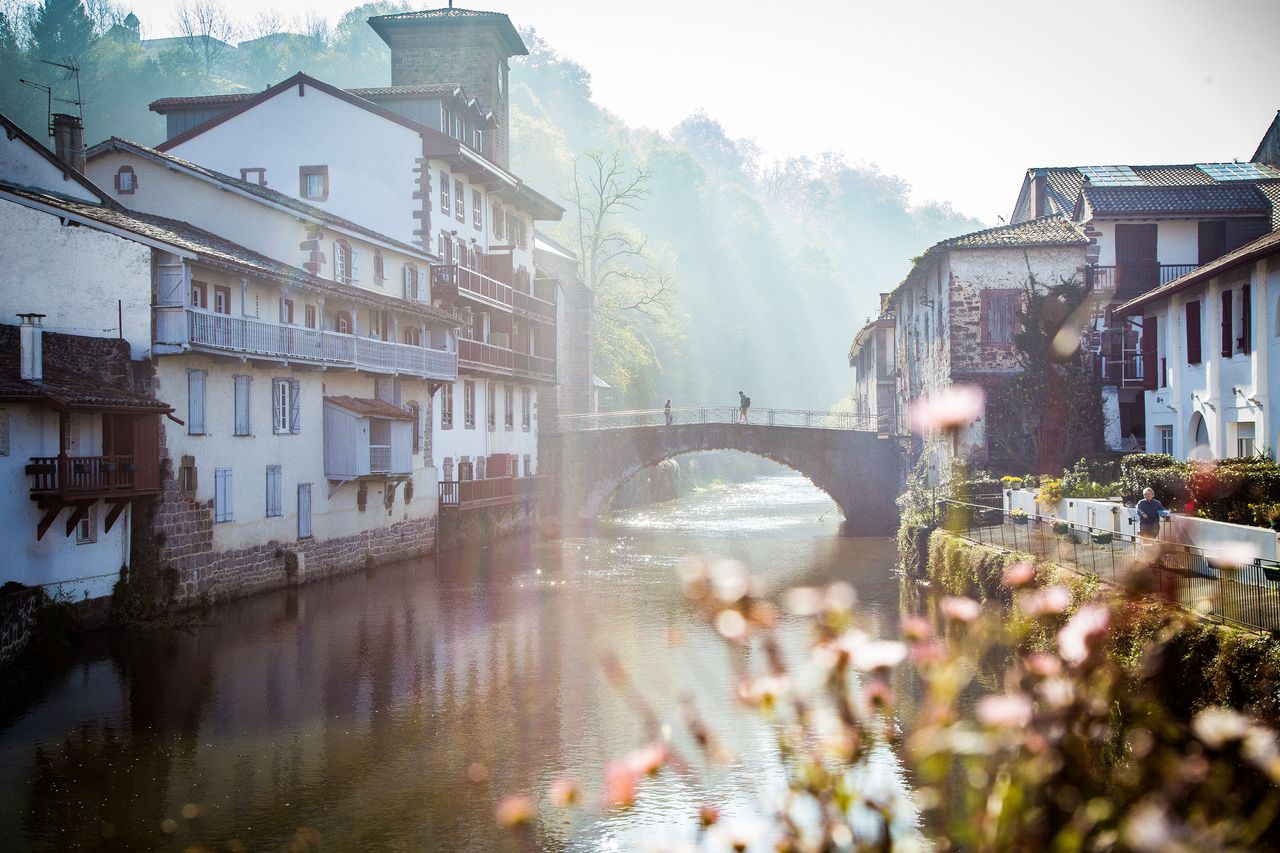
Nestled at the foot of the Pyrenees, Saint-Jean-Pied-de-Port is just a few kilometres from the Spanish border and about an hour’s drive from both Biarritz in France and Pamplona in Spain.
Its unique medieval architecture sets it apart from other Basque villages, giving it a charm that’s hard to match. While you’ll find the typical Basque houses (white facades with red or green shutters) on the outskirts of town, the historic centre is where the real magic happens.
Narrow cobblestone streets are lined with sandstone buildings now home to restaurants, artisanal boutiques, outdoor shops, and hostels.
Overlooking the village is the Citadel, a medieval fortress that dominates the skyline and offers panoramic views of the surrounding valleys. Walking along the bulwarks that encircle the town gives you a real sense of its history and strategic importance.
It’s easy to imagine the days when this fortress stood guard over the region, protecting travellers and traders crossing the Pyrenees.
But what truly makes Saint-Jean-Pied-de-Port famous is its role as the starting point of the French Way (Camino Francés), the most popular route of the Pilgrimage to Santiago de Compostela in Spain. Visit between April and October, and you’ll find the streets bustling with pilgrims.
They’re easy to spot, with scallop shells dangling from their backpacks and expressions that are a mix of excitement and anticipation. The energy in the town during these months is something special, like a small, international community all sharing the same dream of reaching Santiago.


Useful information about Saint-Jean-Pied-de-Port
Don’t miss: The view of La Nive from the road bridge.
Visit: Church Assomption de la Vierge – Porte Saint Jacques – Citadel walkway
Eat: Café Ttipia – Chez Edouard – Restaurant Oillarburu
Drink: Café Le Navarre – Café de la Paix
Sleep: Hôtel Ramuntcho – Hôtel des Pyrénées – Gite de la Porte Saint Jacques
| How to get to Saint-Jean-Pied-de-Port: Car via roads D918 and D933- Bus from Pamplona (1h30 – €22) and direct train from Bayonne (3 per day) – Plane via Biarritz (55km) or San Sebastian (77km) airports.
road-trip itinerary
If you really want to experience everything the French Basque Country has to offer, the best way to do it is by hitting the road. Renting a car allows you to explore hidden villages, dramatic coastlines, and the lush valleys at your own pace.
To make things easier, I’ve compiled a 10-day itinerary for the French Basque Country that’s flexible and packed with the best stops. You’ll travel from the Atlantic Coast’s wild waves to the Nive Valley’s rolling hills, winding through the Pyrenees Mountains and into the heart of the most beautiful Basque villages.
Along the way, you’ll have the chance to explore iconic towns like Biarritz, Saint-Jean-de-Luz, and Bayonne, but also hidden gems like Ainhoa, Sare, and La Bastide-Clairence.
The itinerary is designed to give you a taste of everything that makes this region unique. One day, you’ll be strolling along the surf-swept beaches of Bidart and watching the waves crash against the cliffs. Next, you could be hiking up La Rhune for panoramic views that stretch all the way to Spain. You’ll visit bustling markets where you can sample Piment d’Espelette, freshly baked Gâteau Basque, and local cheeses that are unlike anything you’ve tasted before.
Of course, no road trip through the Basque Country would be complete without driving the Route de la Corniche, a stunning coastal road that hugs the edge of the Atlantic. With the ocean on one side and dramatic cliffs on the other, it’s a drive that you’ll want to pull over for again and again, if only to take in the views.
Whether you’re planning a quick weekend getaway or a longer adventure, a road trip through the French Basque Country is the perfect way to experience its charming towns, stunning landscapes, and unique culture. If you want the full breakdown of this incredible journey, check out my Best Itinerary to Visit the French Basque Country for all the details, including routes, hidden gems, and local tips.

ARE YOU ON PINTEREST?
What about saving this post to your Pinterest board? Click on the photo to save this blog post for later.
We are also on the platform and we love pinning great travel tips. Follow Tales From The Lens’ boards to see our latest pins.
Don’t be shy, come say hi!
Please note │ This blog post may also include affiliate links to hostels or products we recommend, which means if you buy something following a link on this page, we’ll get a small commission. This will be of no extra cost to you but will help us continue running this blog. Thank you for your support.

About the Author
Jen is the Funder, Author & Photographer behind Talesfromthelens.comJen has lived for the past 15 years across Oceania and Ireland while also travelling in Latin America, North America, and Europe. She has visited more than 65 countries and set foot on every continent in the world! She is a coffee nerd, passionate about photography, wildlife, and outdoor activities.
For more info, check out the About page.