
Pamplona is a vibrant city in the North of Spain, with a strong Basque culture and pride, delicious food, a bit of a dark edge and a long history that has shaped its architecture and historic centre.
While the town is primarily famous internationally for the San-Fermin festivities and the Run of the Bulls that occurs every July, it also deserves in my opinion to be seen for its architecture, food culture and history… In this city guide, I will share all the great things to do in Pamplona.
Why travel to Pamplona?
Pamplona is located in the North of Spain in the Navarre region. It is one of the main stops for visitors interested in the Spanish Basque Country. Despite being relatively close to San Sebastian, the Rioja Region and the French side of the Basque Country, Pamplona is not often chosen as a base to visit the area.
It is, however, an excellent place to learn more about the Basque culture and discover a thriving city pulled up by its new mayor – a former art history teacher – who has embraced culture, diversity and green politics.
It is indeed, a great time for the city, its population and tourists. The town is focusing on developing and marketing the “other things that Pamplona has to offer” and not just the “Run of the Bulls” – a festival that attracts more than one million tourists (national or international) each year.
With its lively streets filled with Pintxo bars, well-preserved medieval architecture and narrow cobblestone streets leading Pilgrims towards Santiago de Compostela, Pamplona has, in fact, a lot more to offer to anyone willing to give it a chance. Here is a guide to the best things to do in Pamplona, Spain.
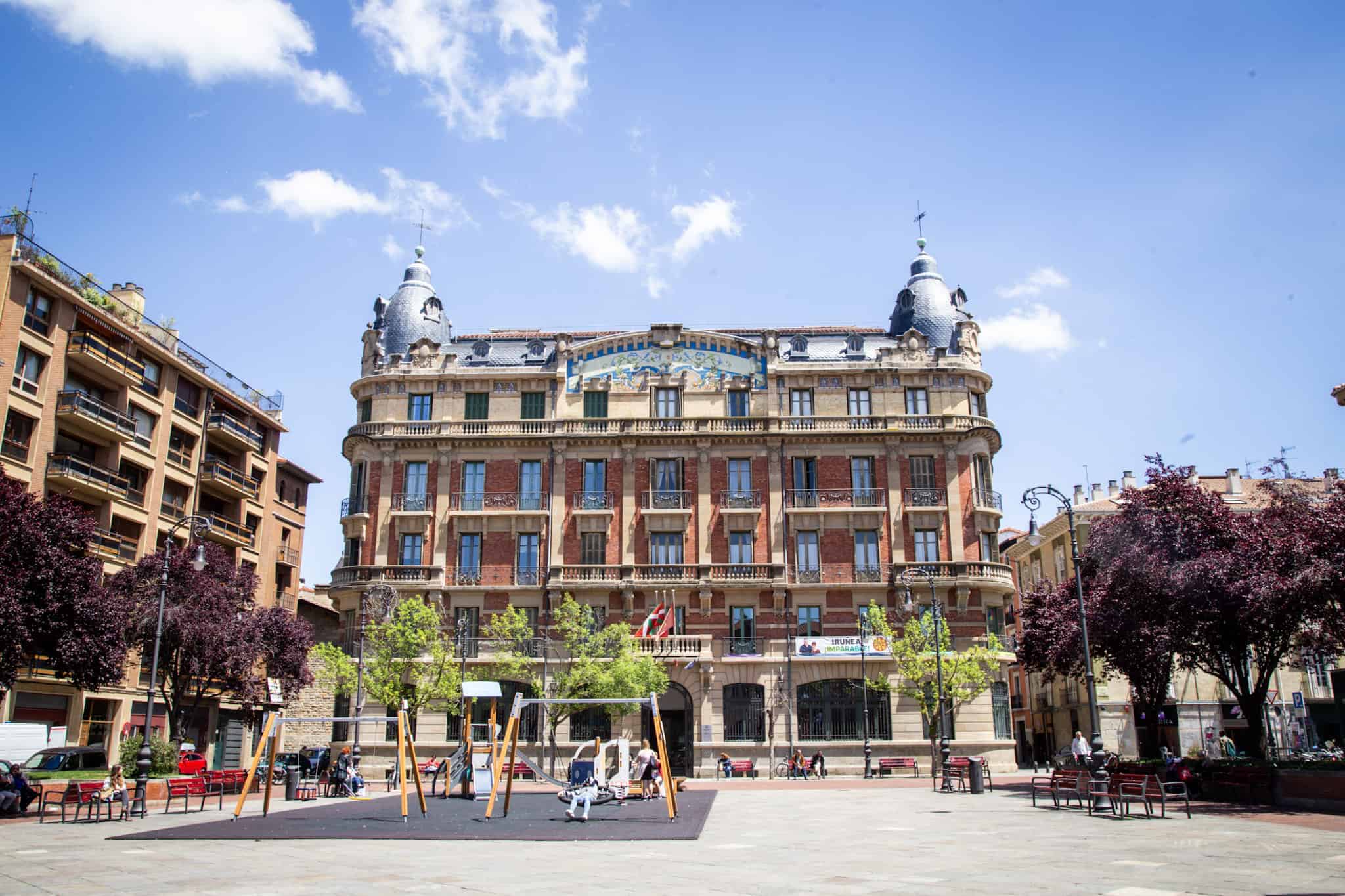
Things to do in the Historical Heartbeat of Pamplona
The Gothic Cathedral of Santa María la Real
The Gothic Cathedral of Santa María la Real stands as a monumental testimony to the city’s rich past. This architectural marvel, dating back to the 14th century, showcases stunning Gothic design, with its impressive facade inviting visitors into a world where history and spirituality intertwine.
The interior is equally captivating, with its intricate altarpiece, cloisters, and royal mausoleum, each narrating stories of faith, art, and royalty through the ages.
- Entrance: General admission includes access to the Cathedral, cloister, and museum.
- Hours: Open daily from 10:30 AM to 6:00 PM, but hours may vary by season.
- Cost: €5 for adults, with discounts available for Pilgrims, students and seniors.

The City Walls
Pamplona’s ancient city walls offer a literal pathway through history. As one of the best-preserved fortifications in Spain, these walls have protected the city since Roman times, evolving through the centuries to meet the changing demands of warfare and urban expansion.
Today, a walk along these historic ramparts not only provides panoramic views of the city and beyond but also a palpable sense of the strategic importance Pamplona once held.
The best way to start your walk along the city walls is to start from behind the Cathedral.
- Entrance: Access to the walls and the surrounding park areas is free.
- Hours: Open to the public year-round.

The Citadel: A Military Fortress
The Citadel of Pamplona is a star-shaped military fortress from the 16th century. It represents one of the finest examples of military architecture of the Renaissance in Europe.
Originally constructed for defence, it now serves as a peaceful public park. The expansive green spaces within its bastions are perfect for a leisurely stroll, a picnic, or simply soaking in the serene atmosphere, a stark contrast to its martial origins.
The Citadel also hosts various cultural events throughout the year, including art exhibitions, concerts, and festivals, making it a vibrant part of the city’s cultural life.
- Entrance: Entry to the park is free.
- Hours: Open 24/7, with cultural venues and event times varying.

Plaza del Castillo
Plaza del Castillo has long been the heart of social life in Pamplona. This sprawling square, bordered by a diverse array of cafés, restaurants, and shops, pulses with the energy of the city.
It’s a place where locals and tourists alike gather, whether to enjoy a coffee in the sunshine, savour the local cuisine, or simply watch the world go by. The blend of architectural styles around the square reflects the layers of history that have shaped Pamplona, from medieval to modern times.
More than just a scenic spot, Plaza del Castillo is a cultural crossroads, hosting events, markets, and concerts that bring the community together.
It’s a space that embodies the spirit of Pamplona – vibrant, welcoming, and steeped in tradition yet always looking forward. Spending time here, you’ll feel the pulse of the city and understand why it’s known as Pamplona’s living room.
- Entrance: The plaza is a public open space, accessible to everyone.
- Hours: Accessible 24/7, though businesses around the plaza have their own hours.
- Tip: Try to visit both during the day and at night to experience its different atmosphere

Cultural Immersion and Festivities
Attend the San Fermín Festival: Run of the Bulls
The San Fermín Festival, celebrated every July, is a spectacle of courage, color, and festivity, catapulting Pamplona to global fame. Central to the celebrations is the exhilarating Encierro, or the Run of the Bulls, where daredevils race ahead of charging bulls through the city’s cobblestone streets.
This event, while controversial, is deeply embedded in the cultural fabric of Pamplona, drawing thousands of spectators from around the globe.
Beyond the adrenaline-pumping run, San Fermín is a mosaic of traditional music, dance, and gastronomy, reflecting the vibrant spirit of the Navarre region.
- Dates: July 6-14 annually.
- Safety: Participants should be over 18 and wear appropriate attire. Spectator areas are available for a safer experience.
- Tip: Book accommodations well in advance as the city fills up quickly during the festival.
Plaza de Toros and Bullfighting Monument
The Plaza de Toros, Pamplona’s bullring, is not only the final point for the Run of the Bulls but also a significant cultural landmark. Hosting bullfights during the San Fermín festival, it draws enthusiasts and curious observers alike.
Adjacent to it, the Bullfighting Monument pays homage to this deeply traditional yet controversial spectacle, capturing the drama and intensity of the event in bronze.
- Entrance: Tours of the bullring are available outside festival times.

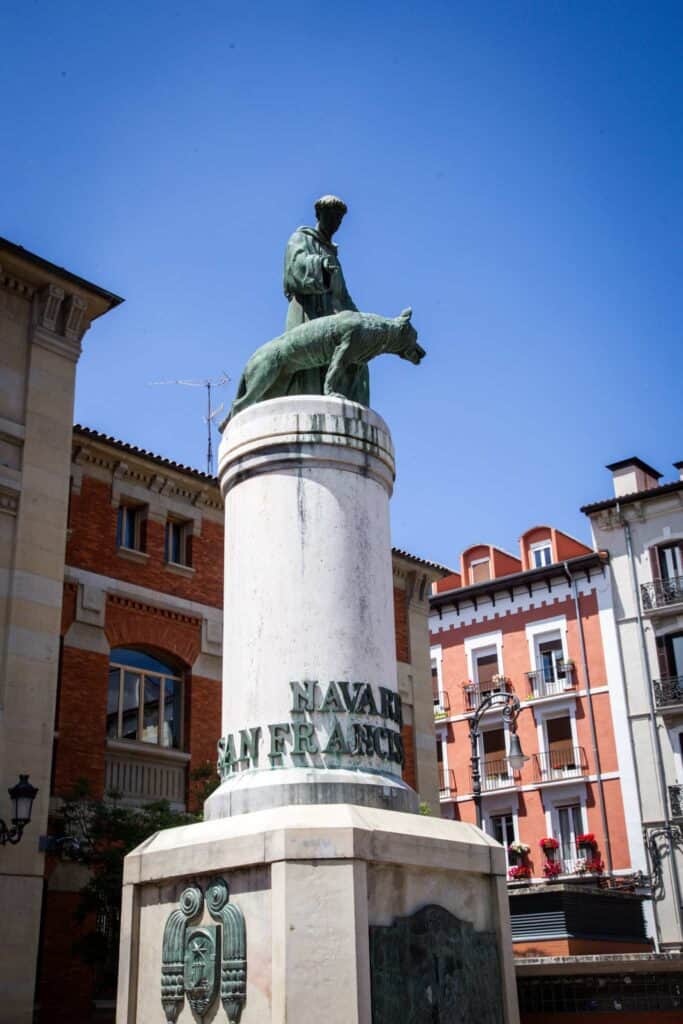
On the Footsteps of Ernest Hemingway
Ernest Hemingway’s love affair with Pamplona is no secret, immortalized in his novel “The Sun Also Rises.” For literary enthusiasts and curious travellers, following in Hemingway’s footsteps offers a unique lens through which to explore the city. Key stops include Café Iruña, Hemingway’s favoured haunt, and the Hotel La Perla, where he stayed during his visits.
- Locations: Café Iruña, Hotel La Perla.
- Tip: Many places have plaques or information about Hemingway’s connection to them. Make sure to look for them.
Explore the Museum of Navarre
The Museum of Navarre, housed in a renovated Renaissance hospital, offers a comprehensive journey through the region’s history, art, and culture. From Roman mosaics to Gothic sculptures and masterpieces by Goya, the museum’s collection is both diverse and illuminating. It serves as a testament to Navarre’s rich cultural tapestry, spanning prehistory to modern times.
A visit to the Museum of Navarre is an essential stop for anyone looking to learn more about Navarre’s heritage and the myriad influences that converge in Pamplona.
- Entrance: €2 per adult. Free on Saturday afternoon and Sunday all day.
- Hours: Closed Mondays. Open from 9:30 AM to 2:00 PM and 5:00 PM to 7:00 PM on weekdays, with reduced hours on weekends.
- Tip: Look out for temporary exhibitions, which often feature contemporary themes and artists.
Visit the Jorge Oteiza Museum
Dedicated to one of the Basque Country’s most influential sculptors, the Jorge Oteiza Museum is a celebration of avant-garde art and thought. Located in Alzuza, just outside Pamplona, the museum displays a significant portion of Oteiza’s work, including sculptures, drawings, and experimental pieces. His work, characterized by its exploration of space and form, invites contemplation and debate.
The museum itself, designed by architect Francisco Javier Sáenz de Oiza, is a masterpiece of modern architecture, offering stunning views of the surrounding landscape. A visit here not only pays homage to Oteiza’s artistic legacy but also provides insight into the broader currents of 20th-century art in the Basque region and beyond.
- Entrance: €6 per person with discount for Students (€3).
- Hours: Closed Mondays. Open from 11:00 AM to 3:00 PM, Tuesday to Friday and Sundays, and until 7 pm on Saturdays.
- Tours: You can join a guided tour of the museum on Tuesdays only at 11 am and 1 pm (booking required).
- Tip: The museum’s location offers a perfect opportunity to explore the countryside around Pamplona.

Eat Pintxo
Pintxos, the Basque Country’s answer to tapas, are a culinary tradition that no visitor to Pamplona should miss. These small snacks, ranging from simple cheese and olive skewers to elaborate miniature dishes, offer a taste of the region’s gastronomic diversity.
Pintxo bars, particularly abundant in the Old Town, invite patrons to hop from one establishment to another, sampling different bites along with local wines or cider.
- Tip: Look for bars where locals outnumber tourists for the most authentic experience!
- Cost: Prices vary, but pintxos are generally affordable, allowing you to try multiple varieties without breaking the bank.
- Recommendation: Pair your pintxos with a glass of local wine or cider to enhance the experience


Unique activities in Pamplona
Kayaking on the Arga River
Kayaking on the Arga River offers a refreshing and unique perspective of Pamplona, away from the hustle and bustle of the city streets. It’s an activity that combines adventure with the tranquillity of nature, suitable for beginners and experienced kayakers alike.
Kayaking tour – Pigagysmo Pamplona offers several tours, such as a 2-hour kayak tour for €10 per person.
Discover Local Wines at a Navarra Vineyard Tour
Navarra’s wine region, renowned for its diverse climates and grape varieties, offers a delightful experience for oenophiles. A vineyard tour in Rioja (south of Navarre) will not only allow you to taste the exceptional wines but also to learn about the winemaking process, from vine to bottle.
Recommended Tour – This Rioja Winery day trip from Pamplona with tasting is a great option. It is also available on Viator.
Taste Basque Cider
If you aren’t much into wine, you can try a cider-tasting trip from Pamplona during the Txotx season. This very festive period in the Basque Country is marked by the opening of cider barrels, signalling the beginning of cider tasting. This tradition occurs typically between January and April.
During Txotx season, cider houses open their doors to the public for a unique gastronomic experience, where guests can enjoy freshly fermented cider directly from the barrels alongside traditional Basque foods such as cod omelette and grilled steak. It’s a lively, social event deeply rooted in Basque culture.
This tour offers an immersive experience of the vibrant Txotx season, where you will visit the cider house of your choice in Astigarraga. This is a great option to visit a traditional cider house and learn about cider making if you don’t have access to a car.
Note: Only available on Sundays, during the Txot season.
Alternatively, you can rent a car in Pamplona and go for a road trip around the countryside for the day, stopping at the cider house of your choice!
Visit the Planetarium of Pamplona
The Planetarium of Pamplona offers a journey to the stars, making it a unique educational and recreational activity. The planetarium’s public sessions cater to all ages, making it an ideal destination for families, or anyone with a curiosity about space.

How to get to Pamplona?
By plane
You can fly to Pamplona airport with the company Air Nostrum, but the daily flights come from Madrid and Barcelona only. The airport is 6 km outside of Pamplona. Take Line A (Moventis – about 15 min – costs €2. Frequency: every hour) from the airport to the city centre or a cab (about €25).
The nearest international airports are Biarritz-Anglet-Bayonne about 130km north, San Sebastian 100km away or Bilbao and Madrid. We would recommend flying into Biarritz or Madrid for cheaper rates and more direct lines from all other Europe/globe.
By Train
Taking the train is quite fast and it is much cheaper than flying to Pamplona. From Barcelona, it takes about 4 hours with Renfe’s train and one hour less from Madrid (except if you need to change train in Zaragoza). You can also reach Pamplona from San Sebastian on the north coast, but note there aren’t any direct trains from Bilbao.
If you come from Southern Spain or any other large town in Spain, you might need to stop either in Zaragoza or Madrid to change carriage. The train station called “Station Square” is 1.5 km north and can easily be reached by the local buses 7 and 9.
By Bus
Busing is the cheapest way to get to Pamplona. The bus station which can be found underground right next to the Citadela (about 10 min walk from the city centre) links the major cities in Spain as well as Saint-Jean-Pied-de-Port in France, Biarritz, Bayonne, etc…
The main bus company to look at is Alsa but Edsa, PLM, Bilman, Eurolines, Flixbus, etc. also offer a few different routes to Pamplona from Europe. From Biarritz count 1h50 ride (€20), from San Sebastian 1h15 (€15), Madrid 5h (€25) and Valencia 7h30 (€35).
For those who are starting the Camino de Santiago in Saint-Jean-PIed-de-Port, you can take a bus from Pamplona to the town for €20 (1h30).
By car
It takes about 4 hours to drive to or from Barcelona or Madrid via the motorway AP-15. From the other side of this highway, San Sebastian is only one hour away.
If you come from Saint-Jean-Pied-de-Port in France, you’ll need to cross the Pyrenees via the National road N135 (D933 on the French side).
If you want to rent a car in advance, we would recommend using Discover Cars. The best part about Discover Cars is that you get full coverage for less than €7 a day! You can also compare all the companies in the market, choose the type of car you want and see all the most recent customer reviews before making a booking. On the website, you can easily narrow your search price to find the best deal within your budget.

BEST ONLINE CAR RENTAL COMPARATOR – DISCOVER CARS
When booking a rental car in Spain online, we recommend using Discover Cars because they offer Full coverage for less than €7. It is one of the best rental car comparators out there!

Parking in Pamplona
There 4 types of paid street parking in Pamplona: Visitors can’t park at the “Green” parking which is reserved for the residents ‘Solo Residentes”. Look for the parking with blue, orange or red lines. These have different time limitations and prices depending on the colours.
Take a ticket at the closest machine and display it on the board right behind your front windscreen. Often, the paid on-street parking is free from 2 pm to 4 pm so take this into account when you pay at the ticket machine.
You can also go to an indoor car park. There are about 10 of them in the city centre and they are mostly underground.
You can also find free parking outside the city centre of Pamplona. There are more than 8,000 spots. These car parks are well linked with public transport or close enough to walk from.

Where to stay in Pamplona?
Pamplona on a budget
- Albergue Plaza Catedral – bed dorm from €15
- Aloha Hostel – bed dorm from €17
- Alojamientos Olga – twin from €37
- Hostal Pamplona – double from €45
Mid-range accommodations
- Hostal Rodas Pamplona – double from €60
- Hostal Arriazu – double from €67
- Hotel Pamplona Plaza – double from €85
- Antique Tres Reyes – Apartment from €90
Luxury accommodations
- Hotel Pompaelo & Spa – double from €90
- Catedral Hotel – double from €108
- Palacio Guendulain – double from €149
- Gran Hotel La Perla – double from €239
ARE YOU ON PINTEREST?
What about saving this post to your Pinterest board? Click on the photo to Save this blog post for later.
We are also on the platform and we love pinning great travel tips. Follow Tales From The Lens’ boards to see our latest pins.
Don’t be shy, come say hi!

About the Author
Jen is the Funder, Author & Photographer behind Talesfromthelens.comJen has lived for the past 15 years across Oceania and Ireland while also travelling in Latin America, North America, and Europe. She has visited more than 65 countries and set foot on every continent in the world! She is a coffee nerd, passionate about photography, wildlife, and outdoor activities.
For more info, check out the About page.