
More than just a sunny destination to get a tan in the middle of winter, Tenerife offers many options for outdoor enthusiasts, adventure junkies and nature lovers. The largest island of the Canaries has it all, from a high-altitude snow-capped volcano to fine sand beaches and palm trees. For this post, we have tested 8 outdoor activities in Tenerife that we think you are going to love.
Do you love nature and can’t think of a vacation without some exercise and adventure? You have landed on the right page. We are just like you! We love warm weather and sun, but we quickly get itchy feet if we are not being active. Tenerife is for us, the best destination we could hope for, only a 3 to 4-hour flight from Europe.
With incredibly warm weather, even in the winter, you can get a tan without staying at the beach all day. Enjoy incredible hikes, try some fun outdoor sports and watch the thriving marine wildlife. What else could we ask for?
8 AMAZING outdoor activities in Tenerife FOR NATURE LOVERS
1. Whale and Dolphin Watching
Dolphins and whales are the most emblematic animals present off the coast of Tenerife. Thanks to deep seafloors that can reach 2,000 m below the surface, the water strip between the islands of La Gomera and Tenerife provides a perfect environment for a thriving marine ecosystem. Some species such as the Bottlenose Dolphin and the Short-finned Pilot Whales reside in these calm and warm waters all year long.
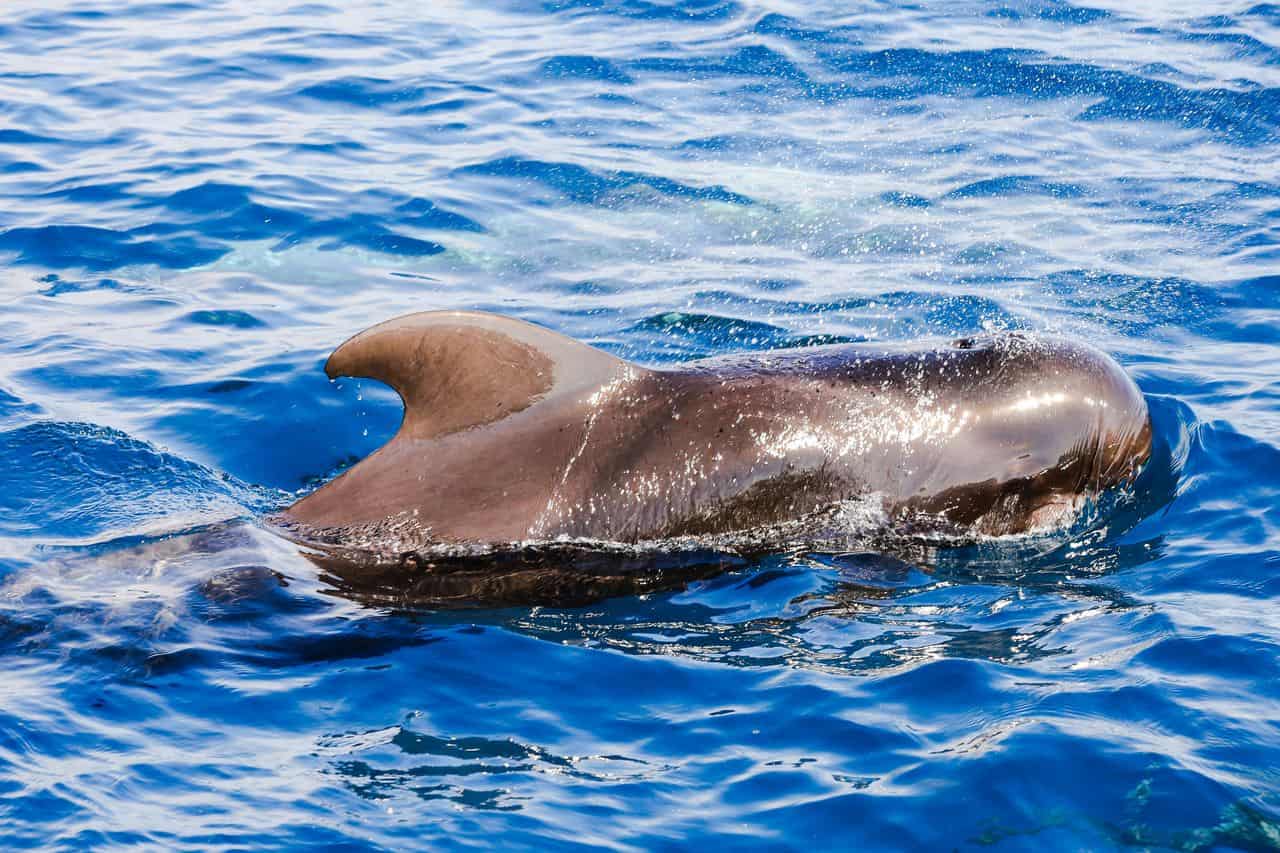

For these reasons, the south and west coasts of Tenerife are the ideal destinations for cetacean lovers with almost a 99% chance to see one of these animals during a boat trip. I worked on these boats for a while and can vouch for these tours. I have had about 2 to 3 interactions with these dolphins (Pilot Whales are technically part of the dolphin family) on every single excursion! Not surprising that Whale and dolphin watching is one of the best outdoor activities in Tenerife.
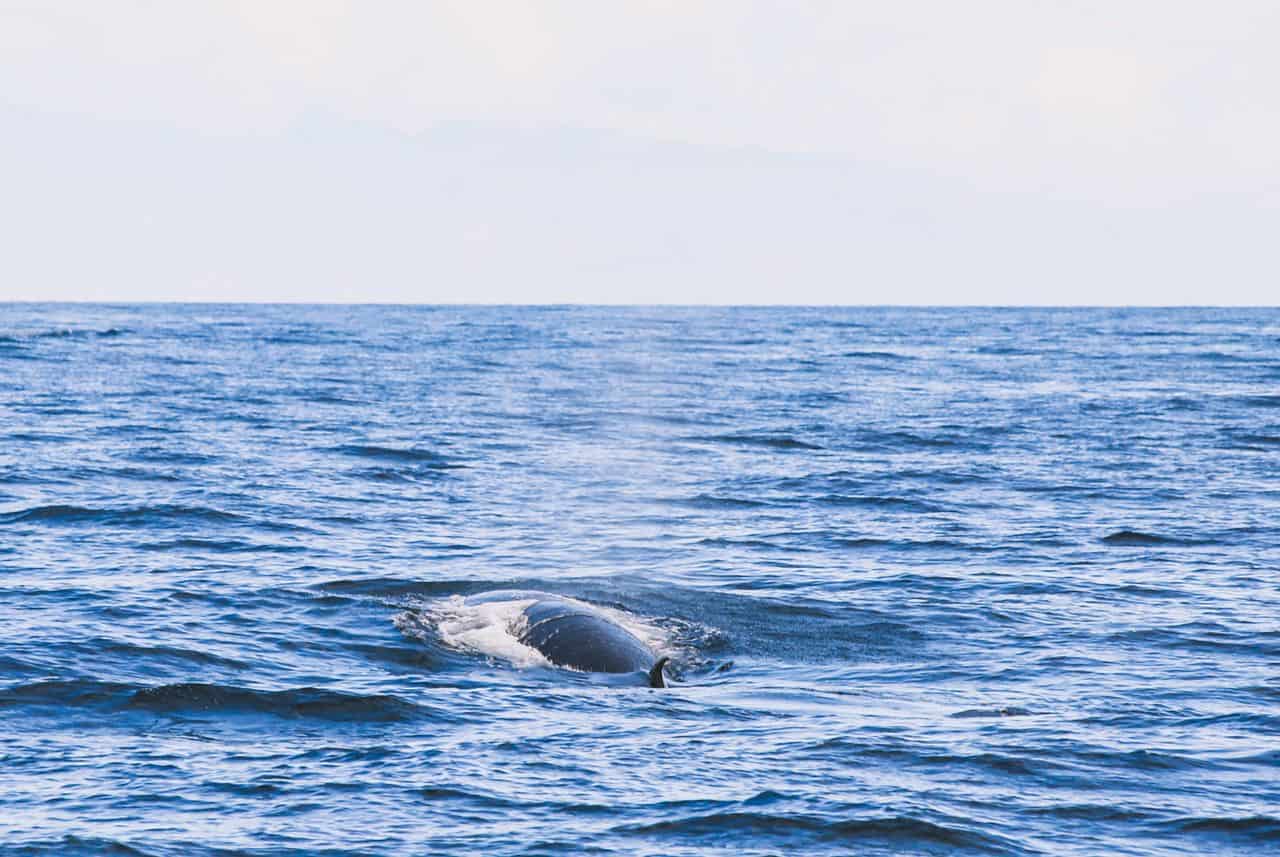
But these two species aren’t the only ones that can be seen in Tenerife. If lucky, you can also spot huge marine mammals migrating near the islands like the Orcas, Sperm Whales, Bryde’s Whales or even the emblematic giant of the sea: the Blue Whale.
Join a 3 to 4-hour tour from Puerto Colon, Los Frailes or Los Gigantes for less than €40. You can book directly at any of these marinas or check online Eden Catamaran, Royal Delphin or Freebird. I have been in these 3 boats and I recommend them without a doubt. To learn more about Whale and dolphin watching and choosing the right responsible tour read our dedicated article.
2. SNORKELLING WITH SEA TURTLES AND KAYAKING WITH DOLPHINS
Boat tours to see marine animals are great, but nothing compares to a good sweat to see dolphins and turtles in the wild. Taking a kayaking excursion is probably the most sustainable and rewarding activity to approach bottlenose dolphins in Tenerife. With zero underwater noise pollution, unlike jet skis and boats, the kayaks aren’t a threat to marine wildlife. On the contrary, the curious dolphins often approach the paddlers by swimming under or alongside the kayaks, and if in luck, by porpoising or even breaching beside.
Of course, sea kayaking requires a bit of elbow grease but the waters of Tenerife are usually calm, allowing both beginners and savvy kayakers to fully appreciate a couple of hours paddling along the coast.
Another good thing about kayaking is that you can reach areas that you can’t on foot. An excellent occasion to find a spot to go snorkelling with turtles… Equipped with snorkels and masks, it is time to anchor the kayaks together and go for a dip near “Punta del Bocinegro”. Here the swallow and quiet sea attract Hawkbill Turtles that like to hang out around scuba divers and snorkelers. An incredible chance to watch them in their natural environment.
Book your kayaking experience! Xplore Tenerife is located in Los Cristianos. The main reason for choosing this company is for their genuine respect and love of marine wildlife. We appreciated the instructions provided and the attention to detail regarding our security and the animals’. The tour costs €45 and leaves from Los Cristianos every day around 10 am. Check availability or book now by using the below widget.

3. SELF-GUIDED HIKE IN EL TEIDE NATIONAL PARK
From its 3,718 m, El Teide is an active volcano found at the centre of the island that hasn’t shown much of its strength since 1909. It is the star of the island for its unique and breathtaking landscapes that may remind you of what the planet Mars could look like.
Take any winding road from the coast up to the mountain and you will cross beautiful Canarian pine tree forests through the thick fog before finally reaching a desolated space above the clouds.
Over the centuries, eruptions made of different rock compositions have shaped the landscape from the yellow sand and red rocky hills to giant boulders and sheets of black lava. And in the middle, mount El Teide, stands proudly as the tallest mountain in Spain, fuming from small faults near its summit.
Fun fact about El Teide National Park
Because of its strong resemblance to Mars’ environment, El Teide National Park was used by NASA to test their Space Rover before sending it to the Red Planet.

The diverse scenery can be appreciated along 21 perfectly marked hiking trails within the National Park. Each trail is different in length and difficulty. Some can be walked or run within a couple of hours while others will require an overnight stay in a refuge. Most trails start from the centre of tourism in El Portillo or at the Hotel “Parador del Teide“. In both places, you will find local rangers giving out maps and excellent information.
Despite the high altitude, hiking within the Teide National Park can be done without a guide. Make sure to bring plenty of water and follow the security rules found on every board at the start of the trail. We especially loved hiking the Roque de Gracias which takes you for 1 to 1.5 hours to giant rock formations and lava fields with Teide in the background. It is an easy 5 km hike as long as you take your time on the steeper parts.
You don’t feel like hiking?
No problem! The national park roads will bring you to the main viewpoints where you can see the volcano, the Cañadas, and a lot of different types of rock formations that are the result of several eruptions.

Boca de Tauce: a fascinating black lava sea cut in half by the road. You can stop on the side of the road to get closer, but the best place is still to park at the viewpoint of the “Narcisses de Teide” for an incredible view of the Nostrils of Teide, Pico Viejo and Teide,
Parador del Teide: from here, you have a pretty view over the “Catedral” and can take a stroll on the right side of “Roque de Gracias“. These rocks that look like hands coming out of the ground are old volcanic chambers that have resisted erosion through time. It is one of the best places to watch the sunset or stargaze at night.
Montana Blanca & Minas de San Jose: There are a few areas where to can park and go for a stroll to a couple of viewpoints over the Seven Cañadas and see yellow sand and bright red rocks. It’s absolutely worth a stop.
Teleferico: hop on the Cable car to take on the altitude and have a unique point of view of the National Park. Return tickets cost €27 return for a foreign adult. It takes 8 minutes to reach the stop at 3,500 m. From there you can walk to the Mirador de Fortaleza or continue to the summit if you have acquired a free permit (You need to book at least one month in advance on this website)
If you don’t have your own car, join a tour or take the bus 492 from Playa las Americas (every day at 9 am – return at 4 pm from El Teide).
4. COASTEERING AND CLIFF JUMPING
The idea of scaling along the side of cliffs, climbing up and down and leaping into the ocean sounds like a perfect way to spend a morning in Tenerife. It may sound mad, but coasteering is becoming more and more popular all around the world.
In Tenerife, coasteering tours leave and head to the cliffs of Marazul. The iconic rock faces have plenty of natural ledges to jump into the ocean from 1 m to 20 m high… Coasteering and Cliff Jumping are suitable for anyone, from kids to adults. It is in fact, very well organised with professionals who know the cliffs, the jumps and the ocean. They will support you every step of the way and if you don’t feel comfortable with a jump or if they think the waves aren’t safe enough, you’ll keep moving onto the next spot on foot.
NOTE | We booked with Xplore Tenerife and had a really good experience. However, as of December 2019, it seems that the company doesn’t offer this outing anymore. We will try to add more details if we find any other company offering this tour. Do not risk doing this on your own as it can be dangerous and guides are specially trained for this sport.


5. SUNRISE FROM EL ROQUE DEL CONDE
Roque del Conde is an emblem of the South of Tenerife. It is one of the main volcanoes that have shaped the island, along with Anaga and Teno before Cañada linked them all. Now, Roque del Conde is a huge hill with a flat top that can be seen from most of the southern coast.
Watching the sunrise over El Medano as the early mist leaves the coast is for sure one of the most incredible and secret activities (shhh!) to do in South Tenerife. To get there, count 1 to 2 hours hike by night along a steep trail from the village of Arona Pueblo / Vento. You will need to drive in the early morning and start the hike by night. It isn’t for everyone because the hike is steadily steep and sometimes complicated to find in the dark. Make sure to bring torches and use a GPS app like Maps.me.
If you don’t feel like hiking at night, or don’t have a car to get up this early, you can still take the bus (stop Gonzalez de Yerro – 342 – 474 – 482) and hike during the day to enjoy a 360° view over El Medano, Los Cristianos and the Adeje coast up to Los Gigantes.
Another way to see the Roque del Conde and the Adeje coast is to go Paragliding!!! A great way to challenge yourself and admire the beautiful island of Tenerife from the sky 🙂

6. STARGAZING FROM EL TEIDE
While the coast of Tenerife is often under clouds and subject to light pollution, Teide rises above all and offers exceptional views of the sky in total darkness. It’s no surprise that Tenerife has become one of the world’s leading destinations in terms of astronomy and stargazing for amateurs and professionals. It is one of the main reasons to choose Tenerife over the other Canary Islands!
If you have access to a car, stargazing won’t be too hard. Choose a night around the new moon and drive up the mountain until you pass through the clouds that often form in the afternoon along the coast. There are several parking spots within the national park where you can settle for the night. We would recommend bringing a couple of blankets as the nights can get really cold at this altitude, even during the hottest months of the year.
For those who don’t have a car on the island, you can join an astronomy tour. Some will include pick up at your hotel, dinner or even a stop at the Canary Islands Observatory. You can book this favourite tour online.
7. RELAXING AT THE BEACH
What would be a trip in Tenerife without a few hours chilling at the beach? We won’t lie, this isn’t really our thing but we still enjoyed a couple of hours here and there getting red cheeks while enjoying our first swim of the year…in January! Tenerife is exceptional and whether you are spending time in the south or the north of the island, you will find incredible places to drop your towel by the ocean.
Being a volcanic island, Tenerife mainly offers a dreadful coast with strong currents, huge waves and rocky seafloor. Fortunately, a few beaches have been reshaped to offer safe bathing and relaxing spaces to locals and tourists.
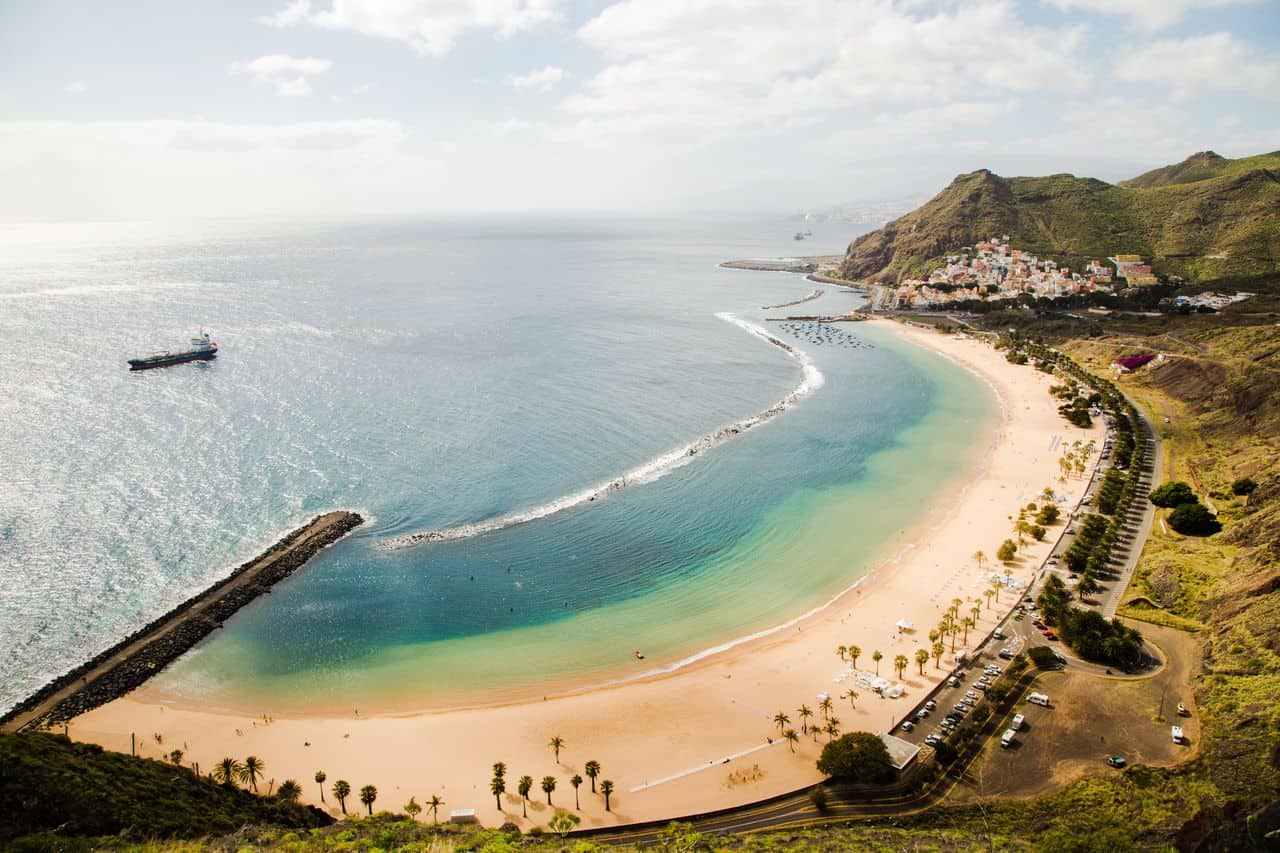
Las Teresitas near Santa Cruz de Tenerife is the perfect example of the Canarian coastal management where fine sand has been imported and shore barriers created to protect the beach from the strong waves from the Atlantic ocean. But this isn’t the only one, head to Puerto de La Cruz or Las Americas and you will find large strands of sand, free from plastic waste, and crystal clear water. One thing is sure, other than the climate, you will appreciate Tenerife for how nice and clean the beaches are.
If you aren’t much of a beach bum, a few places will let you rent Surfboards or Paddleboards around the island. Both of these activities are quite popular in Tenerife. I would recommend the peaceful waters of Los Gigantes for Stand-up Paddleboarding, and Puerto de la Cruz or El Medano for Surfing.

8. HIKE THE ANAGA MOUNTAINS
The tropical landscape of the Anaga Mountains is home to the most important assortment of endemic species in Europe. With almost 70 cm worth of rain each year, the northeast range of Tenerife is home to a unique climate suitable to the development of a biosphere impossible to find anywhere else. It includes humid forests, exceptional laurisilva woodlands and in some parts, ferns that can reach up to 20 m high.
An incredible place for nature lovers that remains off the beaten path as it is mostly unknown from mass tourism. The Anaga Mountains are in fact, often reduced to a quick visit to the small towns of Taganana and Bajamar or the half-moon beach of Las Teresitas.
But what makes a trip to the Anaga Mountains unforgettable is the landscapes only accessible on foot. You will find here as many trails as there are days in a year and what’s more rewarding than walking a few hours to witness how beautiful remoteness is.
How to get to the Anaga Mountains?
Most people heading to the Anaga range base themselves in San Cristobal de la Laguna or in Santa Cruz de Tenerife but for those in the Southern part of the island the mountains can be reached within 1.5 hours by car.
Visit Independently | Take the 945 from Santa Cruz or the 76/77 from La Laguna to get to Cruz del Carmen or La Casa Forestal from where many hikes start. You can come back to these places or hike to small villages such as Punta del Hildago, Taganana or Chamorga and take a bus back into town. Check the website Titsa to learn more about the bus lines in Tenerife.
Take a tour | You can also join a hiking tour from either the South of the island or the North (Santa Cruz de Tenerife), depending on where you stay. The transport and guide are included.


HOW TO GET TO TENERIFE?
Tenerife is the largest island of the Canaries, which is found off the coast of Morocco in the Atlantic Ocean. There are plenty of direct flights from the main European cities such as Dublin, London, Paris or Madrid on a daily basis and for a ridiculously cheap price. you can also take a ferry from either La Gomera or Gran Canaria.
WHERE TO STAY IN TENERIFE?
The island has two airports, one near Santa Cruz de Tenerife and La Laguna in the north, and one near Los Cristianos in the south. They are both very well connected to the main cities of the island by local transportation. Whether you land in the south or the north and need to get to the other side of the island, it won’t be much of a pain thanks to an excellent bus system, “Titsa“.
The southwest of the island is very touristic, while the north is mainly inhabited by locals. This means that you will find more hotels, apartments, Airbnb and all-inclusive resorts in the Adeje and Arona areas than in the north of the island.
At the end of the day, it really depends on what you prefer. The northern towns like Santa Cruz and La Laguna have accommodations, but short-term tourists usually prefer staying in the south for better weather and easy access to many tourists’ services. Here is a selection of accommodations we stayed at or were recommended.
North
$ Wanderlust Hostel – Santa Cruz de Tenerife – Avg. €20 per night
$$ Homelys Apartment 2 bedrooms – La Laguna – Avg. €56 per night
$$ Sol Hotel – Puerto de la Cruz – Avg. €70 per night
$$$ Hotel Best Semiramis – Puerto de la Cruz – Avg. €100 per nigh
South
$ Hostel de la Playa – Costa Adeje – Avg. €25 per night
$$ Costa Adeje Garden Apartment – Avg. €55 per night
$$ Haciendas Appartement – Costa Adeje – Avg. €80 per night
$$$ Hard Rock Hotel – Avg. €150 per night

ARE YOU ON PINTEREST?
What about saving this post to your Pinterest board?
Click on the photo to save this blog post for later. We are also on the platform and we love pinning great travel tips. Follow Tales From The Lens’ boards to see our latest pins.
Don’t be shy, come say hi!
Please note │ This blog post may also include affiliate links to hostels or products we recommend, which means if you buy something following a link on this page, we’ll get a small commission. This will be of no extra cost to you but will help us continue running this blog. Thank you for your support.

About the Author
Jen is the Funder, Author & Photographer behind Talesfromthelens.comJen has lived for the past 15 years across Oceania and Ireland while also travelling in Latin America, North America, and Europe. She has visited more than 65 countries and set foot on every continent in the world! She is a coffee nerd, passionate about photography, wildlife, and outdoor activities.
For more info, check out the About page.