
If you’re looking for an adventure that will take your breath away, look no further than Vatnajökull National Park. Located in the southeast of Iceland, this large national park covers almost 15% of the country’s landmass and hosts the largest glacier in Europe.
With its jaw-dropping views, thrilling hikes and breathtaking ice caves, the park offers visitors a unique experience that is sure to stay with them forever.
Let’s explore what makes this glacier so special and what activities are available to you throughout the year.
Vatnajökull National Park
The National park was created in 2008 when the Icelandic government combined the Vatnajökull glacier with two pre-existing national parks (Skaftafell nature reserve and Jökulsárgljúfur). This new protected area covers today almost 15,000 km2 which is the equivalent of 15% of Iceland’s territory.
On the highlands, the untouched landscape stretches as far as the eye can see, with snow-capped mountains and deep crevasses carved out by centuries of glacial movement. In fact, just the glacier itself accounts for 8% of Iceland and conceals no less than 7 active volcanoes!
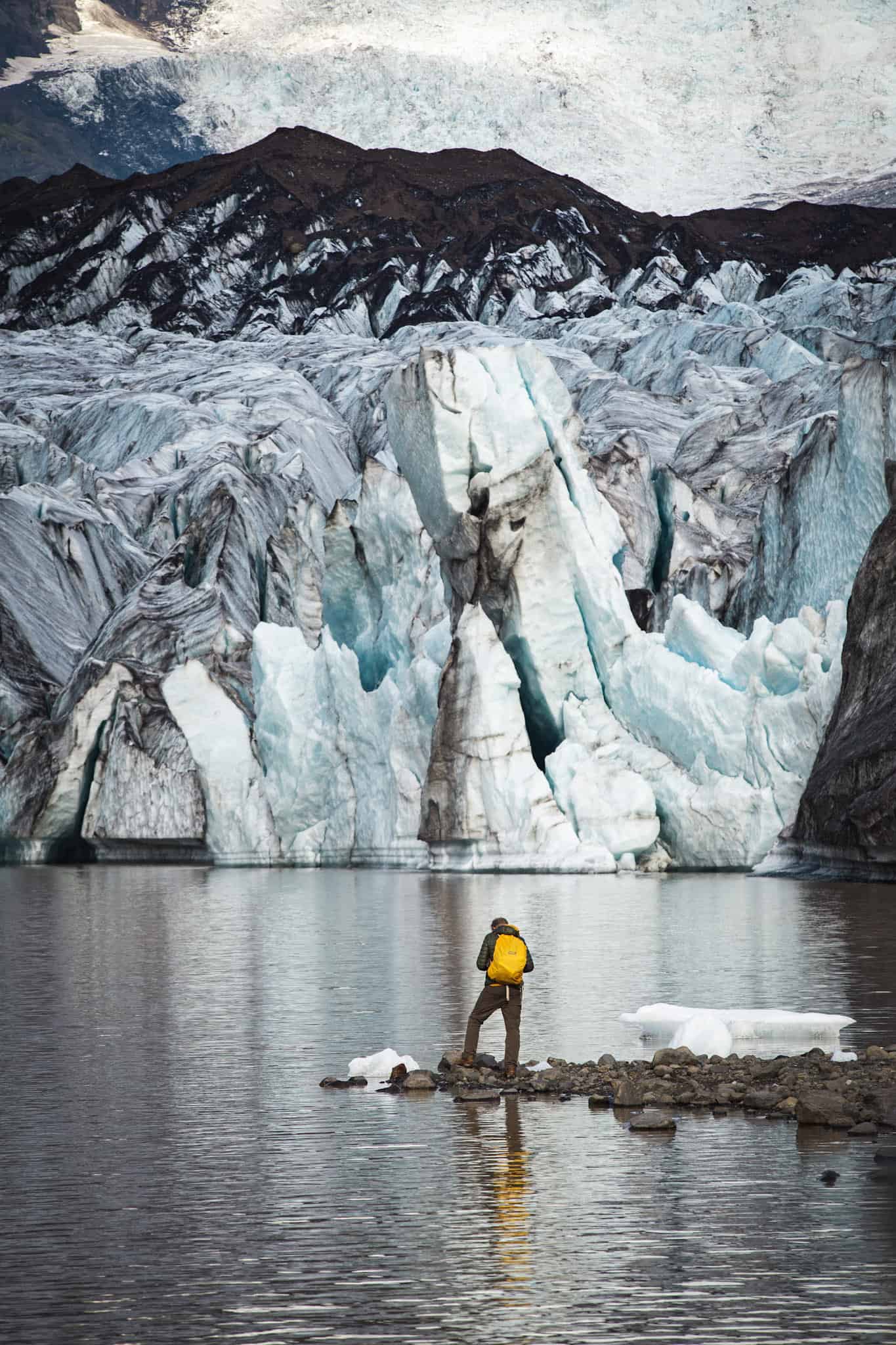
Closer to the sea, the lowlands are a lot more accessible to visitors all year long. On that side of the national park, you will find touristic infrastructures, gorgeous glacial lakes and lagoons dotted with floating icebergs, as well as some incredible hikes leading to beautiful waterfalls.
Fun fact: there are several volcanoes located within the Vatnajökull ice cap, including Grímsvötn – the most active volcano in Iceland – of which many spectacular eruptions have been observed over the years.
Note on Jökulsárgljúfur Canyon
While Jökulsárgljúfur canyon is located on the north side of the country (and geographically very much away from Vatnajökull glacier), this beautiful place as well as Detifoss Waterfall and Ásbyrgi are actually part of the Vatnajökull National park boundaries! However, we will not be covering this area in this article.

How to get to the Vatnajökull National Park?
Driving to and around Vatnajökull National Park
With its vast open spaces and awe-inspiring landscapes, driving around Vatnajökull National Park can be one of the most unforgettable travel experiences in Iceland.
The best way to get to the Vatnajökull National Park is by renting a car or a campervan and driving to the most accessible areas of the park like Skaftafell nature reserve or Jokulsarlon. These beautiful areas are located about 350-400 km from Reykjavik along the main road.
While this seems like a short distance, don’t underestimate the time you will need to get there. Depending on the season and driving conditions you may need to split your drive across a couple of days. There are a lot of other places to see on the way such as the Seljalandsfoss, Skogafoss and Reynisfjara black sand beach.
Why not include the park on a south coast road trip? If that’s something you are looking into, make sure to check out our 7-day road trip itinerary along the south coast of Iceland.
Alternatively, if you are short on time and can’t drive all the way there and back on your own, check out our article about the best a day-trip from Reykjavik.
Lowlands
To get to the lowlands of the national park from Reykjavik or Keflavik international airport, follow Road 1 toward the southeast of the country.
You will first pass the towns of Selfoss, Vik and Kirkjubæjarklaustur before arriving at the Skaftafell visitor centre. The drive is pretty straightforward and you can’t get lost! Continue east on the same road to reach Jökulsárlón lagoon, diamond beach and Höfn.
Pss!! Driving in Iceland can be tricky, which is why we put together a list of our best tips for a safe road trip on the island. Click here to check it out (link coming up).
Highlands
To visit the North side and most remote parts of the Vatnajökull National Park, you will need a 4WD as the roads on the highlands are only accessible to these vehicles and experienced drivers.
The F-roads F-26 passes through Nýidalur and F-910 will get you to the north part where you can access the crater Lake Askja. On the East side, take the F-902 to reach Kverkfjallaleið and the F-909 to the Snæfell Wilderness Area.
Finally, to the west, F-206 will take you to the Laki craters, and the F-235 to Langisjór.
Safety first! Driving within the highland of Vatnajökull National Park can be strenuous and dangerous with large loose rocks, potholes and difficult river crossings. Don’t venture if you are not an experienced 4WD driver. Make sure also, to check the weather and road conditions before driving in the backcountry. This official website road.is will provide you will all the information you need and this one shows all the maintained roads in Iceland.
Vatnajökull National Park Public Transport
It is totally possible to get to the Vatnajökull National Park by public transport from Reykjavik but that will require organisation and a lot of time!
Bus 51 from Mjódd in Reykjavik services Skaftafell and Jökulsárlón. There are several buses departing Reykjavik each day on that line but not all departures go straight to the National Park. In fact, Skaftafell, Jökulsárlón and Höfn are only served once a day via route 51 (except Wednesdays and Saturdays). You can find the timetable here.
You can take luggage and even bicycles on that route.
Cost
Reykjavik to Skaftafell: 10,780 ISK
Reykjavik to Jokulsarlon: 12,250 ISK
Skaftafell to Jokulsarlon: 1,470 ISK
To save on the transport fee, buy a 1-month period card for 29,900 ISK. It will allow travelling as much as you want in South Iceland for that period of time.
How to pay for your bus ticket
You can pay with a debit card or by cash directly to the bus driver. Contrary to the Reykjavik city bus, the countryside drivers give change back. Otherwise, you can buy your ticket via the Strætó app.
Note you cannot pre-book a seat on that route. Just turn up at the bus station or bus stop.

What to do in Vatnajökull National Park?
Vatnajökull Glacier walk
One of the most unique ways to experience Iceland and more particularly Vatnajökull is to go on a glacier walking tour.
These tours across the glaciers are organized by experienced guides who know how to navigate these treacherous paths safely and provide visitors with interesting information about the surrounding unique icy landscapes. Tours depart Skaftafell campground and Jökulsárlón parking daily (depending on the season) if the weather permits it.
Take a tour: It is not allowed to venture on the glacier on your own unless you are qualified. Don’t be a hero, glaciers are dangerous and hiking on them requires specific equipment like crampons and an ice axe.
There are a few companies in Iceland offering glacier walking tours depending on the season. We would recommend booking with a local company like Icelandic mountain guides or Local guides. We took that 3 to 4-hour tour and it was the highlight of our winter trip!
They offer full-day and half-day walks from Skaftafell all year long.
Blue Ice Experience – from Skaftafell Icelandic Mountain Guides hut – 3-4 hours // €100 per person (the one we took)
Half-day glacier hiking tour – from Skaftafell with Troll Expeditions – 3 hours // €86
Full-day glacier hike tour – from Skaftafell with Troll Expeditions – 5 hours // €126 per person

Visiting an Ice Cave
Seeing firsthand a glacier carved by time into stunning shapes is a truly unforgettable experience. There are countless Ice caves within the Vatnajökull national park but only a handful are accessible to the public and only during wintertime – usually from November until April.
Since it is not allowed to enter an ice cave without a qualified guide in Iceland, you must book a tour. Generally, the guides drive you near the Ice cave with a massive Super Jeep – which in itself is quite an adventure (I personally didn’t like it but it’s the only way to reach the cave) – and then walk with you to the entrance of the cave.
Famous Sapphire Ice cave – from Jökulsárlón with Local Guides – 3 hours // €151 (the one we took)
Aurora Ice cave – from Jökulsárlón with Icelandic Mountain Guide – 3 hours // €163 per person
You can also combine a Glacier walk with ice caves. In this case, you will reach more remote caves which tend to be a lot less crowded.
Glacier Hike + Ice Cave – from Jökulsárlón with Local Guides – 6 hours // €220
Ice climbing
Ice climbing in Iceland can provide a thrilling experience.
Perched amidst the majestic landscape of snow and ice, climbers have the opportunity to explore crevasses, ridges and ice walls while they traverse some of the most beautiful natural ice formations in the world.
Ice climbing requires a certain level of skill and expertise, but with the right equipment and proper instruction and guidance, it is entirely achievable for motivated individuals looking for the adventure of a lifetime. In Skaftafell, adventurous souls of any skill level can join Ice climbing guided tours.
Skaftafell Ice Climbing + Glacier hike – from Skaftafell with Troll Expeditions – 4 hours // €188 per person

Hiking
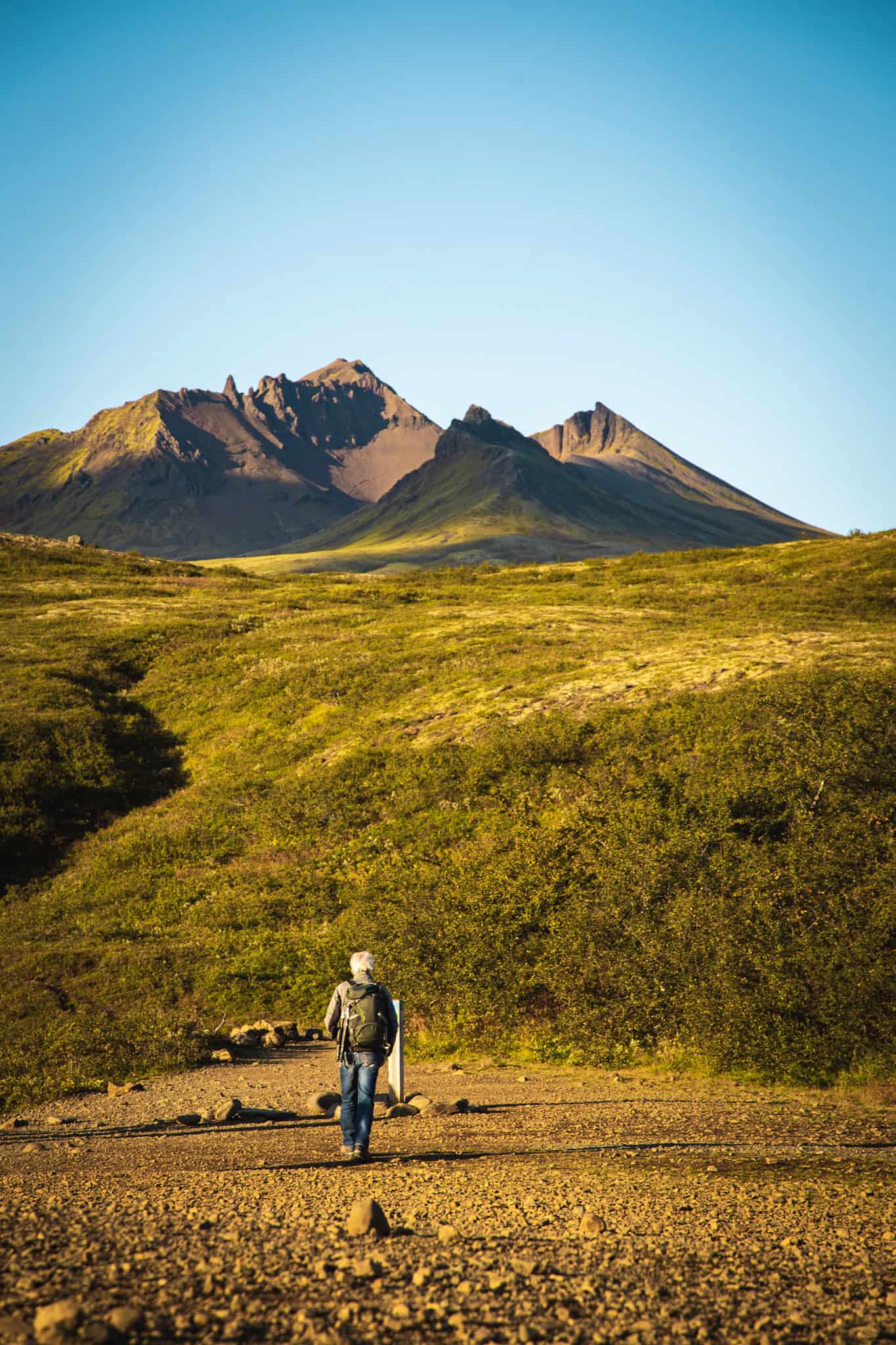
As the largest national park in Europe, Vatnajökull offers plenty of hiking trails during the summertime.
The most popular area to hike is around Skaftafell where several routes depart from the visitor centre. One of the main hiking paths (S2) will take you to one of the top 10 waterfalls to not miss in Iceland, Svartifoss.
For those who have a bit more time, head East to Sjónarnípa for stunning viewpoints overlooking glacier fields.
You can also find summer trails around Jökulsárlón, Laki or Aksja. We would recommend visiting the Vatnajökull National Park website to learn about all the hiking trails available or using the Alltrails app on your phone. We have also a dedicated article about day hikes in Iceland if you are looking for some hiking inspiration outside of Vatnajökull.
Skaftafell hike: No need to take a tour to hike within the Skaftafell national park. Pop by the visitor centre if you want details on all the trails available and don’t forget to pay for the parking!
Kayaking and boating
For tourists seeking an exhilarating experience, kayaking Jökulsárlón Lagoon in Iceland offers unparalleled thrills. During kayak tours of the lagoon, visitors are immersed in a breathtaking landscape and have the chance to paddle through floating icebergs. Not to mention the potential chance to see seals gliding through the waters.
If kayaking isn’t for you, you can also hop on an iceberg tour boat! For sure, an adventure you won’t forget!
Info: There are a few companies you can take kayaking and boat tours with at Jökulsárlón – check their website here: https://adventures.is/ – https://www.iceguide.is/ – http://icelandadventuretours.is
If you are looking for more unique things to do in Iceland, check out our dedicated article on the subject!!

Best season to visit the Vatnajökull
The best time to visit the national park is between June and August when the weather is at its warmest and the days are long enough for the visitors to enjoy a wide range of activities like hiking. In the summer, the highlands F-roads are also open and accessible allowing the exploration of less visited areas.
Outside of the main season, from October to May, days are a lot colder (and shorter) which generally affect the driving condition and limit places that can be reached. However, winter months are perfect for icy activities such as glacier walks, ice caving or ice climbing.
Stormy and snowy weather can also block roads and tours can be cancelled, so allow a bit more time when travelling during that period.
Where to stay in Vatnajökull National Park?
For those seeking a budget accommodation option, there is a couple of campsites available throughout the park. On the highlands, there are also huts for hikers.
People travelling by campervan on the south side will have the only option to park at either Skaftafell visitor centre campground or at Svínafelli campground found a bit further down the road.
On the flip side, several hotels and guesthouses near the national park can provide a more luxurious getaway while still being close enough to nature. Here is a selection below:
Less than €150
More than €250
Read More: Best Tips to Travel on a Budget in Iceland

FAQ
Can you drive through Vatnajökull National Park?
The national park is easily accessible via ring road 1. However, the most remote part of the park, on the highlands, is only accessible with 4×4 vehicles due to rugged terrain and river crossing
How far is Vatnajökull National Park from Reykjavík?
The distance between Reykjavik and the boundaries of the Vatnajökull National Park is around 300km. Due to road speed limitations and weather conditions, it takes around 5 to 7 hours to drive to Skaftafell from Reykjavik.
What is Vatnajökull famous for?
Vatnajökull is known for being the largest glacier in Europe. Its icecap and glaciers cover more than 8% of the country’s landmass and host no less than 7 active volcanoes!
How much time do you need at Vatnajökull National Park?
Allow a few days (2 t 3) to truly appreciate and visit Vatnajökull National Park from the south coast. There are a lot of activities that require time and can’t be rushed. If you intend to visit the highlands part of the national park, you will need to account also for longer driving.
Can you visit ice caves in Iceland on your own?
No. In Iceland, it is strictly mandatory to visit Ice Cave with a qualified glacier guide for safety reasons.
Can you hike on Vatnajökull?
There are a lot of hiking trails within the Vatnajökull National Park. These are mostly accessible during the summer month. In the winter you can hike on some of the glaciers as long as you are accompanied by a qualified guide.
No matter why you choose to visit Vatnajökull glacier; it will be an adventure like no other! From its stunning landscape to its thrilling hikes and activities; there’s something magical about this place.
So make sure to add Vatnajökull national park to your itinerary and create memories that will last a lifetime
ARE YOU PLANNING A TRIP TO ICELAND?
We have a lot of articles about travelling in Iceland and add new ones each month. Check out our latest guides below to prepare for your trip…
- 10+ Must-See Waterfalls in Iceland
- Best Day Trips from Reykjavik
- Self-Drive Guide to the Golden Circle
- 5 Beautiful Black Sand Beaches
- Top Day Hikes in Iceland
- Iceland on a Budget
- Exploring Vatnajokull National Park
- 7-day Road-Trip Itinerary to the South Coast
- 10 best hot springs in Iceland

ARE YOU ON PINTEREST?
What about saving this post to your Pinterest board?
Click on the photo to save this blog post for later. We are also on the platform and we love pinning great travel tips.
Follow Tales From The Lens’ boards to see our latest pins.
Don’t be shy, come say hi!
Please note │ This blog post may also include affiliate links to hostels or products we recommend, which means if you buy something following a link on this page, we’ll get a small commission. This will be of no extra cost to you but will help us continue running this blog. Thank you for your support.

About the Author
Jen is the Funder, Author & Photographer behind Talesfromthelens.comJen has lived for the past 15 years across Oceania and Ireland while also travelling in Latin America, North America, and Europe. She has visited more than 65 countries and set foot on every continent in the world! She is a coffee nerd, passionate about photography, wildlife, and outdoor activities.
For more info, check out the About page.
This article blew me away! You gave so much solid advice on what to see and do at the park. I would definitely want to experience the ice caves and glacier walking. And your nature photos are gorgeous. Well done!
I need to get back to Iceland – this looks incredible. Thank you so much for sharing. Your photos are stunning
This looks AMAZING! I love that it seems more off the beaten track than other places in Iceland. ANd your pics are stunning!! I would love to explore here one day!
I can’t believe that Vatnajökull National Park is the largest glacier in Europe, and this is the first time I have heard about it. It is absolutely stunning place, especially the Sapphire Ice cave. I would love to explore it one day. Thanks for the added extra info.
I know right!? Even if it is a touristy country, most of its incredible beauty remains unknown.
We loved visiting Vatnajökull when we traveled the ring road by campervan. My only regret was not being there in the winter to see the ice caves. Beautiful photos.
Oh Karen, I am sure you will see them next time!! I def recommend visiting Iceland for the 1st time in the summer. But if you have the chance to visit a second time, go in the winter. It i another world 🙂
Beautiful photography and super informative. Thank you for sharing!
Thank you Mari.