
It is impossible to visit the region of Occitanie without stopping at one of the Cathar Castles. These fortifications have been dotting the Languedoc landscapes since the 12th & 13th centuries. They are the emblem of the medieval era in the south of France.
Perched atop rugged hilltops, they were strategically positioned to oversee ancient trade routes and provide refuge to the Cathars. Although, they are now mostly ruins showcasing the tragic history of the religion wars.
There are about 14 Cathar castles in southern France, out of which only a few can be visited. In this article we will be sharing the best Cathar castles to visit and everything you need to know prior to your visit.

Best Cathar Castles to visit
Montségur Castle
Perched atop a rocky outcrop at an altitude of over 1,200 meters, Montségur Castle is a symbol of Cathar defiance. This fortress was the site of a tragic siege in 1244 where over 200 Cathars chose martyrdom over renouncing their faith.
Today, Montségur offers not only a glimpse into the past but also panoramic views of the surrounding Ariège region.
Fun Fact ¦ Montségur is often associated with legends of a secret treasure, rumoured to have been smuggled away during the siege’s final days. Some believe that this treasure may even be the real Holy Grail.
How to get there ¦ Montségur is accessible by car from the village of Montségur, with a free parking area at the base of the pog (“peak” in old local language). From there, you will need to hike about 30 minutes to reach the castle ruins located 170 m above the road. Allow 2 hours minimum to climb up, visit and get back down.
Cost/Entry ¦ Entry fees start from €5.50 for adults, with reduced rates for children. The site is open everyday from July until December. The ticket office is located on the way to the castle, not at the parking. Credit cards are accepted.
Guided tours ¦ Depending on the season and the day, free guided tours of the castles are offered to the visitors. Here is the official website where you can find the details.
Peyrepertuse Castle
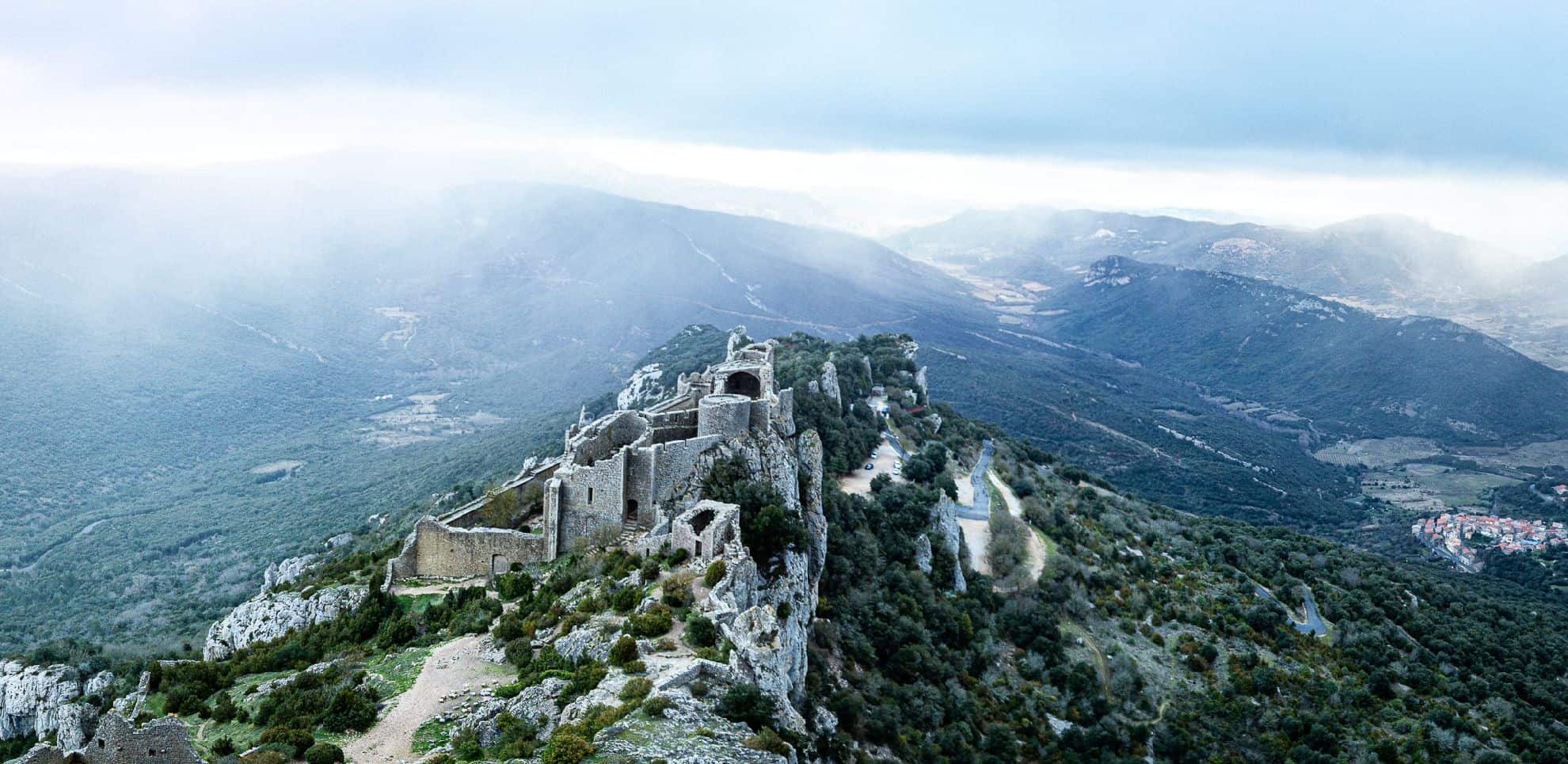
Stretching along a limestone ridge, Peyrepertuse Castle is one of the largest Cathar fortresses, known as the “Celestial Carcassonne.” Its walls and towers seamlessly integrate with the cliff face, creating a formidable bastion that seems to emerge from the rock itself.
This is one of the most popular Cathar Castles in Southern France, with almost 100,000 visitors each year!
Fun Fact ¦ Peyrepertuse Castle was expanded by the French king Louis IX after the Cathar period, which added to its impressive size and fortifications.
How to get there ¦ The castle is best reached by car via Duilhac-sous-Peyrepertuse. There is a car park just below the cliff where you then take a small walking path up to the ruins. It takes about 15 min to walk the steep and rocky path to the castle, so make sure to allow 2 hours minimum to visit Peyrepertuse from the main car park.
If you have time and feel like a good hike, you can take the scenic path from the village. It involves a steep but rewarding climb.
Cost/Entry ¦ Entry is €8 for adults, with concessions available for children and larger groups. It is free for children under 6 years old. The castle is open daily all year long with opening hours variating from 9 am to 7pm depending on the season. For more details check the official website.
Quéribus Castle
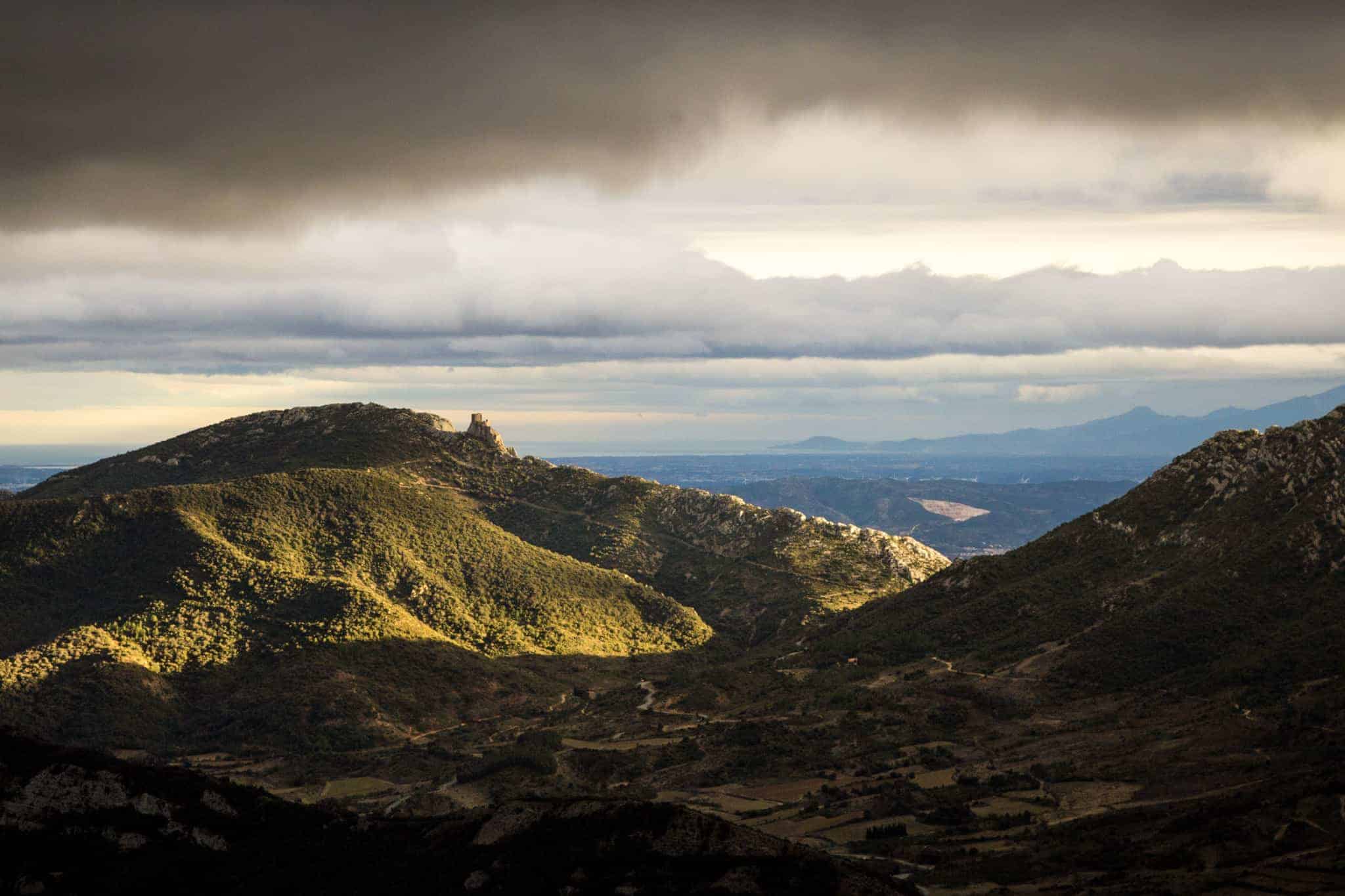
Quéribus Castle stands as a sentinel on the highest peak in the area, offering a strategic vantage point that was crucial during its time. It is known as the last stronghold where Catharism persisted after the fall of Montségur.
Fun Fact ¦ Quéribus is famed for its “hall of columns,” a beautifully preserved room that showcases the architectural prowess of its builders.
How to get there ¦ Accessible by car, visitors can drive to Cucugnan and then follow the signs to the castle. A parking lot is available, followed by a short (10 min) uphill walk to the entrance.
Cost/Entry ¦ The entrance fee starts at €7.5 per adult, with discounts available for children, students, and groups. The site is opened all year long with opening hours fluctuating between 9 am and 8 p.m. depending on the time of the year. Find the opening hours here.
Aguilar Castle
Aguilar Castle, with its distinctive hexagonal inner bailey, is one of the “Five Sons of Carcassonne”, with a network of fortresses defending the border against Spain. Surrounded by vineyards, its ruins reflect the blend of military strategy and the beauty of its natural setting.
Fun Fact ¦ The castle’s design is a rare example of transitional architecture, featuring both Romanesque and Gothic elements.
How to get there ¦ Located near Tuchan, Aguilar is accessible by car. Parking is available nearby.
Cost/Entry ¦ Entrée fee ranges from €2.5 to €4 per adult, making it one of the more affordable Cathar castle visits. It is not open all year long and depends on the month, only accessible on weekends. Before your visit, please check the opening details on the Aude tourism website.
The Four Lastours Castles
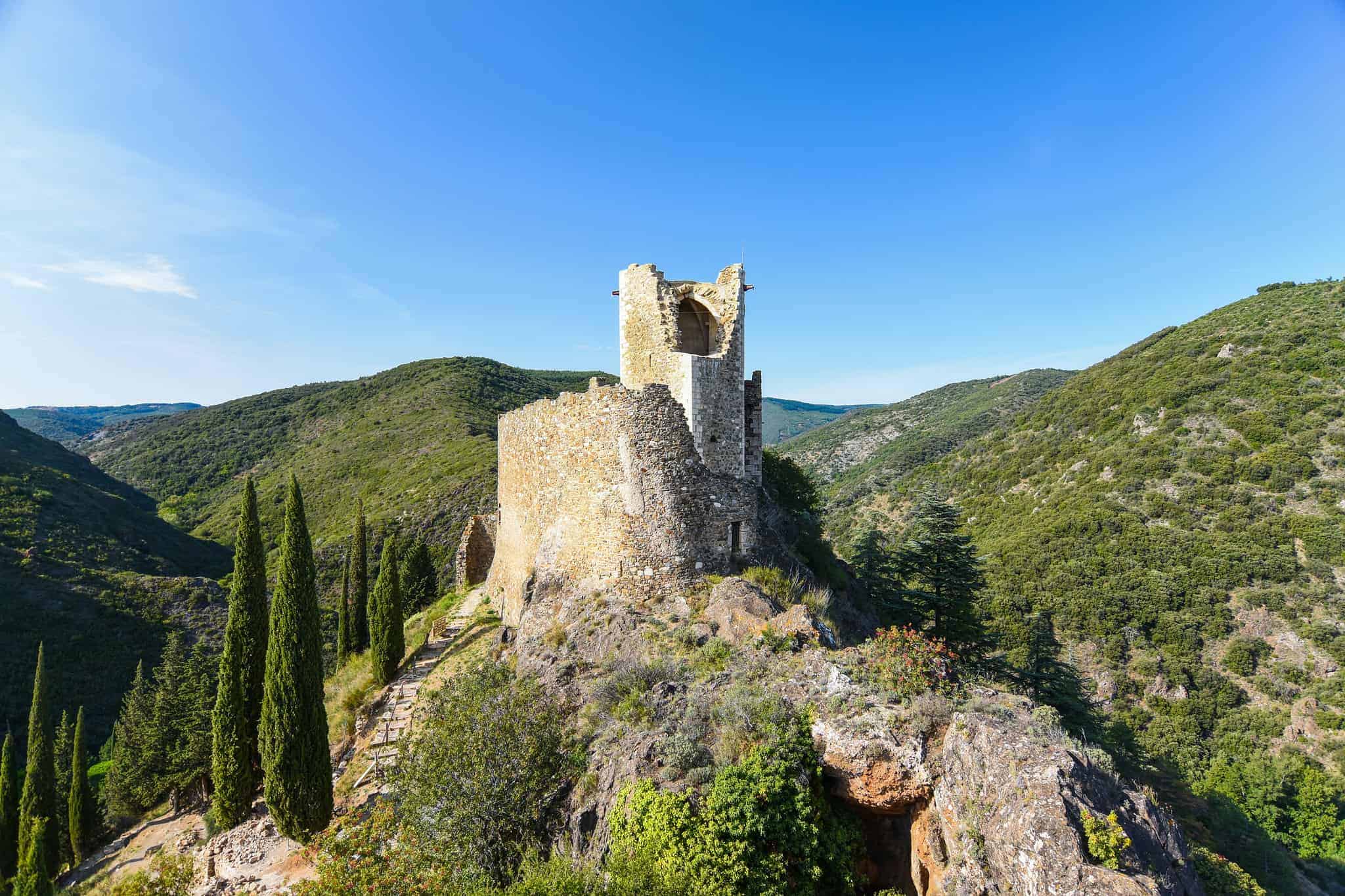
The Four Lastours Castles (Cabaret, Surdespine, Quertinheux, and Tour Régine) stand on a rocky spur above the village of Lastours, offering a stunning example of medieval military architecture. These castles were a single fortress complex, providing a layered defence system that was difficult for attackers to breach.
Fun Fact ¦ The layout of the four castles is unique, with each castle positioned to support the others defensively, showcasing advanced military strategies of the time.
How to get there ¦ Lastours is accessible by car, with a dedicated parking area for visitors. A steep walking path leads from the village up to the castles, offering breathtaking views along the way. There are several routes to choose, from 3 to 6 km, depending on what you wish to see.
Cost/Entry ¦ Entry to the site costs around €7 for adults, which includes access to all four castles and the archaeological exhibits.
Other Cathar Castles in Southern France
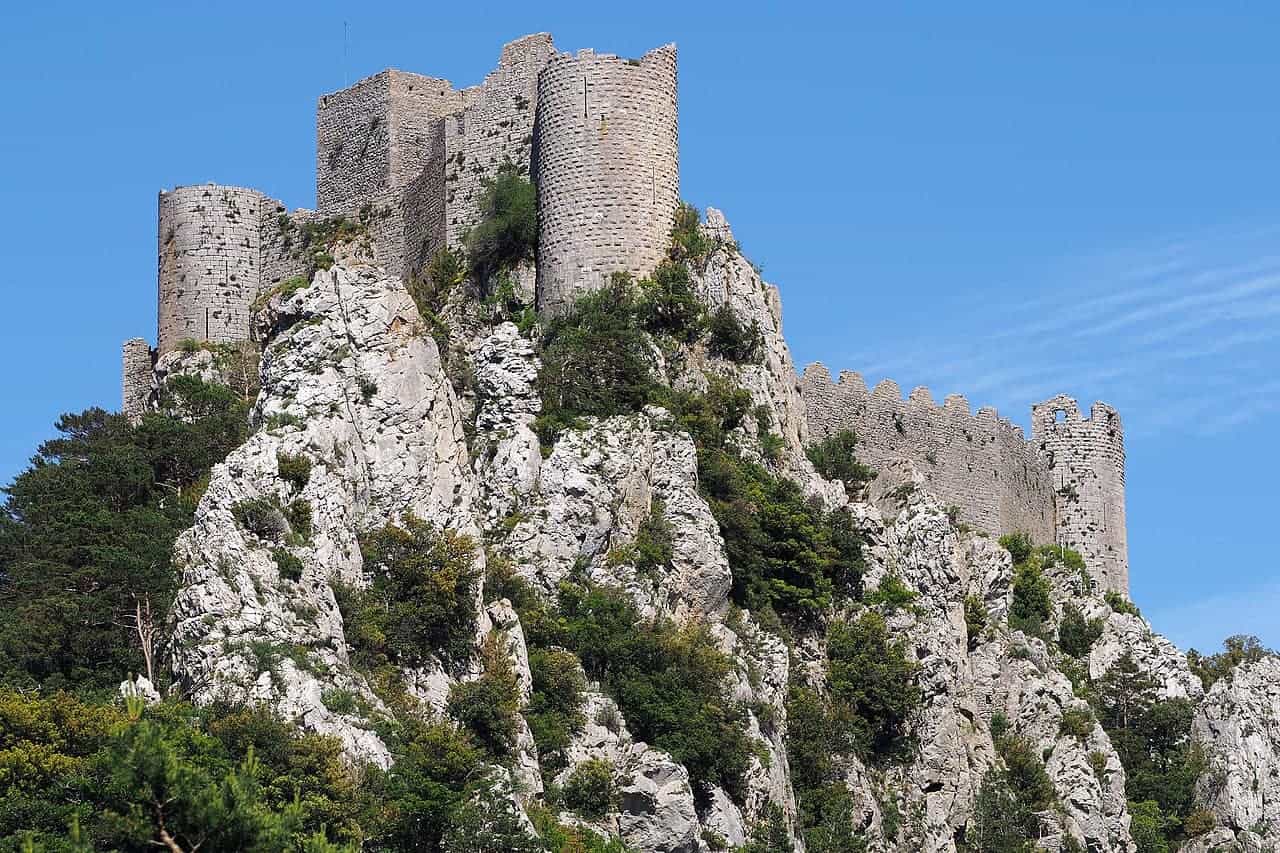
Puilaurens
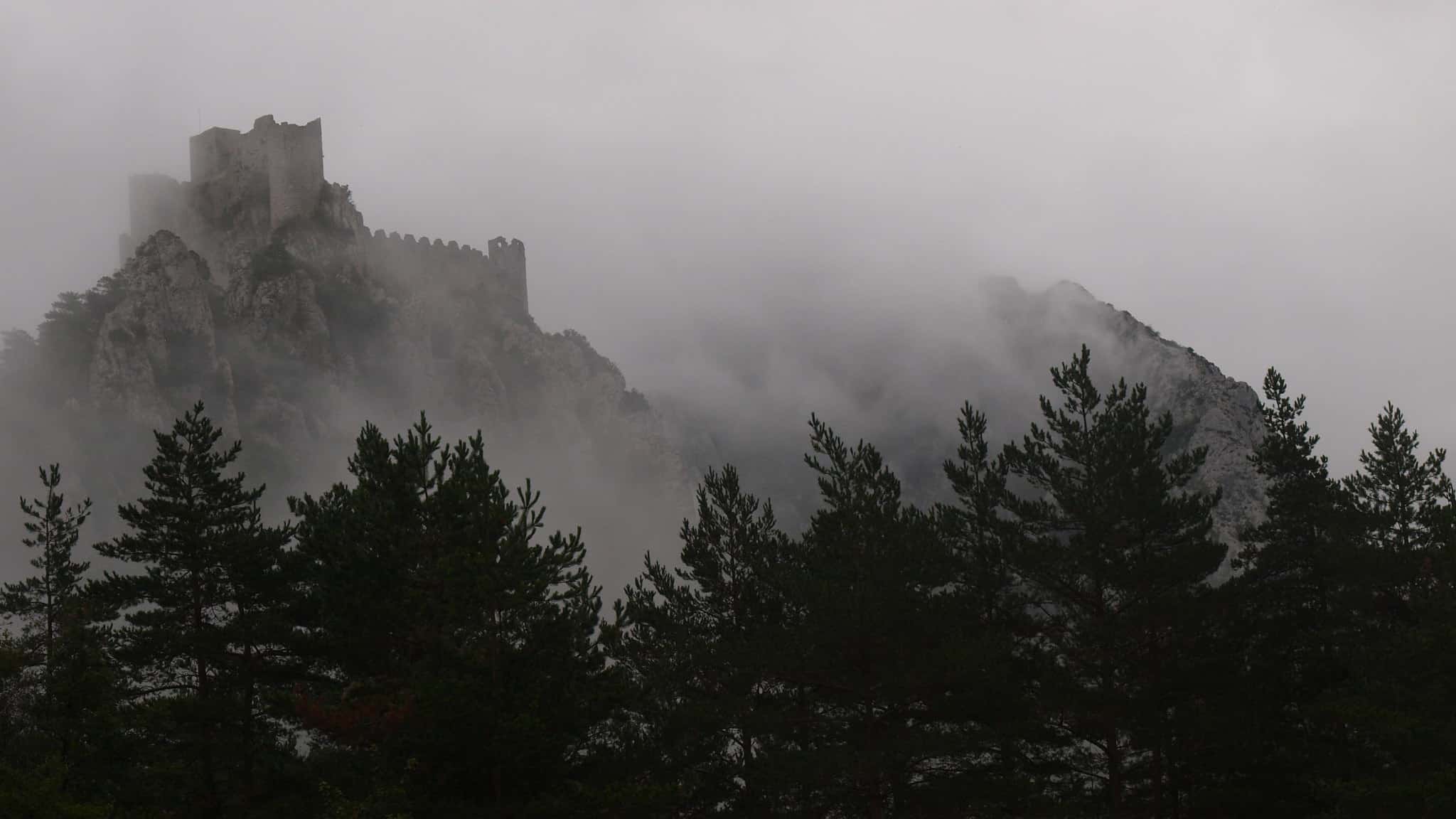
Puilaurens Castle, perched on a craggy ridge, served as a formidable bastion and a safer location for Cathars during the Albigensian Crusade. Surrounded by deep forests, its strategic position made it nearly impregnable.
Fun Fact ¦ Legend has it that the castle is haunted by the White Lady of Puilaurens, who appears on full moon nights.
How to get there ¦ The castle is accessible by car, with parking available at the base. From there, a long steep path with staircases leads up to the castle through the forest.
Cost/Entry ¦ €5 per adult – from April until September & on weekend in February and March.
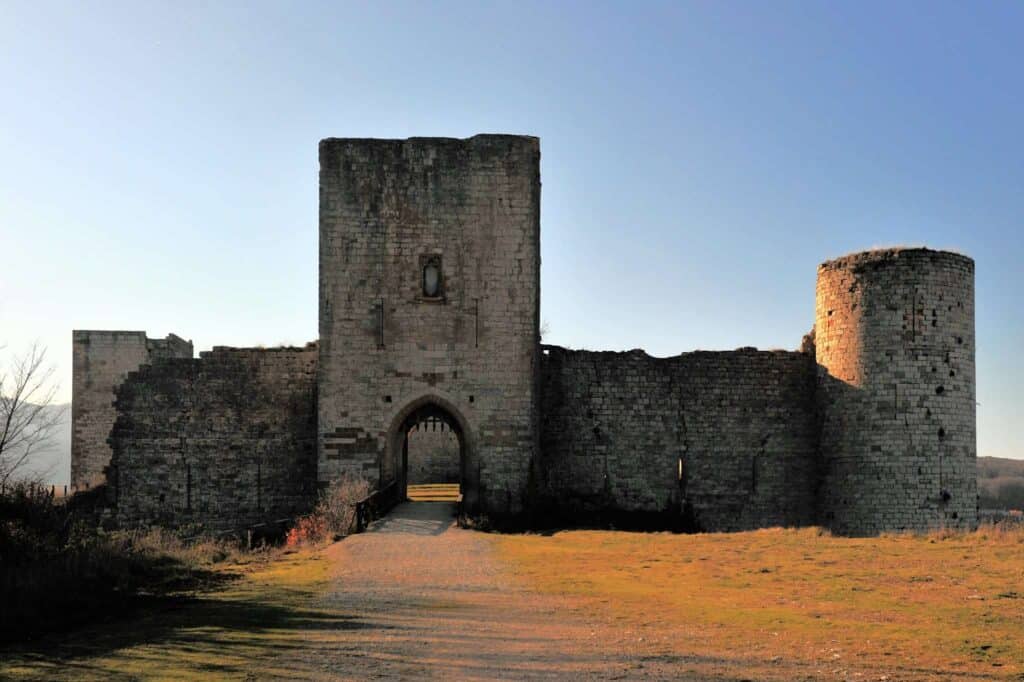
Puivert
Puivert Castle is renowned for its impressive keep and the large minstrels’ hall, where gatherings of troubadours were held in the 12th century. It offers insights into the social and cultural life of the medieval Languedoc region.
Fun Fact ¦ Puivert Castle is thought to have been a center for courtly love, a cultural and literary movement that celebrated chivalry and love.
How to get there ¦ Located near the village of Puivert, the castle can be reached by car, with parking available on site. It’s a short walk from the parking area to the castle entrance.
Cost/Entry ¦ The entrance fee is approximately €4 for adults.
Arques
Arques Castle, with its distinctive square keep, stands out among the Cathar Castles for its architectural style and the relatively good condition of its preservation. It was built in the 14th century, after the main Cathar period, but is deeply rooted in the history of the region.
Fun Fact ¦ The castle was once owned by the Termes family, one of the leading noble families involved in the Cathar movement.
How to get there ¦ Arques Castle is situated in the village of Arques and is easily accessible by car. There is a parking lot near the castle for visitors.
Cost/Entry ¦ A visit to Arques Castle costs about €3 for adults.
Villerouge-Termenes Castle
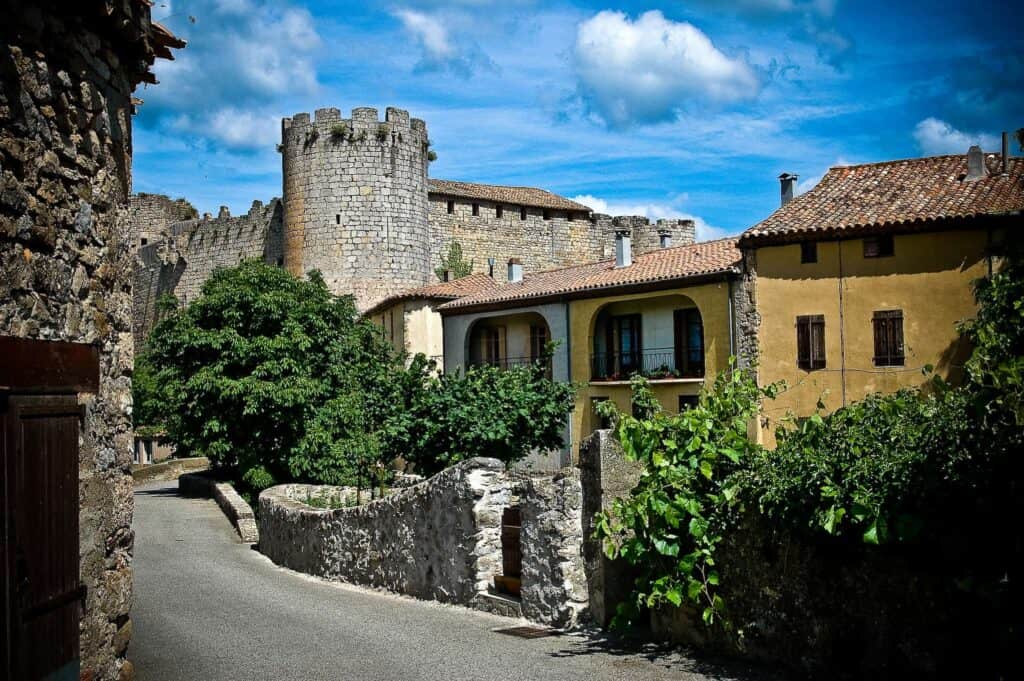
Villerouge-Termenes Castle is notable for its association with the last known Cathar parfait, Guilhem Bélibaste, who was burned at the stake here in 1321. The castle now houses an exhibition dedicated to the Cathar heresy, providing educational insights into this period.
Fun Fact ¦ The castle hosts a medieval festival every summer, bringing to life the history of the Cathars with reenactments, workshops, and traditional meals.
How to get there ¦ The castle is located in the village of Villerouge-Termenes, accessible by car. Visitor parking is available in the village.
Cost/Entry ¦ Entry is around €7 for adults, which includes access to the castle and the Catharism exhibition.
Termes Castle
Termes Castle is one of the most historically significant Cathar sites, known for its lengthy siege in 1210 during the Albigensian Crusade. Though now in ruins, its strategic location and the resilience of its defenders remain emblematic of the Cathar resistance.
Fun Fact ¦ The siege of Termes was one of the longest and hardest fought during the Albigensian Crusade, lasting four months.
How to get there ¦ Termes Castle is nestled in the Corbières mountains and can be reached by car. The site is a short hike from the village of Termes, where parking is available.
Cost/Entry ¦ The entrance fee to Termes Castle is about €5 for adults.
How to visit the Cathar Castles?
Rent a Car if you don’t have one
I won’t stress this enough, but the Cathar Castles are isolated and difficult to access via public transport. Some can be accessed by regional buses or trains to nearby towns, followed by hikes or taxi rides, but a car is recommended for flexibility and time saivng.
If you want to rent a car in advance, we would recommend using Discover Cars. The best part about Discover Cars is that you get full coverage for less than €7 a day! You can also compare all the companies in the market, choose the type of car you want and see all the most recent customer reviews before making a booking. On the website, you can easily narrow your search price to find the best deal within your budget.
BEST ONLINE CAR RENTAL COMPARATOR – DISCOVER CARS
When booking a rental car in Chile online, we recommend using Discover Cars because they offer Full coverage for less than €7. It is one of the best rental car comparators out there!
Road trip around Occitanie
A road trip is perhaps the most flexible and immersive way to explore the Cathar Castles. The Occitanie region, with its rolling hills, vineyards, and rugged mountain landscapes, offers a picturesque backdrop for discovering the castles at your own pace.
If you have a couple of days to drive around the Cathar country, here is a 2 to 3 day itinerary.
Day 1: Carcassonne to Montségur
- Start at the fortified city of Carcassonne. Explore its medieval ramparts in the morning.
- Drive to Montségur Castle, the symbol of Cathar resistance. Hike up to the ruins for panoramic views.
Day 2: Montségur to Peyrepertuse
- Depart from Montségur to Queribus Castle, known as the last Cathar stronghold.
- Continue to Peyrepertuse, to explore its sprawling ramparts and breathtaking landscapes.
Day 3: Peyrepertuse to Aguilar and Lastours
- Visit Aguilar Castle for its unique architecture.
- Conclude at the Four Castles of Lastours for a scenic view of the remnants of Cathar fortifications.
Day trips from Carcassonne
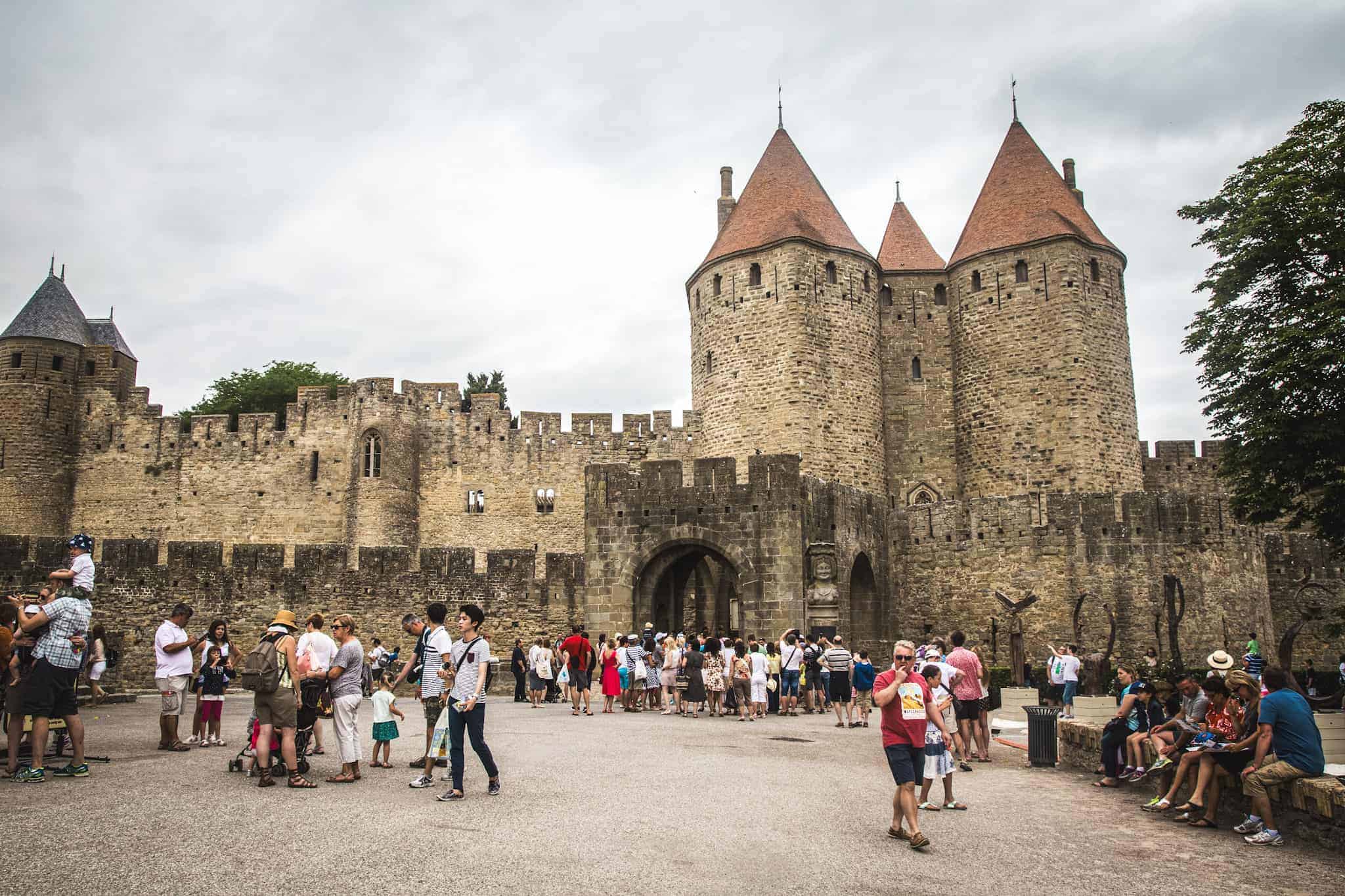
Carcassonne itself is a must-visit destination, with its beautifully preserved medieval citadel, La Cité, offering an immediate dive into the historical context of the Cathar period. From Carcassonne, you can easily access several key Cathar castles for day trips such as Montségur Castle (about a 1.5-hour drive) or the Lastours Castles (just a 20-minute drive north of Carcassonne).
Day Trips from Pyrenees-Orientales
The Pyrenees-Orientales department, a stunning yet often overlooked gem in the south of France, is highly recommended for a visit. Spanning from majestic mountains to the Mediterranean sea, and dotted with vineyards amidst a backdrop of rich Catalan culture, there’s an abundance of sights and activities to enjoy.
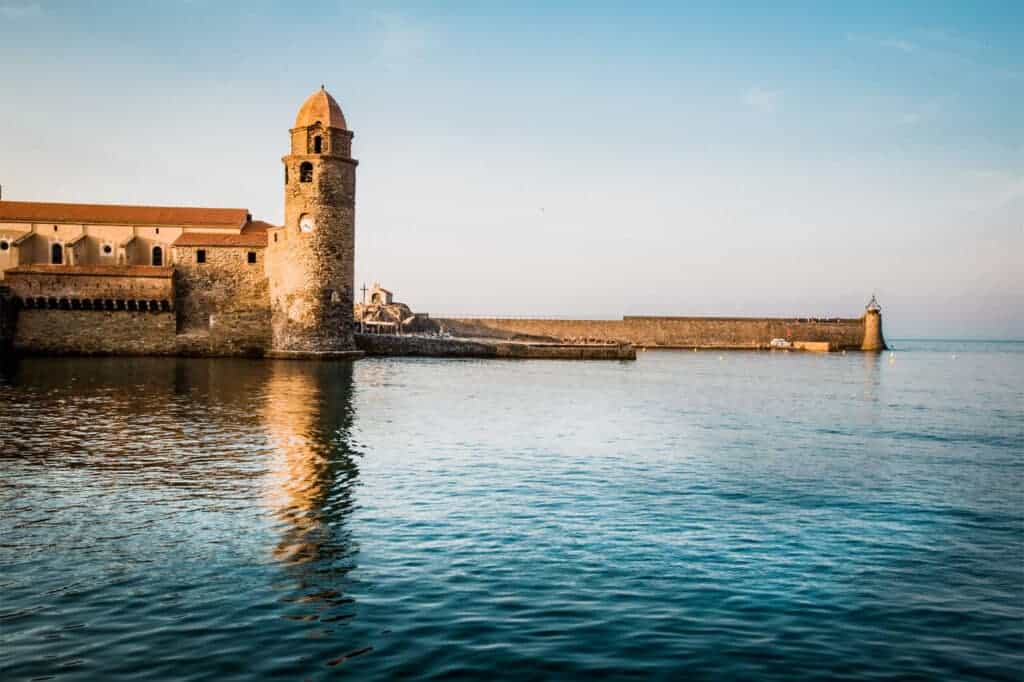
Whether you are staying in Perpignan or in one of the small towns along the coast like Collioure, you can get fairly easily to the Cathar castles, particularly those on the southern side of the Cathar region. Peyrepertuse & Quéribus Castles are about an hour’s drive across vineyards and stunning views of the Corbières hills. Along the way, consider making a detour to the breathtaking Gorges de Galamus.
Cathar country guided tours
For those who prefer an organized approach with expert insights, joining a Cathar Country tour can be an excellent option. These tours often include transportation, guided visits, and sometimes the entry to the castle. These tours are a great option to experience the Cathar country without the hassle of planning.
Carcassonne visit
- From Toulouse: Carcassonne Day Trip
- Carcassonne Castle and Ramparts Entry Ticket
- Carcassonne: Fortress Walking tour
Hiking: Sentier Cathare GR367
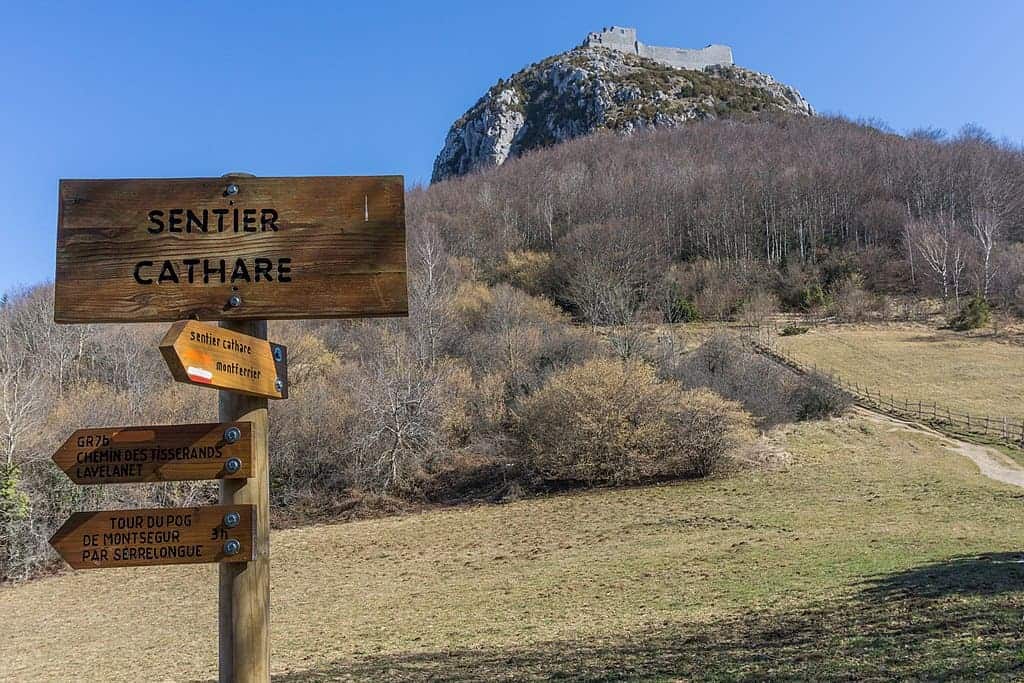
The Sentier Cathare (GR367) or Cathar Trail, is a 12 days hike across the Corbiere and Black Mountain passing through several Cathar Castles, including Quéribus, Peyrepertuse, Puilaurens, and Montségur, among others. This is one of the best hiking trails in the south of France!
Hiking the Sentier Cathare is not just a journey through the picturesque countryside; it’s an adventure into the heart of history, culture, and the enduring spirit of the Cathar people.
The trail traverses a diverse array of landscapes, from coastal plains to forested hills and mountainous terrain. While certain sections can be challenging due to elevation changes and rugged paths, the trail is generally accessible to hikers with a good level of fitness and some hiking experience.
Total distance ¦ 250km – about 12 days walk.
Start ¦ Port-La-Nouvelle – Arrive ¦ Foix.
Difficulty ¦ Moderate. Good physical condition is needed with long distance and multi-way walk experience.
Best time of the year ¦ Spring and early fall when temperatures are lower and it doesn’t rain much.
Accommodation ¦ Along the way, there is a range of accommodations, from camping sites and gîtes (holiday homes) to bed and breakfasts. Booking in advance is advisable, particularly in peak seasons.
Where are the Cathar Castles?
The Cathar Castles in Southern France are scattered across the rugged and hilly Corbières, perched atop strategic hilltops and craggy peaks. The locations of these fortresses were strategically chosen for their defensive advantages, offering panoramic views over the surrounding French countryside, and serving as formidable bastions during times of conflict.
Traveling to the Cathar Castles takes you through some of the most beautiful parts of the French countryside. The drive itself is an adventure, winding through vineyards, forests, and along mountain roads, offering stunning views and a sense of anticipation as you approach each castle.
Once you park your car, the journey usually continues on foot. Most castles are perched high up on hills and require a hike to reach them.
These paths can be steep and a bit challenging, but they’re part of what makes visiting these castles so special. As you climb, you’ll understand why these locations were chosen for defense and the views from the top are your reward.
Map of the Cathar Castles
Who were the Cathar?
The Cathars were a religious group that flourished in the 12th and 13th centuries in Southern France, advocating a simple, spiritual lifestyle in stark contrast to the opulence of the Catholic Church.
The Cathars’ rejection of Catholic doctrines, such as the sacraments, the cross as a symbol, and the authority of the Church, led to growing tensions. The Catholic Church viewed Catharism as a threat to its power and the social order, leading to the Albigensian Crusade (1209-1229), a brutal military campaign initiated by Pope Innocent III to eradicate Catharism.
The crusade, coupled with the subsequent Inquisition, aimed to eliminate the Cathar influence through force, resulting in the massacre of thousands and the near annihilation of the Cathars.
To learn more about the Cathars before you visit you can refer to the below books:
- The Perfect Heresy: The Revolutionary Life and Death of the Medieval Cathars / by Stephen O’Shea – This accessible narrative provides a vivid account of the rise and fall of the Cathars, set against the backdrop of medieval Europe’s political and religious turmoil.
- The Cathars: Dualist Heretics in Languedoc in the High Middle Ages / by Malcolm Lambert – Lambert offers a detailed scholarly analysis of Catharism, exploring its origins, beliefs, and the context of the Albigensian Crusade.
- Massacre at Montségur: A History of the Albigensian Crusade / by Zoé Oldenbourg – Oldenbourg’s work is a classic account of the Cathar period, focusing on the siege of Montségur and its significance in the broader conflict between the Cathars and the Catholic Church.
- Cathar Castles: Fortresses of the Albigensian Crusade 1209–1300 / by Marcus Cowper and Nic Fields – This book delves into the architecture and strategic importance of the Cathar castles, offering insights into the military aspect of the Cathar resistance.
- Labyrinth / by Kate Mosse – A best-selling novel that weaves together the lives of a modern archaeologist and a medieval woman connected to the Cathars, set in the Languedoc region. While fictional, the novel is rich in historical detail and captures the essence of the Cathar landscape.
- The Holy Blood and the Holy Grail / by Michael Baigent, Richard Leigh, and Henry Lincoln – Although speculative and controversial, this book explores the mystery surrounding the Cathars, the Knights Templar, and the legend of the Holy Grail. It’s an intriguing read for those interested in the blend of history, legend, and conspiracy.
FAQ about the Cathar Castles in Southern France

About the Author
Jen is the Funder, Author & Photographer behind Talesfromthelens.comJen has lived for the past 15 years across Oceania and Ireland while also travelling in Latin America, North America, and Europe. She has visited more than 65 countries and set foot on every continent in the world! She is a coffee nerd, passionate about photography, wildlife, and outdoor activities.
For more info, check out the About page.