
Traveling through South America is an incredible adventure, but one challenge many backpackers face is the prevalence of scams targeting tourists. These common scams in South America can quickly turn an amazing journey into a stressful situation.
During my 18-month backpacking trip in Central and South America, I’ve encountered my fair share of scams. Some I managed to avoid, while others, unfortunately, caught me off guard. Traveling across the world for an extended period often means more chances to face difficult situations, theft, and scams.
In this article I decided to share the different scams I have witness in South America, and also asked some of my fellow travelers to describe theirs. While being aware of the common scams in South America is important, knowing how to avoid them or how to react when faced with the situation is crucial.
This is why as part of these testimonies, you will find practical tips on how to avoid these common scams and still enjoy exploring bustling markets in Bolivia, catching a taxi in Colombia, or using ATM in Argentina…
This article is based on firsthand accounts and will provide you with valuable insights and actionable advice to help you stay safe and enjoy your adventures across this beautiful continent. Of course, we share specific scams that happen in specific locations, but that doesn’t mean they only occur in these area. These scams can be found all other the continent.

Dirt on bags
During my travels in Chile, I encountered a scam that I called the “dirt on the bag” trick. This scam targets backpackers, especially those carrying both a large backpack and a smaller front pack where valuables like passports, money, and electronics are usually kept.
It happened to me in Santiago, right near the entrance to the subway. As I was walking, someone called out my bag was covered with dirt and offered me a tissue. He was asking me to remove my bags so we could clean properly. They seemed friendly, but this was immediately a red flag to me.
I politely declined their help and kept walking to the subway and headed straight to a quiet spot where there were security guards. The dirt smelled like food and looked disgusting, possibly to make the scam more convincing.
There are several similar scams like this one, some more disgusting than others. I’ve heard of incidents where people were vomited on to create a distraction, making the situation even more distressing.
💡I’d recommend always covering your backpack with a protective cover that can easily be wiped clean. Keep your valuables like passport, credit card and cash in a secure belt underneath your clothes.
The most important thing is to always stay vigilant when someone offers unsolicited help, be aware of your surroundings and be wary of distractions like spills or overly helpful strangers. Politely refuse and move to a safer area if you feel something is off.
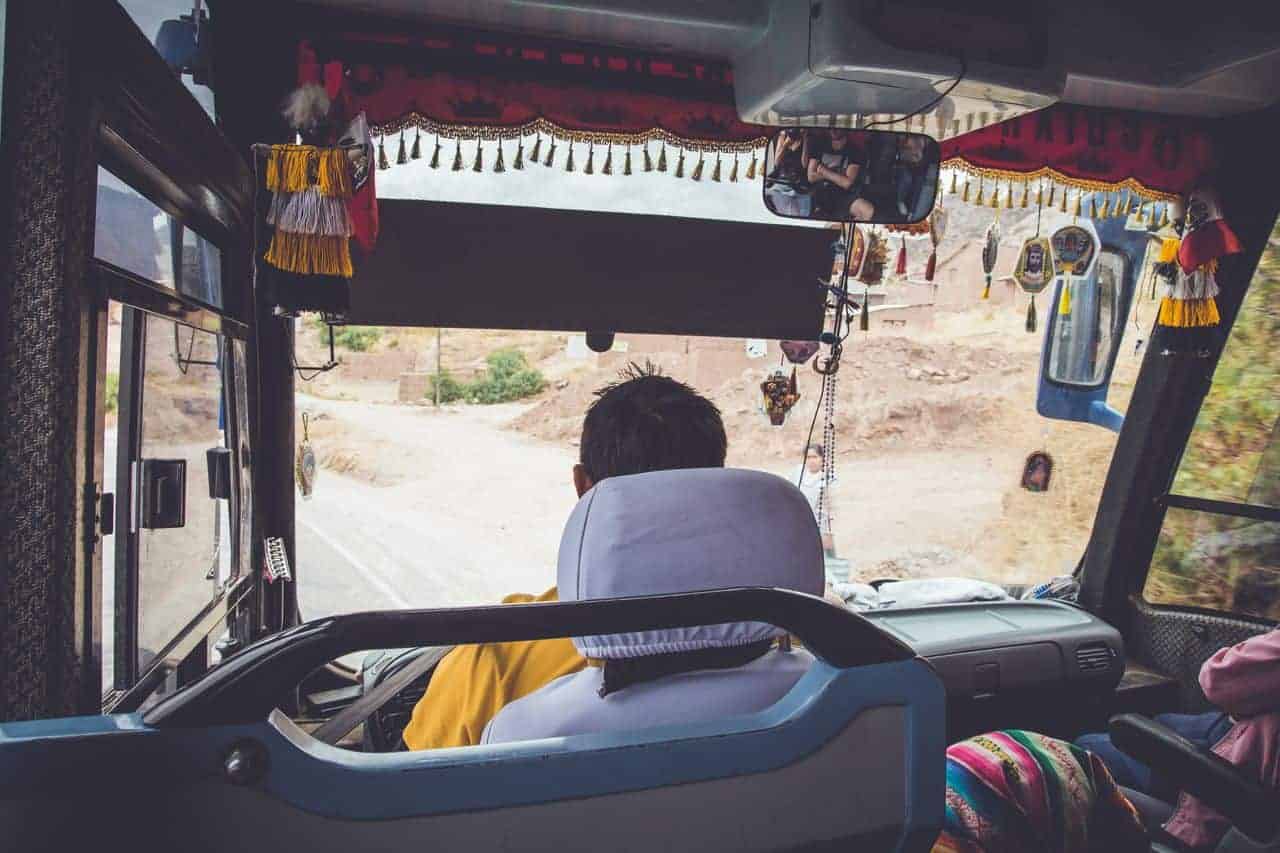
Overhead backpack thief in buses
During my travels in Peru and Bolivia, I heard a lot about the “overhead backpack thief” scam on buses. This scam often targets travelers who place their smaller backpack in the overhead compartment. The scammer will create some distraction when people are boarding, and slip your backpack inside a larger bag before leaving the bus.
The first time I encountered this myself, was on a bus from Lima to Cusco. Upon boarding, a local insisted I put it back in the overhead, claiming it would be safer there. When I refused, they became pushy, but I stood my ground, firmly telling them to stop touching me and my belongings. Sure enough, the individuals left the bus before it departed, confirming my suspicion of their intentions.
Another variation of this scam can happen while you sleep. Thieves might try to fish bags from under seats. To counter this, I recommend sleeping with your bag inside your sleeping bag at your feet (buses in South America are always very cold). This makes it much harder for anyone to access your valuables. Additionally, use a lock on your bag for added security.
💡Always keep your bag in sight or in a place difficult to access, like your lap or at your feet within your sleeping bag. Refuse any unsolicited help with your belongings, and remain vigilant, especially in bus stations and during boarding. These precautions will help ensure a safe and smooth journey through the beautiful landscapes of Peru and Bolivia.

Fake Police
When I was in Cartagena, Colombia, one of the backpacker in my hostel encountered a scam involving fake police officers.
One afternoon, while he was sitting in a square, two men approached him, flashing badges and identifying themselves as police officers. They claimed to be conducting a routine check for counterfeit money and drugs. Although they appeared convincing, their demand to see his passport and wallet raised his suspicion.
He told us that he politely refused to hand over his belongings and instead, insisted on accompanying them to the nearest police station. They answered that since he didn’t want to comply, he will get a fine. They then forced him to go to the ATM to take cash out. He still refused and repeatedly stating that he would only cooperate at a police station.
Eventually, the situation gathered curious people and the two men faked a call before leaving in a hurry.
💡To avoid falling victim to this scam, never hand over your personal belongings or documents to anyone claiming to be an authority without proper verification. Real police officers will understand your hesitation and cooperate with your request to go to a station. If they accept to go to a police station, request a marked police car… Do not follow new encounters on foot or in taxis.
Always travel with copies of your passport on you; when you walk around cities, only use the photocopies, and leave your original documents in a safe place at your accommodation.

Card Cloning at atm
During my travels in South America, I discovered a fraudulent charge on my bank statement for a flight from Buenos Aires to Cusco, while I was in Bolivia. The odd thing was, I had left Argentina three months earlier, so the card cloning could have happened anywhere.
The charge was a clear indication that my card had been cloned, likely at an outdoor ATM that had been tampered with. I always try to be cautious, but this scam can be incredibly subtle and hard to detect. Upon investigating, I found the travel agency through which the flight had been purchased. They confirmed it was paid for in person, not online, which helped me prove to my bank that it couldn’t have been me making the purchase as I was in Bolivia at the time. My bank statement and payment history supported my claim.
Though my bank eventually reimbursed me and sent a new card, the process took about a month. This delay forced me to extend my stay in Bolivia longer than I had planned, but that was for the best… As you may know I love Bolivia!!!
💡To prevent this kind of scam, always use indoor ATMs located within banks, preferably during business hours. These are less likely to have skimming devices installed. Before using an ATM always inspect for any unusual features like odd-looking card slots or raised keypads.
Regularly check your bank statements for any unauthorized transactions, and notify your bank immediately if you spot anything suspicious. Keeping your bank informed about your travel plans can also help them monitor for unusual activity on your account.

Your hostel is closed
One of the most common scams I encountered in South America involves taxi drivers claiming that your hostel is closed. This scam seems to be a favorite among taxi drivers, and it’s nothing more than a blatant lie.
It happened to me several time but the one I remember the most was is Mancora, Peru. As soon as I got into the taxi, the driver casually mentioned that my hostel was closed for renovations and offered to take me to a “better” accommodation nearby.
I refuse and asked him to drop me off at the address I gave him. The driver continued to push, saying it was unsafe and that he knew a much better place. I held my ground and even called the hostel in front of him to confirm my reservation. As expected, the hostel assured me they were open and waiting for my arrival. Upon hearing my phone conversation, the driver reluctantly drove me to my accommodation.
This scam didn’t affect my itinerary or finances, but I can understand that after a long trip, late at night, some people may fall for the scam.
💡To avoid this, I would suggest to not give the taxi the name of your hotel/hostel, but just the address. If they ask for the name of the accommodation, push back on asking them to drive you to that address!
Always have your accommodation contact details handy so if a taxi driver tries this on you, you can give them a quick call. You can also pre-book airport transfers through your hotel if they offer this service.
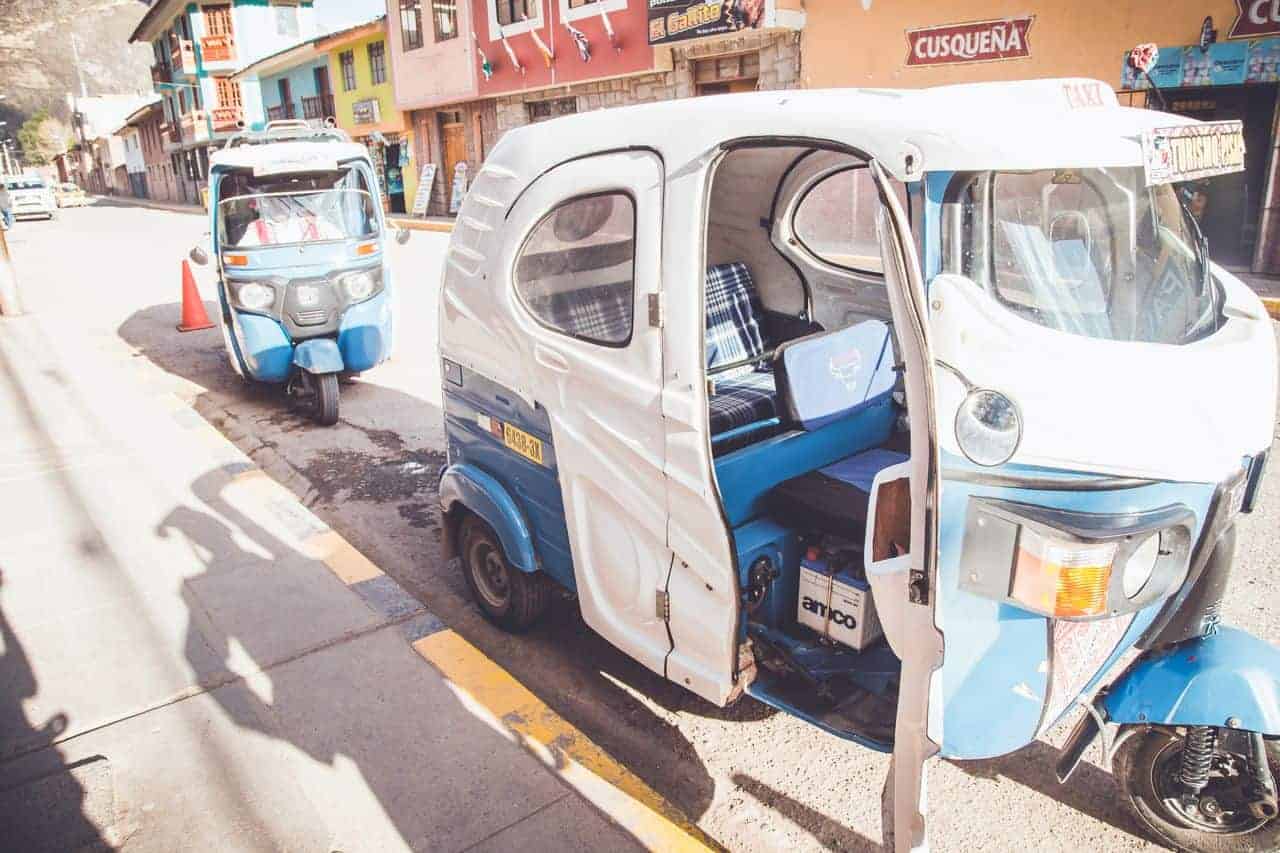
Taxi scam
Shared by Liza of Altas Rambler Travel Guides
When travelling in Argentina I fell victim to a common taxi scam. I had just arrived in El Calafate from a very long bus trip. I didn’t have data roaming or a local SIM card to order an Uber so I wearily jumped in a taxi from the bus station to the city. When we arrived, I handed over the taxi fare in cash using a single bank note that should have covered the total cost of the fare with change.
A split second later the driver was waving a much smaller note in my face asking for more money. With a magician’s level of sleight of hand, the driver had somehow switched the note I gave him for one that in most countries would be a coin. I initially tried to argue back, but the driver was getting angry and insisting I had given him the smaller note. To get myself out of a declining situation, I just paid the fare again and left.
Fortunately enough, this was a relatively small-scale scam that didn’t leave me with much more than a bad mood for a few hours.
💡To avoid this scam, I always make sure I have access to phone data when travelling. Uber is very common in Argentina now which I always use when possible. When I do need to use taxis, I always get out of the car before paying. My theory is that drivers are less likely to attempt this scam if they see you are watching them and not distracted. There are also less places to hide money outside of the car!

Extra “0” scam
Share by Cullen of Passport Pilgrimage
In Argentina, there’s a fairly new “Extra 0 Scam.” Due to hyperinflation, prices are hard to keep track of. At the time of this writing, 1,000 Argentine pesos equals 1.11 USD, 0.87 pounds, or 1.03 euros. For a normal dinner for one, taxi ride, or other services, prices can be in the tens of thousands of pesos. This makes figuring out the price in your home currency somewhat difficult, and there are certainly people willing to take advantage of this.
The extra “0” scam happens when someone who just provided a service adds an extra 0 to the card terminal. When you think you’re paying 14,000 for a meal, it may end up being 140,000 pesos–10 times the price!
This almost happened to us when we were out at dinner with 4 other people, and the bill came out to 85,000 pesos. We opted to pay with card and tip. First, we paid the 85,000 pesos, and proceeded with another transaction for the tip.
For the tip we told him 8,500 pesos, but he entered 85,000 pesos on the card terminal! As we noticed it, he corrected it, and we didn’t think anything of it. A few days later, we heard from other friends, who upon paying a taxi ride with a card, fell victim to this scam.
We contacted the restaurant’s owner and he assured us he would talk to the waiter and look into prior tips via credit card for this specific waiter. We still don’t know if it was an innocent mistake or a mal-intentioned move by the waiter.
💡To avoid this scam, always check the bill, use your calculator app to convert the bill into your local currency, and check the restaurant’s Google reviews for any suspicious activity. Be extra careful after having a few drinks!

Your Bus isn’t coming
Share by Victoria of Guide Your Travel
In Colombia we often came across a scam, where you’d be told that a certain bus wasn’t coming or didn’t exist anymore. This was never true, but you’d be told by multiple people, even some seemingly working at the bus station that the bus wasn’t coming, until you eventually believed them. Then, they’d try to sell you much more expensive bus tickets from their own company, or try to get you to take a taxi instead.
We encountered this scam twice, and also heard from others that they had very similar experiences. Luckily, we only fell for it once, and the results weren’t too disastrous, since we only ended up slightly overpaying for a different bus, rather than the one we were originally going to take.
I did feel slightly unsafe at first, being approached by strangers at a bus stop, and these men were often yelling at us, which was very intimidating, especially with limited Spanish knowledge.
Financially, it left us paying triple the normal price for a bus, which was not a large amount of money still, but made a difference as a budget traveler. Luckily, we didn’t fall for the scam where they make you take a private taxi, which is much more expensive.
We didn’t have many options other than staying on the bus, and warning other travelers who might encounter a similar situation. Reporting it to the local authorities didn’t feel worth the effort to us.
💡I would make sure to only communicate with official bus station staff and do thorough research in advance on buses and their departure times. Stay calm, and just avoid talking to anyone who isn’t the actual bus driver, or someone behind an official, branded ticket counter.
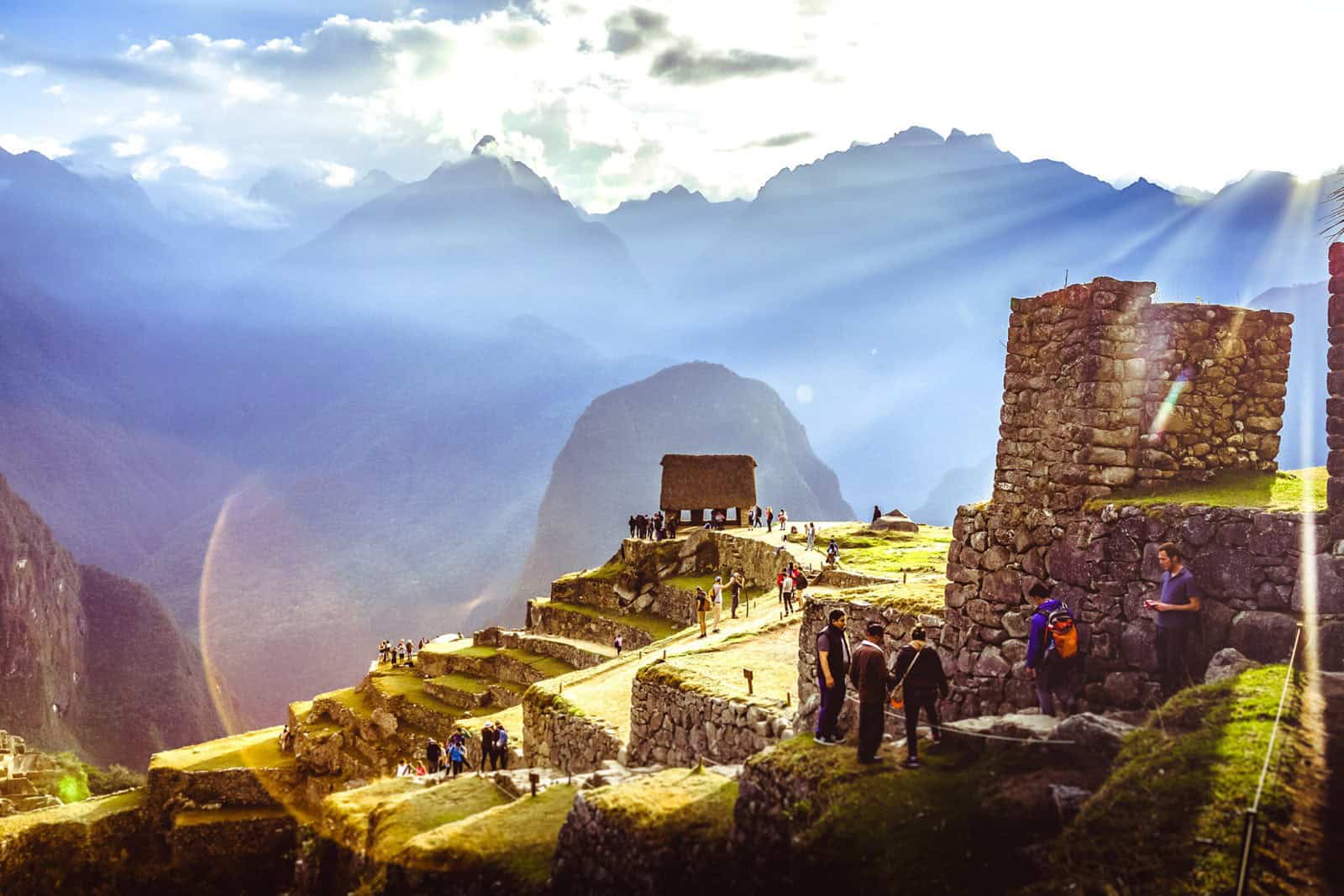
Other Scam in South America and how to avoid them
Broken Taxi Meter
In some cities, taxi drivers claim their meter is broken and then charge exorbitant rates at the end of the ride. To avoid this, always insist on using the meter or agree on a fare before getting in.
💡Alternatively, use reputable ride-hailing apps like Uber where fares are set upfront.
The Strap Slashing
In crowded places like markets or bus stations, thieves may slash bag straps to steal valuables.
💡To prevent this, avoid carrying anything valuable in a hand bag or totes. I won’t tell you to keep your bag in front as it will immediately target you as a tourist. I would avoid backpacks in general when walking around cities (unless you are travelling to a bus station, etc.). Wear a money belt under your clothes instead.
Unsolicited Guides
In tourist hotspots, unofficial guides offer their services and then demand high fees after the tour. This is common near major attractions like Machu Picchu.
💡Politely decline any unsolicited offers and book tours through reputable agencies. If you want a guide, you can check their accreditation and always clarify the cost and details of the service beforehand to avoid surprises.
Have you encountered any of these scams while in South America? Have you been the victim or witness any other scam? Drop us a comment to share your experience and help fellow travelers be aware and prepared!
TOP Read – South America articles

15 Pictures of Peru That Will Inspire to Travel

A City Guide To Santiago, Chile

Hiking Colca Canyon without a guide, Peru
ARE YOU ON PINTEREST?
What about saving this post to your Pinterest board?
Click on the photo to save this blog post for later. We are also on the platform and we love pinning great travel tips. Follow Tales From The Lens’ boards to see our latest pins.
Don’t be shy, come say hi!
Please note │ This blog post may also include affiliate links to hostels or products we recommend, which means if you buy something following a link on this page, we’ll get a small commission. This will be of no extra cost to you but will help us continue running this blog. Thank you for your support.

About the Author
Jen is the Funder, Author & Photographer behind Talesfromthelens.comJen has lived for the past 15 years across Oceania and Ireland while also travelling in Latin America, North America, and Europe. She has visited more than 65 countries and set foot on every continent in the world! She is a coffee nerd, passionate about photography, wildlife, and outdoor activities.
For more info, check out the About page.