

5 fun things to do in Arica | Chile
Initially planning on staying only long enough to organise a bus to La Paz, Bolivia, we ended up staying 5 days by the beach; filling our bellies with fresh fish, meeting interesting people and exploring historical sites. Here are our best tips about Chile’s most northern city: what to do in and around Arica.
Heading this far north isn’t an obvious choice when backpacking Chile as most prefer to cross to Bolivia via the Salt Flats or stop in Iquique on the way in or out of Peru. For us, the decision to visit Arica, Chile’s most northern town on the border of Peru, was forced due to the closure of the mountain pass from San Pedro de Atacama into Bolivia. But stopping in Arica would mean that we had travelled from the most southern town on Chile’s mainland, Punta Arenas, to its most northerly. And that’s pretty cool. A nice Milestone when you think that Chile is the longest country on Earth!
What we didn’t know was that Arica would be the last surprise Chile would give us after two and a half months in the country.

What to do and see in Arica, Chile?

Visit Arica city centre
Arica is known as the city of the eternal spring due to its constant pleasant climate, a welcome relief from the -11 degrees in Atacama. The city was also the location of the War of the Pacific which saw Chile take control of land from both Peru and Bolivia.
You can’t say that Arica is Chile’s prettiest town. Stroll around its centre and you will find the heart of a real working city that lacks mass tourism. Its dirty and messy streets are crammed with buses and cars spewing toxic fumes, while locals flock into the local food shops for an afternoon beer, a completo or some deep-fried chicken. Continue past these streets to find a modern shopping street, 21 de Mayo, filled with brand stores and food chains. Here, we were lucky to come across a mini carnival of local dancers, moving their way down the main street, wearing traditional fiesta attire and shaking their bodies in ways that were both impressive and amusing.
Within the old city is the famous white & red Cathedral de San Marcos de Arica. The cathedral is famous for the fact that it was designed by Gustave Eiffel, the same man that made the Eiffel Tower, in the 1870s. However, the main attraction in Arica is a short walk outside of the centre.

Taste speciality coffee in Arica
A nice treat for us was to find a speciality coffee shop in town. Arica doesn’t seem like the place for good coffee but Barista Café served up a great cup of the black stuff and had a good selection of baked treats.
The only problem with South American coffee shops is that they only seem to open in the afternoon. Luckily Barista Café has a nice rooftop terrace to sit and relax in the afternoon sun.
Climb to The Morro de Arica
As mentioned, Arica was the site of the last battles between Chile and Peru. The land here was once part of Bolivia and was the last piece of land taken from them which left the country landlocked. Morro de Arica is a huge piece of rock that towers over the city and was the final battle place where Chile defeated Peru in 1880.
From town, it is easy to walk up the hill. The easy access is made harder due to the heat, so water is needed. The view from atop of the rock offers amazing views of the pacific ocean and you can really see how the City has been expanded over the years. For those interested, there are memorials and museums to learn more about the War of the Pacific and Chiles Campaña del Desierto, a campaign to capture the lucrative desert land.


THE MARINA & FISH MARKET
Just down from 21 de Mayo is Terminal Pesquero, Arica’s industrial port and fish market. It is a great place to buy fresh fish as they gut and fillet it in front of you or pick up a fresh ceviche for only €1. Being so close to Peru it’s no surprise that ceviche has been adopted here. Continue down to the pier to see the fishermen bring in their nets and transport to waiting carriers. Try chatting to some of the local fishermen and taste the local rock urchin which they happily told us is an aphrodisiac. They even mimed the effects!
Unlike some other fishing ports where the fishermen usually don’t bat an eyelid to tourists getting in the way, the locals here were happy to let us take photos of their strange-looking fish. If any space not taken up by fishing boats or fishermen; pelicans and aggressive sea lions bark for the discarded scraps.
Terminal Perquero was our favourite fish market in all of Chile solely due to the openness of the fishermen.

Home of the Traditional Reed Boat
Learning about a boat made entirely made of reeds from Bolivia was by far the most random part of our stay in Arica. Over breakfast, in our hostel, we started a conversation with an Australian who had been in Arica for one month. He explained to us how he met a man named Buck and heard that he is the captain of a reed boat set to sail to Australia in February 2018. He became fascinated and offered to volunteer and help build the boat.
The Viracocha III is the third attempt from Buck, an American adventurer, to cross the pacific ocean on a traditional reed boat. Unfortunately, the first two attempts were cancelled due to bad sea conditions. However, Buck is determined to show that the traditional reed boats used in Lake Titicaca by local Bolivians and Peruvians could have come from sailing explorers from Polynesia.
The Viracocha is entirely made of reeds from Lake Titicaca and will use traditional sails powered by the wind to first reach Easter Island before continuing to Australia. The project started in La Paz where Buck worked with locals and TV stations to show the traditional methods of creating reed boats before relocating to Arica where he will set sail.
We visited the site where they are building the boat. Unfortunately, it was early morning when we arrived and everyone was still asleep so we couldn’t see how they were making the boat.
| Check out Buck’s expedition

Take a day trip to the Azapa Valley
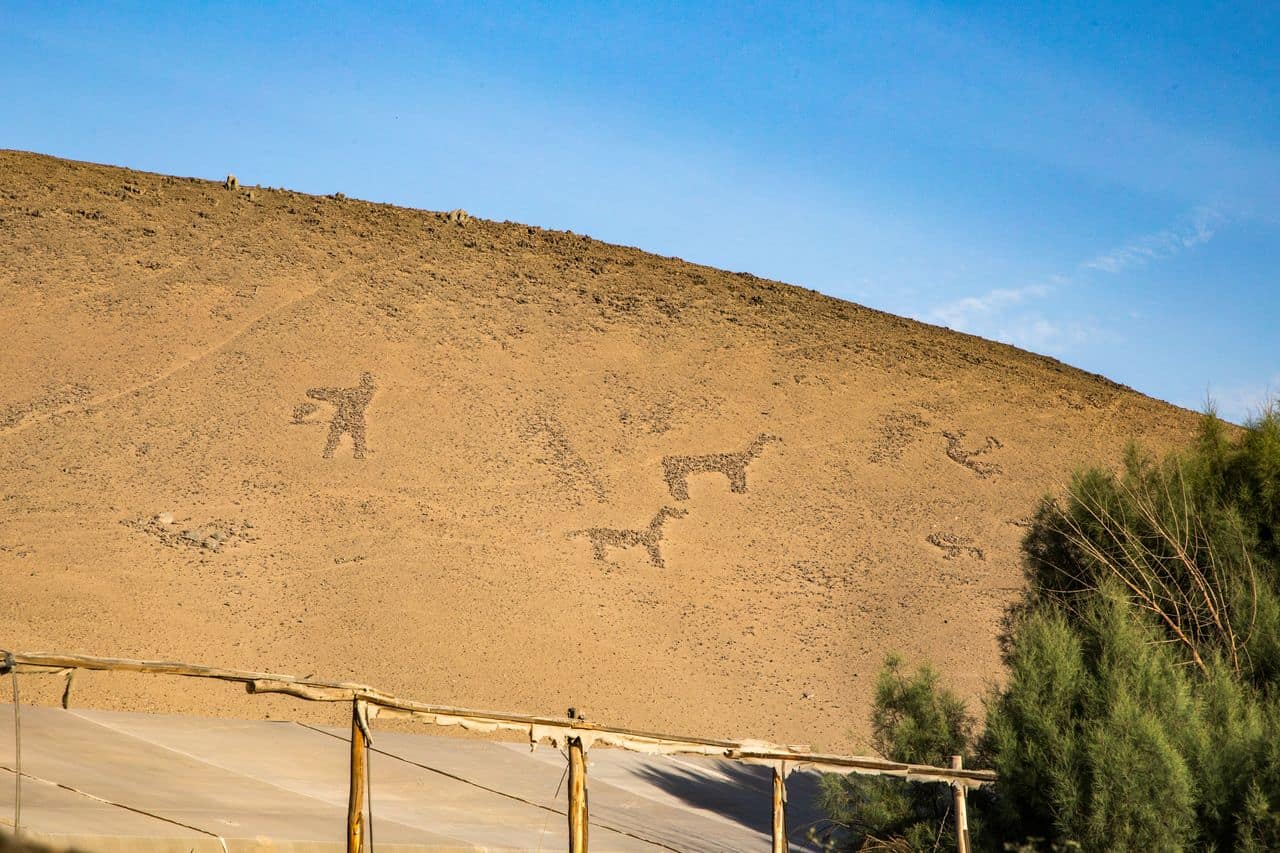
Having never heard of the Azapa Valley until we arrived in Arica we were immediately determined to visit once we were told about the history it possesses. The valley is a sort of oasis where a lot of olive farms are located. Head further into the valley to find hundreds of year old geoglyphs of llamas, etched on the sides of the hills to “advertise” the sale of llamas in the valley
Read our full article about the Azapa
Where to stay in Arica
Sunny days hostel
The hostal Sunny Days is run by a New-Zealand/Chilean couple. The owners are incredibly nice people who give lots of information about what to do in the area. They serve
Cost and Useful information
Exchange rate (as of May 2017): €1 = 714.20 CLP
Transport:
San Pedro de Atacama – Arica (night bus): 13,000 CLP (€18.20)
City Bus: 400 CLP (€0.56)
Arica – La Paz: CLP 7,000 (€9.22)
Accommodation:
Hostal Sunny Days: CLP 11,000 pn/pp (€15.40)
Other:
Coffee – Barista Cafe: 1,500 CLP (€2.10)
Entrance to Morro de Arica: Free

ARE YOU ON PINTEREST?
What about saving this post to your Pinterest board? Click on the photo to save this blog post for later.
We are also on the platform and we love pinning great travel tips. Follow Tales From The Lens’ boards to see our latest pins.
Don’t be shy, come say hi!
Please note │ This blog post may also include affiliate links to hostels or products we recommend, which means if you buy something following a link on this page, we’ll get a small commission. This will be of no extra cost to you but will help us continue running this blog. Thank you for your support.

About the Author
Jen is the Funder, Author & Photographer behind Talesfromthelens.comJen has lived for the past 15 years across Oceania and Ireland while also travelling in Latin America, North America, and Europe. She has visited more than 65 countries and set foot on every continent in the world! She is a coffee nerd, passionate about photography, wildlife, and outdoor activities.
For more info, check out the About page.