
Tucked away on an island in the Nile, just south of Aswan, Philae Temple is one of those places that feels both peaceful and monumental at the same time. It doesn’t have the size of Karnak or the crowds of Abu Simbel, but what it offers instead is something quieter with detailed carvings, layered history, and a setting that feels almost cinematic.
Visiting Philae isn’t complicated, but it does come with a few things worth knowing: boat logistics, the best time to go, how much time to allow, and whether or not to hire a guide.
I didn’t know what to expect before my visit, but it ended up being one of my favorite stops in Egypt and one I’d recommend to anyone heading south.
In this guide, I’ll walk you through everything you need to plan your visit, from practical tips to what makes the temple historically unique. Whether you’re into ancient mythology, architecture, or just want a beautiful break from the busier sites, Philae Temple deserves a spot on your itinerary.

Where is the Philae Temple?
The Temple of Philae is situated on Agilkia Island, which lies approximately 12 kilometres to the south of central Aswan. Nestled between the Old Aswan Dam and the High Dam, the temple is only accessible by boat.
Initially, the temple stood on Philae Island, but rising water levels from the construction of the High Dam threatened to submerge it permanently. In the 1970s, UNESCO led a massive rescue project, moving the entire complex, piece by piece, upstream to Agilkia Island.
Why visit Philae Temple while in Egypt?
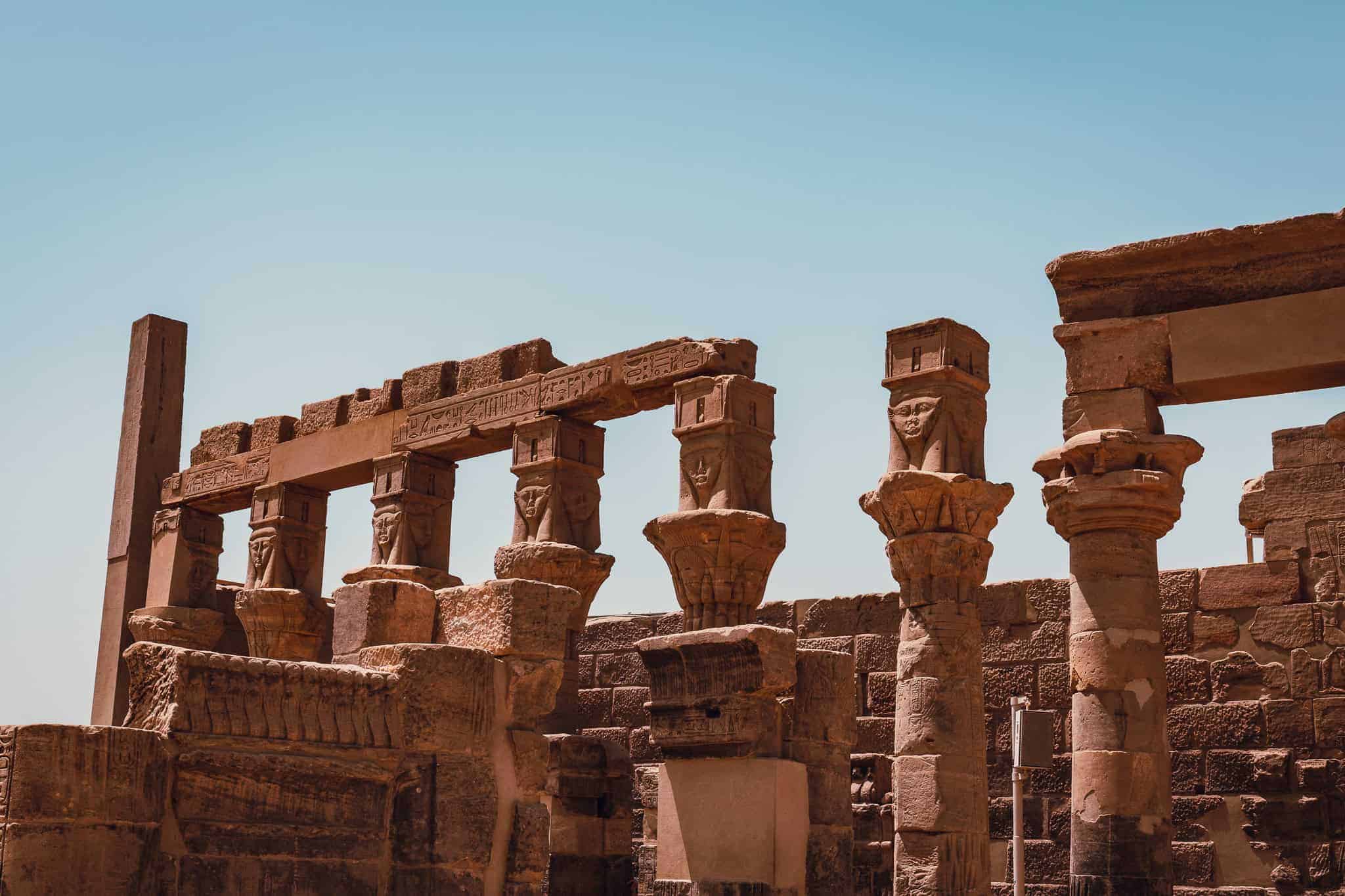
Philae Temple isn’t the biggest or the oldest in Egypt, but it’s definitely one of the most memorable. Built during the Ptolemaic period, it’s a great example of how Egyptian, Greek, and Roman influences blended over time, and you can see that clearly in the columns, carvings, and layout across the island.
There’s this interesting mix of mythology and history here. You’ll find ancient rituals carved into the walls, traces of early Christian use, and even some graffiti from colonial visitors. The layers of meaning make it feel like more than just a temple.
It may not have the fame of Karnak or the scale of Luxor, but Philae is still absolutely worth a stop, especially if you’re already in Aswan. Here’s why:
- It’s easy to get to, even with limited time
- The island setting feels peaceful and scenic
- The reliefs give a really clear look into the cult of Isis and ancient beliefs
- You can still see the full temple structure, mostly intact
- It’s a UNESCO success story in terms of preservation
- The boat ride and views alone are worth the trip
Personally, I loved it. I’d been curious about Philae ever since reading a few fiction and nonfiction books set in Egypt. In particular, What the River Knows by Isabel Ibañez. If you read it, you will love visiting Philae temple, which plays a central role in the plot of the book! So walking through the actual temple, seeing the reliefs and the chambers, was actually really fun.
If you’re looking for something special to do in Aswan, or want to add a quieter, less-touristy spot to your Egypt itinerary, Philae Island is one I’d absolutely recommend.
How to Get to Philae Temple from Aswan
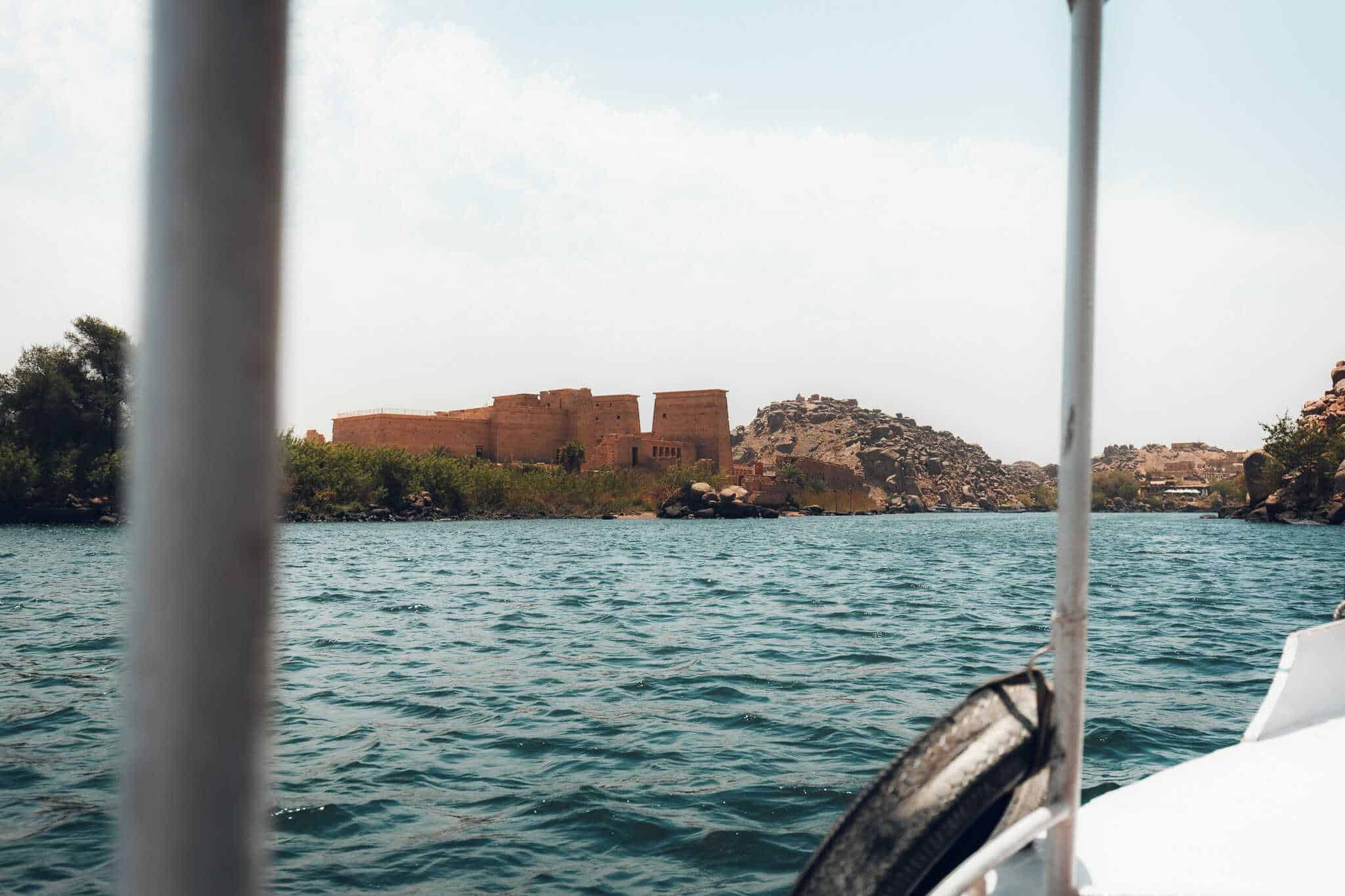
Option 1: Independent Travel
Getting to Philae Temple on your own is absolutely doable and often cheaper than joining a tour. But you’ll need to manage a few logistics, especially around transport and boat negotiations.
Step 1: Taxi to Marina Philae (Shellal Dock)
From central Aswan, it takes about 20 minutes to reach the marina, depending on traffic. There’s no Uber in Aswan, but you can use the local app “Careem” or rely on street taxis. Most don’t use meters, so make sure you agree on the fare before you hop in. A fair price is around EGP 70–100.
Note: Getting a taxi back can be difficult, and Careem may take time to arrive. You can either pay a taxi driver to wait, arrange for your driver to return later, or hire a private driver.
Step 2: Buy Your Entry Ticket
Right by the marina entrance, there’s an official ticket booth. That’s where you’ll need to purchase your temple entrance ticket before boarding any boat. As of 2025, prices are:
- EGP 550 for foreign adults
- EGP 275 for students (with a valid student ID)
Opening hours are 07:00 to 16:00, with last entry usually around 15:00 to 16:00. Entry tickets can be paid by card at the official booth.
Step 3: Boat to Agilkia Island
Boats offering trips to the island are privately operated and not government-regulated, so prices are entirely negotiable. You’ll need to agree on a round-trip rate and how long the driver will wait while you explore the island.
- A fair range is around EGP 200–400 per boat (not per person)
- Standard wait time is 60 to 90 minutes, which is usually enough
- Make sure to pay when you come back, not at the start.
- Boats are cash-only, so bring enough small notes (EGP) for negotiating and tipping.
- If you need cash, there are reliable ATMs in central Aswan
If you’re traveling solo, try to find others at the dock to share a boat and split the cost. Also, carry small notes and exact change, as drivers rarely have or offer change. They also might expect a tip.
Tip: Some travellers are charged extra on return. Make sure you’re clear that it’s a return trip and confirm they’ll wait for you at the island. Ask for the boatman’s phone number if possible.
Note: There is a sign at the entrance of the dock that mentions a government-recommended cost for the boat ride to Philae Temple. Take a photo and use this as a baseline for your negotiation once at the pier. The boat driver will always start really high, so keep calm and haggle as best as you can to get close to what you are comfortable with.
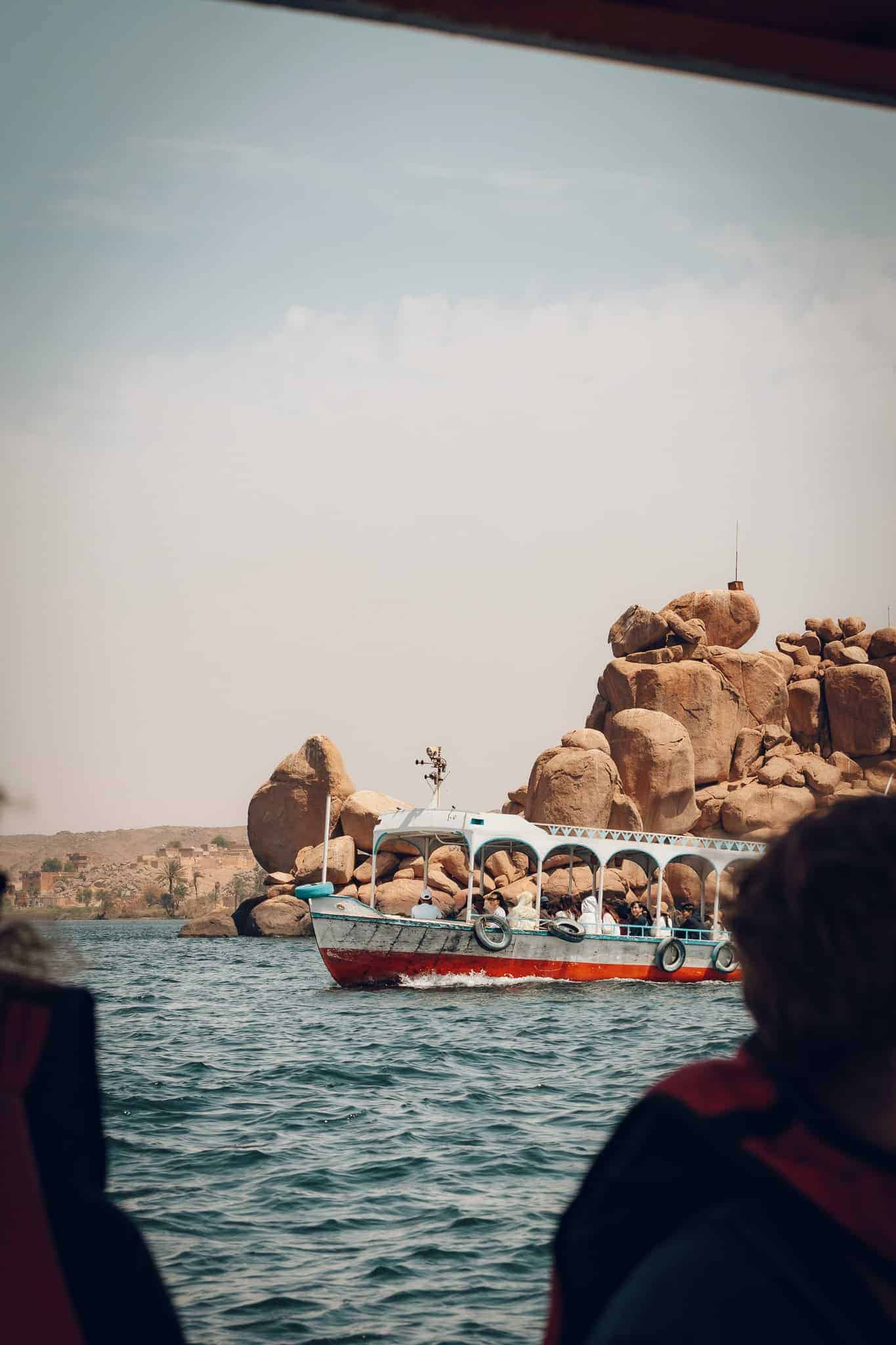

Option 2: Tours from Aswan
If you’d rather skip the haggling and logistics, booking a tour to Philae Temple from Aswan is straightforward. I would recommend this option. Most guesthouses and hotels can arrange one for you, but you can also book through a local tour operator in town or online.
Tours vary in price depending on group size, transport type, and whether a guide is included. They usually leave in the morning and last about 3 to 4 hours. If you want to add a stop to the High Dam or the Unfinished Obelisk, look for combined packages like this one.
Tip: If you book in Aswan through your hotel, always confirm what’s covered in the price. Some tours only provide transport, skip key details, or rush the visit. I’d suggest finding a reputable tour online with positive reviews that include a knowledgeable guide, round-trip transport from Aswan, the boat ride, and island entry included, such as this one.
Option 3: Included in a Multi-Day Tour
If you’re on a multi-day trip through Egypt, there’s a good chance Philae Temple is already on the itinerary. That’s how I visited, on an overland group tour with Intrepid. The temple was included as part of a packed day around Aswan, which made it logistically easy and budget-friendly since everything was pre-arranged.
Our group had private transport to the marina, tickets were sorted in advance, and we didn’t have to deal with boat negotiations. The guide handled it all and gave a quick intro before we had free time to explore on our own. We didn’t attend the sound and light show, but it’s sometimes offered as an optional add-on.

Things to note if you’re going this route:
- You won’t need to pay for individual entry or boats, but it’s worth confirming this with your tour provider
- Timing is fixed, so there’s less flexibility to avoid crowds or go early for photos
- Group pace can feel rushed. Philae deserves at least an hour to enjoy
Tip: Even if your temple visit is part of a bigger itinerary, check whether it includes Agilkia Island access, or just a panoramic view from the dam area. Some cheaper packages skip the boat entirely.
Independent vs. Tour: Costs, Pros & Cons
| Option | Approx. Cost (per person) | Pros | Cons |
| Independent Travel | EGP 550 entry ticket + share of EGP 200–400 boat + taxi (~EGP 70–100) | • Cheapest if sharing the boat • Full control over timing and pace • Flexibility to add other stops nearby | • Need to negotiate taxis and boat prices • No guide included • More planning and less time efficient |
| Organized Tour (Half-Day) | EGP 900–2,000 (depending on group/private) | • Hassle-free transport and boat • Guide often included • Easy to book through hotels or online | • More expensive than going solo • Less flexibility in timing • Group pace can feel rushed |
Is a guide essential to visit Philae Temple?

You can visit Philae Temple without a guide, but I honestly think hiring one makes the experience so much better. There’s a lot of layered history here, and unless you already know what you’re looking at, it’s easy to miss the bigger picture.
Philae has a mix of cultures from Egyptian and Greek to Roman and Christian. All is visible in the architecture, carvings, and layout. A good guide can help you make sense of those layers, explain the mythology behind the reliefs, and point out details you might otherwise walk right past.
If you’re not big on deep history, that’s fine too. Just let your guide know. You can ask for a lighter overview instead of a lecture-style visit. Most guides are happy to adapt.
Since there’s little signage on the island itself, having someone explain what you’re seeing can really enhance the visit and make it stick with you long after you’ve left. For me, that context is what turns a quick sightseeing stop into something memorable.
What to see at the Philae Temple?
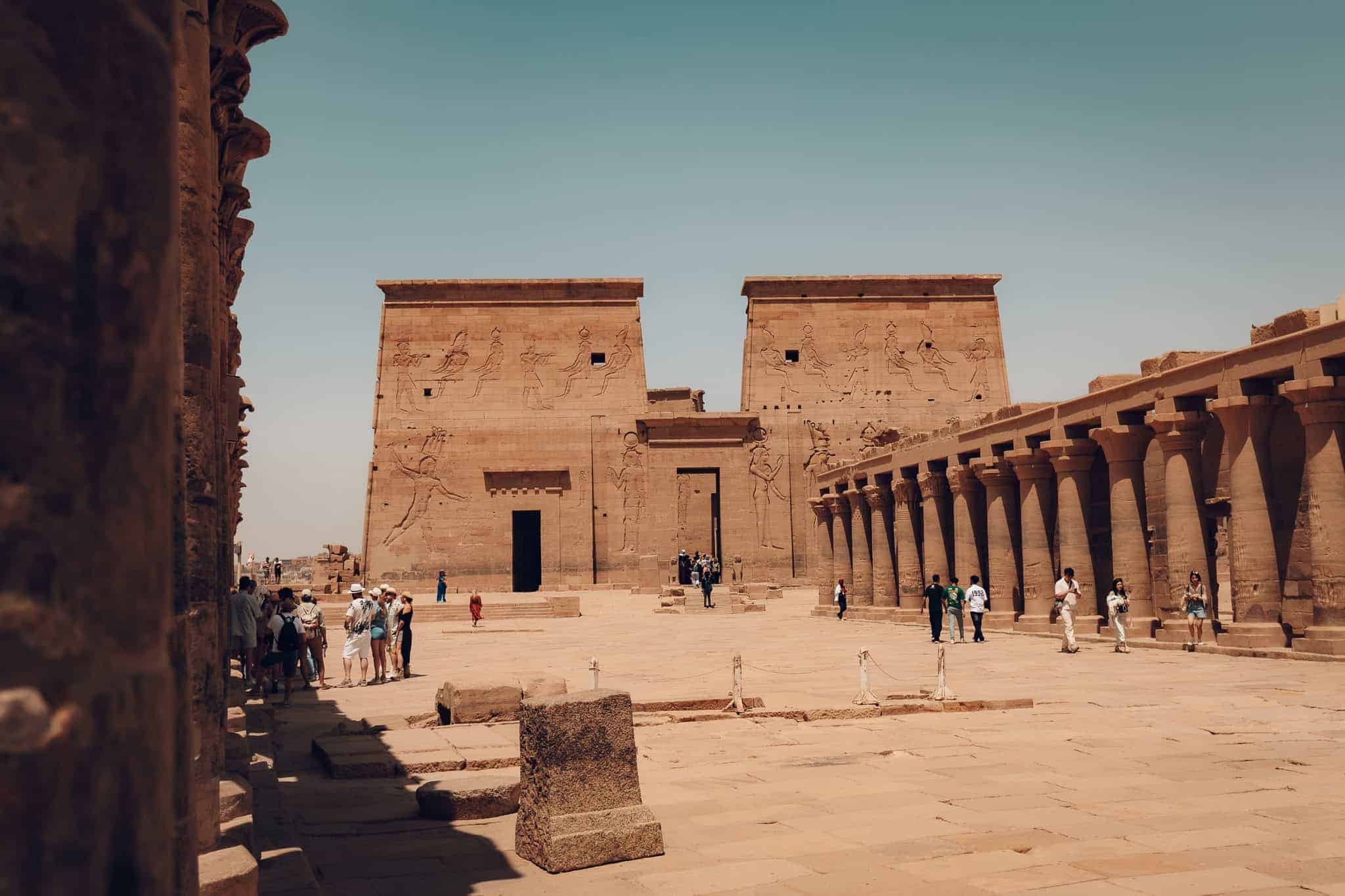
The temple complex isn’t massive, but it’s full of details that reveal just how much history passed through the original island. Once you arrive at the dock on the south side of Agilkia Island, you’ll find a small cafeteria to your right and the temple to your left, framed by columns.
At the entrance of the temple, two weathered granite lions and a towering pylon welcome you in. Here’s what not to miss as you explore the site, ideally walking clockwise from the First Pylon.
First Pylon Reliefs

The entrance is classic ancient Egyptian drama: Ptolemaic kings smiting enemies, flanked by gods. These scenes were all about power and authority, and they still leave an impression.
Look closely at the carvings of Isis, Horus, and Ptolemy XII on both towers. Some figures have been deliberately scratched out, while parts of the wall show carvings layered in different scripts. You’ll spot hieroglyphs next to Coptic crosses, Greek inscriptions, and Christian symbols; all coexisting on the same stone surface.
Most of the defacements happened during the early Christian period, when parts of the temple were converted into a church. As Christianity spread, the older images of gods were considered pagan and often destroyed. Faces were chiseled off, and symbols like the ankh were scraped away.
Temple of Isis


This is the heart of the complex and the reason most people come. Built during the Ptolemaic period and expanded by the Romans, it was dedicated to Isis, one of the most important deities in the Egyptian pantheon.
Step into the hypostyle hall with its intricately carved columns, then continue toward the sanctuary, where a replica of the sacred barque rests. This temple was one of the last places in Egypt where the old gods were worshipped, and you can feel that sense of reverence still lingering.
Birth House (Mammisi)
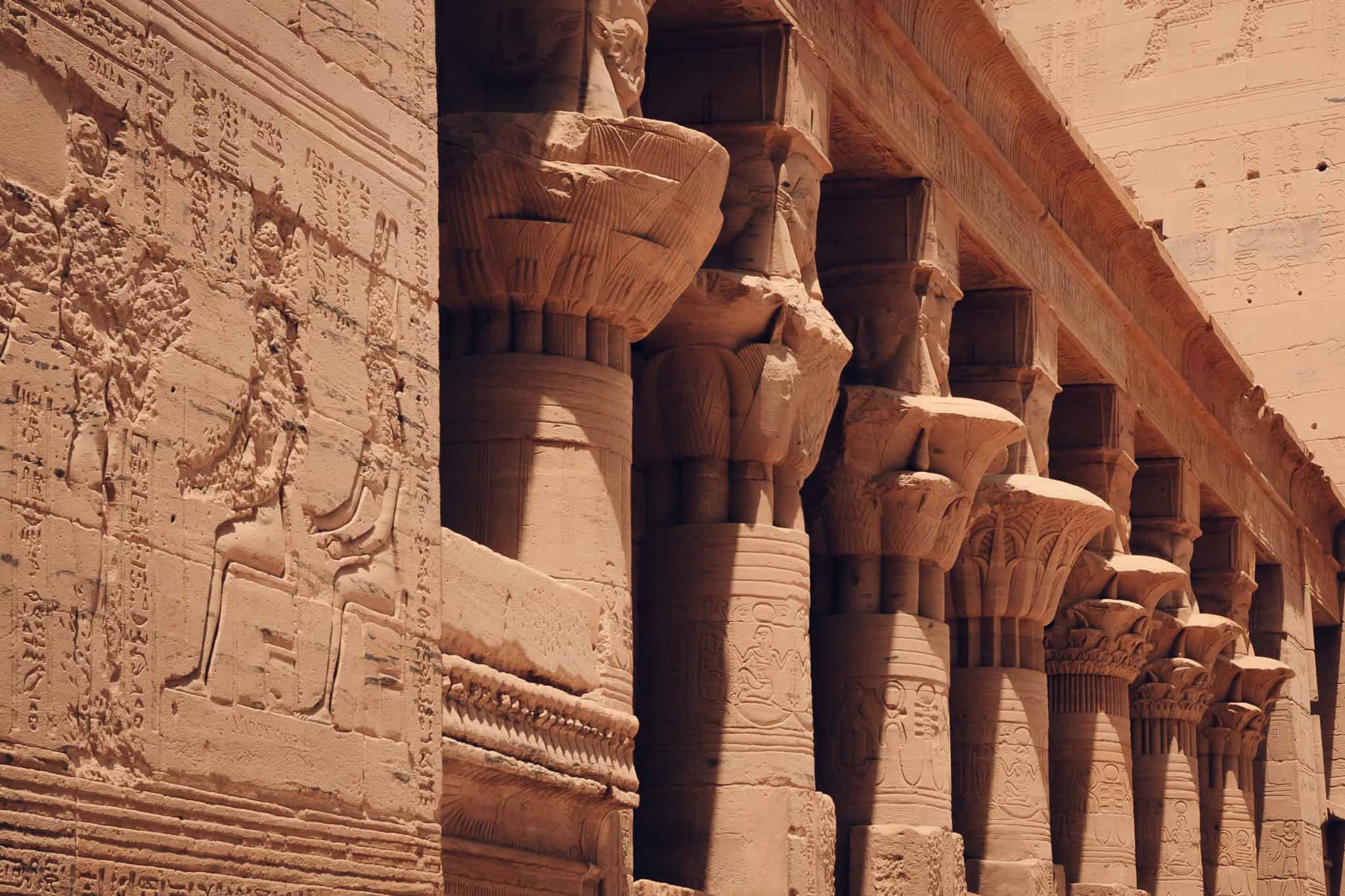
Tucked just to the left of the main temple, this small chapel celebrates the divine birth of Horus. Pharaohs were considered the earthly embodiment of Horus, so this space reinforced royal legitimacy. Don’t miss the reliefs as many are surprisingly detailed, with scenes showing Isis nursing the infant god.
Just beyond the Birth House, you’ll find an area that was converted into a church during Egypt’s Christian period. Look for crosses carved over older scenes (especially over the ancient ankh symbols), which early Christians saw as too similar to their own iconography.
Temple of Hathor
East of the main temple, this smaller shrine is dedicated to Hathor, goddess of music, dance, and joy. It has a few whimsical touches like reliefs of musicians and playful imagery. The Romans expanded it around the 1st century BCE.
Trajan’s Kiosk (The Pharaoh’s Bed)
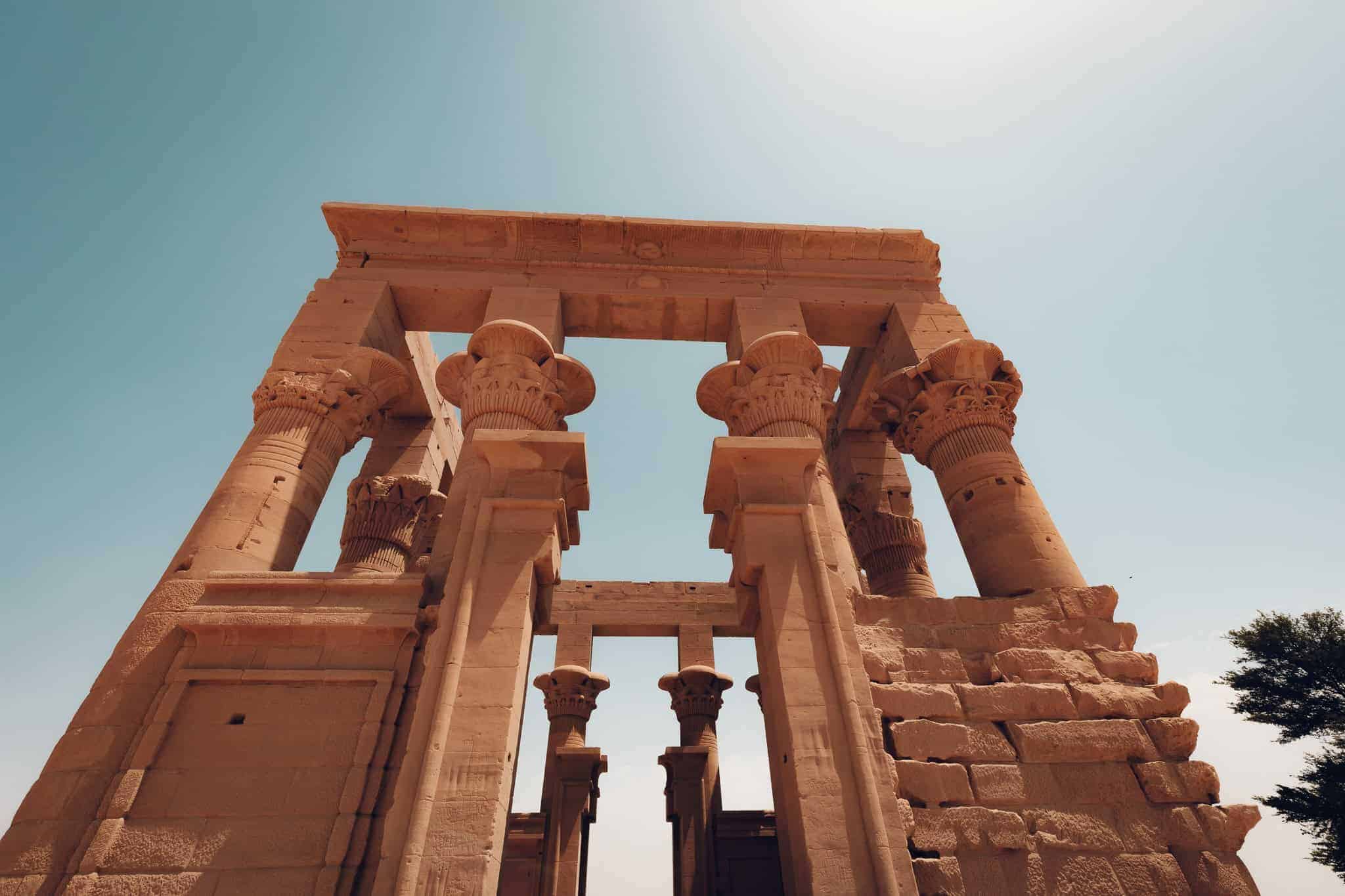
Probably the most photographed spot on the island. This open-air pavilion with 14 elegant columns was never completed, but it’s beautiful at golden hour. Trajan is shown offering incense to Isis and Osiris—an image of Roman power integrating Egyptian tradition.
Gate of Hadrian
This ceremonial gate features reliefs of Hadrian making offerings to Isis. It’s another example of how Roman emperors linked themselves to local deities to legitimize their rule in Egypt.
Coptic and Christian Carvings
As Christianity spread, parts of the temple were reused. Crosses were carved over pharaonic imagery, and some interior spaces were repurposed as chapels. The overlapping layers of worship here make Philae feel like a living timeline.
Enjoy the Nile Views

Between stops, take a minute to look out over the water. The setting is peaceful, and depending on the time of day, the light over the calm Nile waters and other nearby islands is stunning. It’s one of the few places where the view really competes with the architecture.
Visit Tip: Start at the First Pylon and walk clockwise around the complex. Bring water, wear sun protection, and take breaks in shaded spots. There’s little signage on-site, so having a guide (or at least a solid guidebook) can really help bring it all together.
Is the Sound and Light Show at Philae Worth It?
The Sound and Light Show at Philae Temple is one of those experiences that sounds grand, and visually, it kind of is. The temple is lit up after dark, with a dramatic voiceover telling the story of Isis, Osiris, and the temple’s rescue from rising waters. But whether it’s worth it really depends on what you like! Here are the details to organise a visit:
- Price: Standard adult ticket is USD 20 on the official website.
- When: There are a 2 shows per day (Thursday to Monday), one at 7 pm and one a 8 pm – show lasts1 hour.
- Languages: Depending on the day & time, the show is offered in Arabic, English, French, German, Spanish and others. Make sure to check the schedule ahead.
- Book: You can book on the official website and visit by your own means (as explained here), or join this tour including transport from Aswan, which is probably most convenient if you are in Aswan for a couple of days only.
Some people really enjoy the theatrical side of the Philae sound and light show. Others might find it a bit dated or prefer seeing the temple during the day, when natural light makes the carvings easier to photograph. I didn’t go myself, but friends who did said it’s more about the atmosphere than the historical depth.
Tip: If you’re short on time, prioritize a daytime visit. The carvings, colours, and island deserve at least a visit during the day. If you have time, go back for the sound & light show.
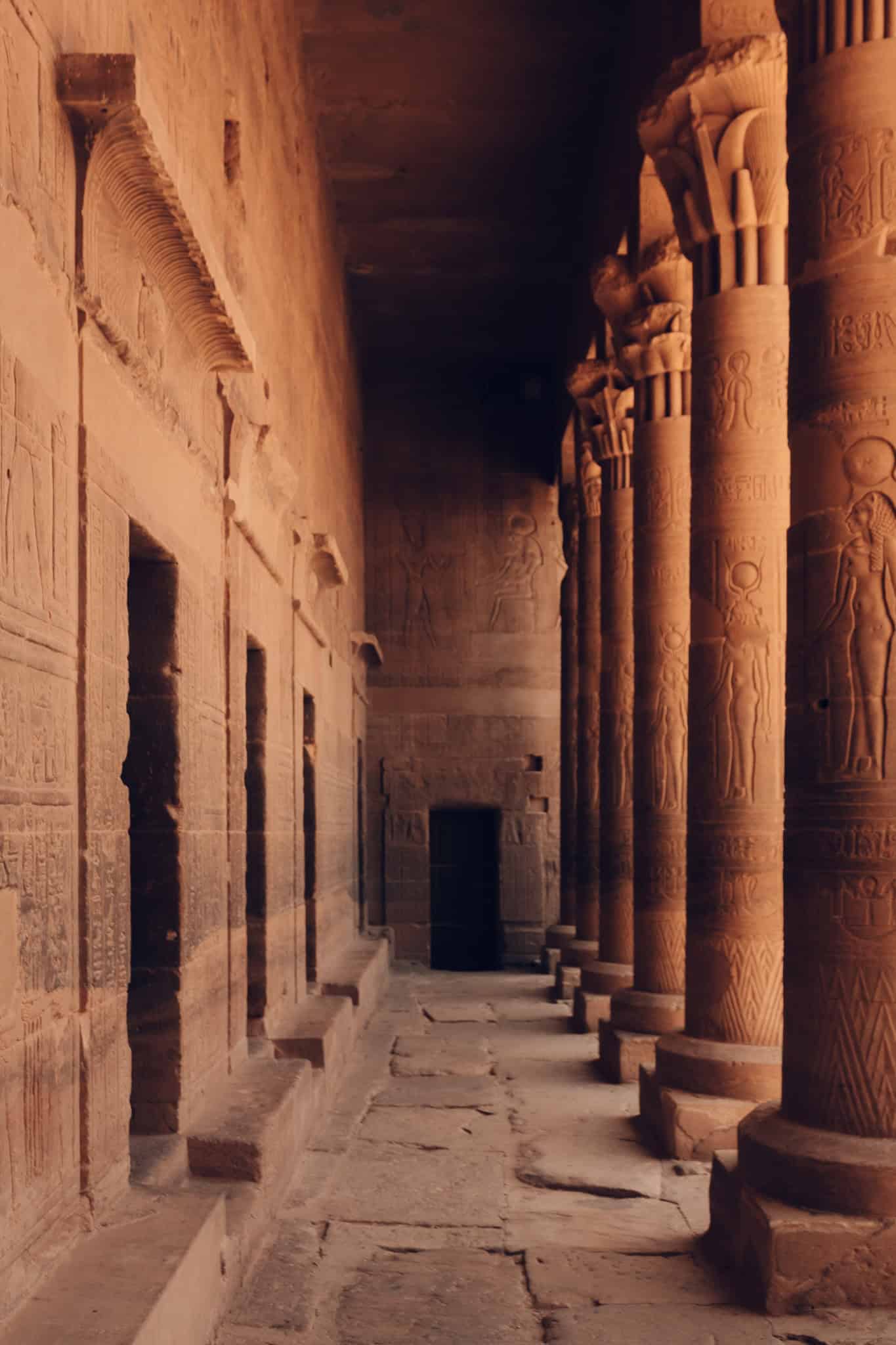

Is the Temple of Philae safe to visit?
Yes, Philae Temple is safe and one of the more relaxed places to visit in Egypt.
The main thing to watch out for isn’t safety, but overcharging. At the marina, boat prices can vary wildly, especially if it looks like you’re not sure what you should be paying. Stay polite, offer a fair price once, and don’t be afraid to walk away. Another boatman will probably step in with a better deal.
Solo travelers should feel comfortable visiting, too. If you’re heading out early in the morning or toward closing time, it might feel quieter, but not unsafe. Pairing up with other visitors to share a boat can make things more social and definitely helps cut costs. During the day, the island tends to stay active, with tour groups and local families coming and going.
Best Time to Visit for Photos and Fewer Crowds

Philae Temple is smaller than Karnak or Luxor, which makes it feel fuller faster, especially if a couple of tour groups arrive at the same time. If you’re after peaceful moments or clean shots of the architecture, timing really does matter.
Morning (7:00–9:00) | This is the sweet spot. Lighting is soft, the air is cooler, and the crowds haven’t arrived yet. The sun rises behind the temple, casting gentle light across the main pylon, perfect for wide shots without harsh shadows. It’s also a good way to dodge the midday heat, which hits hard once you’re on the island.
Midday to Early Afternoon (11:00–14:00) | This is peak tour time. The light gets flatter, shaded spots become rare, and you’ll be weaving around groups. That said, if this is the only time that fits into your itinerary, it’s still worth the visit. Just manage expectations for both photography and elbow room.
Late Afternoon (15:00–16:00) | Things start to quiet down again as the golden hour light sets in. Warm tones hit the stone, and the vibe becomes calmer. It is a great time for photography and slower wandering. Just keep an eye on the time, as the last boats leave not long after the site closes.
Seasonal Tip: I visited in April and found it ideal. The weather was warm but bearable, with clear skies and enough breeze to make the boat ride pleasant. March through early May is a great time: temperatures are rising, but it’s not peak heat yet. October to early December is also good, especially if you’re trying to avoid both the summer highs and the winter tourist peak.

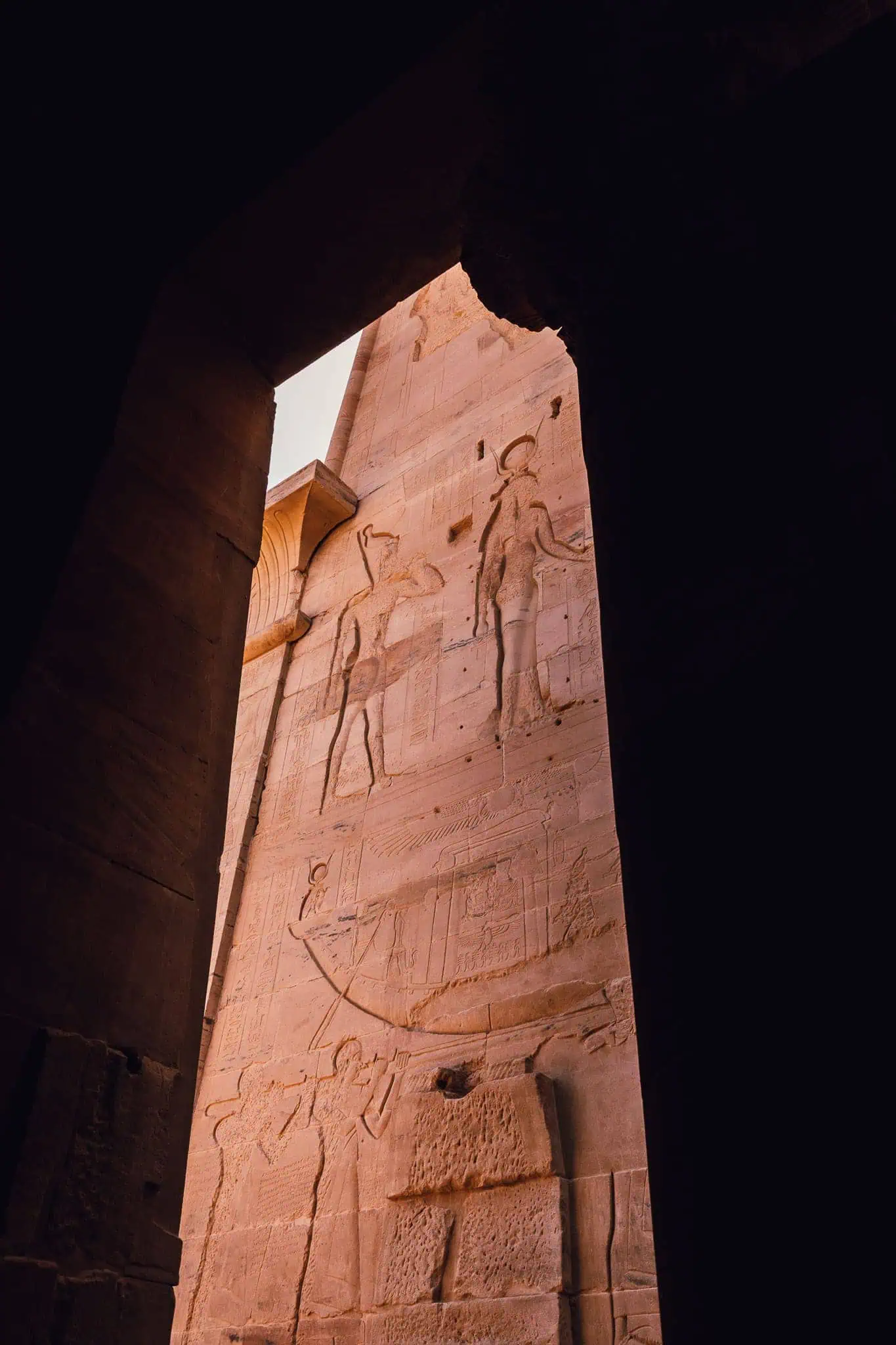
Essential Tips for Visiting Philae Temple
How Long to Visit | Plan for at least two hours, including the boat ride and time on the island. The temple isn’t massive, but there’s a lot to take in. It’s also a great spot to slow down and enjoy the Nile views before heading back.
Accessibility | Philae Temple isn’t very accessible. The boat ride requires stepping in and out of small, sometimes unstable boats, which can be tricky if you have limited mobility. Once on the island, paths are mostly gravel and uneven stone. Inside the temple, there are multiple ramps, steps, and floor gaps that make navigating difficult without assistance. This site is not well-suited for wheelchairs or those who need solid, even ground.
Weather | Shade is minimal outside the temple buildings, and the sun reflects off the stone, making it feel hotter than it is.
What to Wear | There’s no formal dress code, but modest clothing is a good idea. Covering shoulders and knees is respectful and practical, too, since it helps with sun protection. Breathable fabrics are your best bet for staying comfortable. Bring plenty of water, wear sunscreen, and don’t skip the hat.
Toilets | There are toilets near the temple. They’re basic but usually clean. Bring a 5 EGP coin to get in.
Tips | Boat drivers and marina staff typically expect small tips. Having small change (around EGP 10–20) makes things smoother, especially if someone helps you board, dock, or navigate.
Where to stay in Aswan

West Bank: Nubian Village Vibes
If you’re into bold colors, mural-painted homes, and slower mornings by the river, head to the Nubian villages. Places like Kato Dool and Anakato offer clean rooms, Nubian-style decor, and a more personal feel than downtown hotels. They’re popular with travellers (and Instagrammers) for a reason but they still feel grounded and relaxed. Just know that getting back and forth means hopping a boat (usually included in the stay, but confirm upon booking).
East Bank: Budget to Mid-Range
For something central, Obelisk Nile Hotel is a solid pick. I stayed there and loved the view, plus it’s walkable to markets and ferries.
Citymax and Basma Hotel are reliable mid-range options with Nile access and good value. Blue Lotus is a good fit if you want something smaller and friendlier, with colorful touches and helpful staff.
Elephantine Island
For peace and views, Elephantine Island is a great in-between. It’s car-free, super chill, and close to everything by ferry. The Mövenpick is the high-end pick with lush gardens, big balconies, and riverside calm.
For something more local, Nuba Tod or Hamo House offer guesthouse charm right in the heart of the island village.
Tip: If you’re staying on the west bank or Elephantine, make sure to factor in ferry times; especially for early morning tours.
Luxury Stay
If you want comfort and history, it’s hard to beat the Old Cataract Hotel. It’s pricey, but if you’ve read any Agatha Christie or just want to soak up colonial-era luxury with serious Nile views, this is the spot.
Pss! Even if you don’t stay there, consider dropping by for tea on the terrace (entrance is €20 per person but deductible from the cocktail of the day).
History of the Temple of Philae
Philae Temple was built in honor of Isis, one of ancient Egypt’s most powerful and widely worshipped goddesses (protector of magic, motherhood, and healing). It became an important pilgrimage site during the Ptolemaic period (around the 3rd century BCE), when Greek rulers were blending their own customs with Egyptian religion to win over the local population.
Construction began under Ptolemy II and continued for several generations. Later, even the Romans contributed. Emperor Trajan’s unfinished kiosk still stands near the water, a striking example of the temple’s layered history. That long timeline explains why some reliefs are sharply carved while others remain incomplete.
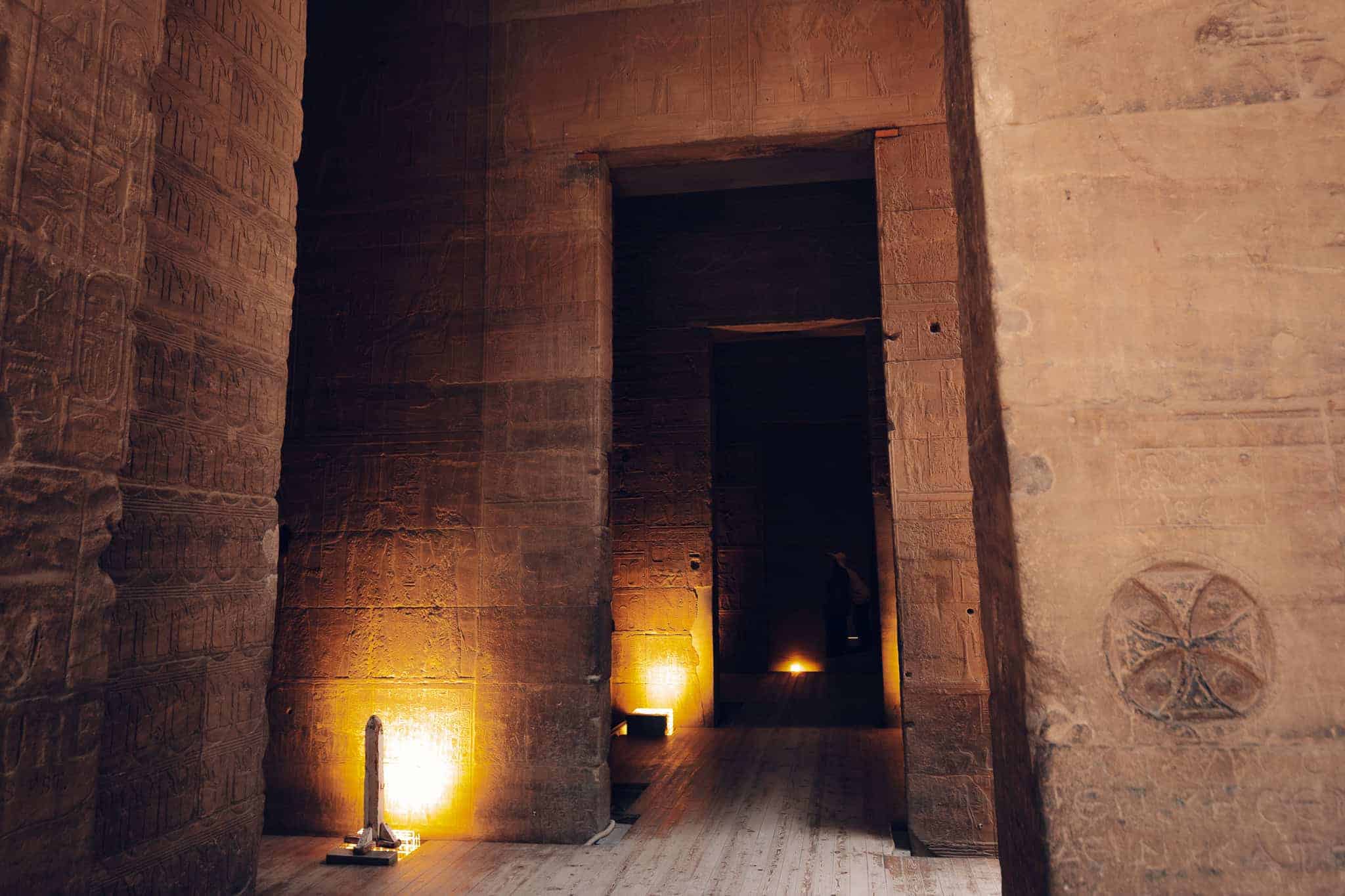
What makes Philae especially unique is how long it stayed active. While most temples in Egypt closed after the arrival of Christianity, worship of Isis continued here until at least the 6th century AD. Eventually, the temple was converted into a church. Many of the original carvings were defaced or covered with crosses, marking a dramatic shift in how the space was used.
In the 20th century, after the construction of the Aswan High Dam, Philae Island was flooded and the temple was at risk of being lost for good. In a massive UNESCO-led rescue project (similar to Abu Simbel), the temple complex was dismantled stone by stone and rebuilt on nearby Agilkia Island between 1972 and 1980.
The Myth Behind Philae Temple
Philae Temple is dedicated to Isis, the goddess of magic and motherhood, and the central figure in one of ancient Egypt’s most powerful myths: the story of Isis and Osiris.
According to the myth, Osiris, king of Egypt and husband of Isis, was murdered by his jealous brother Seth, who cut his body into pieces and scattered them across the land. Isis, heartbroken but determined, searched for each piece and eventually reassembled Osiris, bringing him back to life long enough to conceive their son, Horus.
This myth explains Isis’s strong association with healing, resurrection, and protection. And it’s why Philae, the island temple dedicated to her, became one of the most important religious sites in ancient Egypt. Pilgrims traveled here for centuries to seek her blessings, often leaving offerings or carvings in the temple walls.

Throughout the complex, you’ll see reliefs of Isis nursing Horus, standing beside Osiris, or receiving offerings from pharaohs. These images weren’t just decorative; they were meant to keep the myth alive and reaffirm the divine right of rulers, who saw themselves as successors to Horus.
The island itself was considered sacred, believed to be one of the places where Isis found part of Osiris’s body. That spiritual weight gave Philae a significance that lasted well into the Christian era and beyond.
The Rescue and Relocation of Philae Temple
Philae Temple’s current location on Agilkia Island isn’t its original home. It used to stand on Philae Island, just a short distance away, until rising waters from Egypt’s modern dam projects nearly swallowed it.
The trouble started in the early 20th century with the construction of the Old Aswan Dam, which caused seasonal flooding. For decades, the temple was partially submerged for months at a time. Reliefs faded. Structures weakened. Tourists had to visit by boat through half-drowned columns.
Then came the Aswan High Dam in the 1960s, which would’ve left Philae underwater permanently.
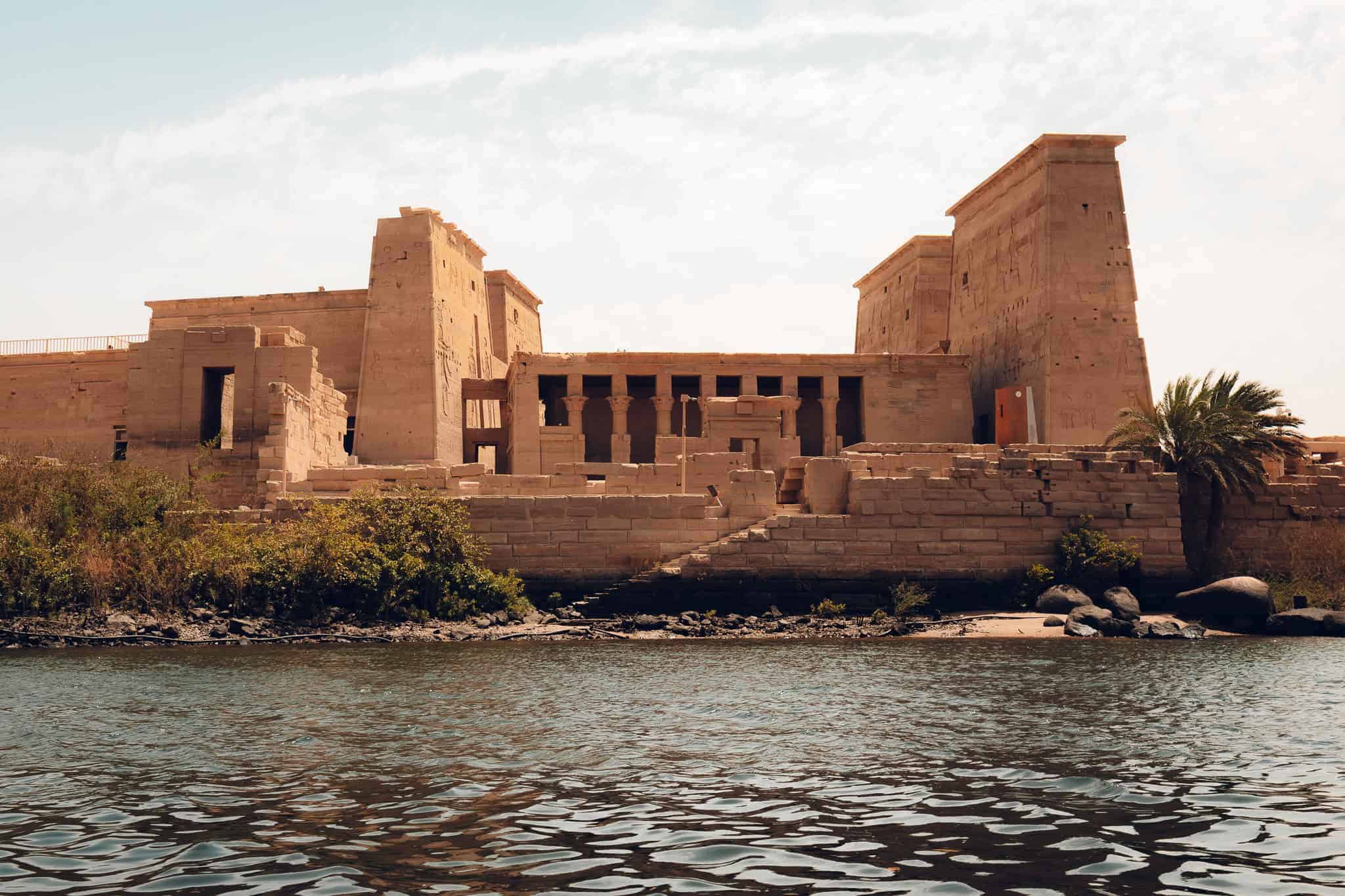
In response, UNESCO launched an international campaign to save it (like many other sites along the Nile). Between 1972 and 1980, engineers and archaeologists carefully documented, dismantled, and rebuilt the entire complex on higher ground at Agilkia Island. Every block was moved and reassembled piece by piece, with attention to keeping the layout, orientation, and environment as close to the original as possible.
You can still see subtle differences in the stonework (cleaner joins, slightly newer cement) but the rescue was considered a massive success. And it set the standard for global heritage preservation.
Tip: As you explore the temple, you might notice small metal markers or numbers on certain stones. These were used during the relocation process to track each piece, proof of just how complex and delicate the project was.
FAQs
Final thoughts and where to go next?
Philae Temple might not be the biggest site in Egypt, but it leaves a lasting impression if you time your visit right and take the time to explore its details. From mythology and layered history to calm Nile views, it’s a stop I’d recommend to anyone passing through Aswan.
If you’re planning more time in the area, check out my guide on how to visit Abu Simbel from Aswan, especially if you’re debating between a tour or DIY option. I’m also working on a full Things to Do in Aswan guide, so check back soon for that.
And if you’re still mapping out your Egypt itinerary, have a look at this round-up of Famous Landmarks in Egypt, a great way to decide what not to miss, whether it’s your first time or a return visit.
Hope you enjoyed this article. Leave a comment if you have any questions!
ARE YOU ON PINTEREST?
What about saving this post to your Pinterest board?
Click on the photo to save this blog post for later. We are also on the platform, and we love pinning great travel tips. Follow Tales From The Lens’ boards to see our latest pins.
Don’t be shy, come say hi!
Please note │ This blog post may also include affiliate links to hostels or products we recommend, which means if you buy something following a link on this page, we’ll get a small commission. This will be of no extra cost to you but will help us continue running this blog. Thank you for your support.

About the Author
Jen is the Funder, Author & Photographer behind Talesfromthelens.comJen has lived for the past 15 years across Oceania and Ireland while also travelling in Latin America, North America, and Europe. She has visited more than 65 countries and set foot on every continent in the world! She is a coffee nerd, passionate about photography, wildlife, and outdoor activities.
For more info, check out the About page.