
There’s something surreal about standing in front of four colossal statues carved into a sandstone cliff, staring into the eyes of Ramses II as the desert sun rises behind you. Abu Simbel isn’t just a bucket-list destination, it’s one of Egypt’s most awe-inspiring feats of ancient engineering and modern preservation.
Located deep in southern Egypt near the Sudanese border, these twin temples were famously relocated in the 1960s to save them from rising waters caused by the Aswan High Dam. Today, visiting Abu Simbel (a UNESCO World Heritage Site) is a highlight for many travellers. Though getting there isn’t always straightforward.
Should you go by minibus, private car, plane, or cruise? Is it worth the early wake-up call? And what’s the best way to avoid the crowds while not spending an arm and a leg for this detour from Aswan?
In this guide, I’ll walk you through every option for visiting Abu Simbel; from budget-friendly group tours to luxurious Lake Nasser cruises; with personal insights, practical tips, and a few things I wish I’d known before I went. This post will help you make the most of your visit of Abu Simbel from Aswan. Let’s dive in.
Where to Stay?
- West Bank Aswan: Kato Dool or Anakato
- East Bank Aswan: Obelisk Nile Hotel or Blue Lotus
- Overnight in Abu Simbel
Recommended Tours

Where Is Abu Simbel?
Abu Simbel sits about 280 kilometres south of Aswan, very close to the Sudanese border and perched on the western shore of Lake Nasser. This is proper Nubian desert territory which means it is remote, wind‑blown, and unmistakably separate from the Nile towns you will leave behind.
There are several ways to reach Abu Simbel, which we will details below. The most common is driving through the desert, usually with a guided tour or a private driver, but you can also enjoy a short flight or a longer cruise. The choice is yours.
how to get from Aswan to Abu Simbel

1) Group Tour by Minibus: Cheapest, but Longest
If you’re looking for the most budget-friendly way to visit Abu Simbel, joining a shared minibus tour from Aswan is your best bet. Nearly every hotel or tour desk can arrange it, and it’s a popular choice for first-time visitors. Cost is around €40 to €60 per person.
Expect an early pickup around 4:30–5:00 AM, followed by a 3.5–4 hour drive through the desert. You’ll get about two hours at the site before heading back; so it’s a long day, but well-timed to avoid the worst of the heat.
The road from Aswan to Abu Simbel/Sudan border is open from 5 AM to 5 PM, with several security checkpoints along the way. You won’t need to leave the bus as your details will shared with authorities in advance by the travel company, though, bring your passport just in case. Also pack water, sunscreen, and snacks. There isn’t much to buy anything en route, and hotel breakfast boxes aren’t always satisfying (mine wasn’t…)
Most tours include transport, entry ticket, and basic commentary outside the temples. The downside? You’re on a fixed schedule with little flexibility but in my experience it was enough and not too busy. Still, for the price, it’s hard to beat.

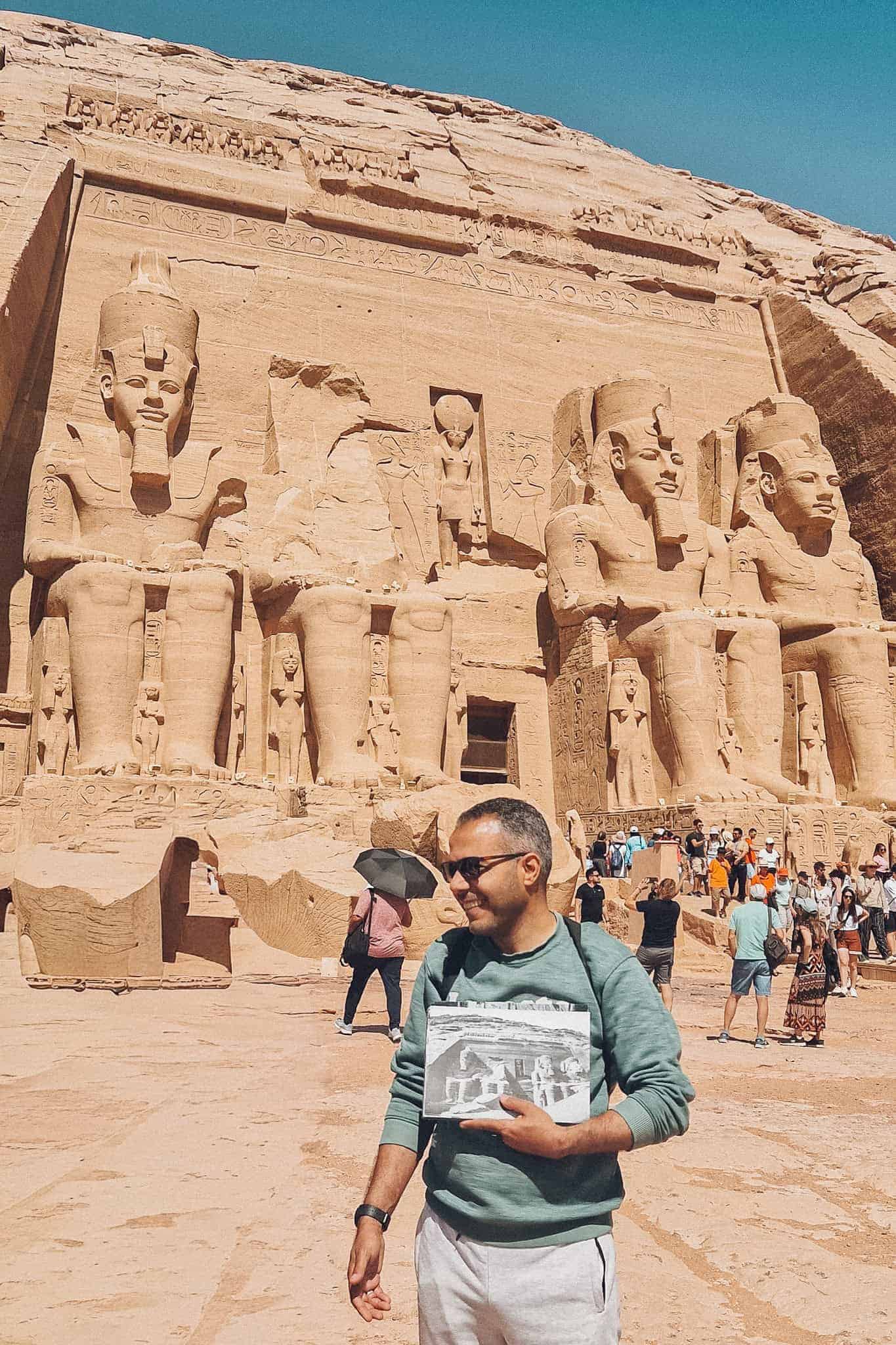
You can book these tours in advance. Here are a couple of reliable options to consider:
- From Aswan: Abu Simbel Temple Day Trip with Hotel Pickup
- Aswan: Abu Simbel Group Tour with Guide and Entrance Fees
👍 Pros:
- Easy logistics: hotel pickup and drop-off
- Often includes entry tickets
- Great for short stays or fixed itineraries
👎 Cons:
- Early start with a long drive
- Group timing limits flexibility
- Only a couple of hours at the site at the same time as the other tours.
Note: If you’re already on an organised tour (many multi‑day operators offer Abu Simbel as an optional add‑on). For example, Intrepid quoted €110 per person for their add‑on on one trip I was on, which felt high given we were 12 and a private bus split between the group would have been cheaper. I still joined the Intrepid option so I could stay with my group; but it’s totally allowed to book a different operator’s transfer if that makes more sense for your planning and budget, as long as you’re not missing a required group activity.
2) Private Car + Driver: Best for Flexibility
If you want full control over your schedule, and the best chance at quiet photo moments, hiring a private car with a driver is the way to go. You’ll take the same desert highway as the group tours, but you decide when to leave, how long to stay, and whether to linger at the temples or skip the crowds.
You’ll still pass through security checkpoints and need to register with local authorities, but you won’t be stuck waiting for a busload of people to get organized. Small delays can happen, but with your own driver, you move when you’re ready.

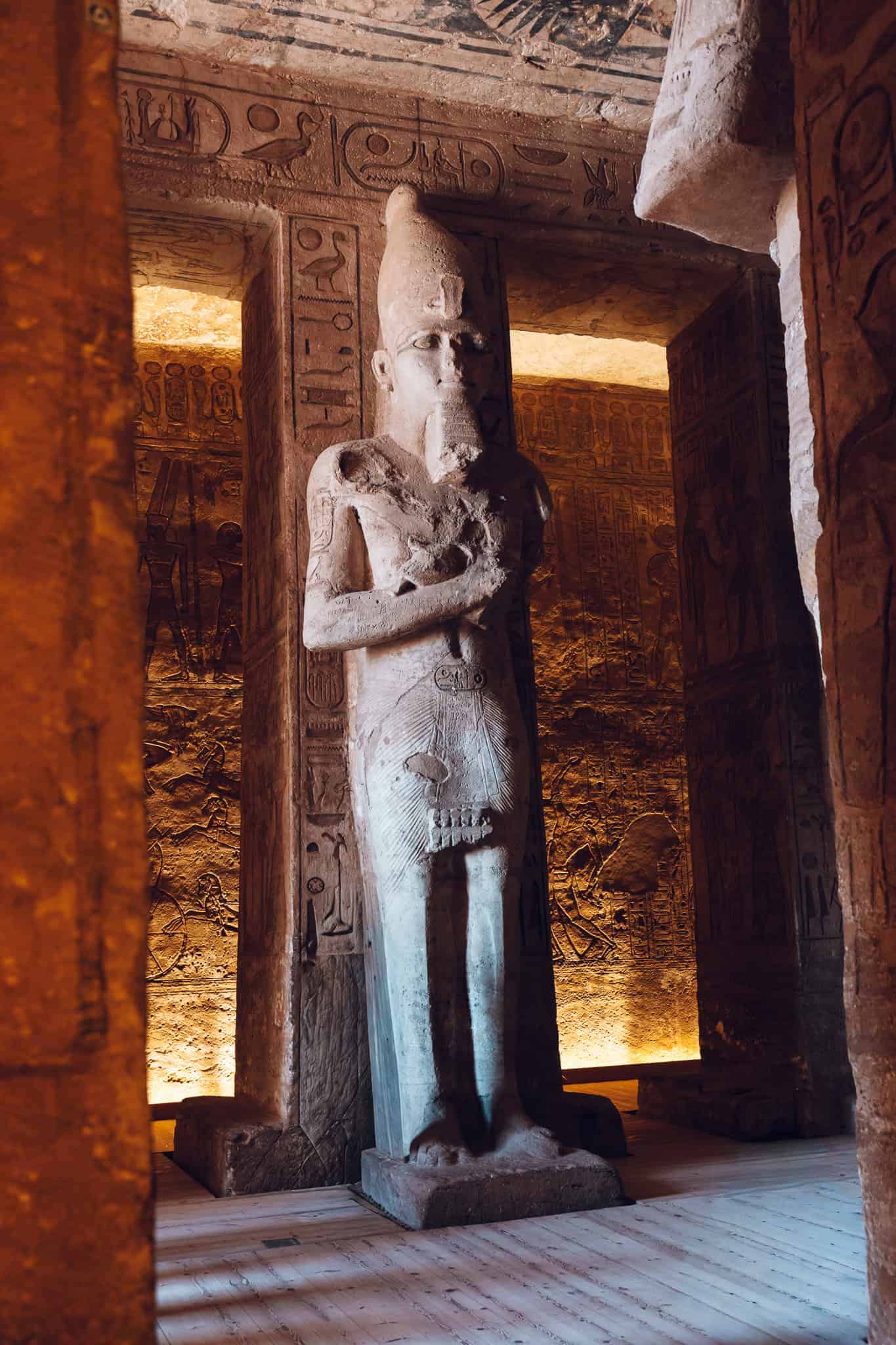
Prices typically range from €70 to €150 round-trip, depending on the number of people. Always double-check what’s included, especially entry fees. Most hotels or licensed guides can arrange everything for you, but here are some popular options you can book from home:
- From Aswan: Abu Simbel Day Tour with Private Guide and Car (choose your departing time)
- Best Private Day Trip To Abu Simbel From Aswan
👍 Pros:
- Full control over your schedule
- Great for avoiding crowds or catching ideal light
- Can be more comfortable, especially in summer
👎 Cons:
- Higher cost than group tours
- Still goes through same route and checkpoints
3) Flight Aswan (ASW) ⇄ Abu Simbel (ABS) (fastest)
If you want to skip the long desert drive entirely, flying is hands‑down the fastest way to reach Abu Simbel. EgyptAir operates direct flights between Aswan (ASW) and Abu Simbel Airport (ABS), though not every day. The flight itself takes just 40–45 minutes.
The fares start at €87 one way per person but expect to pay more for the earlier flights which are more popular.
Schedule tips: flight times shift often, especially outside peak season. Morning departures are most common, and some itineraries offer same-day return with 2–3 hours to explore.
Note: EgyptAir offer a free shuttle between the Airport and Abu Simbel site. The bus will wait for you are the temples before taking you back to the airport for your return flight. As always double‑check the schedule and book ahead.
Why fly? this is the go‑to option if you’re short on time, visiting in summer (when the road heat is brutal), or just want a more comfortable experience.
Flying works well if you plan to stay overnight in Abu Simbel for the sound‑and‑light show or to catch sunrise photos without the crowd. Though, remember this is very remote so don’t expect a lively town like Aswan.
👍 Pros:
- Fastest way to get there and back
- Skips the 8-hour round trip by road
- Good fit for luxury travel or tight itineraries
👎 Cons:
- Limited availability and can be pricey
- Feels less immersive. Quick in and out
4) Visiting Abu Simbel as Part of a Cruise (Exclusive & €€€)

Most multi-day Nile cruises follow the classic Luxor–Aswan route, and while some advertise Abu Simbel as part of the itinerary, it’s usually offered as a road-based day trip from Aswan. It’s a popular optional excursion, timed to fit around your sailing schedule, but not part of the standard river cruise route (and that’s not always clearly explained).
If you’re after something slower, grander, and more atmospheric, a Lake Nasser cruise from Aswan to Abu Simbel might be the experience you’re looking for. These are luxury sailings operated by Mövenpick or Steigenberger, and other high-end lines, that drift south over several days, stopping at remote temples like Amada and Wadi El Seboua along the way.
Lake Nasser cruises are more expensive (up to €1,500 per person for 3 nights), but they offer desert sunrises and quiet decks, onboard Egyptologists, lesser-visited Nubian sites, and a peaceful pace that feels straight out of Murder on the Nile (hopefully without the drama…)
I imagine that arriving at Abu Simbel by boat is like a throwback to the 19th century, when early explorers first glimpsed the colossal statues from the water.
👍 Pros:
- Includes lesser-visited Nubian temples en route (e.g. Amada, Wadi El Seboua)
- Onboard Egyptologists
- Ideal for slow travel and avoiding crowds
- Feels luxurious and immersive
👎 Cons:
- More expensive than road or air options
- Limited availability; fewer sailings than Nile cruises
- Not ideal for budget travellers or quick visits

Are there trains to Abu Simbel?
Nope, there are no trains to Abu Simbel. Currently, the nearest train station is in Aswan but the governement is working developpong a high-speed line across the country. The segment covering Abu Simbel is not expected until after 2027 (which no exact timeline available)
So for now, if you’re coming from Cairo or Luxor, you can take the train to Aswan, then switch to a tour, private car, or flight. But there’s no rail line that goes all the way to the temples themselves.

Can you take a public bus from Aswan?
Yes! You can hop on a public bus from Aswan. This is avery budget-friendly alternative (about 100 EGP pp one way. This is a good option if you are planning to stay in the town and visit the site in late afternoon or the next morning.
The bus (which indeed accept tourists) takes a very long time though compared to flying, as it leaves daily from Aswan at 8 AM and make it at Abu Simbel village around 12:30PM. It then returns to Aswan at 1PM.
This means, you cannot make the day-trip to visit Abu Simbel with public transport, but you can for a couple of days trip.
To do so, head to Aswan Bus Station (Abu AR Rish Qebli, Aswan, Aswan Governorate 1234005, Egypt) from where the bus leaves daily. I would recommend to pop by the bus station the day before to confirm the bus is running the next day.


Entry & Logistics at the Site
Opening hours|The temples are open daily from 5:00 AM to 6:00 PM (might change during Ramandan week), though most tours arrive in the morning between 8:00 and 10:00 AM. If you’re traveling independently, consider arriving earlier to beat the crowds and the heat. Around 12PM most were gone. If you travel during the off season, it is also a good time to arrive to avoid the crowd.
Tickets|Entry costs EGP 750 for foreigner adults (roughly €13-14), with 50% discounts for students. Tickets can be purchased at the gate; no need to book in advance (tickets are usually included in the guided tour price, but double check).
Facilities|There’s a small visitor center with information on the 1960’s relocation, basic toilets, and shaded seating near the entrance with a café and a small shop to buy souvenirs, water and snacks.
Photography|You’re free to take photos outside and inside the temples, but tripods and flash are not allowed.
Sound & Light Show|If you’re staying overnight in Abu Simbel, the evening show is a dramatic retelling of the temple’s history with projections and music. Tickets are separate and can be booked online, through your hotel or tour desk.
Special Event|Ramses temple was also planned as an astronomical showpiece. Twice a year, sunlight pierces the sanctuary and hits the back wall on October 22nd & February 22nd. You can visit the site on these days, but expect the entry cost to bit much higher: EGP 1,200 (€21-22) / Student: EGP 600
How to Dodge the Crowds at Abu Simbel?

Abu Simbel is a popular day trip from Aswan. It drags crowds mostly in the morning as tour operator organise visits at the earliest time to avoid the heat. Since most tourist will arrive from Aswan and it requires at least 3h30 to drive to Abu Simbel, the best time to visit the site wihout the crowd is before 8AM or after 12PM.
Option one: Fly in, stay overnight, and visit during late afternoon or at sunrise the next morning. This requires a bit more time and of course a bigger budget, but it’s the only way to guarantee a quiet temple. Most day-trippers are long gone (or not arrive) by then, and you’ll have the place practically to yourself.
Option two: If you’re coming by road from Aswan, here’s the trick: take a private car and go late. Most tour buses leave around 4 AM, hit the site by 8, and are gone by 10:30/11AM. So if you leave Aswan around 7 AM in a private car, you’ll roll in just as they’re clearing out. Expect to arrive around 11AM , when the site is quiet but the heat is almost at its peak (not recommended during summer). Don’t forget the road closes at 5 PM, so you’ll need to be back in Aswan before.
Option three: Join a lake Nasser Cruise. They are expensive but they are quite exclusive and your boat will drop you off you directly at the site like in the 19th century!
Should you really Visit Abu Simbel?

If you’ve hauled yourself to Aswan, in my opinion, don’t skip Abu Simbel. It’s the kind of places that justifies the long drive. Yes, it’s in the middle of nowhere, shade is scarce, and the long drive tests your patience, but then those four colossal faces loom out of the cliff and suddenly every mile feels worth it.
These two temples aren’t like the rest of Egypt. They’re literally carved out of the rock. Ramses II built the great temple to flex power; the smaller temple is a love letter to Nefertari, his favourite wife. Walk closer and the scale keeps surprising you: hulking columns, carved battle scenes, narrow corridors.
Though, if ancient stone and jaw‑dropping craftsmanship don’t sell it for you, the backstory will!
In the 1950s, when the Aswan High Dam threatened to drown the site, an international rescue mission sliced the temples into thousands of blocks and reassembled them higher, stone by stone. Look closely and you’ll spot the seams. These physical scar tells an epic story of engineering and stubborn preservation…
How Abu Simbel Was Saved from Drowning
In the 1960s Abu Simbel was nearly lost. The Aswan High Dam promised power and irrigation for Egypt but would also drown a vast stretch of Nubia, and several century-old buildings such as Philae temple and Abu Simbel.
Engineeing teams worked from 1964 to 1968 to dismantle the temples into more than a thousand massive blocks, some weighing up to 30 tonnes. The façade, inner chambers, even slices of the cliff were methodically cut, each stone numbered, lifted about 65 metres higher and roughly 200 metres back from the original site, then reassembled with almost surgical precision.

What’s even more incredible is how the temple’s famous solar alignment was preserved so the twice‑yearly sunlight still hits the sanctuary as it did millennia ago (though 1 day later, eg. 22nd of october instead of the 21st & on the 22nd of February instead of the 21st.)
This was not just a technical rescue; it was a turning point for global heritage preservation. A handful of determined people rallied governments and funds, campaigned loudly, and turned what could have been a quiet loss into an international cause. One of the loudest voices was Christiane Desroches‑Noblecourt, a French Egyptologist whose campaigning helped push the project across the finish line.
The result is both sobering and inspiring: the seams where the stones were rejoined are still visible if you look closely, a permanent reminder that the site you stand in front of was nearly swept away and was only saved by meticulous work and relentless advocacy.


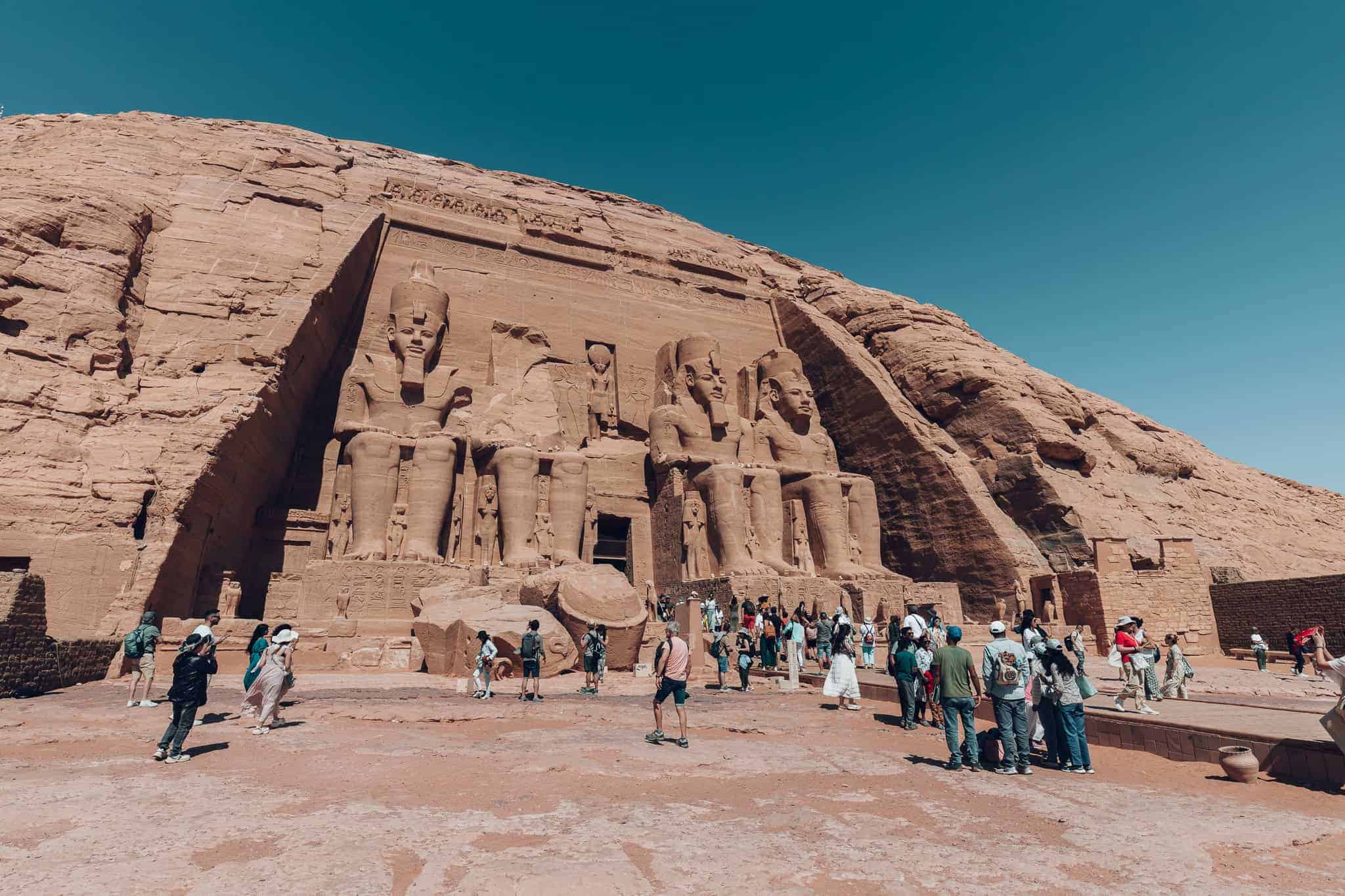
Here are some great reads about this international effort.
- Empress of the Nile / Lynne Olson: narrative history focusing on Christiane Desroches‑Noblecourt and her campaign to save Abu Simbel; compelling, readable, and biography-driven.
- Abu Simbel: The Story of an Extraordinary Rescue / UNESCO: authoritative, photo-rich report of the international salvage campaign and technical details.
- Temples and Tombs of Ancient Nubia / Torgny Säve‑Söderbergh: scholarly overview that situates Abu Simbel within Nubian archaeology and explains the relocation’s archaeological challenges.
- Abu Simbel: A Short Guide to the Temples / Nigel Fletcher‑Jones: concise, well‑illustrated site guide with clear explanations of the dismantling and reassembly process.
What to See at Abu Simbel
Abu Simbel is made up of two massive temples carved directly into the rock, both commissioned by Ramses II, and both packed with detail that’s easy to miss if you don’t know where to look.
The Great Temple of Ramses II
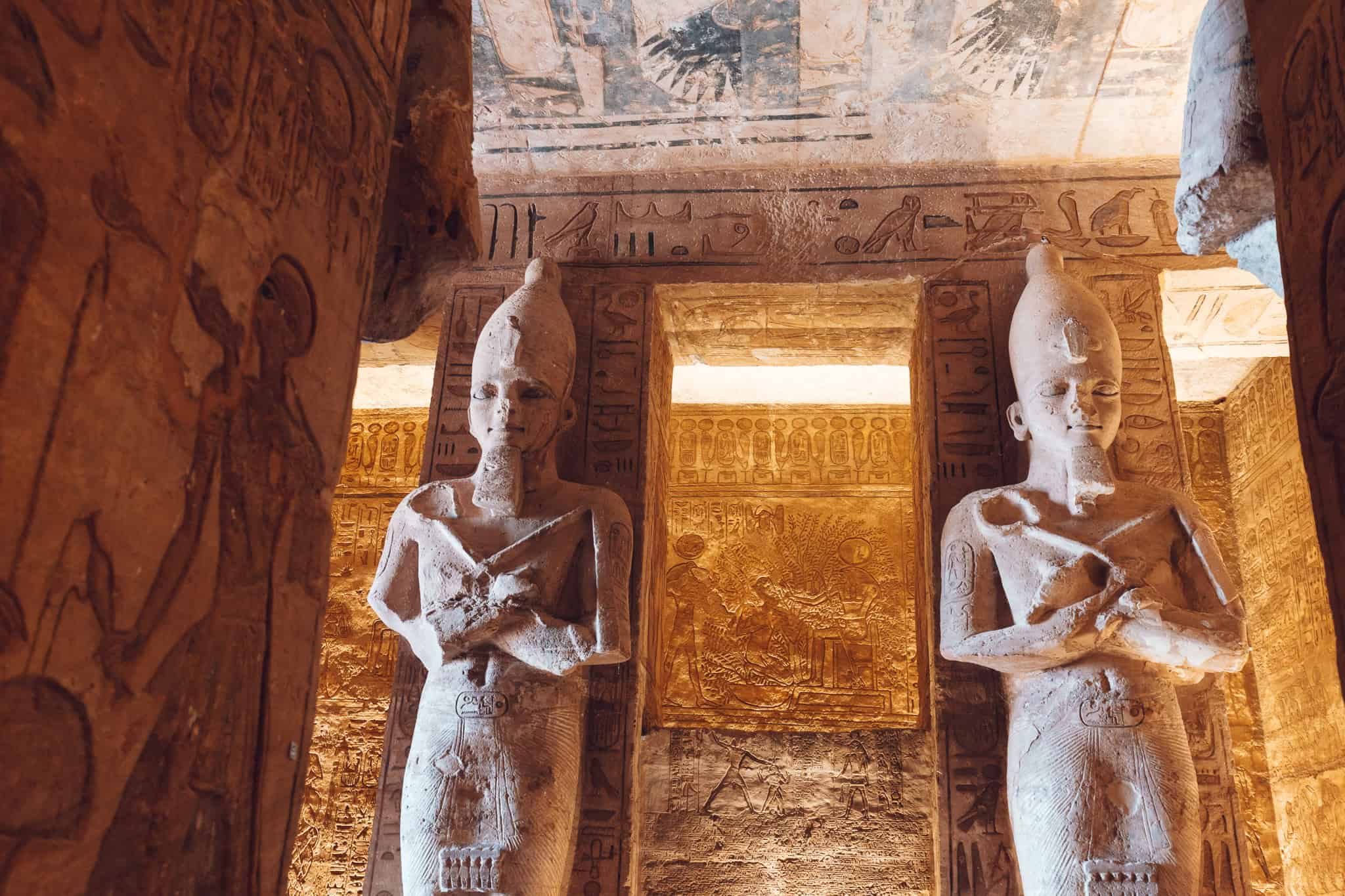
This is the one you’ve seen in photos: four colossal seated statues of Ramses II guarding the entrance, each over 20 metres tall. Look closer and you’ll spot smaller figures carved around their legs representing his wives, daughters, and sons, tucked in like footnotes to his ego.
Above the statues, 22 baboons stretch their arms skyward. Why baboons? Ancient Egyptians believed they greeted the rising sun, so they’re basically cheering on Ra as he makes his entrance.
One of the statues is partially collapsed, the result of an ancient earthquake. It was left that way during the temple’s relocation in the 1960s. A deliberate choice to preserve the damage as part of the story.
Inside, the temple opens into three connected halls. The first is lined with towering pillars shaped like Ramses as Osiris, the god of the afterlife. The walls are covered in hieroglyphs and battle scenes, including his famous victory at the Battle of Kadesh.

At the very back of the Great Temple lies the sanctuary, where four seated figures (Amun Ra, Ra-Horakhty, Ptah, and a deified Ramses II) sit in solemn silence.
Twice a year, on February 22 and October 22, sunlight travels through the temple’s axis and illuminates three of the statues. Ptah, the god of darkness and the underworld, remains in shadow. The statue was deliberately placed to never receive the light.
Temple of Hathor and Nefertari
Just north of the main temple is a smaller but equally impressive one dedicated to Ramses’ wife, Queen Nefertari, and the goddess Hathor. The façade features six standing statues (four of Ramses and two of Nefertari) carved with equal height, which is rare in Egyptian art and a sign of her importance.
Inside, the temple is more intimate, with graceful carvings showing Nefertari making offerings to Hathor.

Step-by-Step: Classic Day Trip from Aswan by minibus
Timing (road):
- 04:00–04:30 pickup (hotel/cruise).
- Your bus might queue a bit while waiting for the highway to open at 05:00 AM.
- 05:00–08:30 drive with brief rest stop; expect stops at police check posts (carry passport – generally your tour bus company will have your details and everything prepared in advance so it doesn’t create delays).
- 08:30–10:30 on site (visitor centre, Great Temple of Ramesses II, Small Temple of Nefertari).
- 10:45–14:30 return to Aswan.
First-timer flow (2 hours on site):
- Visitor Centre (10 min): Quick exhibit on the 1960s UNESCO relocation. Watch the film if you have time later.
- Great Temple (40–50 min): Façade portraits; interior hypostyle and sanctuary (flash-free photography only).
- Nefertari’s Temple (20–30 min): Smaller façade; interior reliefs.
- Optional: pop back to the visitor film/gift kiosk (5–10 min).
Safety at Abu Simbel: What You Should Know
Abu Simbel is a major UNESCO World Heritage Site and one of Egypt’s top attractions. It’s well-organized, with a visitor center, ticketing system, and clear signage. Most tours are run by reputable operators who handle logistics and ensure safe travel.
Independent travelers can visit safely, especially by taking a guided tour or flying from Aswan. The site itself is compact and easy to navigate. Egypt in general requires some cultural awareness, but Abu Simbel is not known for harassment or scams. Dress modestly, stay alert, and you’ll likely find the site peaceful and welcoming.
The region around Abu Simbel is quiet and sparsely populated. While it’s close to the Sudanese border, there are no current travel advisories specific to Abu Simbel from major governments, including Ireland and the UK. Though, always check your government’s travel advice before departure.
The biggest safety concern is the heat. Temperatures can soar, especially midday, so bring water, wear sun protection, and avoid strenuous activity during peak hours.

What to Bring
You’re heading into the desert, and there’s nowhere to buy anything once you’re there. So come prepared, though you won’t need anything out of the extraordinary.
Essentials:
- Passport or ID – You might need it at checkpoints, especially if traveling independently.
- Hat and sunglasses – There’s zero shade except inside the temples.
- Sunscreen – You’ll be out in the open during the hottest part of the day.
- Comfortable shoes – You’ll be walking on rock and sandy paths.
Snacks & Fluids:
- At least 1–2 liters of water per person – You can buy more at the small shop on the site.
- Light snacks – Think nuts, fruit, or crackers. Just enough to keep you going until you’re back in Aswan for lunch.
Extras:
- Cash (small bills) – For tips and toilet access.
- Toilet paper or tissues – Just in case.
- A lightweight scarf or buff – Good for dust or if the wind picks up.
My Experience Visiting Abu Simbel
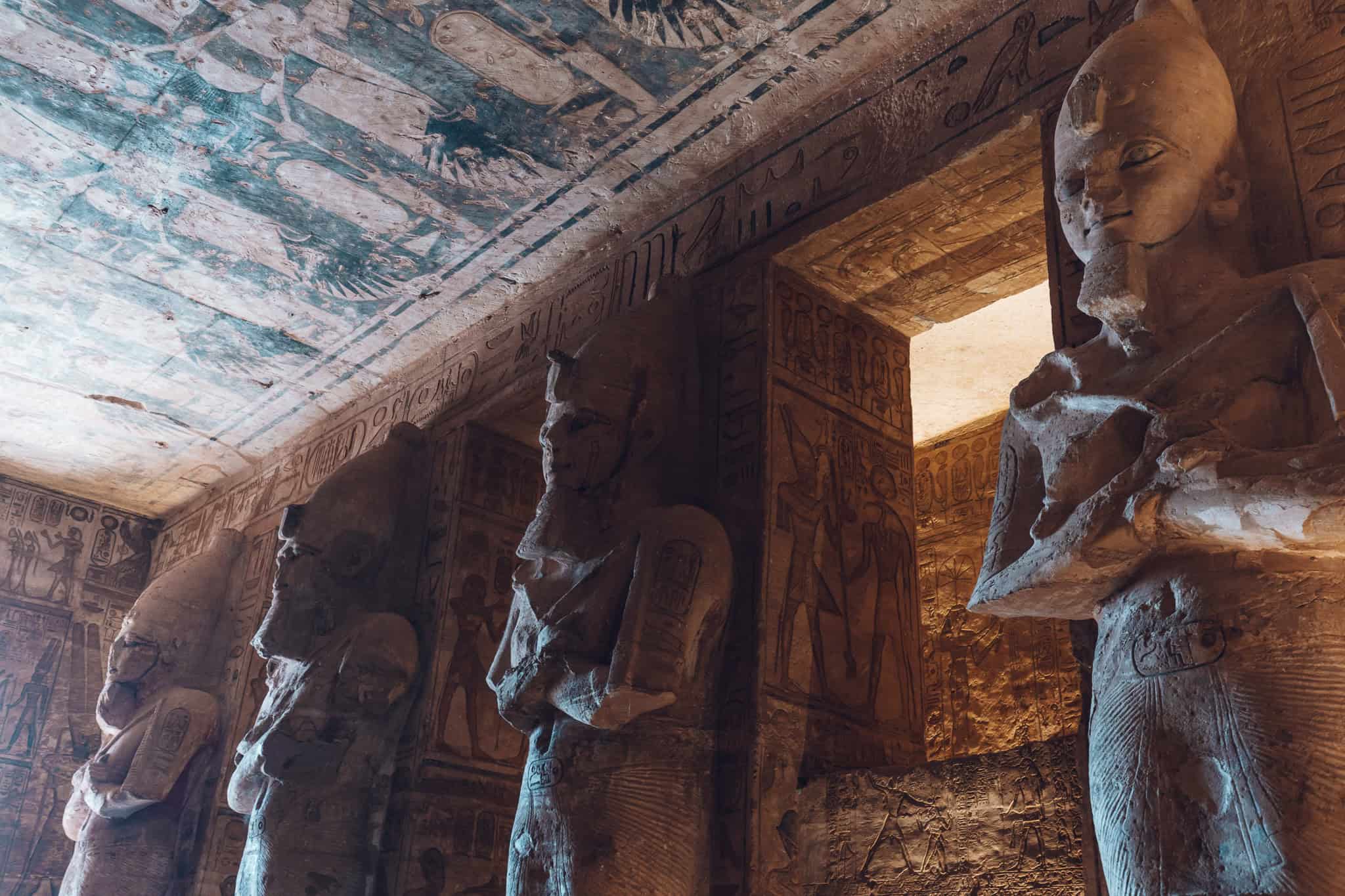
We did the classic 4:00 AM start with our Intrepid tour and waited quite a while for the highway to open (we were some of the firt bus queuing). The drive itself felt long, but the desert was beautiful. Flat, wide, and empty in a way that makes you feel like you’re really far from everything.
As you pass the entrance and walk down the path, you turn around a bend, and suddenly Ramses II is staring you down. The scale is wild, but what really got me was knowing it had all been moved. Every stone. And you can actually see it. From a distance it looks flawless, but up close it’s like a puzzle with the seams still visible.
Our guide gave use some commentaries outside the temple and told us what we should look for inside (guides are not allowed inside).
We had around two hours on-site which really felt enough (even for a photographer like me). I went straight into the main temple then to Nefertari’s and back to the Ramses temple when everyone was gone. I was lucky that we were travelling a bit off season and there weren’t too many tourists. By 12 pm there weren’t many people left.
Coming back, everyone crashed. The ride back to Aswan was mostly silent except for the hum of the road.
Where to stay
Aswan
- West Bank: Best for local charm and color, with Nubian-style guesthouses like Kato Dool and Anakato. Expect relaxed vibes and boat access to town.
- East Bank: Great for convenience and budget-friendly stays. Options like Obelisk Nile Hotel, Citymax, Basma Hotel and Blue Lotus are central and walkable.
- Elephantine Island: A peaceful, car-free choice with both high-end (Mövenpick) and local guesthouse stays like Nuba Tod or Hamo House.
- Luxury: The Sofitel Legend Old Cataract Hotel offers timeless style, colonial history, and Nile views (ideal for a splurge).
Abu Simbel
- Seti Abu Simbel Lake Resort: The most upscale option in town, with lake views, spacious rooms, and a peaceful garden setting. Ideal if you want comfort after the long journey south.
- Kabara Nubian House: A small, family-run guesthouse with Nubian decor, home-cooked meals, and friendly hosts. Best for a local experience close to the temples.
- Tuya Hotel: A simple, practical choice right in the center of Abu Simbel. Clean rooms and basic amenities make it a convenient option for one-night stays.
FAQs

Final Thoughts on visiting Abu Simbel
Abu Simbel isn’t just a temple; it’s a monument to ambition, artistry, and international cooperation. Whether you arrive by minibus, private car, plane, or cruise, the experience is unforgettable. The sheer scale of Ramses II’s vision, paired with the story of its rescue, makes this one of Egypt’s most powerful sites.
If you’re building your Egypt itinerary, Abu Simbel is just one of many jaw-dropping stops. To help you plan, I’ve put together a guide to Egypt’s most famous landmarks; from the Pyramids of Giza to the Valley of the Kings.
And if you’re looking for more tips on Cairo or Luxor, you’ll find all my Egypt articles here.

ARE YOU ON PINTEREST?
What about saving this post to your Pinterest board?
Click on the photo to save this blog post for later. We are also on the platform and we love pinning great travel tips. Follow Tales From The Lens’ boards to see our latest pins.
Don’t be shy, come say hi!
Please note │ This blog post may also include affiliate links to hostels or products we recommend, which means if you buy something following a link on this page, we’ll get a small commission. This will be of no extra cost to you but will help us continue running this blog. Thank you for your support.

About the Author
Jen is the Funder, Author & Photographer behind Talesfromthelens.comJen has lived for the past 15 years across Oceania and Ireland while also travelling in Latin America, North America, and Europe. She has visited more than 65 countries and set foot on every continent in the world! She is a coffee nerd, passionate about photography, wildlife, and outdoor activities.
For more info, check out the About page.