
Thinking about visiting the Pyramids of Giza without a tour? From experience, that can feel overwhelming… You’ve probably heard warnings of pushy vendors, ticket scams, or the need for a guide to stay safe. And if you’re a solo or budget traveller who prefers to avoid group tours, it’s easy to wonder if going on your own is even worth it or possible.
The truth is, visiting the Pyramids independently isn’t just doable, it’s one of the most rewarding ways to see Egypt’s most iconic site. I’ve done it myself, without a guide, without a tour bus, and without the stress. And I’m going to show you how to do the same.
In this guide, you’ll get a clear, step-by-step plan to help you confidently explore the Pyramids of Giza on your own. You’ll learn how to avoid common traps, buy tickets the right way, find the best photo spots, and make the most of your visit without missing a thing.
I’ll even share the exact walking itinerary I used, complete with a map and a couple of alternative options in case you cannot walk for too long but still want to explore on your own.
Wondering where to start, what to watch out for, or how to beat the crowds? This post has you covered. Let’s go!
Disclaimer: This guide is based on our personal trip to the Pyramids of Giza in April 2025 and was updated in February 2026. Travel conditions, prices, regulations, accessibility, safety considerations, and local policies can change at any time. This article is meant to be helpful and informative, but your travel decisions are your own responsibility. We are not responsible for any decisions, issues, or outcomes resulting from the use of this guide.
How to Get to the Pyramids?
To get to Giza from anywhere in Cairo, whether it’s the airport or downtown, order an Uber. It’s cheap, convenient, and you’ll know exactly how much you’re paying before you get in. No awkward haggling. No drama. No surprise, “traffic surcharge.” You’ll also pay by card, so you won’t need to carry too much cash.
👉 Cost: Expect a fee of up to 250 EGP from Downtown and 400 EGP from the airport, depending on demand.
Make sure to choose the local entrance (here) as your destination, so you can avoid the chaotic main gate used by tour buses and groups.
Which entrance should you choose?
There are two entrances to the Giza Plateau: the main entrance (for vehicles) and the local entrance (on foot).
In 2025, the main vehicle entrance has been moved from the “Mena House entrance” to the “Fayoum Road”, where the new Visitor Center is now open. If you’re coming with a guide or driver, this is the gate you’ll use. They’ll drop you off at the ticket office, and then meet you on the other side.
There’s no locker or storage facility, so don’t bring your bags if you don’t have a car. Leave them at your hotel, even after checkout; they will store them for you.
If you’re exploring on your own, I highly recommend using the local entrance, also known as the “Sphinx” on the eastern side. It’s walk-in only and much quieter in the early morning hours; perfect if you want to start your visit with the Sphinx before the tour groups arrive. That said, it can get a bit busier in the afternoons or on weekends and public holidays, so try to go early for the best experience.


Where to Buy Tickets?
At the main entrance (new visitor center), you can buy your ticket from a staffed booth or use one of the ticket machines; both accept cash and cards, and it’s pretty straightforward. However, when I went through the local entrance, the ticket office looked completely closed, and the area felt a bit open and unmonitored (there were no ticket machines either).
Either way, I’d highly recommend buying your ticket online through the official website. Or, if you forget, you can simply scan the QR code posted outside the gate; it will also take you straight to the official site.
Once you’ve paid, you’ll get a PDF ticket by email, with a scannable QR code. Just show it at the entrance, let them scan it, go through the quick bag screening, and you’re in! Super easy, no queues, no stress.

👉 Pss! Make sure to buy an e-SIM card before your trip to Egypt. It’s a game changer for ordering an Uber, buying an entrance ticket, or adding an add-on.
I have a fully detailed article about buying an e-SIM card with Airalo and using it in Egypt. You can use my Referral Code “TALESF5100” on the Airalo website and get €3 off your first purchase!
Pyramids of Giza entrance prices
- Giza Plateau Entrance: 700 EGP / Student: 350 EGP
Add-ons tickets:
You can choose to add an extra ticket to visit other places within the site. You don’t have to choose what to do before entering; you just need the entry ticket. Once on site, if you have internet, you can buy the add-ons online, and within minutes, you will have your ticket in your inbox.
- Inside the Great Pyramid (Khufu): 1500 EGP / Student: 750 EGP
- Inside the Pyramid of Menkaure: 280 EGP / Student: 140 EGP
- Tomb of Queen Meresankh III (Mars Ankh Tomb): 200 EGP / Student: 100 EGP
- Labours Tombs (minimum 5 people): 700 EGP / Student: 350 EGP
Note: These are foreigners’ prices; local prices are significantly lower.
Opening Hours: 7:00am – 5:00pm (last entry at 4:00pm) – May change during Ramadan. Check the Giza Pyramids Official Website to confirm opening hours and book your tickets! (Bookmark it!)
👉 If you’re staying nearby, roll out of bed and walk over by 7:00 am. You’ll be first in line, first at the gate, and probably first at the Sphinx (bus tours typically enter through another entrance and stop at the Great Pyramid first).
How to Visit the Pyramids of Giza on Your Own?

You absolutely can visit the pyramids without a guide, and honestly, it’s one of the best ways to do it. You don’t need a tour group, a flag-waving guide, or a tight schedule.
All you need is a solid plan, decent shoes, and a few hours. Having done both guided and solo visits, I can say without hesitation that exploring on my own was a highlight of the trip. I felt like an explorer!
To get around the pyramids on your own, you can either walk or take the newly implemented free shuttle buses. Private cars and tour buses are no longer allowed within the site.
Do It On Foot (If You Can)
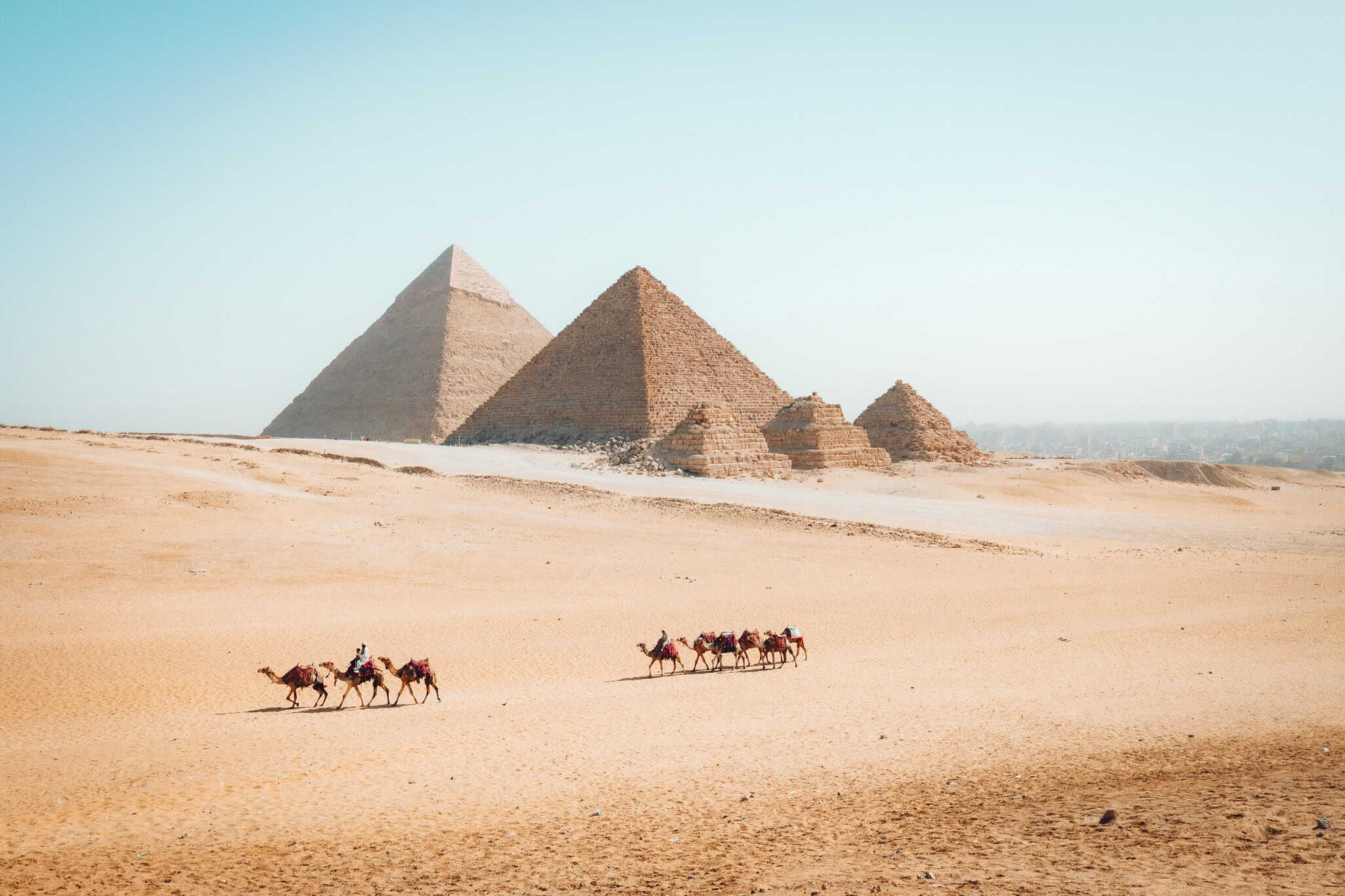
The Giza Plateau is big, but it’s not unmanageable. Most of the main landmarks, such as the Great Pyramid, the Sphinx, Khafre, and Menkaure’s pyramids, are well within walking distance of each other.
If you’re just planning to do the Sphinx and the Great Pyramid, it’s probably less than a kilometre total. Though if you want to go further out to the panoramic viewpoints or explore some lesser-known corners, you’ll end up walking a couple more kilometres across sand and uneven stone paths.
You don’t need to be super fit, but a decent sense of balance and proper shoes will go a long way. Some parts are rocky, others are sandy, so just be mindful of where you step and take your time. The freedom to roam, stop, take photos, and soak it in without a schedule is totally worth it.

Take the Free Shuttles
Since 2025, a free shuttle service has operated within the Giza Pyramids site. There are 4 routes that make the areas much more accessible, especially when it gets too hot:
- Red: from the New Visitor Center to the Sphinx, with a stop at Menkaure and Khafre Pyramids
- Green: New Visitor Center to 9 Pyramids lounge restaurant
- Yellow: New Visitor Center to Horse and camel ride area
- Blue: Khufu to Khafre Pyramids
- Black: New Visitor Center to Khufu Centre
You can hop on at any time, but be careful when you hop off at the new visitor center; many users complained they were herded to the Exit. So do not allow yourself to be shepherded through, as you may not be able to re-enter.
If you enter from the local entrance, you can catch the shuttle from the Sphinx stop.
This is a very good option if you are a bit in a hurry or cannot walk for too long.
>> CAIRO ATTRACTIONS
Best Day Trips & Activities to Book in Cairo
Looking for the best day trips from Cairo? Check out this article to find the best guided tours to cut the stress and help you see Egypt’s highlights without wasting time or energy.
Should you stay in Giza or Downtown Cairo?
Let me start with the single best piece of advice I can give you. The day before visiting the Pyramids, stay in Giza, not Cairo. You will be 50 meters from the entrance to the Giza Plateau and will enjoy an evening watching the sunset or even the Sound & Light show from your hotel rooftop!
And that’s not all – in the morning, you’ll step out onto a balcony and see the Pyramids glowing in the early morning sun! Literal goosebumps.
But the best part? Being among the first people inside the complex. No crowds, no chaos. Just you and 4,500 years of mind-blowing history. It’s quiet, it’s cool (temperature-wise and vibes-wise), and you’ll feel like you’re sneaking into a secret world before the tour buses roll in.
👉 Top tip: If you land in Cairo late, like I did (around 2:00 AM), book a hotel in downtown Cairo that allows for late check-in. The next day, check out (leave your bags at the hotel) and explore some of Cairo’s best attractions, such as the Coptic area or the Old Egyptian Museum.
Late in the afternoon, move to Giza and check into your new accommodation just before sunset to enjoy the view of the pyramids.
Whichever hotel you choose, when booking, make sure to select one with a lot of legitimate reviews. Some of them look shiny, with high scores and low costs (featuring the “best Pyramids’ views), but they only have 10 reviews. Too good to be true… red flag alert!
Many of these are actually scams, poorly maintained, or not what they claim to be. Always double-check multiple sources for reviews, such as TripAdvisor or Google Reviews. It will save you from falling into a tourist trap.
Go for something with a score between 8.5 and 10, but with hundreds (or thousands) of reviews. I recommend the Great Pyramid Inn. It hit all the marks: clean, safe, with a fantastic rooftop view, and breakfast served with an incredible view of the Pyramids and the Sphinx! The place next door (Giza Pyramids View Inn) looked just as solid with the same view and a similar vibe.

Walking Map of the Pyramids of Giza. My recommended itinerary
This self-guided walking route begins at the Sphinx, then leads you past the pyramids of Khafre and Menkaure, continuing toward several panoramic viewpoints for those iconic wide-angle shots of all the pyramids. From there, you follow the road back toward Khufu, looping around for a close-up look at the Great Pyramid.
The walk finishes with a visit to the quieter, often-overlooked tombs of Hetepheres I and Meresankh III, tucked away just behind Khufu’s Pyramid. Perfect for ending the loop on a peaceful, uncrowded note.
Allow a minimum of 3 hours for this walking route of the Pyramid of Giza on your own. For a detailed itinerary and information on what to see, continue reading below!
Tip: You can skip the walk from the Sphinx to the Viewpoint #1 by taking the Red free shuttle.

Self-Guided visit of the Pyramids of Giza – the Itinerary & Things to see
Start by staying in Giza. I’ve said it before, and I’ll say it again. Hotels directly facing the pyramids are a game-changer. You’ll wake up to pyramid views, and more importantly, you’ll be a 5-minute walk from Ticket Office #2, the local entrance near the Sphinx.
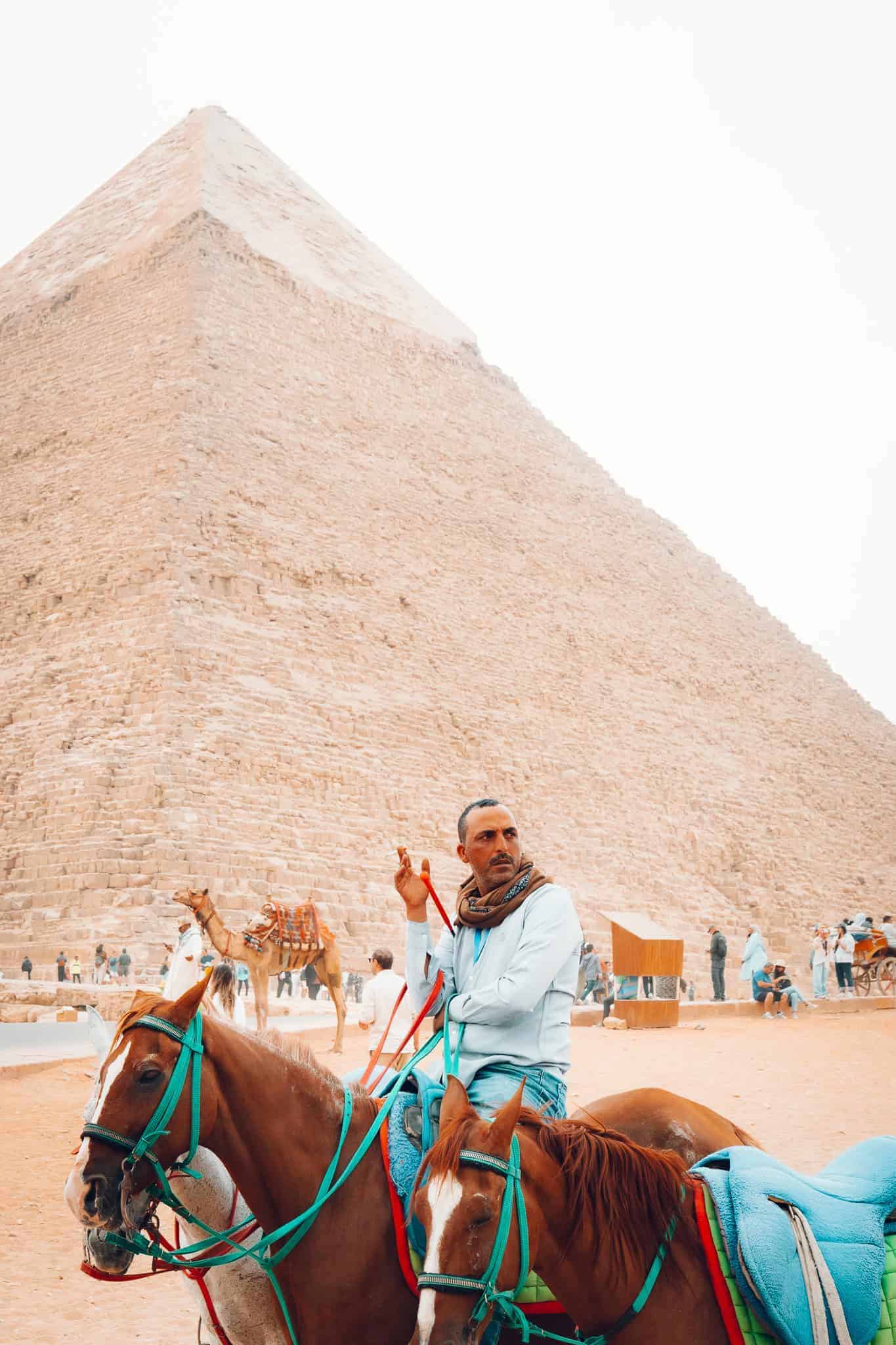
Once inside, ignore the local offer to ride a camel, horse, or a horse-drawn carriage. Yes, you’ll be approached, but they won’t pressure you. Yes, they’ll shout “caleche” at you… which means “horse-carriage”! If you aren’t interested, smile, say “La, shukran,” and keep walking. They’ll get the hint and let you be!
Start with the Sphinx
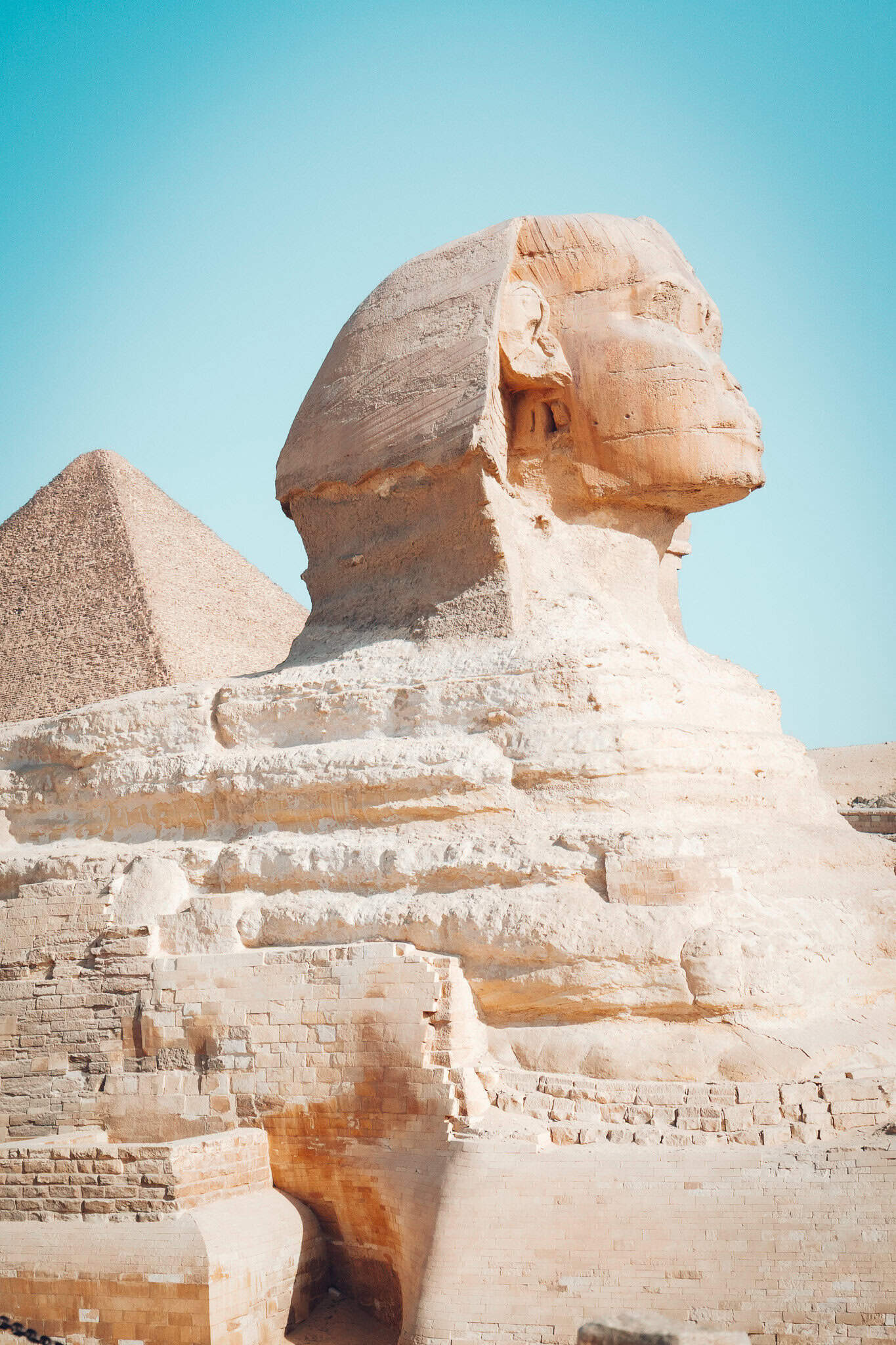
Everyone, and I mean everyone, goes straight to the Great Pyramid first. But I recommend starting with the Sphinx.
After entering the site from the local gate, you will notice a vast, sandy expanse right in front of the Sphinx (but there is a stone wall that will prevent you from walking straight in). Because there is no straight entrance from here, most people follow the road to the right and end up between the pyramids of Khafre and Khufu.
Instead, follow the road to your left. After about 100m, you will find a trail on the right side (after the security house & toilets) that veers off toward a big open area where they host the Sound & Light Show at night. You’ll know you’re on the right path if you spot a few souvenir stalls (closed early in the morning). That’s your sign you’re heading the right way.

👉 Story time! In the past, you could enter straight into the area across from the Sphinx, but during my visit in April 2025, the gate was closed. When I asked the security guards how to get to the other side of the stone wall and get to the viewpoint. He just told me to “hop the fence” behind him… which I did. I wouldn’t recommend doing this unless they ask you to! It’s only on my second visit to the Pyramids that I realised there was a legit path to the same area further down the road.
Snap some epic photos with the Sphinx and pyramids perfectly aligned in the background. It’s one of the best views on the entire site.
Once you’re done taking photos or admiring the Sphinx from far away, head through the small gate into the Temple of Khafre. From there, you’ll emerge at the Sphinx viewpoint! With probably no crowds. Guided tours finish with the Sphinx, so if you go at the gate opening, you’ll have more of the whole place to yourself.
Work Your Way Up to the Pyramids of Khafre

From the Sphinx, follow the exit signs and turn immediately right to walk uphill toward the pyramids. It’s an uneven, rocky path, so wear decent shoes and watch your step.
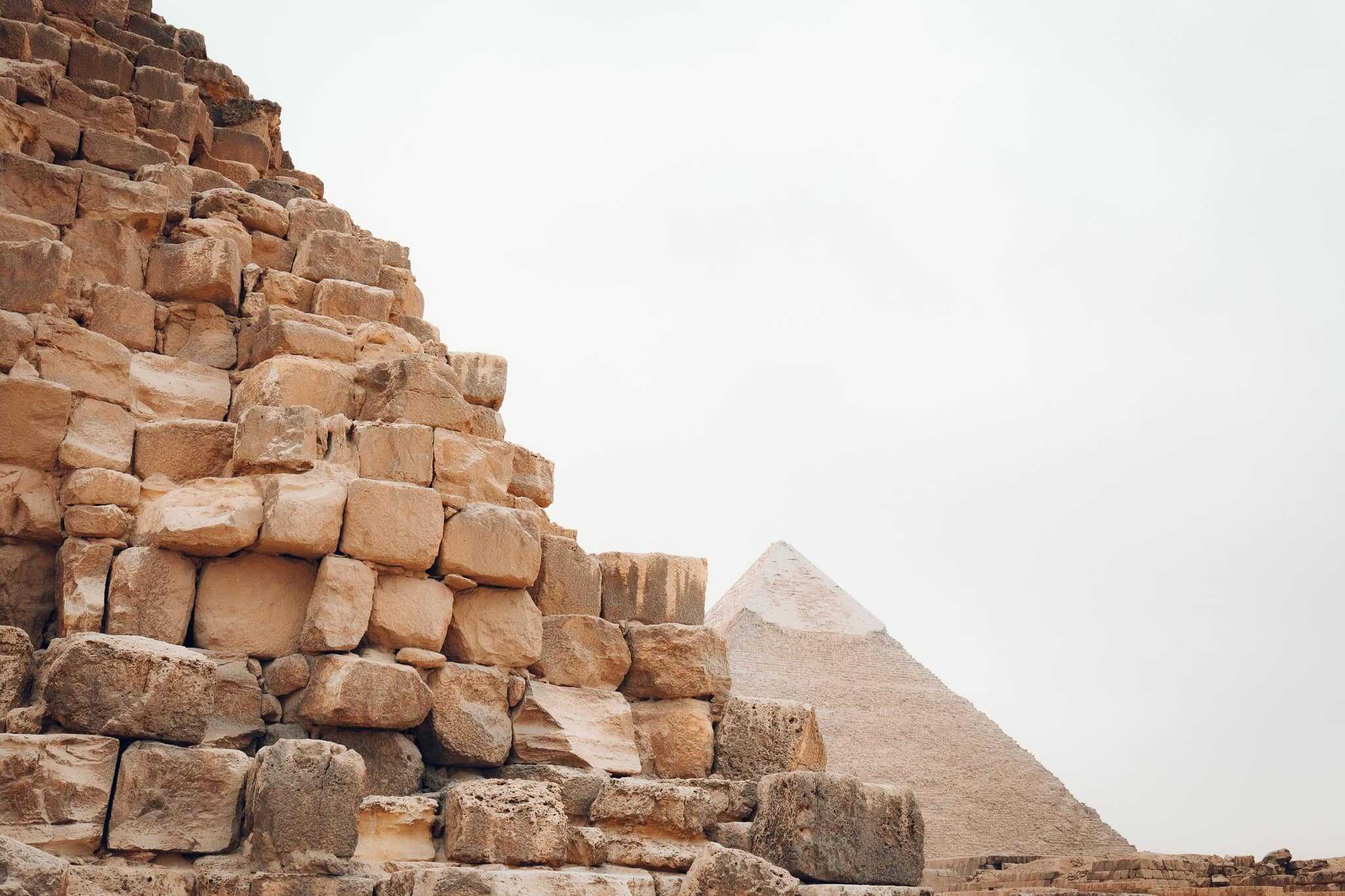
You’ll hit the Middle Pyramid (Khafre) first. Look closely at the top: you’ll spot remnants of the original polished limestone casing. It’s one of the few places where you can really imagine what the pyramids looked like in their prime. Shiny, smooth, and glimmering in the sun.
👉 Explore! Before arriving at the foot of the pyramid, you will pass through the Mortuary Temple of Khafre. You can walk around on your own and get the real feel of adventure and exploration. When I was there, I could see a few security guards checking us out, but they let us wander and walk around without any questions.

Head to the Panoramic Viewpoints
Option A (My recommendation): from Khafre, turn left and walk toward the smaller pyramid (Menkaure). Go through the Funerary Temple of Menkaure and from there, cut across the sand toward the panoramic viewpoint (I’ll go into detail on that below). This route takes you off the beaten path and straight into one of the most jaw-dropping views of the site. Once you’re done soaking it all in, you can loop back via the main road and hit the Great Pyramid last.
Option B: If you’d rather stick to a more solid route, turn right and follow the paved road on the left. It leads to the “Panoramic Viewpoint” (viewpoint #1 on my map), where you can also access the other vantage point from the other side. It’s a bit longer, but you’ll be walking on a footpath all the way. Once at the viewpoint #1, it’s up to you if you want to venture towards the other #2, #3 & #4 I mention on the map, or stay where you are (off the sand).
👉 Infrastructure: If you look at this area on Google Street View, the road might seem like it’s just a bunch of sketchy dirt roads crossing sand dunes. Recently, they added footpaths, rest areas, and even cafés and bathrooms. So don’t panic, if you choose to follow the road, it’s very safe.

Below, I’ll break down exactly how to find these hidden viewpoints, because they’re hands-down one of the most rewarding parts of the Giza experience.
Don’t miss the best views of the Pyramids of Giza!
If you only visit the pyramids from ground level, you’re missing half the magic. Take the time to walk out to the panoramic viewpoints. This was my absolute favourite part of the visit.
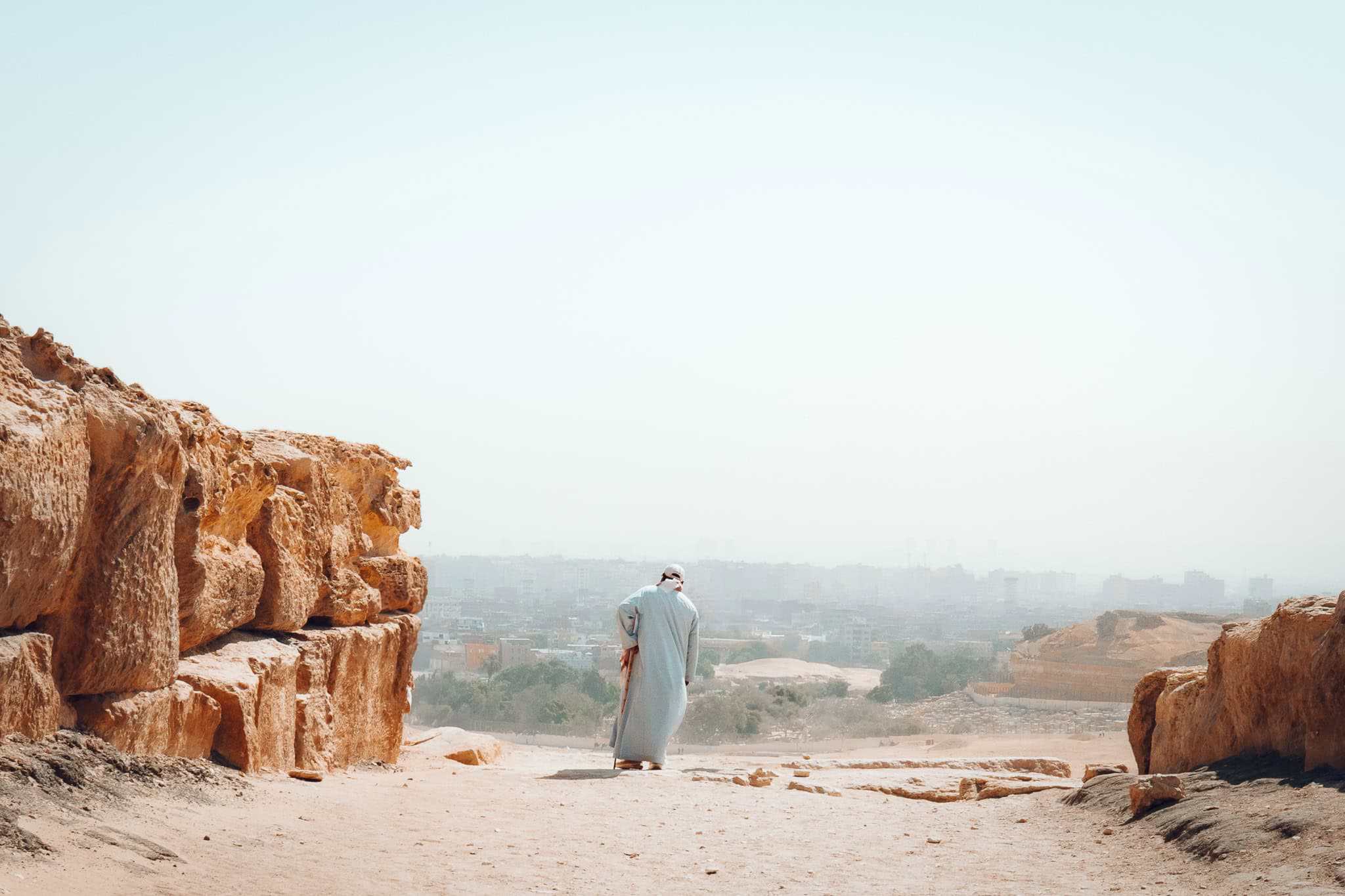
You’ll see all three great pyramids lined up perfectly, the three smaller queens’ pyramids in front, Cairo stretching into the distance, and probably a few camels photobombing in the foreground. Most visitors never make it this far unless they take a camel ride
Viewpoint #1: The Camel Car Park or “panoramic viewpoint.”

- 📍 Coordinates: 29°58’20.3″N 31°07’15.3″E
- This is where most tour buses stop, and it’s one of the main hubs to join a camel ride.
- There are toilets, a souvenir shop, and a café.
- You can walk around the camel area and see the animals up close.
- From here you will see he 3 big pyramids from behind.
👉 Ethical travel: I chose not to ride the camels. I’m not convinced they’re treated ethically. But if it’s something you’re considering, at least observe how the animals look and how the handlers behave before deciding.
Viewpoint #2: The Hill
- 📍 Coordinates: 29°58’10.5″N 31°07’32.5″E
- You’ll get a clear shot of the two smaller pyramids (Khafre and Menkaure) and the three little queens’ pyramids, with Cairo as the backdrop.
- Look for a small stone marker on a hill; it’s not signed or crowded.
Viewpoint #3: The Money Shot

- 📍 Coordinates: 29°58’08.0″N 31°07’35.5″E
- This one’s my personal favourite.
- From here, you get all three great pyramids, aligned in classic formation. Minimal people, maximum wow. If there’s one place to stop and just take it all in, this is the spot.
Viewpoint #4: 9 Pyramids Lounge
- 📍 Coordinates: 29°58’04.5″N 31°07’55.0″E
- If your legs still work and you’ve got the time, walk all the way to the 9 Pyramids Lounge. Grab a drink or lunch with the best pyramid backdrop you can imagine.
- It’s not cheap, but the views make it totally worth it.
- It is also accessible by car.
👉 Keep an eye out: Remember that whether you take the shortcuts or follow the road, you’ll walk in the sand to visit the viewpoints 2 and 3, either way. Make sure to wear closed shoes and watch your step. I didn’t see any wild animals or reptiles, but it doesn’t mean there aren’t any.
The Great Pyramid of Giza

By the time you loop back to the Great Pyramid of Giza, expect a scene. This is Khufu’s pyramid, the biggest and oldest of the bunch, and yes, it draws the biggest crowds too. Most people get dropped off by tour buses here (the main car park entrance is just nearby), so this area is usually buzzing with visitors… and sellers.
Prepare to be approached by locals hawking $1 souvenirs, water bottles, and camel rides. Some will follow you a bit, ask where you’re from, or try to strike up a conversation to get a sale. As usual, if you’re not interested, a polite but firm “La, shukran” (no, thank you) does the trick. Don’t feel bad about saying it 12 times in 3 minutes.
Want to Go Inside the Pyramid?
If you’re up for the adventure, you can enter the Great Pyramid, but it’s an add-on ticket.
Price: 1500 EGP (about $25–30 USD / EUR)
👉 Pro Tip: You can still buy it online even if you already entered the site and changed your mind later. Just make sure your phone has data (Use Airalo to get a cheap travel e-sim)

What to See Inside the Great Pyramid?
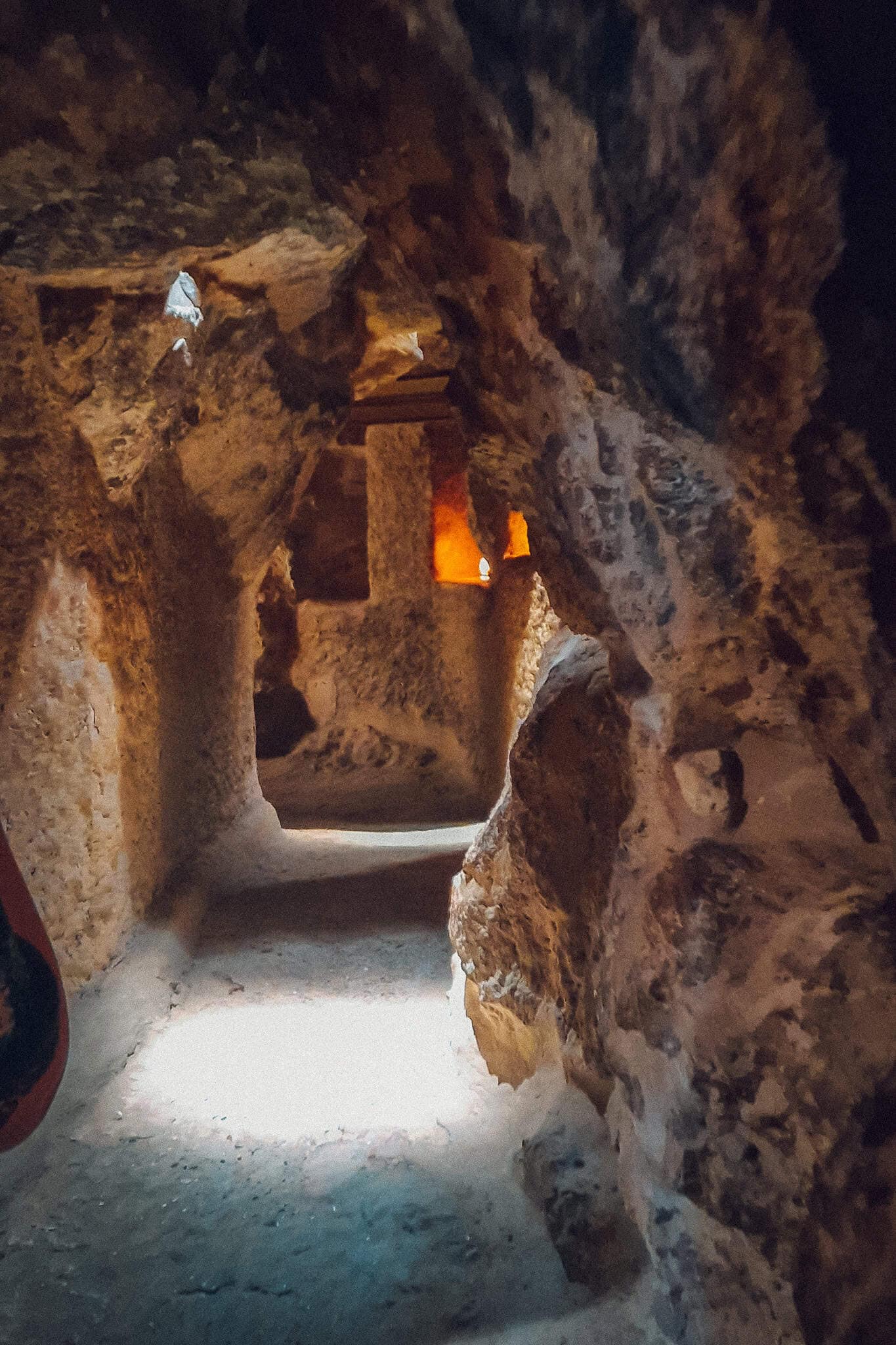
Inside the Great Pyramid, you’ll climb through steep, narrow tunnels leading to the King’s Chamber, a massive granite room housing a single, empty sarcophagus. There are no hieroglyphs, no gold, just raw, ancient stone.
The journey itself, through the tight passages and the soaring Grand Gallery, is as much the experience as the destination.
You’ll crouch your way up a tight, sloped shaft, gripping wooden beams for support. There are handrails and some lighting, but it still feels very raw. You’ll pass through a couple of chambers before hitting the King’s Chamber.
👉 Warning: it’s sweaty, claustrophobic, and not great for anyone who hates small spaces, steep climbs, or crowds in tight quarters. But if you’re game, it’s something you’ll talk about for the rest of your life. And hey, going down is just as wild as going up, so watch your step.
Other Add-On Experiences (do these last!)
Tomb of Hetepheres I

On the eastern side of the Great Pyramid, there’s a small opening in one of the Queens’ pyramids. I wasn’t even sure if it required a ticket; no one stopped me, and no one asked.
Inside, the tunnel is steep and narrow, but instead of going up like in the Great Pyramid, you descend. It’s very hot, quite stuffy, and the air gets thicker the deeper you go. However, it’s shorter than the King’s Chamber and less crowded. The wooden planks are worn, and you’ll need to grip the side rails as you lower yourself into the burial chamber.
At the bottom, there’s a simple stone room with a carved-out sarcophagus space.
Visiting the Tomb of Hetepheres I is a great alternative if you’re not up for the whole Khufu experience, or if you’re on a budget and can’t afford to enter the Great Pyramid. It can also be a good test to check how claustrophobic you feel in such a stuffy and narrow space, if you still hesitate to get a ticket to the Khufu chamber…
Tomb of Meresankh III
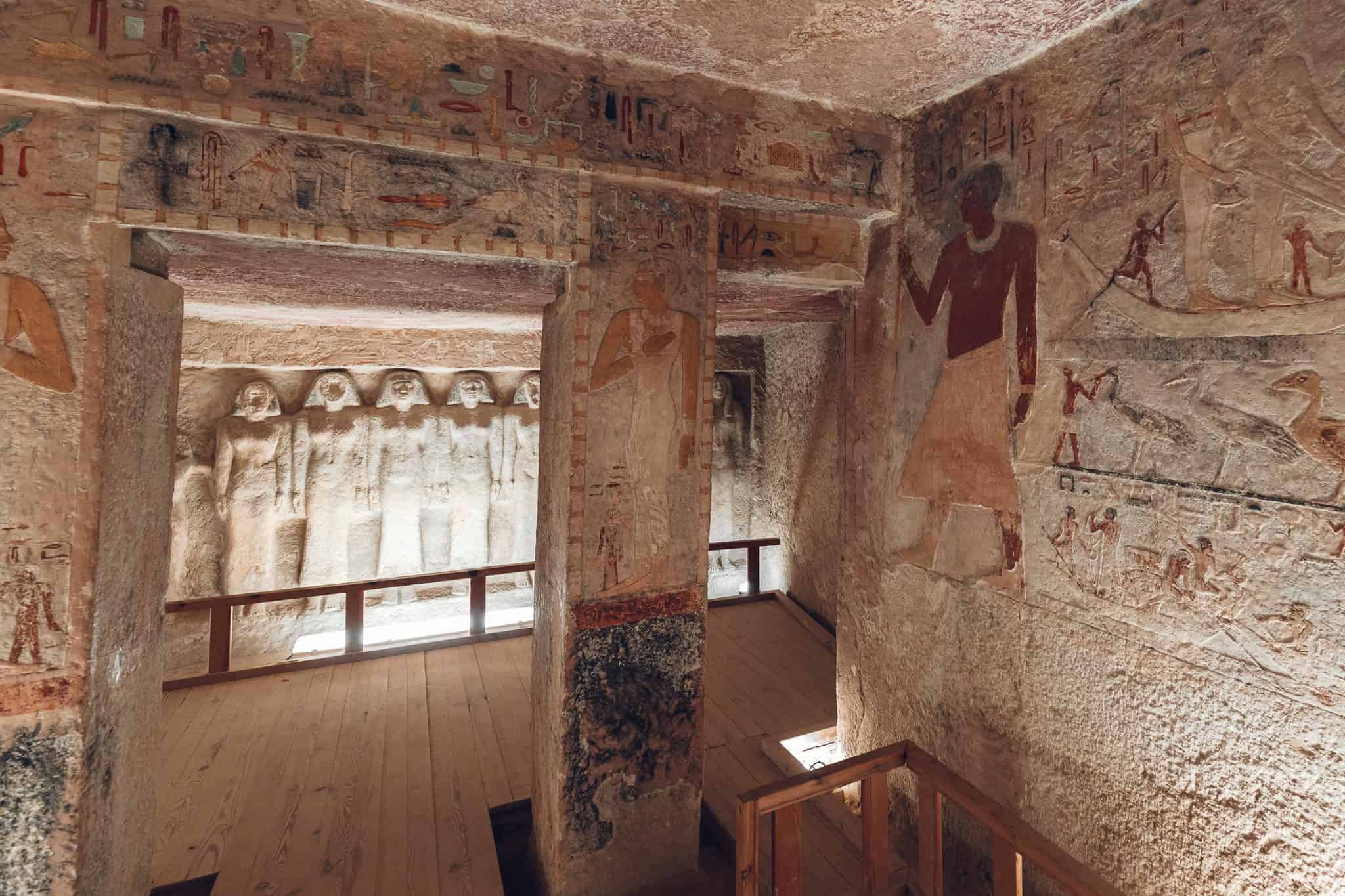
On the same side of Hetepheres I tomb, there’s this oddly quiet, maze-like area where barely anyone wanders. This is the “Giza Eastern Cemetery”. There are no signs, no crowds, but this is exactly where you want to be. Tucked into this dusty corner of the plateau is one of the most underrated tombs in all of Giza: the Tomb of Meresankh III.
You’ll need an extra ticket to get in, but this is one of the highlights that not many people get to see! Enter this tomb and you will be surrounded by brightly painted walls, vivid hieroglyphs, and statues carved directly into the stone. Things you don’t see anywhere else on the Giza plateau.
If you haven’t been to the Valley of the Kings yet, this might be your first real taste of ancient tomb art, and honestly, it’s stunning.
👉 Story time! When I visited, I was the only one there. The guard said, “no photos,” then grinned and told me I could take pics “but just with the phone. [wink wink]… It’s a secret!” A few minutes later, he said, “OK, Camera too”, so I could snap a few photos with my DSLR.
This is a very classic behaviour from the Egyptian security guards who obviously expect a backsheesh (tip) to keep this between us🤫
How Much Time Do You Need at the Pyramids of Giza?
If you want to walk the whole loop, see the Sphinx, and take in the best viewpoints, plan for at least 3 hours. That gives you time to explore without rushing, soak in the details, and take your epic photos.
Add an extra 30-45 minutes to your visit if you want to go inside the Great Pyramid and the Meresankh Tomb.
Where to stay in Giza
As mentioned earlier, I stayed at the Great Pyramid Inn, and I genuinely recommend it. It’s nothing luxurious, but it’s clean, comfy, and the view is unreal. Breakfast on the rooftop with the Sphinx in the background? Yes please! The hotel next door, which also gets great reviews, looked just as good, so you have options.

This is the sweet spot. Clean, comfortable, with a touch of local charm, and just the right amount of modern convenience. The rooftop restaurant overlooks all three pyramids, the service is solid, and you can watch the Sound & Light Show without leaving your chair. I stayed here personally and would 100% book it again.
Book early if you want a room with a view of the Sphinx & Pyramids. I booked a couple of days in advance and got the last room available (with no view, but it was still comfortable).


If you’re watching your wallet but still want that million-dollar view, this is your move. It’s a small, no-frills guesthouse right across from the Sphinx entrance, and yes!!! the view from the rooftop is legitimately incredible.
Rooms are basic but clean, the staff are friendly, and breakfast is included. You’re not getting luxe, but you are getting a front-row seat to history for the price of a hostel bed elsewhere.
If you’re ready to splurge, this is the iconic Giza experience. A former royal hunting lodge turned five-star escape, the Mena House sits in lush gardens at the base of the pyramids. The views from some of the rooms are jaw-dropping, and the pool, spa, and on-site restaurants make it feel like a peaceful oasis.
It’s not near the main entrance anymore, but you can get an Uber fairly easily to the new Visitor Center or to the Local entrance.
Why Should You Visit the Pyramids of Giza?
This is one of the last standing Seven Wonders of the Ancient World. People visit the pyramids to witness the scale, the mystery, and the sheer audacity of what humans achieved over 4,500 years ago. Seeing them in person is just impressive.

How Many People Visit the Pyramids?
- Per year: Over 14 million tourists visited Egypt in 2023, and the pyramids are the #1 attraction.
- Per day: Expect around 20,000–30,000 visitors daily, especially in peak seasons (December to February). It thins out in summer when temperatures can be unbearable
Who Built the Pyramids (and Why Are They Here)?
The most famous of them, the Great Pyramid of Giza, was commissioned by Pharaoh Khufu (aka Cheops) during Egypt’s Old Kingdom, around 2600 BCE. His successors, Khafre and Menkaure, built the two smaller pyramids nearby. These massive structures were national projects, powered by a well-organised workforce that lived in nearby workers’ villages with access to food, medical care, and beer.
Archaeological digs have uncovered housing complexes, bakeries, tools, and cemeteries that suggest a massive but human-scale operation.
The pyramids are royal tombs built on the Giza Plateau, just west of the Nile, because in Egyptian belief, the west was associated with the realm of the dead, where the sun sets. Each pyramid was a monument to a pharaoh, designed to help him ascend to the afterlife and join the gods. The entire complex around each pyramid had mortuary temples, causeways, and smaller pyramids for queens.

Why Are There No Hieroglyphs Inside Khufu’s Pyramid?
Unlike later pyramids and tombs, which are covered in elaborate wall carvings and sacred texts, the Great Pyramid of Khufu is almost completely bare inside. There are no inscriptions, no images of gods or pharaohs, just massive stone chambers and corridors.
The reason? Most scholars believe it comes down to timing. Khufu’s pyramid was built during Egypt’s Old Kingdom, around 2600 BCE, long before the practice of inscribing religious texts on pyramid walls began. The earliest known examples of these sacred writings, called the Pyramid Texts, didn’t appear until about a century later, in the pyramid of Unas, the last pharaoh of the 5th Dynasty.
However, hidden deep above the main burial chamber, in a series of small spaces called the relieving chambers, explorers found some painted quarry marks and graffiti written in red ochre. These were, in fact, construction tags left by the workers, and one of them even mentions Khufu by name. It’s one of the few direct links between the pyramid and the king himself.
What’s the Best Time of the year to visit the Pyramids?
The Sweet Spot: October to April
This is prime time. Temperatures hover between 18–25°C (65–77°F) during the day, and mornings are beautifully crisp. It’s also peak tourist season, so expect more people.
May to September
Egyptian summer is no joke. We’re talking 40°C+ (104°F) with heat radiating off every surface. The pyramid stones feel like they’re cooking from the inside out, and just walking between sites becomes an endurance test. Unless you really hate crowds or have no other choice, I wouldn’t recommend it.
When to visit Egypt
Choose a region, then click a month to explore.
Ramadan Considerations
During Ramadan (dates shift each year), opening hours may start later, and things move at a slower pace. It’s still a good time to visit, just check the schedule in advance and be mindful that many locals are fasting during daylight hours.


Tips for visiting the pyramids
1. Get There Early
Be at the entrance before 8:00 AM, especially if you want peace, shade, and crowd-free photos. You’ll beat the buses, the sun, and the chaos. Trust me, it’s a completely different experience.
2. Buy Your Tickets Online
Skip the “maybe it’s open, maybe it’s not” drama at the ticket booth. Buy your ticket online, get the PDF, and just show it at the gate. If you forget, there’s a QR code outside the entrance where you can pay on the spot.
3. Get an e-SIM card
Getting an e-SIM with Airalo for Egypt is a super-easy and affordable way to stay connected throughout your trip. You can set it up before you even land. Having internet access at all times is especially helpful at sites like the Pyramids of Giza, where you may want to buy an add-on ticket on the spot (such as entering the Great Pyramid or a tomb), which often requires online payment after you’ve already entered.
Use my Referral Code “TALESF5100” on the Airalo website and get €3 off your first purchase!
4. Skip the Camel/Horse/Carriage Rides
Unless you’ve vetted the handler and are 100% sure the animals are treated well, I’d skip it. You’ll be approached a dozen times, smile and say “La, shukran.” Keep walking like you know exactly where you’re going (even if you don’t).
5. Download a Map or Offline Guide
Cell signal can be spotty. Have an offline map or GPS app ready if you’re going solo. Or download an audio guide app with commentary, it’s a great way to learn on the move without being stuck in a tour group. I use the app Smart Guide wherever I go. This “self-guided tour of the pyramids” includes most of the sites I recommend here (just in a different order).
6. Bring Water, Sunglasses, & Sunscreen
There’s almost zero shade inside the plateau. Bring water, wear sunglasses, apply sunscreen, and consider wearing a light scarf or hat if you easily burn.
Final Thoughts: Is It Worth Visiting the Pyramids of Giza on Your Own?
Without a doubt, yes! Visiting the Pyramids of Giza on your own gives you something a group tour simply can’t: freedom. Freedom to take your time, to pause in awe, to explore hidden tombs most people walk right past, and to experience one of the world’s most iconic sites without being rushed from one stop to the next.
With a little planning and the tips from this guide, you can make the experience entirely your own… more intimate, more memorable, and honestly, more magical.
If you’re spending more time in the city, check out my full guide to the best things to do in Cairo, from the museums to Coptic Cairo, it’s all there. And if your trip takes you beyond the capital, don’t miss my handpicked list of the best day trips from Cairo and the top landmarks to visit in Egypt for the ultimate once-in-a-lifetime journey through this incredible country.

ARE YOU ON PINTEREST?
What about saving this post to your Pinterest board?
Click on the photo to save this blog post for later. We are also on the platform and we love pinning great travel tips. Follow Tales From The Lens’ boards to see our latest pins.
Don’t be shy, come say hi!
Please note │ This blog post may also include affiliate links to hostels or products we recommend, which means if you buy something following a link on this page, we’ll get a small commission. This will be of no extra cost to you but will help us continue running this blog. Thank you for your support.

About the Author
Jen is the Funder, Author & Photographer behind Talesfromthelens.comJen has lived for the past 15 years across Oceania and Ireland while also travelling in Latin America, North America, and Europe. She has visited more than 65 countries and set foot on every continent in the world! She is a coffee nerd, passionate about photography, wildlife, and outdoor activities.
For more info, check out the About page.
This is hands down the best blog post I’ve read so far about the Pyramids of Giza! I’ve only been to Egypt one, in Hurghada and as a work trip so my experience there is very limited and to be fair, although I have always wanted to visit the Pyramids & Temples, I’ve always been a little bit scared of how to handle it as I always plan everything by myself and never through an agency nor take tours to explore… Thank you SO much for putting all of the infos here, this is everything I needed!
As a local though, I wouldn’t really recommend staying in Giza (assuming you mean the area surrounding the pyramids and not the governorate). You see, the pyramids are basically surrounded by ghettos and that’s one of the reasons some tourists end up getting disappointed. Also, if one’s staying multiple days in Cairo, the attraction is not central at all so it’s not really practical. So unless it’s a bucket list thing to wake up to the view of the pyramids, I wouldn’t really recommend staying in this area. Glad you managed to explore confidently on your own though – Egypt is definitely doable if you’re a solo female traveler, unlike the common belief out there.
Hey, thanks so much for your thoughtful comment! I totally agree with you — that’s exactly why I recommend staying in Giza “just the night before visiting the pyramids”. It gives the chance to catch both the sunset and sunrise over the pyramids, and it makes it super convenient to be one of the first people in. I also included suggestions for hotels right on the front line with amazing views. But beyond that, I wouldn’t recommend staying in the area for longer either; like you said, it’s not ideal for exploring the rest of Cairo. Appreciate you sharing a local perspective!
Merci pour votre excellent article sur Gizeh, très inspirant et bien documenté !
Je visite le site mardi prochain pour des photos argentiques noir et blanc, et je cherche à optimiser mon parcours pour la lumière.
Avant de voir votre itinéraire, je pensais commencer à 08h par le Sphynx puis prendre le chemin nord, déjeuner au restaurant Khufu qui est sur le chemin vers 13h30, puis enchaîner avec les points panoramiques 1, 2 et 3.
Pensez-vous que cet itinéraire est judicieux pour la lumière et les photos ?
Merci encore !
Sorry for the french comment. Here’s in english :
Thank you for your excellent article on Giza.
I’m visiting the site next Tuesday with my black-and-white film camera and would love to optimize my route for the best lighting.
Before reading your suggested itinerary, I was thinking of starting at 8:00 AM with the Sphinx, then heading north, stopping for lunch around 1:30 PM at Khufu’s restaurant (which seems lovely and is along the way), and then continuing with panoramic points 1, 2, and 3.
Do you think this route makes sense for the light and for taking good photos?
Hey Faust, I am not sure about the Khufu restaurant, that seems to be outside the Giza Plateau perimeter but I know they just opened a few places to eat when I visit (there is even a Ladure!) so maybe that’s what you mean… Now just a note, the distances aren’t that long, so if you plan to start at 8 am and plan on eating at the pyramids, you’ll have really a long time to kill. I know you are a photographer but 4h30 on site not including the panorama viewpoints, that’s quite a lot already 😉
I’ll suggest to go to the viewpoint before lunch, especially if you are walking. Next Tuesday it’s meant to be sunny and 32 degrees from 12pm so you might get very hot… Anyway back to your question about the light. In my opinion, the light is best first thing in the morning (sun will rise at 6am) and it will be already fully bright at the doors opening (7am), so if you can go before 8am, do so! For the panorama shots avoid midday or end day, the shadows won’t be great (I think I was there around 10:00 am). Hope it helps?
Thank you for all the details and tips. I think this is one of the best I’ve read about Giza. I have a question for you if you don’t mind. Who took your pictures? They are beautiful. Did you have a professional photographer with you? Thank you again
Hello Alma, thank you so much! I took all the photos and if I am on them, my partner took them. I think you can hire a photographer or a guide that does photo for you, but I don’t have any recommendations unfortunately.
Hi,
Thank you so much for this useful article. I have changed where I was staying after reading your warnings about hotels. I am also more confident to explore with my son without having a guide.
We have booked a guide for the next day for an overview of a number of pyramids around Cairo.
Katie
Hi Katie, I am glad to hear this article helped. Do let us know how your trip goes! I wish you a wonderful time. Jen