
Standing at the threshold of a 3,500-year-old tomb, surrounded by walls glowing with ancient celestial maps, is something you don’t easily forget. The Valley of the Kings isn’t just one of Egypt’s top attractions, it’s one of the most iconic archaeological sites in the world.
Tucked into the ochre cliffs of Luxor’s West Bank, this legendary burial ground was the final resting place of Egypt’s New Kingdom pharaohs, including the boy king, Tutankhamun, and famous rulers like Ramses II and Seti I. But visiting it isn’t as simple as buying a ticket and showing up.
From understanding how the ticket system works to knowing which tombs are worth the splurge and what time of day to avoid the crowds and heat, there are dozens of things that can make or break your experience.
This article will walk you through everything you should know before visiting the Valley of the Kings, with travel tips, personal insights, and the kind of practical advice you won’t always find in tour brochures.
The Valley of the Kings Is Home to Over 60 Royal Tombs
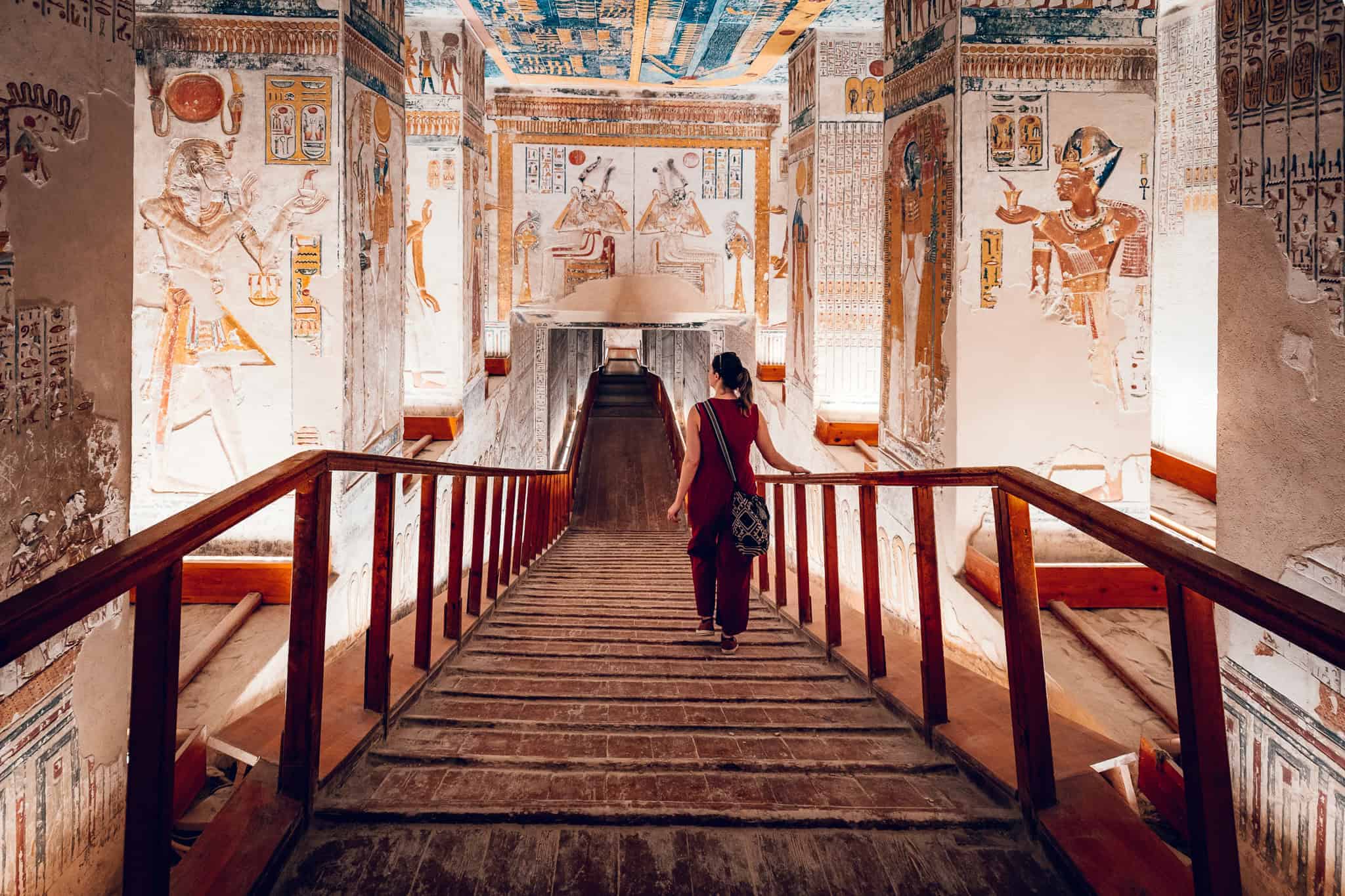
The Valley of the Kings is one of the most significant archaeological sites in the world, and for good reason. It served as the royal necropolis for nearly 500 years, during Egypt’s New Kingdom period (c. 1550–1070 BCE).
Instead of building massive pyramids out in the open, like those at Giza, pharaohs of this era chose to be buried in hidden tombs carved into the cliffs of the Theban Desert, far from the eyes of grave robbers.
Each tomb was meant to be a sacred passage to the afterlife, and pharaohs were buried with everything they might need for eternity: gold, statues, food, sacred texts, and elaborate wall paintings detailing their journey through the underworld.
The most famous resident? Tutankhamun, whose tomb (KV62) was discovered nearly intact by Howard Carter in 1922; a find that stunned the world and revived global fascination with ancient Egypt.
But Tut’s is just one of more than 60 known tombs, some stretching dozens of meters underground with chambers large enough to house temples.
In 1979, the Valley of the Kings was designated a UNESCO World Heritage Site as part of the “Ancient Thebes with its Necropolis” listing. It’s a protected area, not only for tourism but for ongoing scientific study. New chambers and artefacts are still being uncovered today, making it a rare example of a world-class site that’s both ancient and evolving.
The Valley of the Kings Is on the West Bank of the Nile

The Valley of the Kings lies on the West Bank of the Nile, directly opposite modern-day Luxor, the ancient city of Thebes. But this location wasn’t chosen at random. In ancient Egyptian belief, the west was the direction of the setting sun, symbolising death, the underworld, and the transition into the afterlife.
Just as the sun disappeared beyond the horizon each evening, so too did the souls of the dead begin their journey through the underworld before being reborn at dawn.
Beyond the symbolic, the geography played a crucial role here. The valley is nestled at the base of al-Qurn, a naturally pyramid-shaped mountain that looms over the necropolis. To the ancient Egyptians, this peak resembled a sacred pyramid, mirroring the earlier royal tombs of Giza. Its distinctive silhouette likely added to the site’s spiritual importance, reinforcing it as a place of royal passage into eternity.
The area is remote and protected by steep cliffs, making it ideal for secrecy and defence: key considerations in an age when tomb robbing was a constant threat.
Three Tombs Are Included in the General Admission & You Can Choose Which to Visit
Every general admission ticket to the Valley of the Kings costs 750 EGP (€13) and gives you access to three tombs.
You can choose from a rotating list of around 10 open tombs, as not all are available at once. This is part of an ongoing conservation effort aimed at reducing wear and tear on the ancient sites.
When you arrive at the visitor centre, you’ll see a map showing which tombs are open that day. It is important you keep your entry ticket, as it will serve as a punch card. Every time you enter a tomb, your card will get marked: three punches and you’re done. Once inside the tomb, you’re free to explore, but you can’t re-enter or “swap” for another once it’s marked.
The tombs included in the standard ticket are still impressive. While they may not be the big-name attractions like Tutankhamun or Seti I, they often have vibrant wall art, sarcophagi, and incredible ceiling paintings.


I personally loved Ramses IV’s tomb (KV2). It is one of the first tombs you’ll come across from the entrance, and it can be crowded. However, it is so worth it, as it is one of the best-preserved sites, featuring gorgeous painted walls adorned with millions of small hieroglyphs. The only drawback is that it can be busy, so the guards encourage you to keep moving, and it’s hard to appreciate the place and take your time. I felt hushed out, but it was the only tomb where this happened.
I also visited the tomb of Merneptah, which I found less impressive than the others in the valley. Tausert & Setnakht, located toward the back, was quite nice and completely free of crowds. It was enjoyable to explore it on my own.
Tomb Access Rotates to Protect Fragile Interiors


Not every tomb in the Valley of the Kings is open all the time. To protect the delicate wall paintings and prevent damage from moisture and body heat, access to the tombs rotates throughout the year.
This means that even with a valid entry ticket, you’ll only be able to choose from a set list of currently open tombs.
The rotation isn’t random, but it’s also not published far in advance. You’ll find an updated list posted at the visitor centre when you arrive (and if you miss it, you’ll find another one at the entrance of the valley).
While this system might seem restrictive, it’s essential for preserving the artwork and giving conservation teams time to maintain these fragile sites. The upside? You might get lucky and see a tomb that’s just been reopened after months, or even years, of restoration.
You Should Visit The Extra Tombs
While your basic entry ticket includes three tombs, some of the Valley’s most impressive ones are not part of that package. These are considered “premium” tombs and require separate tickets, which can be purchased individually. Here are the main add-ons, along with my opinion on whether they’re worth it, based on my personal experience.
Seti I (KV17) Is the Most Impressive and Most Expensive
– 2,000 EGP / ~€35

Seti I’s tomb is the longest and deepest in the Valley, and in many ways, it’s also the most spectacular. The corridors seem to go on forever, and every inch is covered in richly coloured reliefs and intricate inscriptions.
It’s a masterpiece of ancient Egyptian art and engineering, and Egyptologists consider it one of the finest tombs ever constructed.
But there’s no getting around the price. It’s by far the most expensive tomb to visit.
If you’re deeply into Egyptology or passionate about ancient art, it’s likely to blow you away. The scale, detail, and atmosphere are unmatched. That said, if you’re more of a casual visitor or trying to manage your budget, you might find that other tombs offer similarly beautiful experiences at a fraction of the cost.
Personally, while I found it jaw-dropping, I didn’t feel it fully justified the price when so many other tombs are just as visually rewarding.
Tutankhamun’s Tomb (KV62) Is Small but Iconic
– 700 EGP / ~€13

Stepping into Tutankhamun’s tomb carries a weight that’s hard to put into words. Though it’s small and unassuming compared to many others in the valley, the emotional impact is real, especially if, like me, you grew up hearing about King Tut, whose name and golden mask became the face of ancient Egypt in schoolbooks and documentaries.
The highlight is, of course, seeing Tutankhamun’s actual mummy, resting inside a climate-controlled glass case just a few feet from where Howard Carter made his legendary discovery in 1922.
If you’ve already seen his gold sarcophagus, mask, and treasure collection at the Egyptian Museum in Cairo, this visit feels like the final piece of the puzzle, bringing it all together.
What surprised me, though, were the unique wall paintings. The artwork here is unlike anything else I saw in the valley, especially the depiction of the twelve monkeys of the night.
So is it worth the extra ticket? For me, absolutely, not because of the tomb’s grandeur, but because of the historical resonance. It’s a moment that will stay with you!
Tomb of Ramses V & VI (KV9) Is a Must-See
– 220 EGP / ~€4

This tomb was a standout. It’s much larger than Tut’s, yet still affordable, and it features one of the most stunning ceilings in the valley: a deep blue sky covered in golden stars and celestial gods, stretching overhead as you descend into the tomb’s chambers.
The scale, symmetry, and colours make it extremely photogenic, and it’s usually less crowded than the headline tombs.
If you’re only planning to pay for one extra tomb, this is the one I’d recommend. It’s exceptional value for money, offering a strong visual wow factor, and is one of the most memorable experiences in the Valley.
You Don’t Need to Buy the Extra Tickets Before Entering the Site
If you’re wondering whether you need to plan your visit to the premium tombs days in advance, you don’t. Extra tickets for tombs like Seti I, Tutankhamun, and Ramses V/VI can be purchased at the visitor centre right before you enter the site.
But if you’re still undecided, there’s a handy trick: you can also buy them online while you’re already on-site. This isn’t just true for the Valley of the Kings. It works at many major sites across Egypt, like the Pyramids of Giza. It’s a flexible option if you want to keep your plans open until you’ve seen what’s included in the general admission.

Once purchased, your digital ticket will be sent to you via email with a QR code. Just show it to the attendant at the entrance of the tomb, and they’ll scan it.
That said, you’ll need internet access to make this work, and there is no Wi-Fi available at the site. To stay connected, I highly recommend using Airalo: a reliable and affordable eSIM provider that works well throughout Egypt. It’s a simple way to keep access to data for online bookings, maps, ordering an Uber, or last-minute travel changes without relying on hotel Wi-Fi.
Having this option gives you more control over your visit, no pressure to decide everything upfront, and no risk of missing out if you change your mind once you’re there.
It Will Be Hot, Unless You Go Early
There’s no sugar-coating it: the Valley of the Kings gets hot, and it gets busy. Even in winter, the sun hits hard by late morning, and by midday, the narrow tomb passages can feel more like ovens.
Most are carved deep into rock, with poor airflow and no ventilation systems. They were not meant to be open, so the Egyptians didn’t design them as such. This is the reason temperatures inside can feel stuffy and stifling.
Some tombs have long descending corridors or multiple chambers, and as you go deeper, the air becomes thicker and more humid. Combined with the low ceilings, steep ramps, and occasional crowds, it can be physically draining, especially for those sensitive to heat.
Be prepared by drinking water often, dressing light, while still covering up to protect from sunburn between tombs. Don’t feel the need to rush through, but also know when to exit if it gets too much.
The Valley of the Kings opens daily around 6:00 or 7:00 AM, depending on the season. For a quieter and cooler experience, aim to arrive right at opening time. In the summer, the earlier, the better; however, it is generally best to visit between October and April when temperatures are cooler.
When to visit Egypt
Choose a region, then click a month to explore.
The tombs closest to the entrance are consistently the most crowded
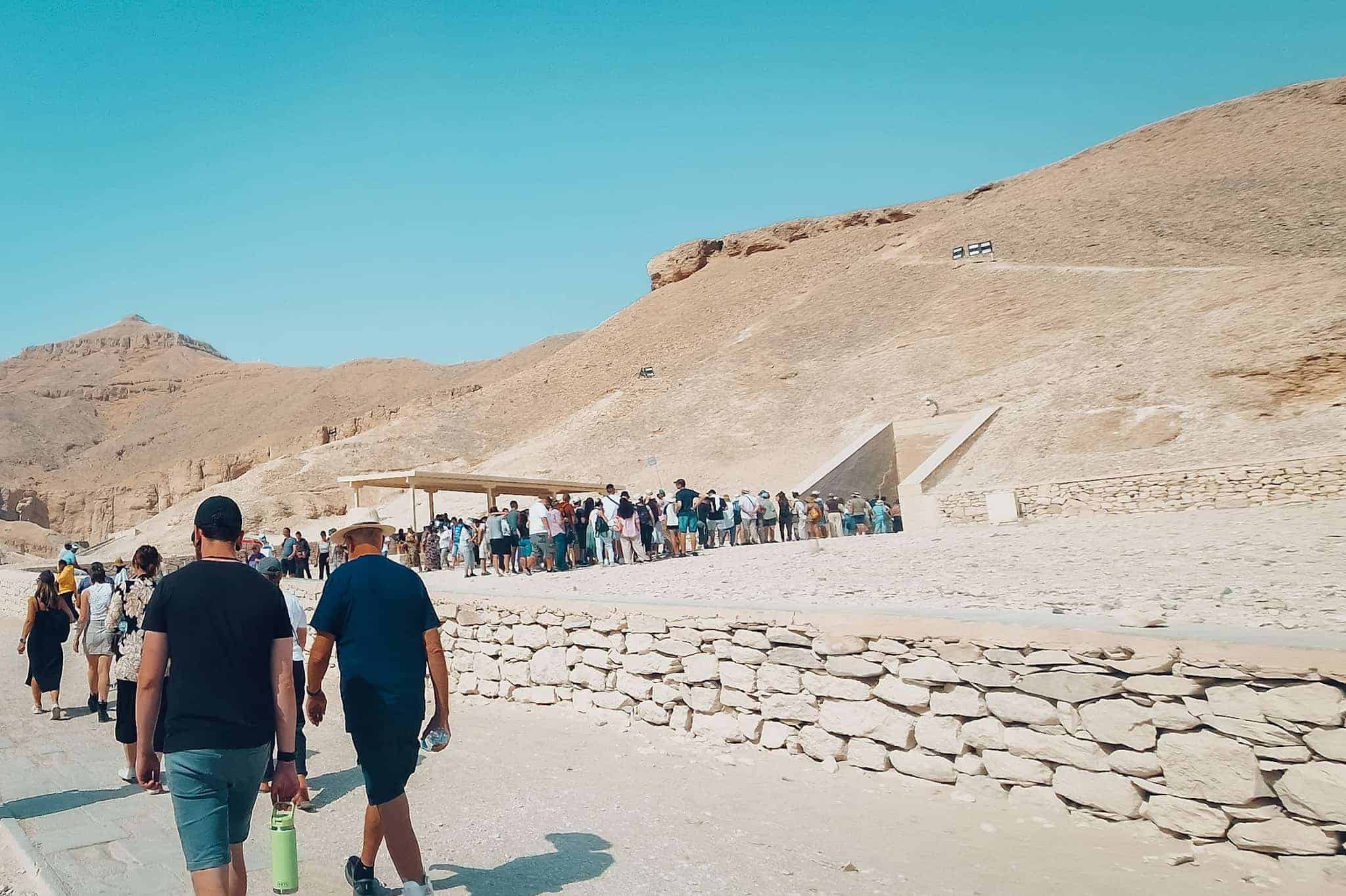
The tombs closest to the entrance are consistently the most crowded, and that’s mainly because most tour guides recommend them not for their beauty or historical significance, but for their convenience. Since they’re quick to access, guides can rush groups through faster and free up more time for stops at alabaster and papyrus workshops, where they usually earn a commission.
As a result, visitors tend to stick to a small cluster of tombs near the entrance, which leads to long queues and a general sense of overcrowding. This is especially true for the tombs of Ramses II and Ramses IV. As soon as you step inside, local guards start ushering you along, asking you not to stop. I felt like I had no time to look at the detailed hieroglyphs or take photos…
But several other tombs are open further into the valley and remain far less visited. If you’ve got the time, it’s worth walking deeper into the site. The crowds thin out noticeably, yet the quality of the tombs doesn’t drop. Some may require a bit more effort to access like steep staircases, but you’re rewarded with space and time to actually appreciate what you’re seeing.
One good example is the tomb of Tausert–Setnakhte (KV14). It’s one of the largest and most complex in the valley, but because it’s set apart from the main tour group flow, it stays quiet, even on busy days.
Tip: Crowds usually peak between 10:00 and 13:00, once the tour buses from Luxor start arriving. If you can, go early. There will be less queues, fewer people inside, and a much better chance to take in the details that get overlooked when you’re being rushed through with a crowd.
There Are Discounts for Children & Students
If you’re travelling with kids or are a student yourself, good news, you can get a 50% discount on most of Egypt’s attractions for children aged 6 to 12 and students with a valid ID. This can make a real difference if you’re budgeting your trip.
That said, there are a few important caveats. To receive the student discount, you’ll need to present a physical student ID (digital versions or photocopies may not be accepted). For children, especially those up to 12 years old, an ID with the date of birth might be required, so make sure to bring one with you.
You might also hear about the Luxor Pass, which bundles access to most archaeological sites in and around Luxor. While it sounds convenient, it’s not a great value for most travellers unless you’re staying several days and plan to visit almost every site on both the West and East Banks, possibly even multiple times.
For most visitors, paying for each site separately ultimately proves to be cheaper and more flexible. I have a full comparison table in my article about the best things to do in Luxor.
You’re Better Off Taking the “Tram” from the Visitor Centre
At first glance, the walk from the visitor centre to the tombs might not seem long (about 10 minutes). But under the blazing sun, with little to no shade along the way, it can feel hot, slow, and unnecessary, especially because there isn’t much to see.
You can take a “tram” that is actually a small open-sided shuttle, more like an oversized golf cart, that takes you from the main gate right up to the Valley’s entrance.
The ride lasts less than a minute, but it saves time and sweat, especially if you’re arriving in the late morning heat.
At just 20 Egyptian pounds, it’s well worth it.


Facilities Are Limited, but There’s Shade, Snacks, and Toilets
There are two public restrooms available: one at the visitor centre and another just inside the main area, near the end of the tram route close to Ramses IX’s tomb (KV6). While the standard of public bathrooms in Egypt can vary, these are generally well-maintained. Just be sure to carry small change as you’ll likely need to tip the attendant.
If you need a break from the sun, there’s a shaded café and souvenir stand directly across from Tutankhamun’s tomb.
It’s a convenient spot to grab bottled water, soft drinks, snacks, or pick up a few keepsakes, such as postcards, magnets, or alabaster trinkets. As expected, prices are slightly higher than in town, but not outrageous.
There’s No Permit Required for Photography Anymore
Until a few years ago, photographing with a DSLR inside the Valley of the Kings required a separate permit. But as of 2019, those rules have changed for the better.
Now, you’re allowed to take photos inside most tombs using your phone or a camera, without needing to pay extra. However, there are still a few things to keep in mind:
- Flash photography is not allowed, as it can damage the delicate pigments on tomb walls.
- Tripods, gimbals and DSLR setups are still restricted unless you obtain a professional permit (which is rarely granted to tourists).

Guides Are Not Allowed Inside the Tombs
One of the more surprising things for many visitors is that official guides are not allowed to accompany you inside the tombs. This rule is in place to preserve the quiet, controlled environment inside and minimise standing crowds.
So, if you’re visiting with a tour guide, don’t expect a full walk-through commentary inside. Instead, your guide will usually give you a detailed briefing outside each tomb, then wait while you explore on your own. This can be a bit disorienting if you’re used to guided explanations throughout, especially since interpretive signs inside the tombs are non-existent (you’ll sometimes find information boards outside the more prominent ones).
In my experience, our guide was fantastic and very knowledgeable. I took a few photos inside and then asked questions about specific paintings and symbols afterwards. He also gave helpful tips on which tombs were the best to visit and what to look out for inside.
The only thing I didn’t love was that before we went in, he showed us photos of the tomb’s interior to explain certain details. I had deliberately avoided spoilers before the trip, so I wasn’t thrilled to see those images in advance.
If you do want explanations once you’re inside, you can ask one of the attendants or “guards” roaming the tomb corridors. I don’t think they are official guides, but many are eager to show you around and point out interesting symbols. Please keep in mind that there is always an expectation of a tip, so only engage if you’re comfortable with that.
You Might Get “Tagged” by the locals at the Tomb Entrances

On that topic, if you’re visiting the Valley independently, without a group or a guide, you might experience a common (and slightly sneaky) local trick: getting “tagged.” This happened to me, and I only realised what was going on a couple of days later. Here’s how it worked:
At the entrance of one tomb, the staff member who punched my ticket handed me a small piece of cardboard to use as a fan. I genuinely thought it was a kind gesture to help cope with the heat. But in reality, it was a signal to the tomb attendant’s “accomplice”.
As I reached the bottom of the tomb and was highly enjoying the breeze from my handmade fan, a man suddenly took it from me without a word. I was confused, even though it was rude. Then he started walking ahead, pointing things out and trying to give me an impromptu tour.
I politely declined, but he was quite forceful and persistent. I eventually got away, repeating several times that I wasn’t interested. I didn’t think much of it at first. In fact, when I left the tomb, I even apologised to the person at the entrance for not being able to return the fan!
His reaction was what really stuck with me. He just shrugged and said, “Yeah, that’s fine.” It felt off, and only later did it click that the fan wasn’t just a fan. It was a mark.
My partner, on the other hand, decided to listen to the man’s explanation. When the quick “tour” was over, the man asked for a tip. Now, he knew what to expect and wasn’t caught off guard, so he was happy to hand over a small tip.
This kind of low-key hustle is common across Egypt’s historical sites. It’s not necessarily a bad thing; some attendants genuinely share interesting stories or highlight details you might miss. But because it was a bit sneaky, I thought it was worth flagging before you head to the Valley of the Kings.
There’s Still Work Going On, and new tombs are discovered to this day
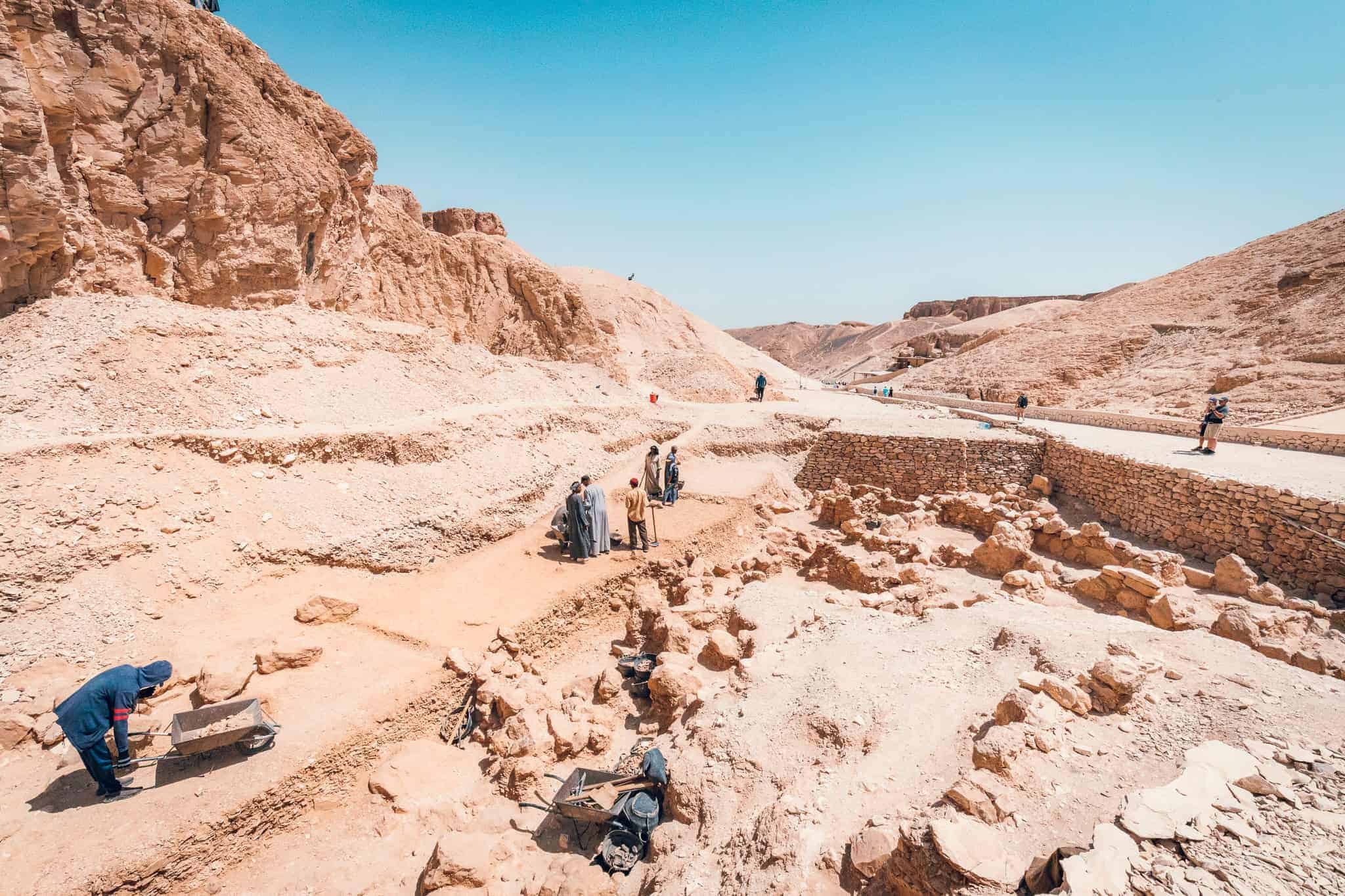
One of the most remarkable things about the Valley of the Kings is that it’s still revealing its secrets. Excavations, restorations, and conservation projects are ongoing, and during your visit, you might spot fenced-off areas, scaffolding, or even active dig teams at work. It’s a reminder that the Valley is a living archaeological site.
Modern scans and research are helping archaeologists uncover how these tombs were built, what they once held, and who might still be buried beneath the surface.
Latest Discovery: Thutmose II’s Tomb
In early 2025, archaeologists announced the discovery of the long-lost tomb of Pharaoh Thutmose II, a ruler from the 18th Dynasty who reigned over 3,500 years ago. Found near the Valley of the Kings, it’s the first royal tomb unearthed in the region since Tutankhamun’s in 1922.
Although the tomb was damaged by ancient floods and the mummy had been moved long ago, the site offers invaluable insights into New Kingdom burial practices and the early days of Egypt’s golden age.
I find this absolutely thrilling. Who knows, maybe one day, we’ll witness another discovery as iconic as Tutankhamun’s. The Valley hasn’t given up all its secrets yet.
The Valley was destination for travelers during Greco‑Roman times

Long before organized tours and entry tickets, travelers were already making their way into the tombs; some as early as the Roman Empire.
Graffiti carved into the walls in Greek and Latin suggests that visitors passed through more than 2,000 years ago. One of the earliest references comes from Diodorus Siculus in 60 BCE, who noted that priests kept records of 47 royal tombs, most already looted.
The most visited tomb appears to have been KV9, shared by Ramses V and VI. It’s basically an ancient guestbook, with nearly a thousand inscriptions, the highest number found in any tomb.
Centuries later, Christians during the Coptic period continued the tradition. They carved crosses and prayers into the stone, sometimes directly next to scenes of Egyptian gods. The contrast is striking; and it says a lot about how this place drew people in, regardless of era or religion.
So when you are visiting the tombs, be on the look out for these inscriptions.
You Can Reach the Valley Easily from Luxor by Taxi or Tour
Most visitors use Luxor as their base to explore the Valley of the Kings, and that’s definitely the easiest and most practical option. If you’re staying in Luxor city or arriving via a cruise, you have a few options to get to the Valley from the East bank:
- Private Taxi: This is the most flexible and comfortable option. The drive takes about 45 minutes from central Luxor, since you’ll need to cross the bridge south of the city. A private driver can wait while you explore or even stay with you for a full-day itinerary around the West Bank. It’s more expensive than a DIY route, but ideal if you want to set your own pace and avoid crowds.
- Group Tour: If you’re short on time or want to visit multiple sites at, this full-day guided group tour is a great option. Most tours include transport, entry fees, and a guide. It’s a no-fuss way to hit all the highlights in a single outing, perfect if you’re not up for negotiating taxis. Though, it might a bit less flexible, but from experience my guide gave us enough time to see the 3 included tombs and 3 extra.
- Public ferry + taxi combo: For budget travellers or those going just to the Valley of the Kings, take the public ferry across the Nile (just 5 EGP) from the East Bank, then catch a West Bank taxi to the Valley. Expect to pay around 300–400 EGP round trip, but you’ll need to negotiate. Don’t hesitate to walk away if the price feels inflated; there are usually other drivers nearby.
Coming from Cairo or Hurghada?
If you’re not staying in Luxor but still want to visit, some tour companies offer long day trips from Cairo or Hurghada. These usually include transport, entry tickets, and meals. You won’t have time to see everything, but if you’re on a tight schedule, it’s a good way to tick off one of Egypt’s must-see sites.
Base Yourself in Luxor for a Few Days
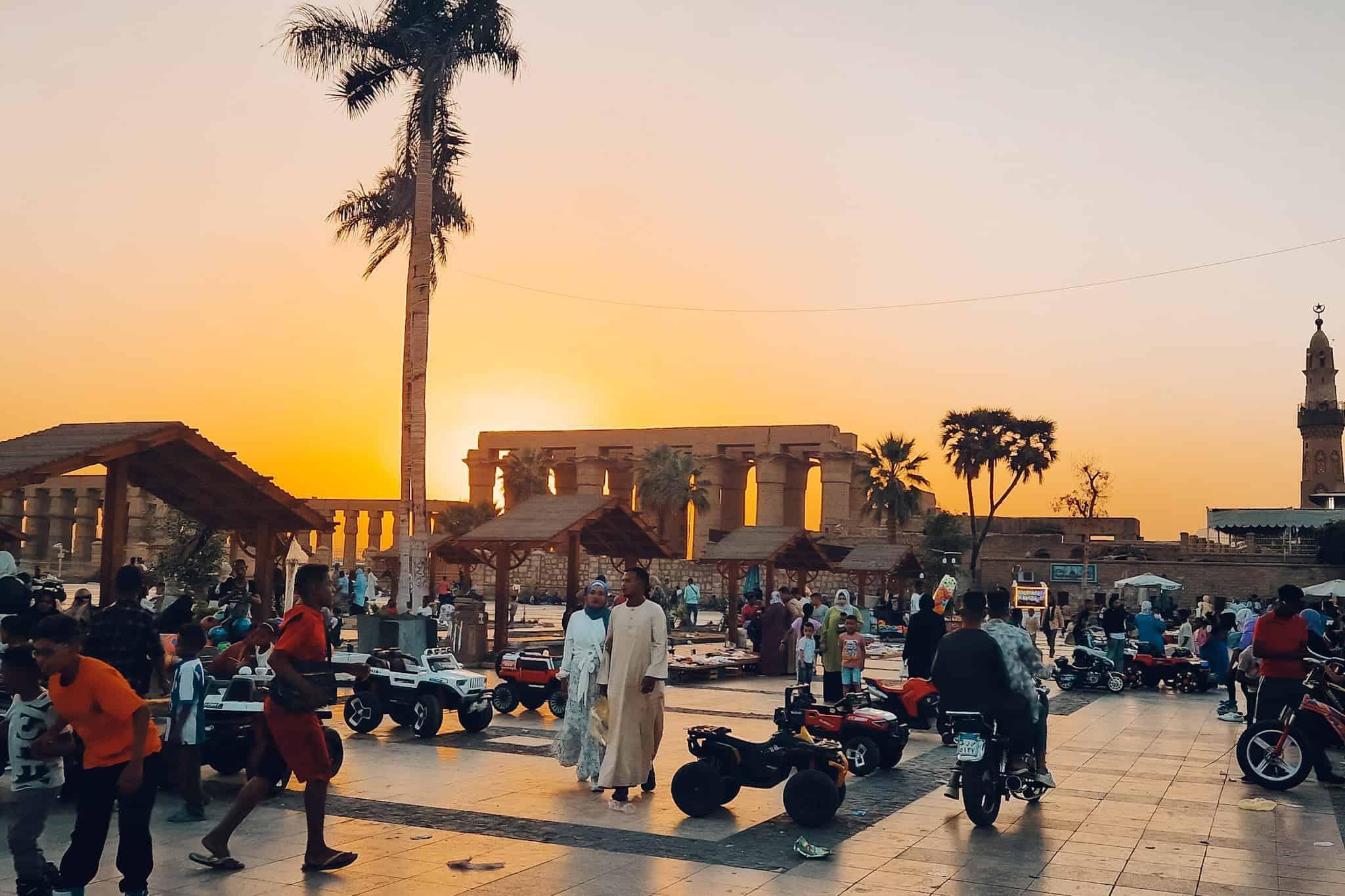
If you’re planning to visit the Valley of the Kings, Luxor is the place to stay. The city is well-equipped for tourists and serves as the perfect place for exploring both banks of the Nile.
Most accommodations are located on the East Bank, where you’ll also find restaurants, shops, and transportation options. Staying in town means you can start your day early, beat the heat and crowds, and return to relax without needing to rush or cram everything into one outing.
Give yourself at least two nights here. That way, you can spread your visits across the Valley of the Kings, Karnak and Luxor Temples, and the many things to do in Luxor.
Here are some recommendations on where to stay while in Luxor:
East Bank
- Hilton Luxor Resort & Spa – Riverside luxury with a pool and spa, perfect for relaxing after long sightseeing days.
- Pavillon Winter Luxor – Affordable elegance next to the historic Winter Palace, with a lush garden and central location.
- Nefertiti Hotel – Budget-friendly, great rooftop views over Luxor Temple, and a solid on-site restaurant.
West Bank
- Villa Sunrise – A peaceful guesthouse with beautiful views, warm hosts, and hearty homemade meals.
- New Memnon Hotel – Clean, friendly, and perfectly located for visiting the West Bank sites.
- Villa Desert Rose – Stylish, quiet, and full of local charm. Generous breakfasts and a relaxed vibe.
Combine Your Visit with Hatshepsut’s Temple or the Valley of the Queens
While the Valley of the Kings is the headline act, the West Bank of Luxor is packed with other ancient sites that are just as fascinating, and often far less crowded.
Just minutes away from the valley, you’ll find Hatshepsut’s Temple, a striking multi-level structure carved into the cliffs. It’s one of the most architecturally unique temples in Egypt and a must-see. It is often included in a guided tour with the Valley of the Kings, such as this one, which is highly recommended.
Also nearby is the Valley of the Queens, home to the tombs of royal wives and children. While most tombs here are smaller and less decorated than their counterparts in the Valley of the Kings, the tomb of Queen Nefertari (currently closed) is an absolute showstopper. It’s considered one of the most beautifully preserved tombs in Egypt, though it requires a separate high-cost ticket.
If you’re curious about the people who built the tombs, head to Deir el-Medina, the ancient village where the artisans and labourers lived. Their own tombs are surprisingly detailed and personal, offering a rare glimpse into the daily lives of non-royals.

>> LUXOR ATTRACTIONS
Best Things to Do in Luxor: A Travel Guide for 2025
This guide covers the top attractions on both sides of the Nile, from ancient temples and royal tombs to hot air balloon rides and sunset felucca cruises.
For something quieter, the Valley of the Nobles is often overlooked, yet it is full of well-preserved tombs featuring vibrant, intimate scenes of daily life, agriculture, and family rituals.
Lastly, the Colossi of Memnon, two towering statues that once guarded a long-lost temple, are a quick and easy photo stop just off the main road.
If you’ve already come all this way, it’s well worth carving out another day (or two) to explore beyond the kings. The West Bank is full of unexpected treasures, and often, it’s these lesser-known sites that leave the deepest impression.
The Tombs Are Hot and Not Very Accessible

One thing you’ll notice quickly is that visiting the Valley of the Kings can be physically demanding, especially inside the tombs. Most are deep, narrow, and carved directly into the cliffs, with steep ramps, uneven stairs, and tight spaces (without feeling claustrophobic).
There’s no air conditioning or airflow in the tombs, so the deeper you go, the hotter and stuffier it gets. In the summer, the air can feel thick and heavy, making descents and climbs even more draining.
If you have mobility issues, some tombs may not be suitable. While there are handrails in certain areas, many entrances require navigating steep inclines or walking down sloped wooden paths with low ceilings. You’ll need to watch your step and take it slow.
For those who can manage it, the effort is worthwhile, but it’s essential to know your limits and pace yourself. Comfortable shoes, breathable clothing, and water are non-negotiable.
And don’t forget: once you go down, you have to climb back up, sometimes in a bit of a crowd.
Final Thoughts on the Valley of the Kings
Visiting the Valley of the Kings isn’t just a sightseeing stop, it’s a journey into the heart of ancient Egypt. While it can be hot, busy, and at times a little chaotic, the magic of standing where royalty was once laid to rest makes it all worthwhile. With the right planning, knowing when to go, which tombs to visit, and how to get there, you can turn a good visit into an unforgettable one.
And if you’re planning a more extended stay in the region, don’t miss our guide to the Best Things to Do in Luxor for more ways to explore both banks of the Nile, or check out our roundup of Famous Landmarks in Egypt to help you plan the ultimate trip through this timeless country.

ARE YOU ON PINTEREST?
What about saving this post to your Pinterest board?
Click on the photo to save this blog post for later. We are also on the platform and we love pinning great travel tips. Follow Tales From The Lens’ boards to see our latest pins.
Don’t be shy, come say hi!
Please note │ This blog post may also include affiliate links to hostels or products we recommend, which means if you buy something following a link on this page, we’ll get a small commission. This will be of no extra cost to you but will help us continue running this blog. Thank you for your support.

About the Author
Jen is the Funder, Author & Photographer behind Talesfromthelens.comJen has lived for the past 15 years across Oceania and Ireland while also travelling in Latin America, North America, and Europe. She has visited more than 65 countries and set foot on every continent in the world! She is a coffee nerd, passionate about photography, wildlife, and outdoor activities.
For more info, check out the About page.
this has to be one of the best article about the Valley of the King I found. I am heading there in one week and wanted to be prepared and not miss out anything. I wasn’t sure about the extra tombs, but you totally sold me. I can’t wait to see Ramses V & VI, and Tut! Though Ramses IV look incredible too.