
If you want to escape the glittering crowds of the French Riviera, the South West of France is where you want to be. Spanning across the regions of Occitanie and Aquitaine, this area is brimming with local traditions, diverse cuisines, and even its own languages like Languedocien, Basque, and Gascon. But what really sets it apart is its stunning landscapes and deep-rooted history that stretch from the Atlantic Coast to the foothills of the Pyrenees.
Here, you can climb Europe’s tallest dune, wander through medieval villages untouched by time, and sip wine in UNESCO-listed vineyards. It’s a place where every turn seems to reveal another hidden gem, far from the crowds and noise of tourist-heavy spots.
This guide covers the most unique things to do in South West France, perfect for travellers craving authentic experiences and off-the-beaten-path adventures. Feel free to add your favourite spots or share your thoughts in the comments, we’d love to hear them!
Climbing the Dune du Pilat

The mighty Dune du Pilat is Europe’s largest sand dune, spanning an incredible 3km long, 600m in width and rising 100m from the forest floor. These measurements are in constant motion with the tides and winds reshaping the sand with their powerful forces, but it remains an incredible sight.
Located on the Atlantic Coast in Southwestern France, the dune makes an easy day trip from Bordeaux or Biarritz by car, or a slightly more arduous one via public transport – you’ll need to take the train to Arcachon before continuing the remainder of the journey by bus. You can also join a morning tour from Bordeaux to Arcachon Bay and enjoy a nice stop at the dune.
If you are driving, arrive early to secure one of the coveted car parks. The parking lot is large but gets filled quickly in summer. Then wander through the makeshift “village” – a small cluster of souvenir shops and restaurants – at the base of the dune, to where the temporary stairs will aid your ascent to the top.
There’s an unmissable view from the summit of the Great Dune of Pyla, encompassing the Arcachon Bassin, Landes forest and expansive sea views. Clamber down the other side for a refreshing swim, or, if you’re feeling adventurous, book a paragliding session for a bird’s eye view!
If you have a few days up your sleeve, stay at one of the on-site campsites or nearby hotels, and you’ll be first to the top in the morning! You might as well climb the dune at the end of the day to watch the sunset from this unique place in Europe.
Hiking to the Cirque de Gavarnie

One of the most unique activities and places to visit in the Southwest of France has to be the Cirque de Gavarnie. This breathtaking destination is a natural amphitheatre in the Western French Pyrenees. It features the second-highest waterfalls in Europe (which you can walk to), breathtaking views, great hiking, and horse and donkey rides.
The Cirque de Gavarnie is about a 2-hour drive from Toulouse, so it’s easy to combine with a trip elsewhere. You have to drive right up into the Pyrenees – expect to stop every 5 minutes to take photos – but the roads are good and fine to drive. The area is a ski resort heaven, which means not everything is open in the summer. Expect a LOT of snow in winter, and some roads may be closed.
Access to the Cirque de Gavarnie is most preferred from Spring to Autumn. When visiting, make sure to allow time to do the hike up to the Hotel du Cirque (which is actually a bar/ restaurant). The route can be a little steep, but it’s definitely worth it. It is easy to find your way, but if you prefer, you can join a guided tour led by professionals.
Entry to the hike is free, although you do pay for parking in the high season. Get there as early as you can – it’s a popular destination and it can get very crowded. If you want to book a horse or a donkey ride, it might be best to do that before the high season. Throughout summer, there are several B & Bs or hotels nearby for you to stay at if you wish.
Surfing in Biarritz

If one place in South West France truly embodies that laid-back beach vibe, it’s Biarritz. Once a hotspot for pirates and corsairs, this Atlantic coastal town has transformed into a haven for surfers and sun-seekers. Its long, sandy beaches and powerful waves draw surfers worldwide, yet it somehow manages to hold on to its easy-going charm.
The main spots for catching waves are Côte des Basques, La Grande Plage, and the long stretch of sand near the lighthouse in Anglet. If you’re starting out, Côte des Basques is your best bet. The waves here are typically smaller at low tide, making it ideal for beginners. Plus, there are several surf schools on the beach where you can rent boards and book lessons. Remember that the beach is only accessible to surfers at low tide, so timing is everything.
If you miss the window at Côte des Basques, head to La Grande Plage. It’s a bit more central and popular with both locals and tourists. There’s no surf rental here, so you’ll need your gear, but the waves are consistent, and the view of the historic Hôtel du Palais in the background isn’t too shabby either.
Getting to Biarritz is a breeze. It’s well-connected by road and rail, with easy access from Spain, Paris, Bordeaux, or Toulouse. If you’re coming from Bayonne, it’s a quick 15-minute trip. Once you’re there, it’s hard not to get swept up in the beachy atmosphere. You can spend your mornings chasing waves and your afternoons strolling through town, popping into surf shops and enjoying a plate of fresh seafood.
For a perfect end to the day, head to the Rocher de la Vierge viewpoint to watch the sunset. The rugged cliffs and crashing waves make it one of the most iconic spots in town. And if you’re up for it, finish with a glass of local wine at a beachside café.
Wine tasting in St Emilion

Wine tasting in St. Emilion is an absolute must when visiting Southwestern France. The town is a designated UNESCO World Heritage Site, and you can explore the area’s medieval history on the town’s free walking tour. However, tasting the city’s famous local white and red wines at one of the historic chateaux is an experience that is hard to top.
Plan your trip early and schedule your tastings ahead of time so that you can visit the chateaux you want. Tastings get booked up days in advance, so don’t wait until the last minute to make reservations. However, if you do get to St. Emilion without a tasting reservation, go to the tourist office in the centre of town. They have a list of which chateaux have openings, and they can also make phone calls on your behalf.
Of course, if you decide not to visit a chateau, you can still enjoy local wine at restaurants and wine shops around town. Don’t worry, you won’t leave without the chance to try as much wine as you desire while you are here! You can stay in St Emilion for a few days or visit on a day trip from Bordeaux. Even if you plan on wine tasting in Bordeaux, St. Emilion is an entirely different microclimate for you to experience.
>> Recommended wine-tasting tours in St Emilion
Discovering the Gorges de Kakuetta

The South West of France is rich in natural wonders, and one of the most beautiful natural sites is in the heart of the French Basque Country. Discovered only as recently as 1906, the deep gorge dotted with waterfalls was long hidden away in the steep Pyrenees until a curious speleologist found himself in a world of its own.
Touted as an Amazon-like micro-climate, the Gorges de Kakuetta is a unique spot where the sun rarely touches the moss-covered cliffs.
The Gorges de Kakuetta is a beautiful day hike that runs 4 kilometres round trip and is easy enough that just about anyone can enjoy it. Wooden walkways attach to the soaring cliffs, and a series of footbridges give visitors passage over the snaking stream that carved out the gorge millions of years ago. The highlight of the gorge is the 20-meter-high waterfall, which visitors can even walk behind.
While it only takes around 2 hours to complete the hike, the drive to the gorges can be a bit longer if you come from the coast. But that’s a good opportunity to make a road trip to the Gorges and discover the incredible landscape of the Pyrenees.
So, pack a picnic, camera, and good shoes (the wooden walkways can be slippery), and enjoy the cool temperatures, beautiful crystalline waterfalls and gorgeous scenery. Alternatively, you can stay close by in La Pierre Saint-Martin, the perfect place in the Pyrenees to base yourself and hike around.
Roaming the beautiful villages of the Basque Country

One of the best things to do in the South West of France is to visit the typical basque villages built with traditional red and white houses. From the charming towns of Ainhoa, Sare, Espelette and La Bastide Clairence to the inevitable pilgrim stop Saint-Jean-Pied-de-Port, the French Basque Country is, in fact, exceptionally filled with pretty countryside small towns that you cannot miss if you are visiting the region.
Tucked between the Pyrenees and the Atlantic Ocean, in the southwestern part of France, these villages are nationally known as some of the most beautiful in the country. They host exceptional craft shops, art galleries, and local traditions such as many “frontons” to play Basque pelota and spicy red pepper fields known locally as “Piment d’Espelette.”
However, despite their national reputation, you won’t find big international crowds, unlike along the French Riviera, but this is probably for the best if you wish to spend a few days off the beaten path in the South of France.
The best way to visit and roam around the streets of these small towns is to rent a car and go on a road trip or take a couple of day trips from Biarritz or Bayonne. During your ramble, you’ll get a sense of the widespread Basque culture found in its cuisine, architecture, arts and craftwork. You’ll also have the chance to witness the incredible landscapes of this region.
The French Basque Country is fascinating. There are many things to do and see in the area. Get inspired by reading our articles, such as the best hikes in the region and our ultimate road-trip itinerary.
Exploring the Gouffre de Padirac

The Gouffre de Padirac is a vast chasm and fascinating cave system located far north of the Lot department in Occitanie. It is a must-see if you are visiting this part of France. It’s hard to describe the sense of awe and wonder you feel when gazing into the chasm for the first time.
It is effectively an enormous hole in the ground that leads through a series of tunnels into a huge underground cave system complete with waterfalls and its own river!
As you descend the metal staircase into the earth, the opening to the sky above becomes smaller and smaller and you start to appreciate just how insignificant you are! You’ll enter the first series of caves before following the route to the underground river, where a knowledgeable boatman will be waiting to punt you along for several miles before you start the climb through the largest of the caves.
All around you are stunning stalagmites and stalactites formed over millennia and now beautifully lit to display their unique formations. As you wander and gaze at the beauty of Mother Nature, you’ll also enjoy the entertaining story of how the caves were discovered 130 years ago.
The Gouffre de Padirac is now a major tourist destination, and booking online for an early time slot means you’ll miss the worst of the local crowds. There is plentiful parking and many places to buy souvenirs or have a meal after your trip. You can also spend a few nights in Padirac to visit the surroundings.
Road-tripping around the Cathar Country
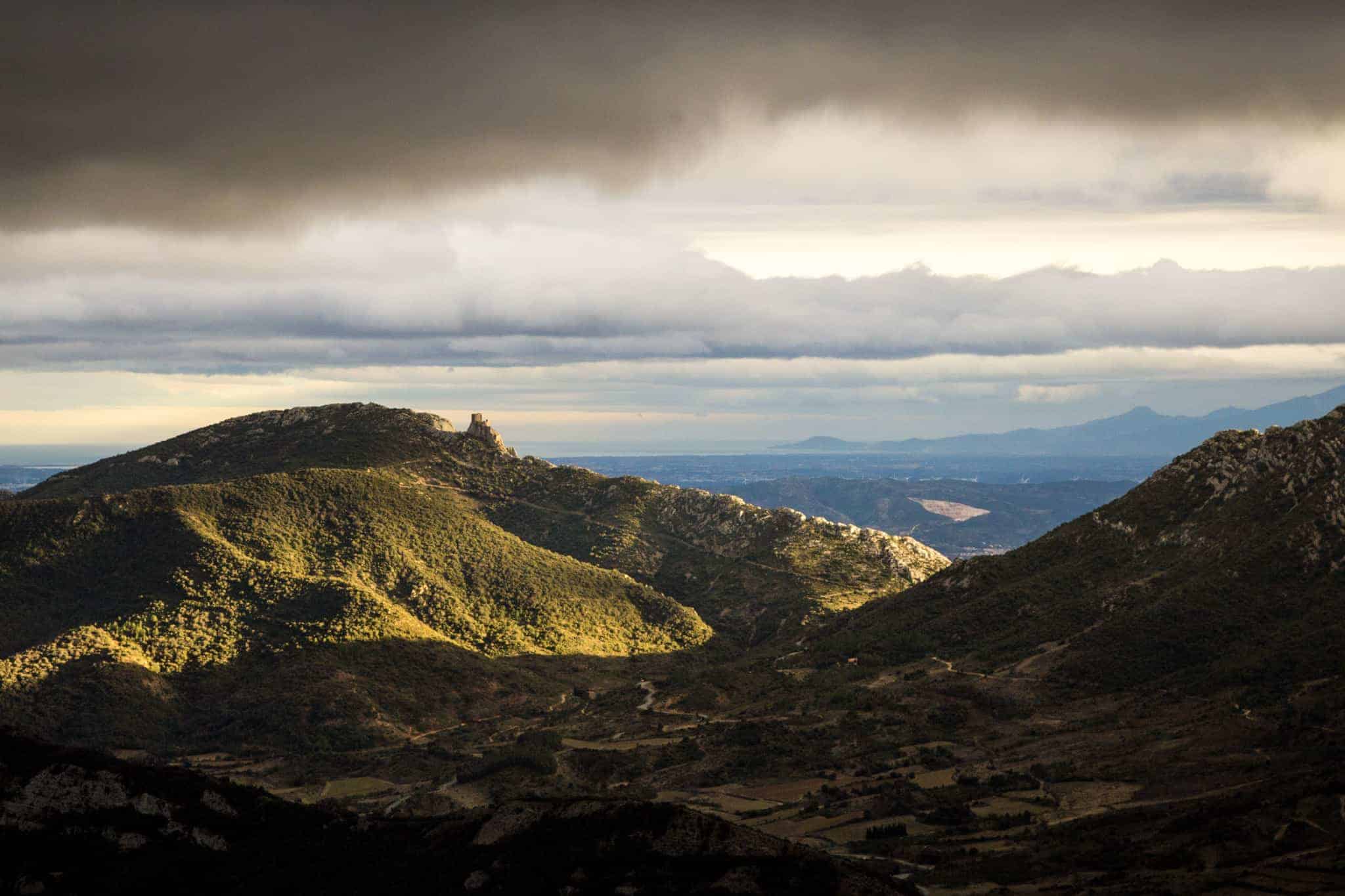
The Cathar Country, in Occitanie, Southern France, is an ensemble of historic sites related to Catharism, a religious movement that flourished in southern France between the 12th and 14th centuries based on a different interpretation of the Gospels and renunciation of all material things.
When the Catholic Church decided that Catharism was a sect, it started prosecuting and exterminating its members until they totally disappeared from France.
The Cathar Castles, such as Latour, Queribus or Peyrepertuse, can be found in the countryside near the fortified city of Carcassonne – the most popular site of the Cathar Country. Because there are so many other medieval villages, abbeys, and fortresses located at strategic points throughout the territory, the best way to explore the Cathar region is on a self-guided road trip or via a tour.
If you don’t have your own car, you can base yourself in Carcassonne and rent a car from there. The city is easily reachable by train or low-cost flights.
The Cathar route can keep you busy for a week, perhaps more. If you are short of time and cannot visit all the sites, consider a minimum of three days to get a taste of the Cathar Country. Use the first day to explore the citadel of Carcassonne and then hit the road to discover three or four places nearby, like the abbey of Lagrasse or the fortress of Montségur.
Cycling the Canal du Midi

Did you know that a waterway connects the Atlantic Ocean and the Mediterranean Sea? The canal des Deux-Mers is one of the most outstanding achievements of the late 17th century. It goes from the Atlantic Ocean to Toulouse by the Canal de Garonne and from Toulouse to the Mediterranean Sea by the Canal du Midi.
You can cycle the full length or just one section, but you can also rent a “peniche” to enjoy a weekend on a canal boat! The latter is particularly incredible to do as you will have to navigate up and down through Locks.
The Canal du Midi is a UNESCO World Heritage site and an activity that is becoming popular thanks to the great services and infrastructure aimed at international tourism. For example, some companies can transport all your luggage from one place to another while you cycle. There are also camping and hotels all the way.
During your trip, you can spend a day in Toulouse, aka the pink city, one of the coolest cities in the South of France, with excellent gastronomy and charming little streets. But don’t forget to plan to visit smaller villages along the canal, such as Le Somail, one of the prettiest villages in the Southwest of France.
Make sure you also stop in Castelnaudary to eat a local “cassoulet,” a typical dish from the Southwest of France made of white beans and meat.
Rent a car in France.
If you want to rent a car in advance, we recommend using Discover Cars. The best part about Discover Cars is that you get full coverage for less than €7 a day! You can also compare all the companies in the market, choose the type of car you want and see all the most recent customer reviews before booking. On the website, you can easily narrow your search price to find the best deal within your budget.

BEST ONLINE CAR RENTAL COMPARATOR – DISCOVER CARS
When booking a rental car in France online, we recommend using Discover Cars because they offer Full coverage for less than €7. It is one of the best rental car comparators out there!
Easy and useful sentences to know in French
- Hello – Bonjour / Goodbye – Au revoir
- Thank you – Merci / Sorry – Pardon / Please – S’il vous plait
- How much does that cost? – Combien ça coûte ?
- I don’t understand – Je ne comprends pas
- I don’t speak (much) French – Je ne parle pas (trop bien) français
- Do you speak English? – Parlez-vous anglais ?
- Two beers – Deux bières / Pint – Pinte / Half-pint – Demi
- One night, double bedroom – Une unit, lit double
- Can you help me? Pouvez-vous m’aider ?
- I am looking for… – Je cherche…
- Do you have wifi? – Avez-vous le wifi? / Password – Mot de passe
- Where is the bathroom/toilets – Où sont les toilettes ?

ARE YOU ON PINTEREST?
What about saving this post to your Pinterest board?
Click on the photo to save this blog post for later. We are also on the platform and we love pinning great travel tips. Follow Tales From The Lens’ boards to see our latest pins.
Don’t be shy, come say hi!
Please note │ This blog post may also include affiliate links to hostels or products we recommend, which means if you buy something following a link on this page, we’ll get a small commission. This will be of no extra cost to you but will help us continue running this blog. Thank you for your support.

About the Author
Jen is the Funder, Author & Photographer behind Talesfromthelens.comJen has lived for the past 15 years across Oceania and Ireland while also travelling in Latin America, North America, and Europe. She has visited more than 65 countries and set foot on every continent in the world! She is a coffee nerd, passionate about photography, wildlife, and outdoor activities.
For more info, check out the About page.
I would definitely need to rent a car and spend a lot of time in southern France because I would love to see many of the out of the way places. I have recently been bike riding and that ride sounds amazing too. How long is it? Is it possible to bike one way and take the boat back?
We’ve not been to this region yet but it seems perfect for us, with the combination of architecture, outdoor activities and culture it would be great for us. Also love how varied even the outdoor stuff is like mountains AND surfing! Really cool!
I am head over heels in love with that picture of Cirque de Gavarnie. Horse riding in that setting in anticipation of the second highest waterfalls in Europe sounds heavenly. Our next France trip is all sorted, thanks to you.
France is so beautiful. We have not explored France beyond Paris and hope to see the other parts of the beautiful country. The South-West of France looks so inviting and these are some really amazing things to do. Each one of them have their own unique appeal, however some of them had my attention riveted. Exploring the Gouffre DePadirac, and Climbing the Dune Di Palat look really amazing activities.
I’ve never been to France, and I had no idea there are sand dunes this big there! They remind me of the ones we have in Michigan – Sleeping Bear Dunes.