
Compared to the intensity of Cairo, Aswan is slower, sunnier, and shaped by a strong Nubian heritage that can be felt in both its atmosphere and daily life.
If you’re planning a visit to the southern part of Egypt and wondering what to do in Aswan, you’ll find a city rich in unique experiences, such as exploring the temple of Philae, watching the sunset over the Nile from a felucca, sharing a home-cooked meal in a Nubian village, or browsing spices and textiles in the Aswan souk.
While many visitors use Aswan as a base for a Nile cruise or a day trip to Abu Simbel, the city is, in my opinion, worth slowing down for. You can hike to ancient tombs carved into cliffs, sip hibiscus tea in riverfront cafés, or hop over to Elephantine Island for car-free walks and quiet views of the desert hills.
Historically, Aswan (known as Swenett in Ancient Egypt) marked the southern edge of the Egyptian empire. Positioned just before the first cataract of the Nile, it served as a strategic trading post, military frontier, and quarry site. The granite pulled from these hills helped build monuments across Egypt, including obelisks and temples.
Today, Aswan is still a laid-back, riverside city where the past is visible in every direction. In this guide, I’ll share the best things to do in Aswan (popular or not) and all the details you need to organise your visit and make your time in Aswan truly unforgettable.
Best Places to Visit in Aswan
- Philae Temple (island temple to Isis)
- Abu Simbel (day trip from Aswan)
- Nubian Village experience
- Felucca sunset sail
Where to Stay?
- West Bank: Kato Dool or Anakato
- East Bank: Obelisk Nile Hotel or Blue Lotus
- Elephantine Island: Nuba Tod, Hamo House, or Mövenpick
- Splurge! Sofitel Legend Old Cataract Hotel
Recommended tours
- Best Highlights Day tour
- Nubian Village
- Abu Simbel day trip
- Edfu/Kom Ombo (tranfer to Luxor)
Explore the Philae Temple

Philae Temple is one of those places that feels different the moment you arrive. Set on its own island and surrounded by the calm waters of the Nile, it’s easily one of the most iconic archaeological sites in Upper Egypt.
This was, in fact, one of the last places in Egypt where the old gods were worshipped and a great example of how Egyptian, Greek, and Roman influences blended over time. Something you can clearly see in the columns, carvings, and layout across the island.
The temple is dedicated to Isis, the goddess of healing, magic, and motherhood, who was widely worshipped across the Greco-Roman world. Construction began during the 30th Dynasty, but most of what’s visible today dates from the Ptolemaic period.
Don’t miss the First Pylon, the colonnaded courtyard, and the inner sanctuaries where you’ll find scenes of Isis with Horus and Osiris carved into the walls, as well as early Christian additions, including crosses etched into older reliefs.
While the site is more compact than temples like Karnak or Luxor, it’s rich in detail, and there is a lot to see if you walk around the site, discovering alleyways without a plan. Outside the Isis temple, make sure to stop at the Trajan’s Kiosk, a large structure with open columns and unfinished carvings.
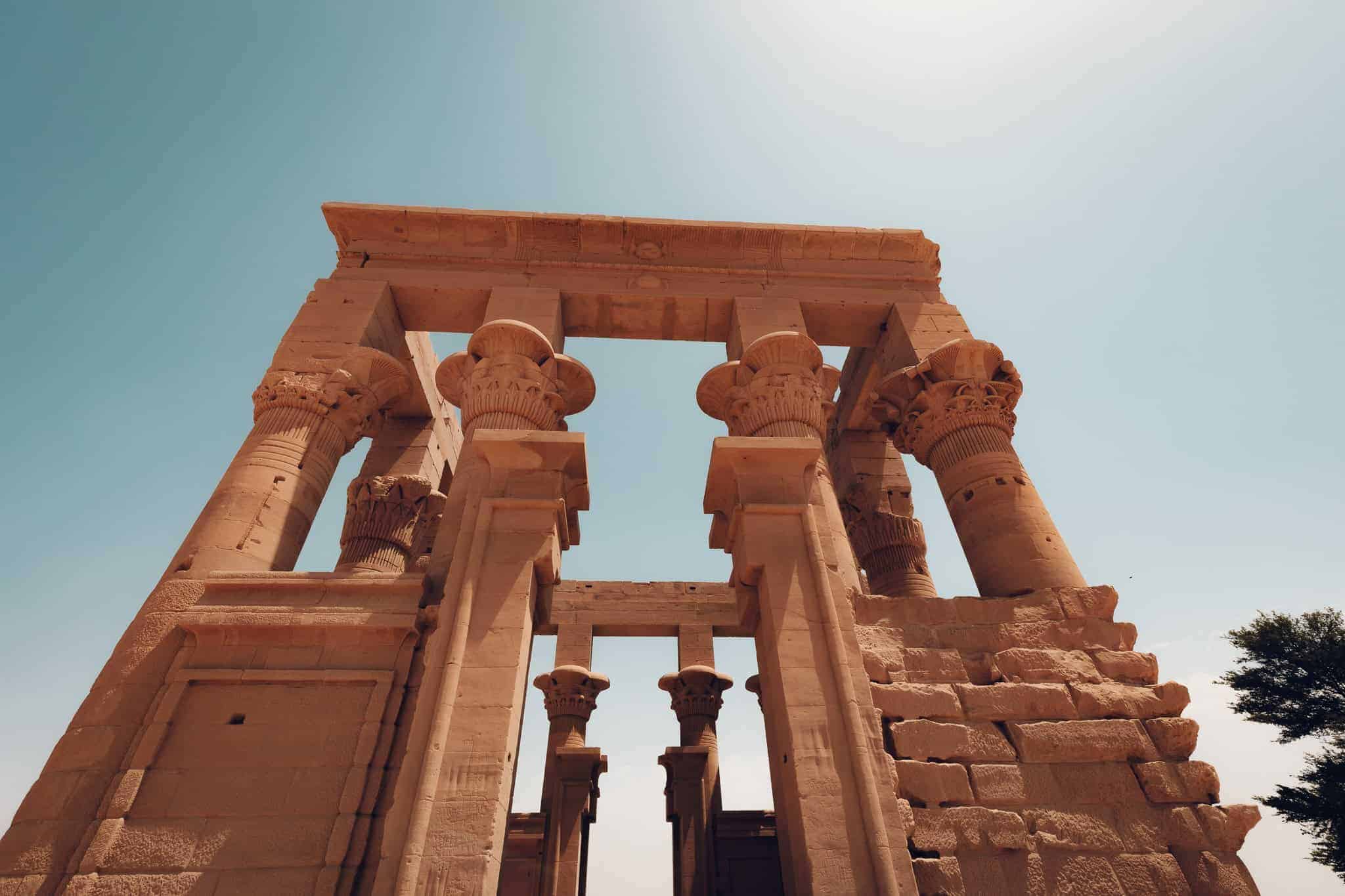
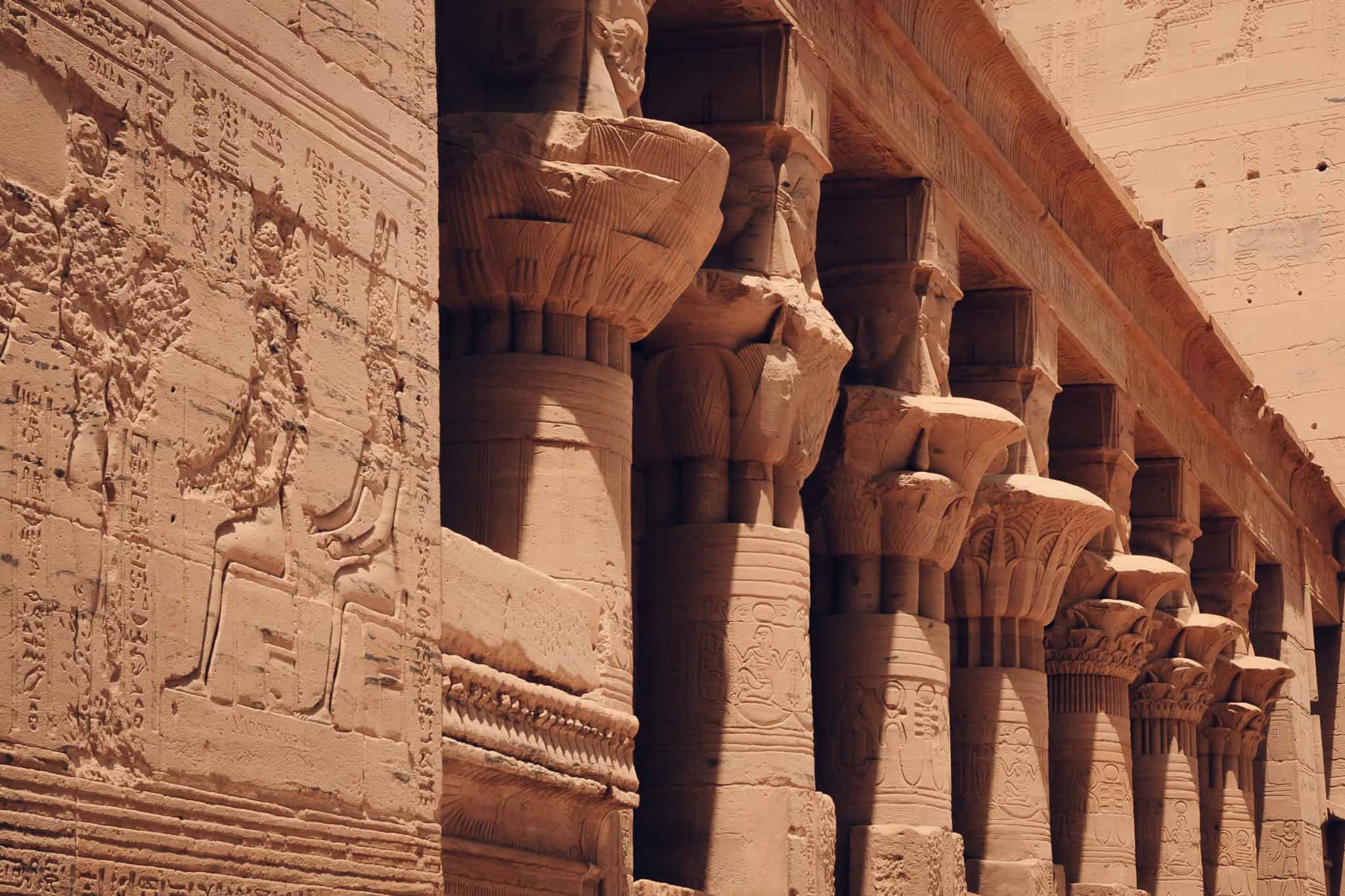
A bit of modern history that shaped the Philae Temple.
The complex wasn’t always on this island. It originally stood near the First Cataract of the Nile, on Philae Island, but was submerged for decades after the construction of the Aswan High Dam.
In the 1970s, UNESCO relocated the temple to Agilkia Island; a massive project that involved dismantling and rebuilding it block by block to save it from the rising waters.
How to Get to Philae Temple?
The islans is only accessible by water Taxi from Shellal Marina. The dock is only 20-30 min drive from Aswan and can easily be reached with a taxi or Careem. Once at the Marica, by your entry ticket (590 EGP per adult), board a boat to Agilkia Island. The boat ride takes around 10 minutes one way.
Note that you will need to pay a fee per boat (not per person) to get to the island. It typically costs about 300-600 EGP, but since there is no set price, you will need to negotiate. The boat fee is paid separately from the temple entry ticket.
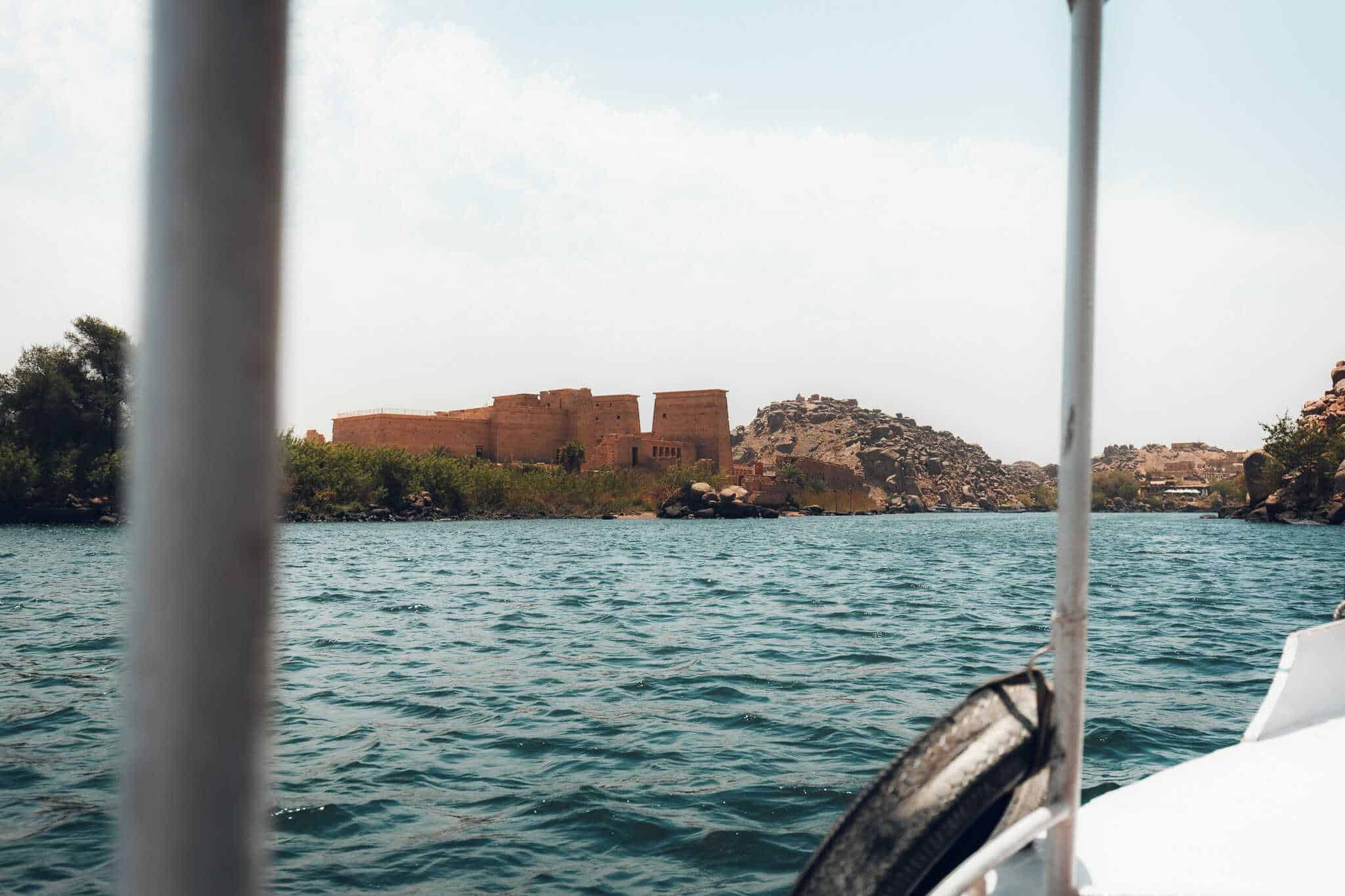
Pss!! I would suggest taking a guided day trip, so you don’t spend time with the transport logistics and negotiations. Philae is often combined with the Aswan High Dam and the Unfinished Obelisk on a half‑day tour such as this one, which is a great way to experience some of the best things to visit in Aswan in a short time.
Opening Hours: Open daily, usually from 7 AM to 4 PM – Try to arrive earlier in the day to avoid heat and crowds.
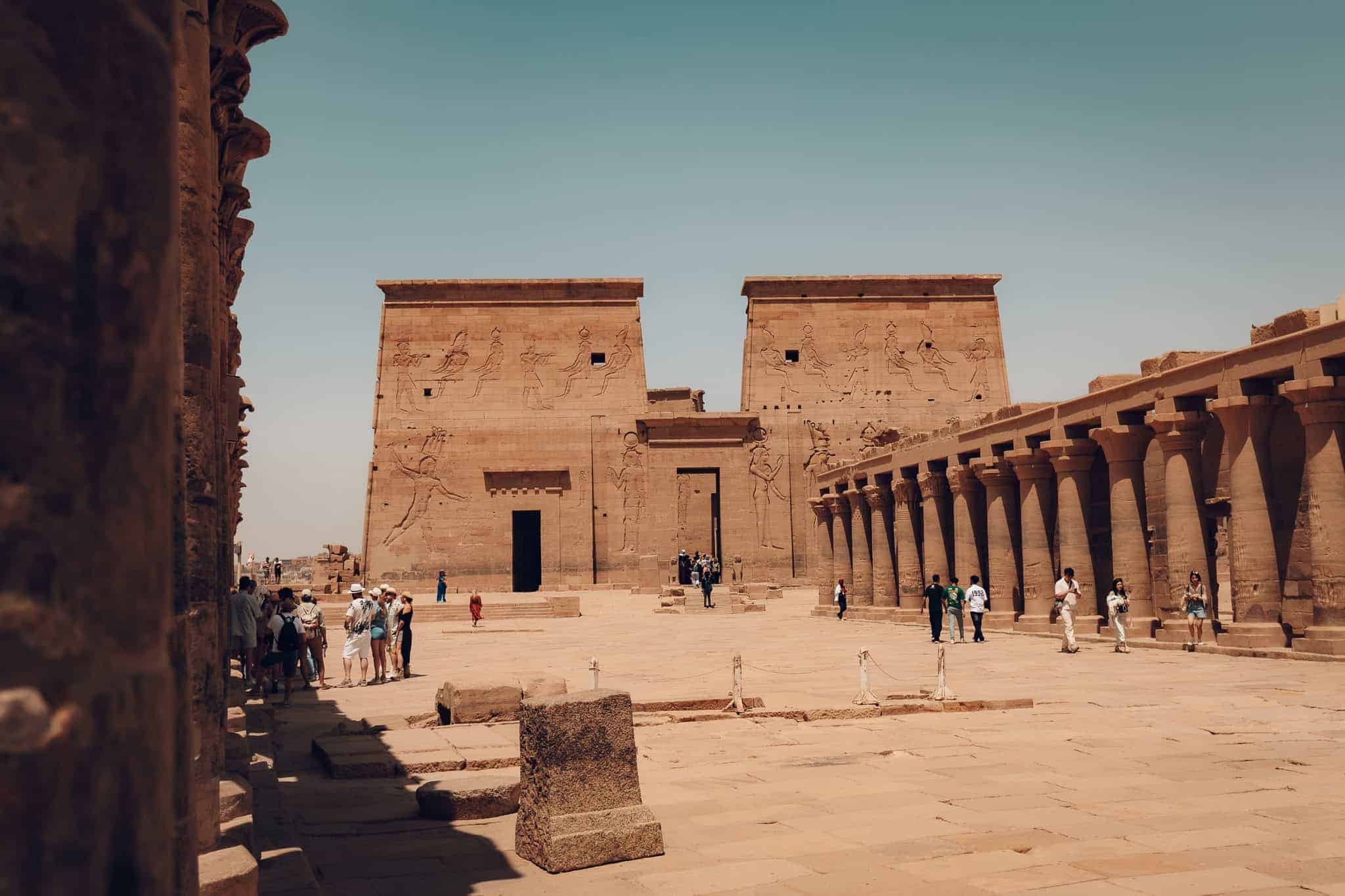
>> PHILEA TEMPLE
My full updated guide!
How to visit the Philae Temple from Aswan?
In this guide I break down all the transport options, costs, and common pitfalls in my full guide to visiting Philae Temple.
Visit a Nubian Village
A visit to a Nubian village offers a quieter, more grounded look at life in Aswan, beyond temples and tour buses. The Nubians are an ethnic group native to southern Egypt and northern Sudan, known for their distinct language, bold use of colour, and long-standing traditions that predate even Pharaonic Egypt.
There are a few ways to visit. You’ll see plenty of tours offering trips to brightly painted villages on the west bank, usually by boat from Aswan. These are popular and easy to access, especially if you’re short on time.


But if you’re after something less curated, head to Elephantine Island. We visited with a local host who had lived there his entire life, and it felt more lived-in (less set up for Insta-photos and more about daily life).
The walk through the village was quiet, passing adobe homes, some painted (but nothing like the villages you see on Insta), others weathered, and a few still under construction. We ate at our host’s home: lentil soup, grilled fish, and a handful of stewed vegetables served family-style. Nothing fancy, but easily one of the best meals we had in Egypt. His wife offered henna tattoos after dinner for 100 EGP, without any pressure to accept.
Government support in these areas is limited, and some communities rely on tourism or donations to support infrastructure. But the hospitality is sincere, and the visit doesn’t feel transactional.


How to Visit
- West Bank (Colorful Villages): for colorful, photo-friendly homes, book a stay at guesthouses like Kato Dool or Anakato. These places often include boat transfers. You can also join a shared tours or take a private one if you prefer a personal experience. Expect to pay around 10 to 30 euros per person.
- For Elephantine Island, take a public ferry (2-5 EGP) or hire a boat near the Corniche and ask to be dropped off on the east side of the island (near the King of Jamaica Restaurant). I believe you can walk around on your own, but I would suggest asking a local for a tour (negotiate price before you go)
Safety isn’t a significant concern in these areas, but stick to common-sense travel rules: dress modestly, avoid flashy jewelry or expensive devices, and double-check return boat times if you’re planning to stay past sunset.
Explore the Unfinished Obelisk

At first glance, the Unfinished Obelisk might look like little more than a stone trench, but once you take in the scale, it quickly becomes one of the most impressive sights in Aswan. Still attached to the bedrock, this obelisk was carved directly into the granite of the quarry and left behind when a crack appeared in the stone.
Had it been completed, it would have stood over 42 meters tall, the largest ancient obelisk ever recorded. Historians believe it was commissioned during the reign of Queen Hatshepsut, one of Egypt’s most powerful pharaohs.
The size of this one suggests it was meant for a major site, possibly Karnak. Walking around it gives you a close-up look at how these massive structures were shaped using only stone tools and sheer determination. You’ll see carved grooves, unfinished edges, and the original crack that led to the project’s abandonment.
Many of Egypt’s obelisks were made from red granite taken from the quarries in Aswan. The ancient Egyptians chose this stone because it was very strong, durable, and could be polished smoothly.
Did you know?
Some of the best-known Egyptian obelisks standing outside the country were carved in Aswan. One of the most famous is the obelisk at Place de la Concorde in Paris. It is actually the twin of the obelisk that still stands in front of the first pylon at the Temple of Luxor. Unlike many ancient monuments that were taken during earlier periods, this obelisk was officially offered to France in the 19th century.
How to Get There
Getting to the quarry independently can be a bit awkward. Uber doesn’t operate in Aswan, and Careem was quite unreliable when I visited (but you should still try). We struggled to get a ride and eventually walked across town. It wasn’t something we planned, but it turned into a decent way to see more of the city, though not sure I would recommend it, it was a bit nerve-racking as we didn’t know how safe we were being…
If you’d rather avoid the hassle, ask your hotel to arrange a taxi and see if the driver can wait for you. Another option is to hire a private driver for the day to visit multiple sites, or join a small group tour that includes the obelisk, Philae Temple, and the High Dam.
Entrance Fee: 220 EGP, paid at the gate – 30/45 minutes is generally enough
Take a day trip to Abu Simbel

Even with the four-hour drive each way, visiting Abu Simbel is absolutely worth the effort. These two colossal temples, built by Ramses II over 3,000 years ago, are carved directly into a sandstone cliff near the Sudanese border.
They were initially constructed to showcase the pharaoh’s power and divine connection, especially to anyone approaching Egypt from the south. But what makes them truly unique today is the fact that they were entirely relocated in the 1960s, block by block, after the Aswan High Dam construction threatened to flood the original site.
The result is nothing short of a modern engineering miracle: a perfectly reconstructed version of the original, aligned. Hence, the sun still illuminates the inner sanctum on the same two days each year, just as it did in ancient times.
Standing in front of the seated statues of Ramses, it’s hard not to feel small. They’re over 20 meters high, with intricate carvings still visible even after centuries of sun, sand, and water.


How to Get There
There are several ways to visit Abu Simbel from Aswan, depending on your budget and comfort level:
- Shared Minibus Tours
The most affordable option, with early morning pickup (usually around 4:30–5:00 AM) and return by late afternoon. You’ll spend around two hours at the site, and prices typically include transport, permits, and entry tickets. Great if you’re short on time or traveling solo. - Private Driver
A quieter, more flexible option if you prefer to travel independently or as a couple. It’s more expensive, but you can adjust timing and avoid the larger groups. Some drivers include a basic explanation or allow more time at the site. - By Plane or Lake Nasser Cruise
Less common and pricier. Flights are limited and not always cost-effective. Egyptair operates every day. Luxury sailings operated by Mövenpick or Steigenberger take longer but offer a very different kind of experience.
Whichever option you choose, keep in mind the road to Abu Simbel is only open from 5 AM to 5 PM, and there are several checkpoints along the way. Bring your passport, sunblock, plenty of water, and snacks. There’s little to buy once you’re on the road or at the site (though there is a small shop), and breakfast boxes from hotels are usually underwhelming.

Travelling Solo?
Shared tours are easy to join, and many hotels or hostels can help arrange them. You’ll be with other travellers, and most people want to sleep on the way there and back anyway. You can also book this tour, which has more than 2,500 reviews!
Want a full breakdown of all the options, costs, and what to expect? Check out my complete guide – 👉 How to Visit Abu Simbel from Aswan
Walk the Aswan Souk
If Cairo’s Khan El-Khalili felt a bit too much, the Aswan souk will be a breath of fresh air. It’s smaller and far less chaotic, with just enough energy to keep it interesting. Locals actually shop here, and there are a few tourist stalls or shops, where you can find great souvenirs.
This is the kind of market where you can browse without being constantly pulled into a sales pitch. A few shopkeepers might call out to say hello or show you something, but it’s not aggressive, and you’ll likely find yourself slowing down rather than rushing through.
What to Look For
- Spices: saffron, hibiscus, cumin, and spice mixes for stews and tagines
- Scarves and textiles, often hand-dyed in bold Nubian colors
- Handmade baskets, incense, and carved souvenirs
- Traditional Nubian crafts that make great, lightweight gifts
- Pharaonic-style souvenirs: statues of ancient gods, scarabs, faux jewels, and small replicas of artifacts.


When to Go
The souk is open during the day, but it really comes alive after sunset, when the air cools, and more locals come out. We stopped by after dinner and wandered the alleyways. A relaxed way to end the day without needing a plan.
Tips
- Prices are negotiable, but the tone is friendly
- Cash is king, and small bills help
- It’s a good place to stock up on souvenirs without Cairo-level pricing or pressure
- Watch for mass-produced imports. Not everything labelled “handmade” actually is.
Sail the Nile on a Felucca

A felucca ride is one of those classic Egyptian experiences that’s as much about slowing down as it is about sightseeing. These traditional sailboats have been used on the Nile for centuries, and once you’re out on the water, with no engine noise and only the sound of the sail catching the wind, it’s easy to see why they’re still around.
Generally, tours sail around Elephantine Island and towards the south of Aswan for an hour or so, while some long tours will include a stop on the island or small Nubian villages.
We booked ours through a local vendor down near the Corniche. It was a short sunset ride, with just a few others on board. The pace was relaxed, the light was perfect, and it felt like a good way to take a break from the busy temple circuit.
- Short Rides (1–2 hours): These are the most common. Great for sunset or a peaceful break in the afternoon.
- Half-Day trip: Often includes stops at places like Elephantine Island or a Nubian village.
- Overnight Felucca Trips: Sleep onboard with basic mattresses and blankets. Expect rustic conditions and no real facilities, but it’s popular with backpackers looking for something different.


Where to Book
You’ll find felucca captains offering rides along the Nile promenade. You can also book through your hotel, a guesthouse, or in advance online if you want a set price and itinerary.
Visit the Aswan High Dam
The Aswan High Dam isn’t flashy, but it’s one of the most essential modern landmarks in Egypt. Built between the 1960s and 1970s with support from the Soviet Union, the dam was designed to control the Nile’s annual floods, generate electricity, and create a more stable water supply for agriculture. It’s the reason Lake Nasser (one of the world’s largest man-made reservoirs) even exists.
While it solved some major problems for Egypt, the project also came with massive consequences. Entire communities were displaced, and several ancient sites disappeared under rising waters while others were fortunately saved, such as Philae Temple and Abu Simbel, both of which had to be relocated. The dam remains a symbol of national pride, but also of ecological and cultural trade-offs.
The site itself is functional rather than scenic. Expect massive concrete walls, views over Lake Nasser, and a few placards explaining its role. You can also see the hydroelectric plant and spillways from the viewing area. It won’t be the most photogenic stop of your trip, but it adds context to many of the temples nearby.
Is It Worth Visiting? If you’re short on time, the High Dam isn’t essential. But it does help explain why several key sites in the region were relocated, and for that reason alone, it’s worth a quick stop. Most visitors combine it with other nearby sites, typically Philae Temple and the Unfinished Obelisk, on a half-day tour.
👉 Check out this 3-in-1 tour if you’re looking for an easy way to cover them all in one go.
Kom Ombo and Edfu

If you’re heading north toward Luxor, visiting Kom Ombo and Edfu Temples along the way makes for a solid trip and a clever use of travel time. Both are unique in their own ways and less crowded than the larger sites, yet still packed with historical detail.
Kom Ombo Temple is a riverside temple, quite unusual because it’s dedicated to two gods: Sobek (the crocodile god) and Horus the Elder. That split design means everything is doubled: twin entrances, twin halls, twin sanctuaries. There’s also a small Crocodile Museum nearby with mummified crocodiles on display, which is as strange and fascinating as it sounds.
Further north is Edfu, one of the best-preserved temples in all of Egypt. Dedicated to Horus, it features massive columns, detailed carvings, and a layout that gives a clear sense of how these temples were used in ancient times. Because they were buried under sand for centuries, the reliefs are incredibly well-preserved.
How to Visit
The most efficient way to visit both temples is to combine them with your transfer to Luxor. It saves time and money. Instead of going back and forth from Aswan, you make these stops part of your journey. This is ideal if you haven’t visited Luxor yet.
👉 Here’s an option that includes both sites and a hotel pickup in Aswan
If you’re interested in booking a Nile cruise from Aswan to Luxor, specific options include visits to both of these sites as well as the Valley of the Kings, like this cruise or this one.
Budget Tip: Booking the combined transfer + tour is often cheaper than doing separate day trips. Make sure entrance fees are included in your booking, or bring cash.
Visit the Nubian Museum
Often overlooked in favour of the big temples, the Nubian Museum is one of Aswan’s most thoughtful and well-curated attractions. It tells the story of the Nubian people, their ancient roots, cultural traditions, and the dramatic changes brought by the construction of the Aswan High Dam.
What makes this museum special is its focus on a community that lived in the Nile Valley for thousands of years but was displaced in the 20th century.
Inside, you’ll find Ancient artifacts such as pottery, tools, and jewelry, as well as statues and carvings from Nubian temples and settlements.
The building itself is modern and well-designed, with air-conditioned galleries and clear signage in both Arabic and English. Outside, there’s a landscaped garden and a small open-air exhibit that adds to the quiet atmosphere.
The museum is best visited during the hottest part of the day. It’s fully air-conditioned and offers a cool, quiet break when the sun is at its strongest. This also frees up your morning and late afternoon for temple visits, when the air is cooler, and the light is better for photos.
- Entrance fee: around 100–150 EGP
- Allow about 1 to 1.5 hours for a visit.
You can also join a private guided tour, which adds context to the exhibits and helps tie them back to what you’ve seen elsewhere. Here’s one option that includes tickets and a guide.
Have Brunch or a Cocktail at the Old Cataract Hotel

Even if you’re not staying there, the Sofitel Legend Old Cataract Hotel is worth a visit for its atmosphere alone. Overlooking the Nile, this colonial-era landmark has hosted writers, royals, and celebrities since the 19th century, including Agatha Christie, who famously set part of Death on the Nile here.
The hotel blends classic British architecture with Moorish details and polished luxury. The terrace bar and restaurant are open to non-guests and offer some of the best Nile views in Aswan. Whether you’re stopping in for a late brunch, coffee, or a cocktail, it’s a great way to soak in the history without splurging on a room.
Before You Go:
Golden hour or sunset for a cocktail and river views is the best time to visit. This is one of the best places to wind down after a full day of sightseeing.
If you’re not staying at the hotel, there’s a +/- 20 EUR entrance fee to access the facilities. This amount is deducted from your bill if you order the cocktail of the day (which usually costs just over 20 EUR).
Aswan Botanical Garden
For a quick escape from temples and traffic, the Aswan Botanical Garden is a peaceful spot to stretch your legs and take in some greenery. Located on Kitchener’s Island in the middle of the Nile, the garden is only accessible by boat, which makes getting there part of the experience.
The island was gifted to Lord Kitchener in the late 1800s, who transformed it into a lush, exotic garden filled with plants, palms, and trees from across Africa and Asia. Today, it’s a shady retreat (especially welcome during the hotter parts of the day) and an easy activity to combine with a felucca ride.
It’s not a must-see, but it’s a nice detour if you have time. It’s perfect for those looking for a calm spot, away from ruins and tourist crowds.
How to Get There
- Hire a private felucca or motorboat from the Corniche or near the Old Cataract Hotel
- You can also book this tour, which includes the felucca ride and a knowledgeable guide who will bring the place to life with stories and commentaries.
Entrance Fee: Around 20–30 EGP, paid at the island entrance. Boat fees vary based on the ride and your negotiation.
Time Needed: 30 to 60 minutes, depending on how much you want to wander or relax.
Start a Nile Cruise from Aswan to Luxor

One of the most iconic ways to travel through Egypt is by sailing the Nile and Aswan is the perfect starting point. From here, boats make their way north toward Luxor over three or four days, stopping at temples and towns along the way.
It’s a relaxing way to take in the landscape while ticking off major historical sites like Kom Ombo, Edfu, and Esna without worrying about transport.
Cruises such as this one vary widely in style, price, and experience, from large floating hotels to small traditional sailboats. Most include full-board meals, guided tours at each stop, and air-conditioned cabins.
If you have not yet visited Abu Simbel, I would highly recommend this 3-night cruise, which starts with a visit to the site before boarding the boat and sailing to Luxor via Kom Ombo and Edfu.
Try a Dahabiya for a Slower, Quieter Journey
If you’re not into big groups or buffet lines, consider sailing on a Dahabiya, a smaller, wind-powered boat with a traditional design and space for around 10–16 guests. The pace is slower, but the experience is quieter, more flexible, and far more personal.
👉 Here’s an option for a 2-night dahabiya cruise from Aswan to Luxor

How Long Do You Need?
Most cruises last 3–4 days, depending on the number of stops. Some offer early morning visits to temples, while others sail more leisurely and explore smaller villages along the way.
Whether you go with a luxury cruise or a slow dahabiya, sailing from Aswan to Luxor is a peaceful way to end your time in southern Egypt, avoiding trains or buses. It will be just you, the temples, tea (a good book!), and the Nile flowing past your window.
Lesser‑Known Places to See in Aswan
Mausoleum of Aga Khan
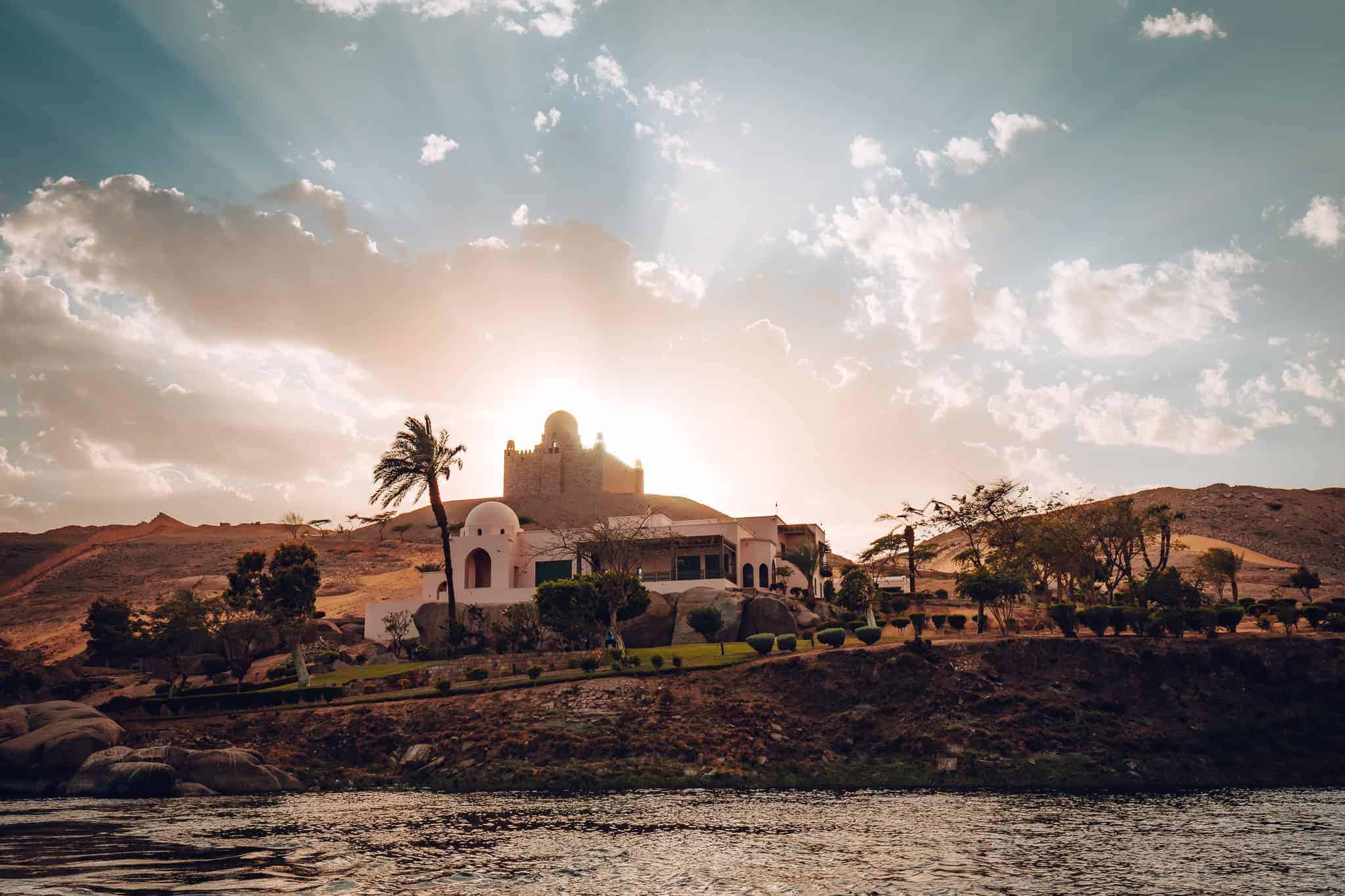
Visible from the Nile but often skipped, the Mausoleum of Aga Khan is an elegant pink-stone structure built in the 1950s for Aga Khan III. While the tomb is no longer open to the public, the exterior is a beautiful landmark, especially at sunset when the light hits its domed roof and marble walls.
How to see it: You’ll spot it easily from a felucca or boat ride along the west bank. Some cruises pass right below it, or you can drive near it if you’re heading to the monastery of St Simeon. While you can’t go inside, the view from below is impressive enough.
Monastery of St. Simeon
Perched on a rocky plateau west of the Nile, this ruined monastery dates back to the 7th century. Once home to hundreds of monks, it was part spiritual sanctuary, part fortress. Its high stone walls and desert views give it a raw, remote feel. You can still see the old chapel, living quarters, and a few faint frescoes inside.
How to visit: You can reach the base by boat or taxi, then hike to the entrance. The path is dusty and exposed, so go early or late in the day and bring water. Entry requires a ticket (paid in cash), and you’ll want at least an hour to explore and take in the views.
Tombs of the Nobles

Carved into the cliffs above the Nile, these tombs belonged to governors, priests, and local elites from as early as the Old Kingdom. They’re less restored than the tombs in Luxor, but still fascinating with faded wall art showing trading expeditions, funerary rites, and daily life scenes.
Climb up the stone path for sweeping views across the Nile to Aswan city. It’s also one of the best places to get a feel for the desert landscape, meeting the river.
How to visit: Take a boat across the Nile to the west bank, then follow the signs up the hill. The walk is short but steep, and you’ll need a ticket to enter. Not all tombs are open at once, so you will need to locate the tomb guards who will open them for you (a tip is, of course, expected). Plan about an hour and bring good shoes.
Coptic Cathedral of Archangel Michael

This striking white cathedral sits quietly near the Corniche, easy to miss but worth a look. It’s one of the main Coptic churches in southern Egypt, with graceful domes, wood-carved details, and a calm atmosphere inside.
How to visit: It’s an easy walk from most downtown hotels, especially if you’re heading toward the southern end of the promenade. Entry is free, but dress modestly and keep voices low inside.
2-Day Suggested Itinerary for First Timers
If you only have two full days in Aswan, you can still see a lot without feeling rushed, especially if you plan your visits around the heat and stick to nearby sites. Here’s a balanced itinerary that mixes temples, culture, and downtime by the river.
Day 1 – Temples, Views, and the Nile
Morning
- Start early with a visit to Philae Temple. Ideally, by 9 AM to beat the heat and the large groups
- Recommended: Combine this with the Unfinished Obelisk and Aswan High Dam on a short guided tour
Afternoon
- Visit the Nubian Museum during the hottest part of the day or hang out at your hotel swimming pool!
- Later, take a felucca ride on the Nile; time it around sunset if you can.
Evening
- Walk through the souk, pick up some spices or souvenirs.
- Grab dinner on the Corniche or at a casual Nile-front restaurant
Day 2 – Abu Simbel or local village
Option 1: Abu Simbel Day Trip
- Early pickup around 4:30 AM for the long drive
- Spend about 2 hours at the temples before heading back to Aswan
- You’ll return mid-afternoon, with time for a late lunch and a rest
- End the day with a drink or coffee at the Old Cataract Hotel
Option 2: Stay Local
If you’ve already seen Abu Simbel or want a slower day:
- Morning: Visit a Nubian village on Elephantine Island or the west bank
- Lunch: Home-cooked meal in the village or head back into town
- Afternoon: Visit the Aswan Botanical Garden or relax at your guesthouse rooftop
- Evening: Stroll the Corniche or take a short sunset felucca ride
This itinerary gives you a good mix of major sights and personal moments, without needing to pack every hour. Add a third day if you want to explore Kom Ombo and Edfu or hop on a cruise toward Luxor.
Where to Stay in Aswan
Aswan offers a mix of calm riverside charm and local neighbourhoods, with budget-friendly guesthouses and mid-range to luxury hotels spread across both banks of the Nile. Here are some recommendations:
West Bank: Nubian Village Vibes
If you’re into bold colors, mural-painted homes, and slower mornings by the river, head to the west bank’s Nubian villages. Places like Kato Dool and Anakato offer clean rooms with Nubian-style decor and a more personal feel than city hotels. They’re popular with Instagrammers, but still feel relaxed and rooted in the local community.
Just note that staying here means taking a boat back and forth. Transfers are usually included but double-check with your accommodation.
East Bank: Budget to Mid-Range
For a more central stay, Obelisk Nile Hotel is a solid budget pick. I stayed there and loved the view. It’s also walkable to the souk, ferries, and restaurants.
- Citymax and Basma Hotel offer more comfort while keeping prices reasonable, with Nile views and rooftop lounges.
- For something smaller and more personal, Blue Lotus mixes colorful design with friendly staff and a quiet location.
Elephantine Island: Local & Peaceful
Looking for calm but still close to everything? Elephantine Island is a car-free zone just across from downtown, reached by public ferry. It’s great for solo travellers and couples who want riverside peace with a short hop into town.
- Nuba Tod and Hamo House are small guesthouses with traditional Nubian charm and rooftop views.
- For a splurge, the Mövenpick offers a quiet luxury experience, with lush gardens and sweeping balconies overlooking the Nile.
Luxury Stay
If you’re going all in, the Sofitel Legend Old Cataract Hotel is hard to top. Think colonial architecture, sweeping Nile views, and Agatha Christie-era elegance. It’s not budget-friendly, but even a single night here feels like a time capsule.

Getting Around Aswan
Aswan is a compact city, and once you’re based near the Nile, getting around is relatively easy.
Walking
The Corniche (Nile promenade) is flat and walkable. You can reach most ferry docks, shops, and local restaurants on foot. Downtown and the souk are also easy to navigate without transport.
Taxis & Ride Apps
Uber doesn’t operate in Aswan, and Careem can be unreliable, especially during peak hours or early mornings. We often had trouble getting a match.
Taxis are widely available but rarely metered. Always negotiate the fare in advance or ask your hotel for a ballpark rate. If you’re planning to visit multiple sites, it’s easier to book a driver for a few hours or a half-day.
Ferries & Boats

Public ferries run regularly to Elephantine Island. It’s super cheap and often used by locals. For the West Bank or Nubian villages, boat rides are usually arranged through your accommodation. But you can also find someone from the Corniche. Always confirm return times if you’re going out in the evening.
Pss: For anything beyond town, like Abu Simbel or Kom Ombo, tours or private transfers are your best bet. The distances are long, and public transport isn’t always reliable or time-efficient.
How to get to Aswan

Aswan is located in southern Egypt and is easily reachable by train, plane, or bus. How you get there depends on your starting point, your budget, and how much time you have.
From Cairo
- By Train: The most budget-friendly and common option. Cairo to Aswan Sleeper trains are the most comfortable, with private cabins and dinner included. Depart in the evening and arrive the next morning. Cheaper day trains are also available but take about 14–15 hours.
- By Plane: EgyptAir operates daily flights from Cairo to Aswan. The flight is under 1.5 hours. Prices vary, but you can often find deals if booked in advance.
- By Bus: Less comfortable and not always direct. Budget-wise, it’s tempting, but the long journey and inconsistent schedules make it the least preferred option.

From Luxor
- By Train: Regular trains connect Luxor and Aswan. The ride takes 3 to 4 hours and is easy to book at the station. First and second-class options are available, both affordable.
- By Nile Cruise: If time and budget allow, sailing from Luxor to Aswan (or vice versa) is an experience in itself. You’ll stop at Kom Ombo and Edfu along the way.
- By Road: Private drivers or group transfers are available and take roughly 4 hours. This is one of the best options to combine the transfer with visits to Kom Ombo and Edfu temples on the way.

Booking Tips
- For trains: Book in advance for night trains, especially in high season
- For flights: EgyptAir is the main domestic carrier
No matter how you arrive, Aswan’s train station and airport are both close to the city center, making arrivals and transfers easy. Taxis and hotel pickups are readily available at both.
Final Thoughts on Visiting Aswan
Aswan might not have the scale of Cairo or the grandeur of Luxor, but that’s precisely what makes it special. It’s a city where things move more slowly, where you can sip tea by the Nile, hop between temples by boat, and get a real feel for southern Egypt’s rhythm and warmth.
Whether you’re here for a couple of days or using it as a launch point for a cruise or desert detour, Aswan is one of those places that stays with you…
If you’re planning your trip through Egypt, check out some of my other helpful guides:
- How to Visit Philae Temple: for boat tips, costs, and common mistakes to avoid
- How to Visit Abu Simbel from Aswan: a complete guide to one of Egypt’s most iconic sites
- Famous Landmarks in Egypt: a country-wide list of must-sees
- Airalo eSIM Review: how I stayed connected across Egypt without the SIM card hassle
Got questions or planning your own Aswan itinerary? Drop a comment or explore more travel stories over at Tales From the Lens. Safe travels.

ARE YOU ON PINTEREST?
What about saving this post to your Pinterest board?
Click on the photo to save this blog post for later. We are also on the platform, and we love pinning great travel tips. Follow Tales From The Lens’ boards to see our latest pins.
Don’t be shy, come say hi!
Please note │ This blog post may also include affiliate links to hostels or products we recommend, which means if you buy something following a link on this page, we’ll get a small commission. This will be of no extra cost to you but will help us continue running this blog. Thank you for your support.

About the Author
Jen is the Funder, Author & Photographer behind Talesfromthelens.comJen has lived for the past 15 years across Oceania and Ireland while also travelling in Latin America, North America, and Europe. She has visited more than 65 countries and set foot on every continent in the world! She is a coffee nerd, passionate about photography, wildlife, and outdoor activities.
For more info, check out the About page.