
Southern France’s villages are attractive due to their historical heritage, beautiful scenery, and unique gastronomy. Often portrayed as slow-paced and romantic destinations in popular summer reads, these small towns allow locals to showcase French terroir and the Art de Vivre.
There are thousands of beautiful small towns in southern France… there is even a national committee that elects the most charming ones each year!
I grew up in Perpignan, and most weekends, my family would head out to explore the region. We usually just walked around, stopped for ice cream, and saw where the day took us. Over time, I’ve come to appreciate what these towns offer. Not just their scenery or quiet charm, but how they still reflect what people call the Art de Vivre, the French way of life.
To help you out in your choice and make sure you won’t miss out, here is a list of “la crème de la crème” (the best of the best), unmissable small towns of less than 10,000 inhabitants that you must add to your next Southern France Road Trip! These aren’t just pretty spots to tick off. They’re places, I think, that are genuinely worth your time. I’ll cover what to see, where to stay, where to eat, and how to make the most of your visit.
Saint-Jean-Pied-de-Port
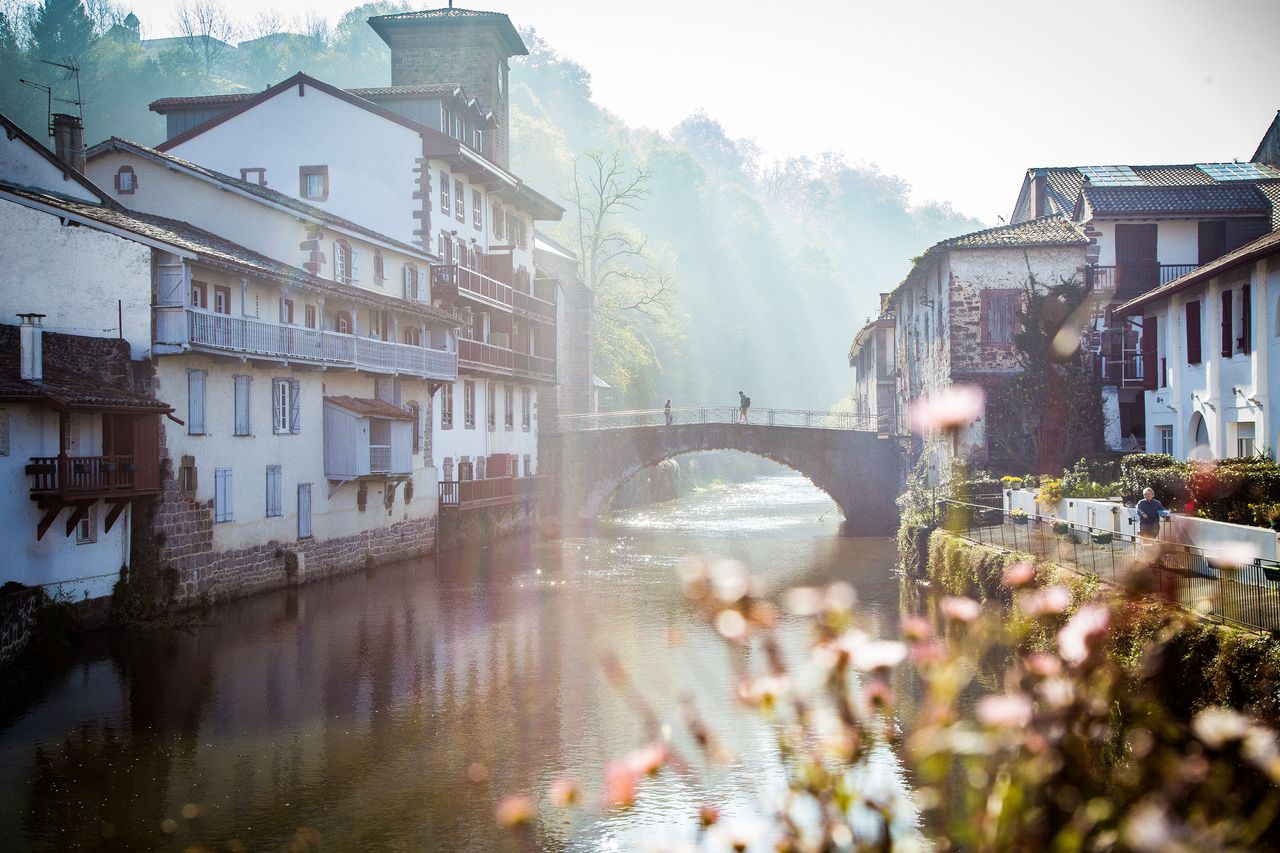
Population: 1,580 | Closest cities: Biarritz & Bayonne
Right at the foot of the Western Pyrenees, only a few kilometres from the Spanish border, Saint-Jean-Pied-de-Port is a charming little village in the French Basque Country that has gained international fame with the movie The Way, which follows Martin Sheen along the “Camino” to Santiago de Compostela in Spain.
Its unique architecture, inherited from a medieval past, stands out from the rest of the region’s villages. While the typical Basque houses, painted white with red or green shutters, are mostly found on the outskirts of the town, the historical centre is organised around a couple of cobblestone streets bordered by old sandstone buildings that have been turned into restaurants, artisanal boutiques, outdoor shops, and hostels.
With its old bridges crossing the Nive river and its hilltop citadel built out of pink sandstone, Saint-Jean is a photogenic place to relax, base yourself to visit the area, or start a 900 km walk across Spain!
Saint-Jean-Pied-de-Port is a few kilometres from the Spanish border and only a one-hour drive from Biarritz in France or Pamplona in Spain. However, due to its growing popularity as the starting point of the “French Way,” one of the Pilgrimage routes to Santiago de Compostela in Spain, the village is easily accessible by public transport.
Visit the town anytime from April to October, and you’ll likely cross paths with many pilgrims who can be easily identified by the Scallop shell attached to their backpacks!
Where to Stay: Gîte Le Chemin vers l’Etoile – Chambres d’Hôtes Garicoitz – Hôtel Ramuntcho
Eze village

Population: | Closest cities: Nice
If you’re dreaming of a medieval French village that looks straight out of a fairytale, that village is probably Eze. Perched on top of a hill overlooking the ocean sits a small town that princes and poets have visited!
The best way to visit Eze is on a day trip from Nice. It’s much cheaper to stay in Nice and take public transport to Eze as it only costs a few euros! Ensure you take a bus to “Eze Village” instead of “Eze.” If you accidentally go to Eze, it will be a steep hike to the village! Once in Eze, most of the fun is getting lost in the cobblestone streets with your camera. After you’ve become familiar with every corner, start heading toward the very top of the village where the church steeple can be seen.
From there, you can visit the Exotic Garden, which is the main attraction of Eze. It’s well worth the 6 euros to enter, as it offers some of the best views of the Côte d’Azur. The Garden also serves as an outdoor museum, teaching you about the history of Èze and its surrounding villas.
If you’re up for it, there are many more things to do in Eze! There are luxurious hotels and restaurants, artisan shops, hidden churches, and even a famous hiking path that leads down to Eze Beach! Although Eze may only have enough for a day (or half-day), it is guaranteed to be one of your favourite days!
Where to Stay: Hôtel La Villa d’Eze – Chateau Eza – Hotel Cap Estel
Great activities to book in Eze
Cassis

Population: 7,300 | Closest cities: Marseille
The charming seaside town of Cassis enjoys a privileged location along the Mediterranean, tucked away between the towering limestone cliffs of Calanques National Park and the ochre cliffs of Cap Canaille.
The lively heart of this Mediterranean gem is its picturesque port, where to this day fishermen moor their pointu boats to supply local chefs with the catch of the day. Rows of pastel-hued houses, winding alleys, lively terraces, meandering streets and the cliff-perched Carolingian Château de Cassis complete this postcard setting. But there’s more to this chic coastal retreat than its classic appeal might lead you to believe.
The rocky inlets that make up the Calanques National Park are the perfect playground for outdoor enthusiasts. There is a challenging network of hiking and mountain biking trails on land and a vast offer of kayak and SUP tours in the aquamarine waters. After your adventurous escape, go wine-tasting at a local vineyard or head to one of the convivial restaurants that dot the quays, before shopping for lavender-scented souvenirs at the enchanting Provençal market at Place Baragnon.
Cassis offers a balanced blend of Mediterranean glamour and monumental nature, allowing visitors to combine the classic Provençal experience with a touch of adventure.
Visiting Cassis and the Calanques is a must-do day trip from Marseille. You can rent a car or take a day tour.
Where to Stay: Royal Cottage – Le Cassiden – Hôtel Les Roches Blanches Cassis – Hôtel la Rad
Book an outdoor activity near Cassis for a summer of fun!
Moustier-Sainte-Marie
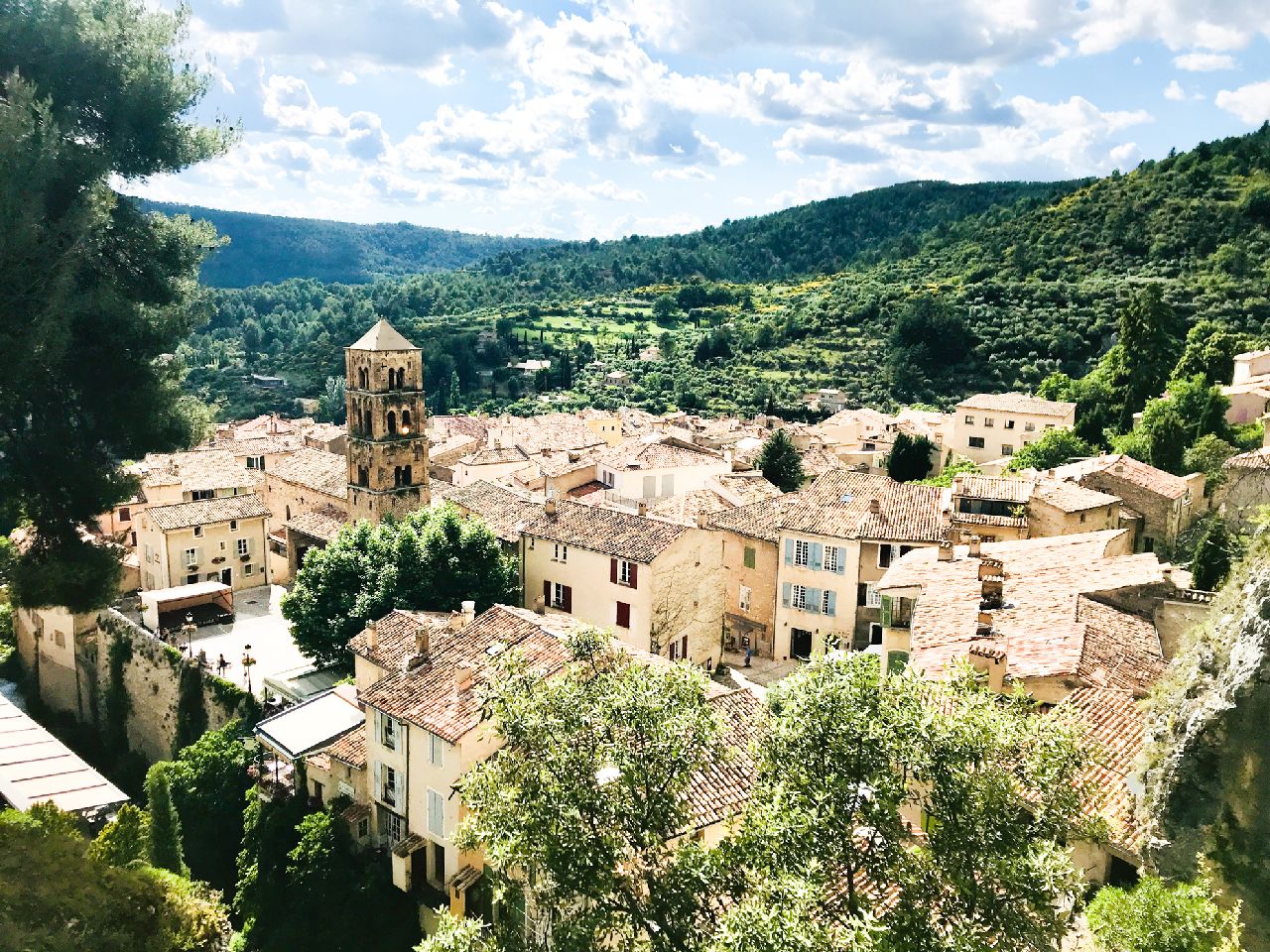
Population: 700 | Closest cities: Nice, Aix-en-Provence & Marseille
Deep in the heart of the Verdon Forest is Moustiers-Sainte-Marie. The village has been officially labelled and recognised nationally as “one of the most beautiful villages of France”, and it is easy to see why. Perched on the ledge of a steep hill, the village began as a pilgrimage destination in the 5th century, when a church was built on the site.
Today, this charming little village has only one single-lane road in and out. Most of it is pedestrianised and dotted with small artisan shops selling local faience pottery in Blue Moustiers and other knick-knacks. Many lovely cafes and restaurants in the villages also serve Provençal cuisine. From the top of the town, you will have fantastic views of the French countryside.
Moustiers is also just a few kilometres away from the famous Gorges du Verdon, a 25 km-long river canyon that attracts hikers and sports enthusiasts from around the world. With rapids on one end and calmer waters on the other, you can choose your water sport, such as kayaking, canoeing, or even rafting! Many hikers and climbers like to base themselves at Moustiers-Sainte-Marie and then hike down to the Gorges.
Most visitors travel to Moustier-Sainte-Marie from Nice or Aix-en-Provence on their way to the famous Lavender fields of Provence.
Here are a few tours you might be interested in:
- From Nice: Gorges of Verdon and Fields of Lavender Tour
- From Aix-en-Provence: Full-Day Lavender Tour to Valensole
- From Aix-en-Provence: Verdon Canyon & Moustiers-Sainte-Marie
Where to Stay: Maison d’Hôtes à Angouire – Le Jas Du Colombier – Hôtel Particulier des Lumières
Gordes

Population: 1,700 | Closest cities: Avignon
Located in the picturesque Luberon Valley, the hilltop village of Gordes is one of the most beautiful and popular villages to visit in the South of France. One of the main highlights of visiting Gordes is strolling through the maze of narrow alleys and discovering something new around each corner. There are plenty of charming little bakeries, cafes, shops and viewpoints around the town that will keep you busy exploring for hours.
The Gordes market takes place every Tuesday in the town centre during the spring and summer months. This is the perfect opportunity to stock up on fresh olives, delicious wines, cheeses, jewellery, lavender sachets, and so much more!
If you’re planning to spend a few days in Gordes, you should make a point of seeing the Abbaye Notre-Dame de Sénanque. This impressive 12th-century abbey is only a 10-minute drive from the village of Gordes and worth visiting. The church’s history is fascinating, and it is surrounded by vibrant lavender fields (during the season), making it a truly breathtaking sight.
During your stay in Gordes, make sure to head over to the town viewpoint either first thing in the morning or at sunset to witness the magical sight of the village lit up in the most perfect lighting of the day. Gordes is a fairy tale village that cannot be missed during your visit to the South of France!
Where to Stay: Mas des Romarins – Le Petit Palais D’Aglae – Hotel Les Bories & Spa
A couple of Fun & unique activities to do while in Gordes:
COLLIOURE

Population: 2,900 | Closest cities: Perpignan
Collioure is a charming Catalan village located in the southern part of France, near the city of Perpignan, and just 20 km from the Spanish border. Also known as the “Cité des Peintres” (City of Painters), Collioure has welcomed numerous artists throughout the 20th century, including Pablo Picasso and Dalí. But its colourful streets and the incredible light have notably inspired Henri Matisse and André Derain to create the artistic movement “Fauvism”.
Today, Collioure remains a crucial artistic hub, with numerous art galleries scattered along the pedestrian streets and renowned museums, including the Musée d’Art Moderne de Collioure (Modern Art Museum of Collioure) and Maison du Fauvisme (Fauvism House).
Authentic but humble, the village has a lot to offer, from rock jetties with incredible views over the Mediterranean Sea to Castles built by the Kings of Mallorca, two central beaches overlooked by the most incredibly looking Church “Notre-Dame des Anges” and a beautiful harbour where local fishermen still use Catalan boats to catch anchovies and sardines.
Collioure is one of the most beautiful villages in France… Though I might be biased, as I was born only 20km from there and grew up strolling around on weekends. Even today, every time I go home, I still thoroughly enjoy an afternoon in Collioure, sipping a refreshing cocktail or hot cocoa and a crepe, depending on the season! Although I can only recommend visiting outside July and August, which are way too crowded.
Where to Stay: Le Mouret – La Frégate – Le Relais Des Trois Mas
Get to know Collioure and its beautiful culture with the following tours:
Saint-Antonin-Noble-Val

Population: 1,850 | Closest cities: Toulouse
Saint Antonin Noble Val is such a quintessential French countryside town that it has appeared in a couple of Hollywood movies, such as “The Hundred-Foot Journey”. It is located in Occitanie, on the Aveyron River in the French department of Tarn-et-Garonne.
This French village is best known for its famous farmers’ market, which runs every Sunday year. Not only does the market take over the covered hall in the town centre, but its stalls also expand throughout most of the village’s atmospheric streets. The market features local produce and arts and crafts from artists from the surrounding area. This region is well-known for its duck meat, and the market is the perfect place to purchase some foie gras or duck confit to take home.
Nevertheless, this picturesque town is more than just a market. During your visit, don’t miss the stunning views over the bridge and the river. The back streets of Saint Antonin Noble Val still have the canals that once supported their former life as tanneries. Many of the buildings in this village have incredible architectural features which highlight their original purpose.
The most charming is perhaps the carving of a medieval couple kissing, which sits above the local matchmaker’s home, now known as the “Maison de l’Amour” – The house of love.
Where to Stay: Domaine de Cadenne – Le Jardin Secret – Gite Petit Bois
Les-Saintes-Maries-de-la-Mer

Population: 2,500 | Closest cities: Montpellier & Arles
Although Marseille is just 120 km to the east, Les-Saintes-Maries-de-la-Mer, the capital of the Camargue region, is famed for its breed of beautiful white horses in the Bouches-du-Rhône department. It is separate from the rest of the south of France, both geographically and culturally.
Built on an island surrounded by the lush Camargue National Reserve, this centuries-old fishing village is distinctly more Spanish than French. Its bright, two-storey, whitewash-painted dwellings, charming squares, and narrow streets are celebrated in the works of Vincent Van Gogh. Saintes-Maries-de-la-Mer is also home to its bullfighting arena.
Thankfully, this is where the similarities with Spain end for the traditional sport of Course Camarguise. It is a bloodless bullfight. The bull is not so lucky in the area’s traditional dish of “Gardiane de Taureau” or bull stew. Other local delicacies include “Telline” clams and the famous aioli.
Whatever your preference, enjoying a serving washed down with a glass of local Corbières is the ideal end to a day relaxing on its miles of white beaches or visiting the Notre Dame de la Mer.
This hugely impressive Historic Monument was constructed between the 9th and 12th centuries, fortified during the 15th century, and can be seen from 10 km away. It is a striking focal point of this alluring coastal village.
Day trips near Les-Saintes-Maries-de-la-Mer:
- Arles and Camargue Small-Group Half-Day Tour from Avignon
- Go on a 4WD Safari trip into the Camargues to see the region’s wildlife and beautiful landscape.
- Electric bike excursion in Camargue
- Private Wine Excursion in Camargue Sand Minibus
Where to Stay: Hôtel Casa Marina – Le Dauphin Bleu – Mas Fandelou
Roussillon

Population: 1,300 | Closest cities: Avignon
When exploring the beautiful hilltop villages in Provence, Roussillon is undoubtedly a unique gem in the South of France that every traveller must see! A visit to Roussillon is best combined with a trip to other villages in the Luberon National Park in Provence.
The town is famous for its ochre deposits, which were derived from mines to supply the textile industry and were highly in demand during the 18th century.
The soil around Roussillon is ochre-coloured and particularly beautiful, especially at sunset. The houses’ deep brown and burgundy colours, combined with colourful doors and wooden window shutters, provide a unique experience that no other Provençal village can compete with. With its vibrant colour palette, Roussillon is an eye-catcher!
Roussillon is small, and you won’t need more than two hours to walk up and down its streets, sipping an espresso and tasting local lavender ice cream. There are several viewpoints around Roussillon, marked as “Belvedère”. It’s worth checking them out to enjoy the views of the city and the surrounding area of Luberon National Park.
To get a glimpse into Roussillon’s history, be sure to visit and follow “Le Sentier des Ocres.” The entrance is on the edge of town, and it costs around €6 per person. Try to avoid wearing white clothes and open shoes. The soft sandy ochre is quite intense, and it isn’t easy to wash it out.
Get to visit Roussillon and the beautiful Luberon!
- Provence Highlights Full-Day Tour from Avignon
- Luberon, Roussillon & Gordes Half-Day Tour from Avignon
- Luberon Market & Villages Day Trip from Aix-en-Provence
- Picturesque Luberon – From Marseille
Where to Stay: Lou Amourie – La Maison des Ocres – Le Clos de la Glycine
by Alexandra – Shurupchik
Menèrbes

Population: 1,000 | Closest cities: Avignon
Most commonly known for its associations with Peter Mayle and his bestselling books, Menerbes is a Luberon village with a literary past. Mayle lived in Menerbes when he wrote the best-selling title A Year in Provence – an account of his experience moving from the UK to rural France. It’s a book that ignited the imagination of many, and it still brings tourists to Provence in search of the fairytale life, more than 20 years after its publication.
Famous authors aside, Menerbes also wears the badge of being one of the most beautiful villages in France, one of 18 villages in Provence. And it is no coincidence that it was bestowed such an honour.
Perched on a hillside in the lower Luberon, it is surrounded by vineyards, lavender fields, and olive groves, creating a bucolic scene. Wander through the charming medieval streets, visit the weekly farmer’s market, have lunch with a view at the popular Bistrot le 5, or pop into the quirky corkscrew museum at a vineyard nearby.
There’s enough to keep you busy for a day trip, but it also makes the perfect base for exploring other nearby villages of the Luberon.
Where to Stay: Hostellerie Le Roy Soleil – Hôtel particulier de Tingry
More Luberon day tours you may like:
- Full Day Ebike Tour in the Luberon Region from Avignon
- Best of Luberon in an afternoon from Avignon
- Highlights of Provence : Chateauneuf du Pape & Luberon
- Luberon Small-Group Day Trip from Avignon
Tourtour

Population: 600 | Closest cities: Nice
This picturesque and welcoming medieval village is one of France’s Most Beautiful Villages (Plus Beaux Villages) and is a must-see destination if you’re touring the country.
Tourtour makes a stop if you’re visiting the surrounding olive mills or vineyards and has two ancient chateaux and a few other interesting sights to explore. The best of these is a typical 16th-century chateau with four round towers, which sit southeast of the village.
This pretty castle houses the Tourtour town hall (Mairie) and has a small square adjacent. It offers stunning views across the surrounding countryside, including the distinctive Sainte Victoire near Aix-en-Provence and the Luberon. No wonder Tourtour is nicknamed the village in the sky; viewed from a distance, it appears to sit on the horizon and dominate the skyline.
Take a short walk out of the village to the 11th-century Romanesque Église Saint-Denis, a striking and straightforward church atop a small hill surrounded by cypress trees and even more glorious views.
Lunch on the lively Place des Ormeaux is a highlight. Cafes and restaurants line the square and serve the best of local produce, including warm tomatoes straight off the vine, fresh sweet basil, and, of course, lashings of delicious local olive oil. With a chilled white wine, there is nowhere better to be on a sunny day in southern France.
Where to Stay: Provençaals dorpshuis – La Bastide De Tourtour Hotel & Spa – Le Mas des Collines
Sare
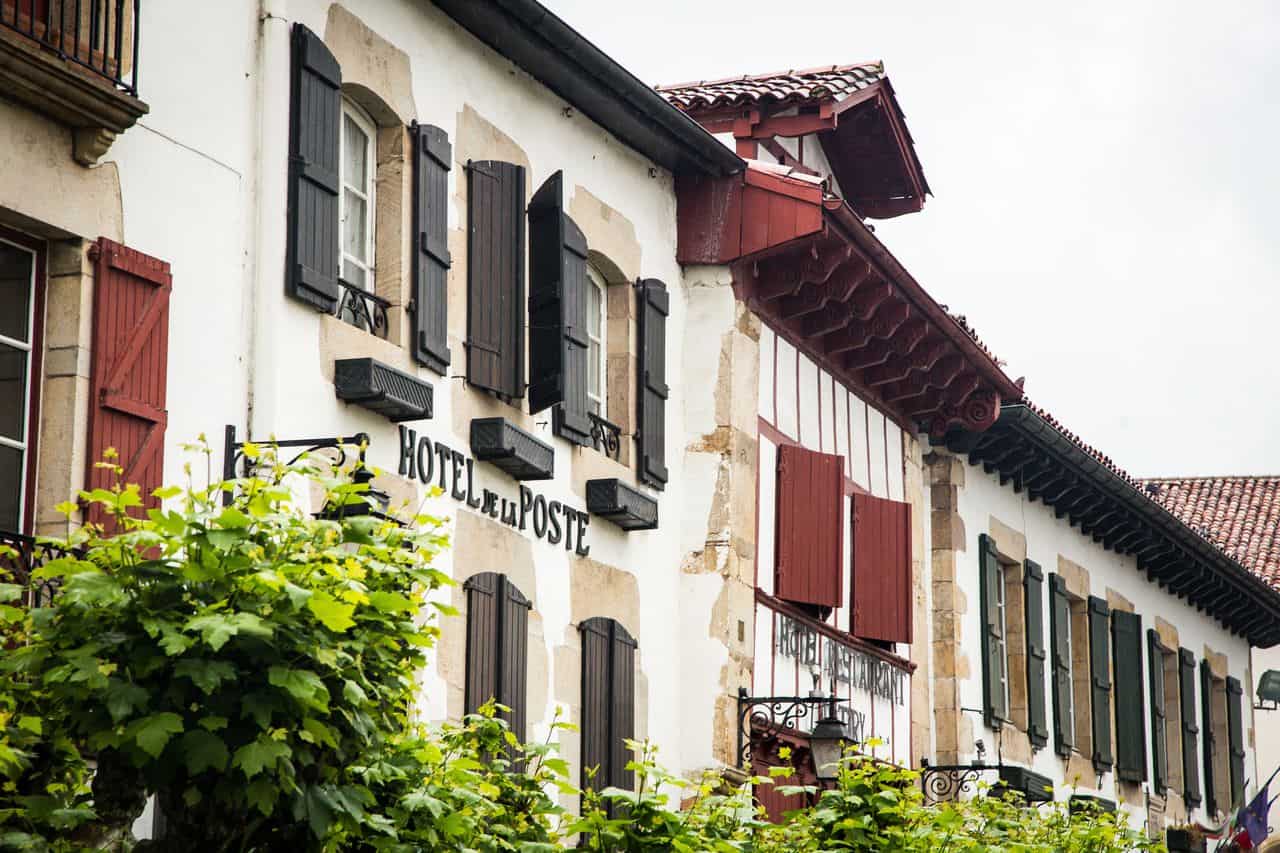
Population: 2,600 | Closest cities: Biarritz & Bayonne
Sare is located in the Basque country, right at the bottom of the iconic hill “La Rhune” (Larrun) known for its Neolithic monuments (dolmens, stone circles) and mystical legends. It became popular in the 19th century after Eugénie de Montijo, wife of Napoleon III, climbed to the summit. Today, you can take a little train to the top or follow the Empress’s steps by hiking the mountain slopes.
Also recognised as one of the “Most Beautiful Villages of France”, Sare is what you would expect from a countryside town on the French Basque side. Pretty facades, a typical church and of course a large “fronton” to play the Basque Pelota! But if you look closer at the houses, you will see that cornerstones have replaced the usual deep-red half-timbering of the buildings.
Despite a dark history of extensive smuggling, the town is best known for its festivals and cuisine. It was also inspired in French literature, such as in Pierre Loti’s novel “Ramuntcho”. It is a place of tradition, vibrant during the summer, and home to the delicious Gâteau Basque, a local cake filled with cream or cherries.
Where to Stay: Logis Hôtel Baratxartea – Chalet Elisa Chambre d’Hôtes – Arraya
Aigues-Mortes

Population: 8,300 | Closest cities: Montpellier
Aigues-Mortes, meaning “dead waters” in French, is located deep in the Camargue region of southern Provence. Aigue-Mortes is easy to visit from Nîmes, Arles, Montpellier or Marseille. Dating back to the Middle Ages, the town features well-preserved 13th-century ramparts and a shady central square, perfect for a casual meal or an afternoon aperitif.
Tourists visit Aigues-Mortes because it is ideal for visiting the marshes, home to Camargue cattle and horses. When you visit Aigues-Mortes, it is well worth taking a boat tour of the marshes to see flamingoes, horses, cattle, and, of course, the proudly traditional Camarguais cowboys and cowgirls.
While it is possible to visit Aigues-Mortes by public transport, the area is best explored by car. If you prefer a beach resort, the nearby Le Grau-du-Roi, with its Rive Gauche beach, offers sweeping golden sands and a seaquarium. The traditional seaside towns of Sète and Marseillan make a pleasant day trip.
Being a village, there are no fancy hotels in Aigues-Mortes – it’s far too relaxed for that. Instead, choose from small, quaint traditional hotels inside the ramparts, or self-catering options a short walk outside. For casual dining with a smile, Restaurant Chez Coco, founded in 1979, never disappoints.
Where to Stay: Hotel Canal Aigues Mortes – Hôtel Saint Louis – Boutique Hôtel des Remparts & Spa
by Jo Karnaghan – frugal first-class travel
Saint-Paul-de-Vence

Population: 3,500 | Closest cities: Nice
Saint-Paul-de-Vence is a beautiful hillside village in southern France, located just 20 km from the Côte d’Azur (a 20-minute drive by car), making it an ideal day trip from Nice.
This old medieval town on the French Riviera features a maze of stone-tiled pedestrian streets that suddenly open up to picturesque squares decorated with fountains and 16th-century walls that point to the village’s historical importance. “La Placette” is one of the prettiest such squares. Outside the main gate, you can also find a picturesque little Square called “Place du Jeu de Boules,” where locals often hang out and play pétanque, a popular sport in the South of France.
It’s also right here that the famous “La Colombe d’Or” Hotel was founded in the 1920s. It gained its fame thanks to numerous famous people who stayed there during their visits to the village. Picasso, amongst others, was a frequent visitor.
But Saint-Paul-de-Vence is also often referred to as an open-air gallery. Throughout the years, a number of artists, such as Chagall, lived in the village permanently, which resulted in the opening of many art galleries and museums. Today, the village’s art galleries are open and lively, with young artists creating their pieces every day in their little studios.
Where to Stay: Hotel Les Messugues – Hôtel La Grande Bastide – Hotel Le Saint Paul
Take a tour to visit Saint-Paul-de-Vence and more:
- Antibes, Cannes & Saint Paul de Vence from Nice
- Provence Organic Wine Tasting Half Day Tour from Nice
- Half-Day Wine Tasting and Saint Paul de Vence Tour from Nice
- Cannes, Gourdon, & Saint-Paul-de-Vence Small Group Day Trip from Nice
Domme

Population: 900 | Closest cities: Brive-la-Gaillarde & Bordeaux
Nestled in the hilltops overlooking the mighty Dordogne River sits Domme. Feel like you’ve stepped back in time as you wander cobbled stone streets and walk past honey-coloured homes decorated with bright flowers, that have stood for centuries.
Domme has been designated one of the most beautiful villages in France, and with good reason. Not only does it have incredible views of the Dordogne Valley and beyond, but it also has an intoxicating, laid-back charm. Devour ice cream, browse the quaint shops for souvenirs and foodie delights, and sit in the main square for an evening meal at several restaurants as hot air balloons glide overhead.
Discover the original fortified walls, ramparts and the city’s gates, and see where the Knights Templar were said to have been imprisoned in 1307. Explore the caves that can be found underneath the main square, too. You can even take a small tourist train that winds through the streets, providing further insight into the area’s history.
The best thing is to stroll and immerse yourself in this picture-perfect village. You won’t be disappointed.
Where to Stay: Le Relais des galets – Maison Maleville
RESOURCES | PLAN YOUR TRIP TO THE SOUTH OF FRANCE
If you’re getting ready for a trip to the South of France, I’ve pulled together a bunch of helpful resources to make planning easier, and more fun. Whether heading to the Southwest or Southeast, you’ll find detailed guides on unique things to do in both regions. From scenic drives to under-the-radar villages, there’s plenty to explore.
If you’re curious about the French Basque Country, I’ve written extensively about it because it’s one of the most character-packed areas in France. You might want to start with:
- All the things you need to know before a visit to the French Basque country
- Best things to do in Biarritz
- The most beautiful small town in the Basque Country
- 7 awesome trails to hike in the French Basque Country
- 1-week itinerary around the French Basque Country.
Beyond that, we have in-depth guides to other standout regions:
- Top scenic drives you can’t miss in the South of France
- The best things to do in this pretty seaside village
- The very best places to visit in Occitanie
- Best things to do in Camargue
- 20+ Best hiking trails in the South of France
- Cathar Castles in Southern France
- One Day in Marseille – Top Attractions and Itinerary
And if you’re still in the planning phase, you’ll probably find these helpful too:
- Our best tips to prepare for any trip
- Our long-term and outdoor travel packing list
- 60 travel books to escape and get inspired
Easy and helpful sentences to know in French
- Hello – Bonjour / Goodbye – Au revoir
- Thank you – Merci / Sorry – Pardon / Please – S’il vous plait
- How much does that cost? – Combien ça coûte ?
- I don’t understand – Je ne comprends pas
- I don’t speak (much) French – Je ne parle pas (trop bien) français
- Do you speak English? – Parlez-vous anglais ?
- Two beers – Deux bières / Pint – Pinte / Half-pint – Demi
- One night, double bedroom – Une unit, lit double
- Can you help me? Pouvez-vous m’aider?
- I am looking for… – Je cherche…
- Do you have wifi? – Avez-vous le wifi? / Password – Mot de passe
- Where are the bathroom/toilets – Où sont les toilettes?

ARE YOU ON PINTEREST?
What about saving this post to your Pinterest board?
Click on the photo to save this blog post for later. We are also on the platform, and we love pinning great travel tips. Follow Tales From The Lens’ boards to see our latest pins.
Don’t be shy, come say hi!
Please note │ This blog post may also include affiliate links to hostels or products we recommend, which means if you buy something following a link on this page, we’ll get a small commission. This will be of no extra cost to you but will help us continue running this blog. Thank you for your support.

About the Author
Jen is the Funder, Author & Photographer behind Talesfromthelens.comJen has lived for the past 15 years across Oceania and Ireland while also travelling in Latin America, North America, and Europe. She has visited more than 65 countries and set foot on every continent in the world! She is a coffee nerd, passionate about photography, wildlife, and outdoor activities.
For more info, check out the About page.